
1. Introduction
The medical aesthetics industry continues to evolve in 2026, with med spas, beauty clinics, and professional aesthetic centers facing increasing pressure to deliver advanced treatments while maintaining competitive pricing and sustainable operating costs. Clients are becoming more selective, treatment expectations are rising, and businesses must continuously improve their service offerings to remain competitive.
However, expanding a professional aesthetic practice often requires significant investment in medical aesthetic equipment. Advanced laser systems, radiofrequency devices, body contouring machines, and multifunctional facial platforms can represent substantial capital expenditures, particularly for small and medium-sized clinics.
This has made affordable medical aesthetic equipment an increasingly important consideration for practice owners. Affordability, however, does not simply mean purchasing the cheapest machine available. A cost-effective investment should balance treatment versatility, technical performance, equipment reliability, operating expenses, and long-term revenue potential.
In 2026, two strategies are attracting particular attention: investing in multi-technology aesthetic devices that combine several treatment functions in one platform and using flexible financing options to reduce upfront financial pressure.
For professional clinics, these approaches can create opportunities to expand treatment menus, improve room utilization, attract different client groups, and generate additional revenue without unnecessarily increasing equipment costs.
Understanding how to evaluate equipment investments is therefore essential for building a profitable and sustainable aesthetic practice.
2. Background: Why Affordable Medical Aesthetic Equipment Matters in 2026
Running a medical spa involves more than purchasing treatment equipment. Business owners must also consider staff salaries, rent, consumables, maintenance, training, marketing, and regulatory compliance. When equipment investments consume too much available capital, clinics may struggle to maintain sufficient cash flow for everyday operations.
One common challenge is the high cost of purchasing multiple single-function machines.
For example, a clinic offering facial rejuvenation, skin tightening, and body contouring may need several independent devices to provide these services. Each machine requires its own purchasing budget, treatment space, maintenance arrangements, and operator training.
This creates several financial and operational challenges:
-
High initial investment: Purchasing several professional devices can place considerable pressure on a clinic's startup budget.
-
Limited treatment-room space: Multiple machines require additional storage and treatment areas.
-
Higher maintenance expenses: Different systems may involve separate service contracts, replacement parts, and consumables.
-
Underutilized equipment: Some machines may receive fewer bookings than expected, reducing their actual return on investment.
-
Cash flow pressure: Large upfront payments can leave insufficient funds for marketing, staff development, and business expansion.
These challenges are particularly relevant to independent med spas and newly established aesthetic clinics.
Instead of purchasing equipment based solely on brand recognition or the number of advertised features, practice owners are increasingly evaluating the relationship between equipment costs, treatment demand, and potential profitability.
The objective is not simply to spend less. It is to make every equipment investment contribute more effectively to the clinic's overall business performance.
3. Technology and Mechanism: How Multi-Technology Aesthetic Devices Improve Cost Efficiency
One of the most practical approaches to reducing equipment investment costs is choosing multifunctional aesthetic platforms.
Rather than purchasing several independent machines, clinics can select integrated systems that combine complementary technologies within one professional device.
Depending on the configuration, these platforms may incorporate radiofrequency (RF), ultrasound cavitation, vacuum massage, hydradermabrasion, oxygen infusion, LED light therapy, or other aesthetic technologies.
Each technology serves a different treatment purpose.
Radiofrequency (RF) Technology
Radiofrequency devices deliver controlled electromagnetic energy into targeted tissue. The resulting thermal effect can stimulate collagen-related remodeling and support improvements in the appearance of skin laxity and fine lines.
Professional RF systems may be designed for facial rejuvenation, skin firming, or body treatments, depending on their operating frequency, energy delivery system, applicator design, and approved indications.
For aesthetic clinics, RF technology provides opportunities to develop treatment programs focused on skin tightening and overall skin appearance.
Ultrasound Cavitation Technology
Ultrasound cavitation systems use acoustic energy to create mechanical effects within targeted tissue. Certain body contouring devices are designed to produce cavitation-related effects in localized adipose tissue.
These systems are commonly incorporated into non-invasive body contouring services. Treatment suitability depends on device specifications, intended use, patient assessment, and applicable regulatory requirements.
For clinics offering body-focused aesthetic services, ultrasound technology can complement other treatment approaches and broaden the available service menu.
Vacuum Massage and Body Contouring
Vacuum-assisted systems use controlled suction through specialized applicators. Depending on the device design, they may be used for mechanical massage, temporary improvements in the appearance of cellulite, and body treatment protocols.
When combined with other technologies, vacuum systems can provide additional treatment options without requiring a completely separate equipment platform.
Hydradermabrasion and Oxygen Infusion
Hydradermabrasion machines combine water-based exfoliation, fluid delivery, and suction to cleanse and refresh the skin.
Some multifunctional facial systems also incorporate oxygen infusion or serum application technologies. These functions are particularly relevant to professional facial treatment programs designed around cleansing, hydration, and skin conditioning.
LED Light Therapy
LED systems use selected wavelengths of light for different aesthetic applications.
Depending on the wavelength and device specifications, red light may be used in professional skin-conditioning and rejuvenation protocols, while blue light is commonly incorporated into acne-related treatment programs.
LED technology can complement facial services and help clinics develop additional treatment packages.
Why Integration Matters
The main advantage of a multi-technology device is the ability to offer several complementary services through one equipment platform.
For example, a multifunctional facial machine may support cleansing, exfoliation, hydration, and skin-conditioning procedures. A body contouring platform may combine vacuum-assisted massage with other body treatment technologies.
This approach can reduce equipment duplication, improve treatment-room organization, and allow clinics to introduce additional services without purchasing a separate machine for every treatment category.
However, more functions do not automatically mean better performance. Each technology should be evaluated according to its actual specifications, output stability, safety features, applicator quality, and suitability for the clinic's treatment needs.
4. Advantages and Comparison: Professional Equipment vs. Home-Use Devices
When evaluating affordable aesthetic equipment, practice owners should distinguish between professional systems and consumer-oriented beauty devices.
Although home-use products may have lower purchase prices, they are generally designed for different operating environments and treatment expectations.
Professional aesthetic equipment is typically developed for repeated use in commercial treatment settings. Depending on the device category, it may offer more comprehensive parameter controls, specialized applicators, higher operational capacity, and technical support intended for professional users.
Several factors are worth considering.
More Flexible Treatment Configurations
Professional multifunctional equipment may provide multiple handpieces, adjustable operating parameters, and different treatment modes.
This allows trained operators to select appropriate configurations according to the device instructions, client assessment, and treatment objectives.
By comparison, many home-use devices have simplified controls and fewer treatment options.
Better Suitability for Commercial Workflows
A professional machine should support the daily operating requirements of a clinic.
Factors such as operating stability, treatment duration, cooling systems, ergonomic applicators, and maintenance accessibility can influence how effectively a device fits into a busy treatment schedule.
Technical Support and After-Sales Service
Equipment reliability is closely connected to business continuity.
Clinics should evaluate manufacturer support, warranty coverage, spare-part availability, operator training, maintenance schedules, and technical response times before making a purchase.
A lower-priced device may become expensive over time if repairs are difficult or replacement components are unavailable.
A More Appropriate Investment for Professional Services
Home-use devices may serve individual consumers seeking convenient personal care. Professional systems, on the other hand, are designed around commercial treatment workflows and trained operation.
They should not be considered interchangeable.
The right choice depends on the intended application, technical requirements, local regulations, and the qualifications of the person operating the equipment.
Ultimately, an affordable professional device should deliver dependable functionality and practical business value rather than simply offering a lower purchase price.
5. Flexible Financing: Making Professional Equipment More Accessible
Even when a clinic identifies the right aesthetic machine, the initial purchase price can remain a major obstacle.
Flexible financing provides another way to manage equipment investment.
Instead of paying the full amount upfront, eligible businesses may use equipment loans, leasing arrangements, manufacturer financing, or other business financing programs.
These options can help clinics distribute acquisition costs over an agreed period while preserving working capital.
Equipment Loans
An equipment loan allows a business to purchase a machine using borrowed funds and repay the loan through scheduled installments.
Depending on the agreement, the clinic may own the equipment from the beginning, subject to the lender's security interest.
This option may suit established clinics purchasing equipment they intend to operate over the long term.
Equipment Leasing
Leasing allows a clinic to use equipment for a specified period in exchange for regular payments.
Different lease structures have different ownership and end-of-term conditions. Some arrangements provide purchase options, while others allow businesses to return or upgrade the equipment.
Leasing can be worth considering for technologies that may experience relatively rapid product development or for clinics that prefer to preserve flexibility.
Manufacturer Financing
Some manufacturers and distributors cooperate with financing providers or offer installment arrangements.
Depending on the supplier, businesses may be able to negotiate payment schedules, deposits, or promotional financing terms.
Before accepting an offer, clinic owners should compare the total repayment amount, interest, additional fees, warranty conditions, and ownership arrangements.
Why Cash Flow Matters
Financing is not automatically cheaper than paying upfront. Interest and additional fees can increase the total acquisition cost.
Its potential advantage is improved cash flow management.
For example, a clinic may prefer to retain part of its available capital for staff training, advertising, treatment consumables, and client acquisition rather than committing all its cash to one machine.
The key is ensuring that projected treatment revenue can realistically support the monthly financing obligation.
6. Maximizing ROI: How Clinics Can Evaluate Equipment Profitability
Purchasing an affordable machine is only the beginning. The real question is whether the equipment can generate sufficient business value over time.
Return on investment (ROI) should be evaluated using actual operating costs and realistic treatment demand rather than promotional revenue projections.
A useful starting point is calculating the monthly break-even treatment volume.
Break-Even Treatments per Month = Monthly Equipment-Related Costs ÷ Net Contribution per Treatment
Monthly equipment-related costs may include:
-
Equipment financing or lease payments.
-
Consumables and disposable accessories.
-
Maintenance and service expenses.
-
Additional operator labor.
-
Marketing costs associated with the treatment.
Net contribution per treatment refers to the treatment price after deducting variable expenses directly associated with delivering that service.
For example, suppose a clinic has total monthly equipment-related costs of $2,000 and earns a net contribution of $100 per treatment.
The machine would need approximately 20 treatments per month to cover those costs.
This is a simplified illustration, not a guaranteed profitability forecast. Actual results depend on booking rates, cancellations, staffing, taxes, overhead, and other business expenses.
Improve Equipment Utilization
A machine that remains unused cannot generate meaningful returns.
Clinics should build treatment packages around existing client interests and introduce complementary services that encourage repeat visits.
For example, a facial platform offering cleansing and hydration functions may support several treatment packages for different skin-care needs.
A multifunctional body system may provide additional service options for clients interested in body appearance and non-invasive treatments.
Build a Strong Treatment Menu
Instead of advertising individual machine functions without context, professional clinics should communicate the treatment experience and client benefits.
Clear treatment descriptions, realistic expectations, suitable client selection, and structured treatment plans can help potential customers understand the value of each service.
Invest in Staff Training
Equipment performance depends not only on the machine itself but also on operator knowledge.
Professional training helps staff understand operating parameters, treatment protocols, contraindications, equipment maintenance, and client communication.
Well-trained operators can improve workflow consistency and help reduce avoidable equipment misuse.
Monitor Performance Regularly
Clinics should track:
-
Monthly treatment volume.
-
Revenue per treatment category.
-
Consumable cost per session.
-
Equipment downtime.
-
Repeat booking rates.
-
Customer acquisition costs.
-
Monthly contribution after equipment expenses.
These indicators help owners identify which machines are generating meaningful returns and which investments may require a revised marketing or operating strategy.
7. Applications and Client Needs: Choosing Equipment That Fits Different Practice Models
Not every aesthetic clinic needs the same equipment configuration. The right investment depends on its target clientele, available space, service positioning, and growth objectives.
Small and Newly Established Med Spas
New clinics often need to control initial expenses while establishing a recognizable treatment menu.
A multifunctional facial machine or a versatile body contouring platform may be a practical starting point if there is sufficient demand for its core services.
The priority should be selecting a reliable system with essential treatment functions rather than purchasing an oversized equipment portfolio.
Established Beauty Clinics Expanding Their Services
Clinics with an existing client base may benefit from adding technologies that complement their current treatment offerings.
For example, a business already providing facial treatments may introduce hydradermabrasion, oxygen infusion, or LED-related services to develop additional facial packages.
Likewise, a body-focused clinic may consider complementary vacuum massage or ultrasound-based equipment, provided the technologies match its target market and regulatory scope.
Professional Aesthetic Centers
Larger clinics may prioritize equipment versatility, treatment-room efficiency, operator training, and service standardization.
Multifunctional platforms can help organize treatment workflows, while specialized standalone devices may remain appropriate for high-demand procedures requiring dedicated technology.
A balanced equipment portfolio is often more effective than purchasing multiple machines simply because they offer different features.
Clinics Seeking Long-Term Growth
For growing businesses, equipment selection should align with a broader expansion strategy.
Before purchasing, owners should assess local demand, competitor services, staff capabilities, maintenance requirements, and potential treatment pricing.
The most suitable equipment is not necessarily the machine with the largest number of functions. It is the system that fits the clinic's business model and can be used consistently.
8. Conclusion: Smarter Equipment Investments for Sustainable Med Spa Growth
In 2026, affordable medical aesthetic equipment is becoming an important consideration for clinics that want to expand their services without placing unnecessary pressure on their finances.
Multi-technology platforms offer an opportunity to combine complementary treatment functions, reduce equipment duplication, and improve treatment-room efficiency. Flexible financing can help eligible practices distribute acquisition costs and preserve working capital for daily operations and business development.
However, affordability should never come at the expense of equipment quality, safety, technical support, or treatment suitability.
Before investing, clinic owners should carefully compare device specifications, treatment capabilities, consumable costs, warranty coverage, maintenance arrangements, and financing terms. They should also calculate realistic break-even treatment volumes and ensure that their teams are prepared to operate the equipment professionally.
For manufacturers and suppliers, providing reliable professional equipment, flexible configurations, technical training, and responsive after-sales service is equally important.
Ultimately, successful equipment investment is not about purchasing the most expensive machine or the cheapest available option. It is about choosing technology that meets real client needs, supports professional treatment delivery, and generates sustainable business value.
With a well-planned equipment strategy, med spas can strengthen their service offerings, improve operational efficiency, and build a more competitive foundation for long-term growth.
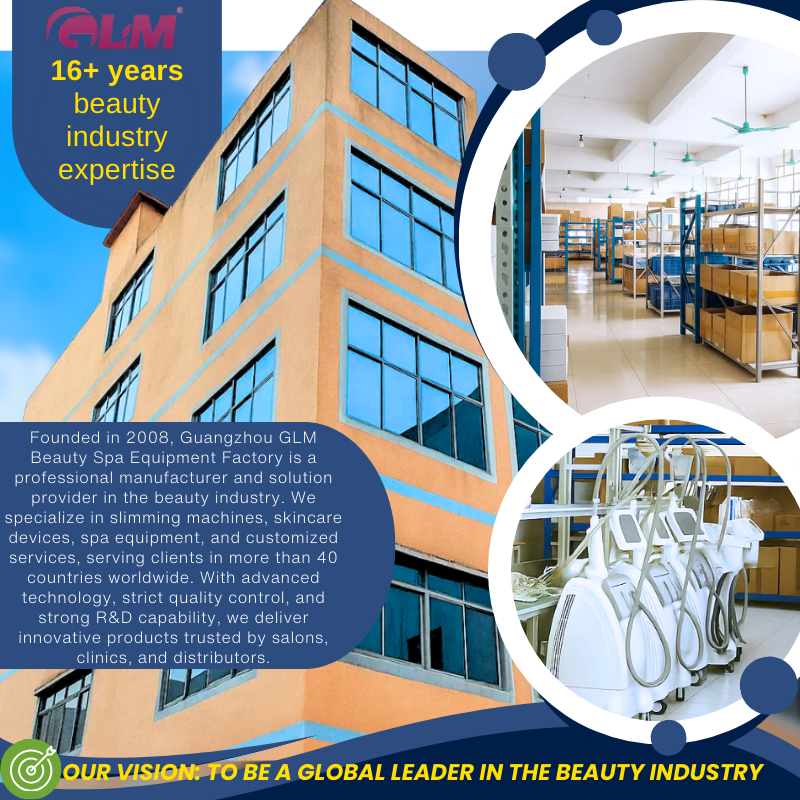
Founded in 2008, Guangzhou GLM Beauty Spa Equipment Factory specializes in research, development, manufacture and selling of beauty and slimming machines. Our production base is located in Guangzhou City, Guangdong Province, China. Since our foundation, we have introduced advanced technologies and equipment, to assure high quality and high performance of our products. With professional marketing guide and excellent after-sales service, our products have been exported to over 20 countries and regions, including Southeast Asia, the Middle East, Europe and the United States, won worldwide praises and gained a good reputation