1. Introduction
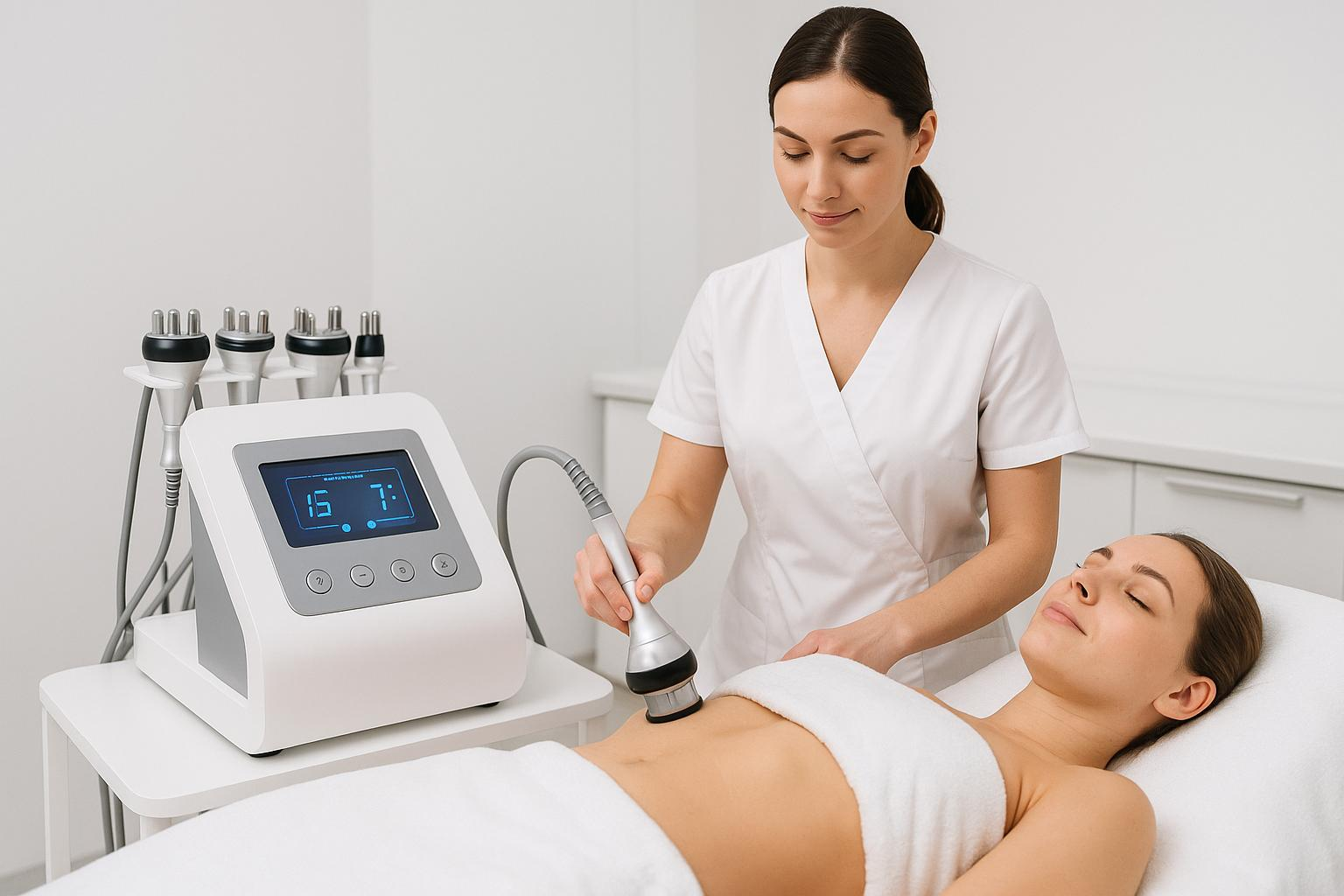
Non-invasive body contouring continues to attract attention in 2026 as consumers look for convenient ways to address localized body concerns without surgery. Among the technologies gaining visibility are ultrasonic cavitation devices, which use acoustic energy to interact with tissue beneath the skin. Compact home-use products are marketed for personal body-care routines, while more advanced systems remain part of professional beauty salons and aesthetic clinics.
For consumers, choosing the best ultrasonic cavitation machine for home use involves more than comparing prices, advertised power levels, or the number of treatment heads. Device design, intended use, safety instructions, ease of handling, and the quality of supporting evidence all matter. A product with impressive marketing claims does not necessarily deliver better results.
For beauty professionals and equipment distributors, the growing interest in home-use devices also creates an opportunity to explain the differences between consumer products and professional body-contouring systems. Understanding these distinctions helps customers make informed decisions and enables clinics to position their services around individualized assessment, controlled treatment protocols, and professional support.
This guide explores how ultrasonic cavitation works, what users can realistically expect, which safety considerations matter most, and how to evaluate a device in 2026.
2. Background and Problem: What Can Home Cavitation Machines Really Do?
Ultrasonic cavitation is commonly promoted as a non-surgical approach to localized body contouring. However, the term covers devices with different technical designs, energy outputs, treatment protocols, and intended uses. Results from one device cannot automatically be applied to another.
Home-use machines are attractive because they may offer convenient operation, flexible scheduling, and lower upfront costs than repeated professional appointments. Nevertheless, convenience should not be confused with proven effectiveness. Independent evidence supporting the broad range of consumer cavitation products remains limited, and outcomes may vary considerably between individuals and devices. Some users may notice modest changes in local contours, while others may see little meaningful difference.
It is also important to distinguish body contouring from weight loss. These devices are not substitutes for a balanced diet, physical activity, or medical management of obesity. They should not be expected to remove visceral fat, produce substantial weight reduction, or guarantee permanent changes in body shape.
The US Food and Drug Administration explains that therapeutic ultrasound can affect tissue and may reduce circumference in a treated area, but it also identifies potential complications, including discomfort, swelling, blisters, burns, and nerve damage. Appropriate device selection and correct use are therefore essential. FDA guidance
For buyers, the central question is not simply which machine has the most features. It is whether the specific device is appropriate for the intended user, treatment area, and level of supervision.
3. Technology and Mechanism: How Does Ultrasonic Cavitation Work?
Ultrasound consists of sound waves above the range of human hearing. In aesthetic applications, an ultrasound transducer delivers acoustic energy through a handpiece placed against the skin. A suitable coupling medium, commonly ultrasound gel, helps maintain contact and transmit energy.
Depending on the device's frequency, acoustic pressure, output, pulse characteristics, and treatment design, ultrasound may produce mechanical effects, thermal effects, or a combination of both. Cavitation refers to the formation and movement of bubbles under changing acoustic pressure. Under specific conditions, these interactions can produce mechanical effects in nearby tissue.
However, not every machine marketed as an ultrasonic cavitation device generates the same type or degree of cavitation. Frequency alone does not establish effectiveness, and a higher advertised wattage does not necessarily mean better performance. Actual acoustic output, energy distribution, transducer design, contact quality, and the manufacturer's validated treatment protocol are all relevant.
This distinction matters when comparing home-use products with professional equipment. A consumer device may be designed around lower output and simplified controls, while a professional system may offer more defined operating parameters, specialized applicators, and documented protocols for trained operators. These differences do not automatically prove that every professional machine is more effective, but they influence how a device can be evaluated and used.
Ultrasonic cavitation should also not be confused with high-intensity focused ultrasound (HIFU). Although both use ultrasound energy, their energy delivery, focal characteristics, treatment objectives, and safety requirements may differ substantially. Clinical evidence for one technology cannot be assumed to validate another. The American Institute of Ultrasound in Medicine emphasizes that cosmetic ultrasound devices require appropriate operator training and that excessive exposure or incorrect targeting can damage unintended tissue. AIUM safety statement
For anyone evaluating a machine, the most useful technical information includes its intended use, operating frequency, documented output parameters, applicator design, contraindications, and available device-specific performance evidence.
4. Advantages and Comparison: Home Devices vs. Professional Machines
There is no single best ultrasonic cavitation machine for every user. The right choice depends on whether the priority is personal convenience, professional service delivery, or long-term equipment investment.
Home-Use Ultrasonic Cavitation Machines
Home devices are generally designed for individual consumers who want a compact product for personal use. Their main advantages may include portability, convenient storage, and the ability to follow the manufacturer's permitted routine without booking appointments.
When evaluating these products, buyers should prioritize clear instructions, transparent technical specifications, appropriate safety features, and a realistic explanation of expected results. A device should not be selected solely because it promises rapid inch loss, permanent fat removal, or clinic-level performance at a fraction of the price.
Potential limitations include restricted control options, less individualized treatment guidance, and limited independent evidence for specific models. Users may also find it difficult to assess whether changes in body measurements are attributable to the device, normal fluctuations, or other lifestyle factors.
Professional Ultrasonic Cavitation Systems
Professional systems are designed for trained operators working in beauty salons, body-contouring studios, or suitable aesthetic settings. Depending on the model, they may provide a broader range of applicators, more detailed parameter controls, structured treatment documentation, and technical support.
Their value extends beyond the device itself. Professional services can include client consultation, screening for contraindications, assessment of treatment suitability, consistent measurement methods, informed consent, and follow-up. These steps support a more structured client experience and help practitioners identify when a different approach is more appropriate.
For clinics and distributors, equipment selection should consider the manufacturer's technical documentation, service arrangements, operator training, spare-parts availability, warranty terms, and regulatory requirements in the destination market. The number of handpieces or the visual sophistication of a control panel should not replace a review of evidence and safety documentation.
Which Option Offers Better Value?
| Consideration | Home-use device | Professional system |
|---|---|---|
| Main user | Individual consumer | Trained practitioner |
| Convenience | Personal use at home | Scheduled professional sessions |
| Treatment guidance | Primarily manufacturer instructions | Consultation and practitioner-led protocols |
| Equipment controls | Often simplified | May offer more detailed parameters |
| Technical support | Varies by seller | May include training and service support |
| Best evaluation criteria | Safety, usability, realistic claims | Documentation, reliability, support, workflow |
| Expected results | Variable; evidence may be limited | Depends on the specific technology, protocol, and client |
Professional equipment should not be assumed to guarantee superior results. Its practical advantages depend on the actual device, operator competence, and quality of service. Conversely, home-use equipment should not be treated as clinically equivalent to a professional system simply because both use ultrasound.
5. Applications and Client Needs: How to Choose in 2026
A sensible buying decision begins with the intended application rather than a product's marketing label. The following criteria can help consumers, salon owners, and equipment buyers compare available options.
5.1 Verify the Intended Use and Technical Specifications
Start by checking whether the product is genuinely intended for home use in your market. Read the instruction manual and look for the manufacturer's identity, model number, operating specifications, contraindications, maintenance requirements, and contact information for support.
Ask the seller to clarify the difference between acoustic frequency, electrical input power, and actual acoustic output. These figures are not interchangeable. Claims about energy delivery should be supported by appropriate technical documentation rather than a large wattage number on the product page.
For professional procurement, request relevant test reports, product documentation, training materials, and evidence supporting the intended aesthetic application. Check applicable registration, authorization, or conformity requirements in the destination country. A certification mark or regulatory listing should not be interpreted as proof of a particular cosmetic result.
5.2 Evaluate Safety Features and Instructions
Safety should take priority over appearance, accessories, and discounts. Look for clear instructions on skin contact, coupling gel, permitted treatment areas, operating duration, cleaning, and situations requiring immediate discontinuation.
Ultrasound energy must be delivered according to the device's instructions. Poor contact or inappropriate exposure may increase the risk of tissue injury. Never improvise treatment settings, increase exposure because results seem slow, or use a device on an area excluded by its manufacturer.
Do not use an ultrasound body-contouring device over open wounds, damaged skin, or areas involving metal beneath the skin or certain implanted electronic devices unless an appropriately qualified healthcare professional has specifically established that the device and application are suitable. Pregnancy and significant medical conditions may also require avoidance or medical assessment. The exact contraindications depend on the product and treatment area.
If a device causes significant pain, persistent numbness, blistering, or unusual skin changes, stop using it and seek appropriate medical advice. A non-invasive label does not mean a procedure is risk-free.
5.3 Match the Device to Your Experience Level
A first-time home user should favor a product with straightforward instructions and a clearly defined intended use rather than one advertising numerous complex modes. If the manual is unclear about operating parameters, safe placement, or contraindications, that uncertainty is a reason not to purchase the device.
Professional operators need a more extensive assessment. Consider whether the system fits the clinic's service menu, whether staff can obtain appropriate training, and whether its workflow supports consistent client assessment and recordkeeping.
Manufacturers serving the professional market can add value through clear English documentation, operator education, responsive technical support, and realistic product positioning. These services are particularly important for overseas distributors who need to train customers and address post-sale questions.
5.4 Consider Treatment Costs and Maintenance
The initial purchase price is only one part of the total cost. Consumers should consider the quality of the device, replacement accessories, warranty coverage, cleaning requirements, and the possibility that the product may not deliver a noticeable result.
For clinics, the calculation also includes staff training, service time, maintenance, consumables, insurance, and local compliance obligations. A machine that appears inexpensive may become a poor investment if technical support is unavailable or the manufacturer's performance claims cannot be substantiated.
Avoid committing to expensive treatment packages or equipment purchases solely on the basis of dramatic before-and-after images. Images can be affected by lighting, posture, camera angle, hydration, and other variables. Reliable evaluation requires consistent measurement methods and a reasonable follow-up period.
5.5 Set Realistic Expectations and Measure Outcomes Consistently
If a device is suitable for the user and the intended application, any outcome should be assessed cautiously. Changes in circumference can reflect differences in measurement location, posture, hydration, abdominal contents, and body weight—not necessarily a device effect.
For professional services, use consistent measurement locations, similar conditions at each visit, and standardized photographs when appropriate and consented to. Record the treatment parameters and any adverse reactions. Explain uncertainty before treatment and agree on a review point rather than promising a specific number of centimeters lost.
A responsible provider should be willing to acknowledge when results are limited and when continued treatment is unlikely to justify the cost.
6. Conclusion: Make an Informed Choice
The best ultrasonic cavitation machine for home use in 2026 is not necessarily the cheapest, most powerful, or most heavily advertised product. It is the device whose intended use, technical documentation, safety instructions, and realistic performance expectations match the user's needs.
For consumers, careful research and compliance with the manufacturer's instructions are essential. Home-use machines may offer convenience, but evidence for individual products varies, and substantial or permanent fat loss should not be assumed.
For beauty salons, aesthetic clinics, and equipment distributors, professional systems can offer a more structured service framework when supported by appropriate training, documented protocols, technical support, and responsible client assessment. These operational advantages are important when building a sustainable body-contouring service.
Ultimately, technology should be evaluated by its documented capabilities and safe, appropriate use—not by marketing promises alone. Whether selecting a personal device or sourcing equipment for a professional business, informed decisions create a stronger foundation for customer confidence and long-term value
Founded in 2008, Guangzhou GLM Beauty Spa Equipment Factory specializes in research, development, manufacture and selling of beauty and slimming machines. Our production base is located in Guangzhou City, Guangdong Province, China. Since our foundation, we have introduced advanced technologies and equipment, to assure high quality and high performance of our products. With professional marketing guide and excellent after-sales service, our products have been exported to over 20 countries and regions, including Southeast Asia, the Middle East, Europe and the United States, won worldwide praises and gained a good reputation