
1. Introduction
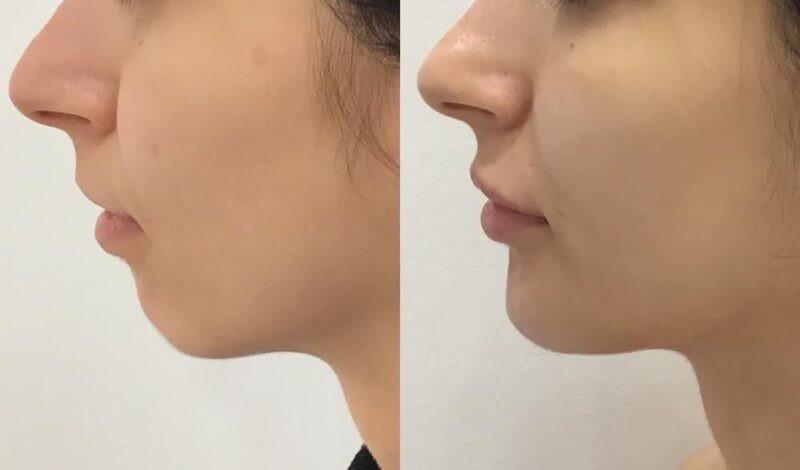
Facial proportions play an important role in how people perceive facial attractiveness, symmetry, and overall appearance. Among the different facial features, the chin is particularly important because it influences the definition of the lower face, the jawline, and the side profile. Even a relatively small difference in chin projection can change the visual balance between the nose, lips, and jaw.
In 2026, interest in facial balancing and natural-looking aesthetic enhancement continues to influence the beauty and medical aesthetics industries. Rather than pursuing dramatic changes, many clients are looking for subtle improvements that complement their existing facial structure. This has increased interest in two popular chin augmentation options: dermal fillers and chin implants.
Chin fillers provide a non-surgical approach to improving chin projection and contour, while chin implants offer a surgical solution for more substantial and long-lasting structural enhancement. Both procedures have distinct advantages, limitations, recovery requirements, and safety considerations.
For professional aesthetic clinics, understanding these differences is essential when discussing treatment expectations with clients. In addition, modern skin-tightening and facial rejuvenation technologies can complement broader facial treatment programs by improving skin quality and the appearance of surrounding areas.
This guide explores how chin fillers and implants work, compares their long-term results, and explains how professional aesthetic treatments can contribute to a more comprehensive facial balancing strategy.
2. Background and the Growing Demand for Chin Augmentation
A well-proportioned chin helps establish the relationship between the upper, middle, and lower thirds of the face. A recessed chin may make the nose appear more prominent, weaken the jawline, or create the impression of an unbalanced facial profile. In some cases, a lack of chin projection is related to underlying skeletal structure rather than simply insufficient soft-tissue volume.
Traditional chin augmentation primarily relied on surgical procedures, including implant placement and sliding genioplasty. These techniques remain important for individuals seeking significant structural changes. However, advances in injectable aesthetics have introduced alternative approaches for people who prefer less invasive treatments.
Chin fillers have become an appealing option because they can add volume, refine contours, and improve profile proportions without requiring an operation. The treatment is generally associated with shorter recovery periods and adjustable results, making it attractive to clients who want a more gradual approach to facial enhancement.
At the same time, demand for longer-lasting aesthetic solutions has maintained interest in chin implants. For patients with more pronounced skeletal retrusion or substantial projection requirements, surgery may provide a more appropriate solution.
The broader aesthetic market is also moving toward personalized treatment planning. Clients increasingly expect practitioners to consider the entire facial structure instead of treating individual features independently. This approach makes facial assessment, skin condition analysis, and treatment customization increasingly important in professional clinics.
3. Technology and Treatment Mechanisms
3.1 How Chin Fillers Work
Chin fillers typically use injectable materials such as hyaluronic acid (HA) to increase soft-tissue volume and improve chin contour.
Hyaluronic acid is a water-binding substance that occurs naturally in the body. When formulated into an injectable gel, it can provide additional volume and structural support in selected facial areas.
During chin augmentation, a qualified medical professional evaluates the patient's facial anatomy, identifies the areas requiring correction, and selects an appropriate filler formulation. The material is then injected into carefully selected tissue planes to improve projection, definition, or symmetry.
The main characteristics of chin fillers include:
-
Immediate volume enhancement: Visible contour changes can usually be observed shortly after treatment.
-
Adjustable results: The practitioner can customize the amount and distribution of filler according to facial proportions.
-
Temporary enhancement: Most HA fillers gradually break down over time, meaning maintenance treatments may be necessary.
-
Limited recovery time: Clients generally experience less downtime than with surgical augmentation.
However, injection depth, product selection, anatomical knowledge, and precise technique are critical. Incorrect placement can cause asymmetry, lumps, or vascular complications. Severe vascular events, although uncommon, can result in tissue damage.
3.2 How Chin Implants Work
Chin implants are solid medical-grade devices designed to increase chin projection and improve the structural proportions of the lower face.
They are commonly made from biocompatible materials such as silicone or porous polyethylene. A surgeon selects an implant according to the patient's anatomy, desired projection, and overall facial structure.
The implant is positioned through a surgical incision, commonly inside the mouth or beneath the chin. Once placed, it provides physical support and creates a more prominent chin profile.
Unlike injectable fillers, implants do not depend on maintaining soft-tissue volume through repeated injections. Their results can remain stable for many years, although long-term monitoring may still be necessary.
Potential benefits include:
-
More substantial chin projection.
-
Long-term structural enhancement.
-
Improved lower-face proportions.
-
A more defined relationship between the chin and jawline.
Nevertheless, implant surgery requires anesthesia, surgical preparation, and postoperative recovery. Patients must also consider possible complications such as infection, displacement, asymmetry, changes in sensation, and the potential need for revision surgery.
3.3 The Role of Professional Facial Aesthetic Equipment
Although beauty devices cannot replace injectable fillers or surgical implants, professional aesthetic equipment can support complementary facial rejuvenation treatments.
For example, radiofrequency (RF) technology delivers controlled electrical energy into targeted tissue to generate heat. Depending on the device and treatment protocol, this can support collagen remodeling and improve the appearance of mild skin laxity.
High-intensity focused ultrasound (HIFU) uses focused acoustic energy to target selected tissue depths. Certain professional systems are designed for non-invasive lifting and skin-tightening applications.
Other technologies, including LED phototherapy and professional hydro-facial systems, can support skin conditioning, hydration, and overall facial skin quality.
These treatments address different concerns from chin augmentation itself. They do not create the same structural projection as a chin implant or the localized volume enhancement provided by a dermal filler.
For aesthetic clinics, this distinction creates an opportunity to develop comprehensive treatment programs that address facial contour, skin firmness, texture, and hydration as separate but complementary concerns.
4. Advantages and Comparison: Chin Fillers vs. Chin Implants
Choosing between chin fillers and chin implants depends on the patient's facial anatomy, treatment expectations, budget, recovery preferences, and desired duration of results.
4.1 Treatment Invasiveness
Chin fillers are non-surgical procedures involving injections rather than incisions. Most treatments can be completed within a relatively short appointment.
Chin implants require an operation, anesthesia, and a recovery period. Patients should expect more postoperative care and temporary restrictions on normal activities.
For individuals who prefer minimal intervention, fillers may be more attractive. However, a non-surgical approach is not automatically risk-free.
4.2 Results and Longevity
Fillers provide temporary improvements. Their longevity depends on the formulation, injection area, individual metabolism, and treatment technique. Repeat sessions may be required to maintain the desired appearance.
Chin implants generally provide longer-lasting structural results. Once properly positioned and healed, they can remain in place for many years.
However, longer-lasting does not necessarily mean better for every patient. Someone who wants a modest and adjustable enhancement may prefer fillers, while someone seeking substantial and durable projection may benefit more from surgical consultation.
4.3 Recovery and Convenience
Fillers typically involve less downtime. Temporary swelling, bruising, tenderness, and redness may occur, but many patients can resume routine activities relatively quickly.
Implant surgery requires a longer recovery process. Swelling, discomfort, dietary adjustments, and follow-up appointments may be necessary depending on the surgical approach.
Clinics should explain these differences clearly so that clients can make informed decisions based on their lifestyles and expectations.
4.4 Safety and Potential Complications
Both treatments have risks, although their complication profiles differ.
With HA fillers, common temporary reactions include swelling, bruising, redness, and tenderness. Rare but serious complications include vascular occlusion, tissue necrosis, and vision-related injury.
With chin implants, potential complications include infection, implant displacement, poor wound healing, asymmetry, persistent discomfort, and changes in sensation.
A qualified medical professional must evaluate the patient's medical history, facial anatomy, and treatment suitability before recommending either approach.
4.5 Comparison Table
| Comparison | Chin Fillers | Chin Implants |
|---|---|---|
| Treatment type | Non-surgical injection | Surgical procedure |
| Main material | Injectable filler, commonly HA | Solid biocompatible implant |
| Primary purpose | Volume and contour enhancement | Structural chin projection |
| Results | Temporary | Long-lasting |
| Recovery | Generally shorter | Generally longer |
| Adjustability | More flexible | Requires surgical revision for major changes |
| Maintenance | Repeat treatment may be needed | Long-term monitoring may be needed |
| Main risks | Swelling, bruising, vascular complications | Infection, displacement, asymmetry |
| Best suited for | Mild to moderate contour enhancement | More substantial structural enhancement |
Neither treatment is universally superior. The most appropriate option depends on individual anatomy and a professional assessment.
5. Applications and Client Needs in Professional Aesthetic Clinics
For aesthetic clinics, chin augmentation is not simply about adding volume. It is part of a broader approach to facial proportion, lower-face definition, and personalized aesthetic care.
5.1 Clients Seeking Subtle Facial Balancing
Some clients do not require major structural changes. They may simply want to improve a mildly recessed chin, refine the profile, or create a smoother transition between the lower lip and chin.
In suitable candidates, injectable fillers may provide a practical option for these concerns.
5.2 Clients Requiring More Significant Structural Enhancement
Patients with pronounced chin retrusion or skeletal imbalance may require a more comprehensive medical evaluation.
In these situations, a plastic surgeon may discuss chin implants or sliding genioplasty rather than relying on soft-tissue fillers alone.
5.3 Combining Chin Enhancement with Skin Rejuvenation
Facial balance depends on more than chin projection. Skin firmness, texture, elasticity, and the definition of surrounding facial areas also influence the overall appearance.
This is where professional aesthetic equipment becomes relevant.
Clinics may incorporate suitable RF treatments, HIFU procedures, LED phototherapy, or professional hydration treatments into separate stages of a facial rejuvenation program.
For example, a client may receive an appropriate medical chin augmentation procedure while also following a professionally supervised skin-tightening program for selected areas of the face.
The objective is not to make one device perform every function. Instead, it is to combine technologies according to their actual capabilities and the client's individual needs.
5.4 Why Professional Equipment Matters
Compared with basic home-use beauty devices, professional aesthetic equipment is generally designed for more structured treatment environments.
Depending on the device, professional systems may offer:
-
Adjustable energy settings and treatment parameters.
-
Multiple applicators for different facial areas.
-
More consistent operating procedures.
-
Treatment protocols designed for trained practitioners.
-
Technical support, maintenance, and manufacturer training.
These features can help clinics standardize their service processes and expand their range of skin-rejuvenation treatments.
However, device selection should always be based on verified technical specifications, regulatory requirements, clinical suitability, and operator training rather than marketing claims alone.
6. Conclusion
Chin fillers and chin implants are two established approaches to chin augmentation, but they serve different aesthetic needs.
Fillers offer a non-surgical way to improve chin volume, contour, and facial proportions, while implants provide more substantial and long-lasting structural enhancement. Their differences in invasiveness, recovery, longevity, and complications make individualized treatment planning essential.
In 2026, the broader direction of aesthetic care emphasizes natural-looking results, facial harmony, and personalized treatment combinations. For professional clinics, this means looking beyond a single procedure and considering the overall condition of the skin and surrounding facial structures.
Professional RF, HIFU, LED, and hydration technologies can complement appropriate aesthetic programs by addressing skin firmness, texture, and hydration. Although they cannot replace chin fillers or implants, they can contribute to a more comprehensive facial rejuvenation service.
Ultimately, successful facial enhancement depends on accurate assessment, appropriate technology selection, qualified practitioners, and realistic expectations. By combining medical expertise with professional aesthetic equipment, clinics can develop more structured treatment solutions that address different client needs while maintaining a strong focus on safety and natural-looking results.
Founded in 2008, Guangzhou GLM Beauty Spa Equipment Factory specializes in research, development, manufacture and selling of beauty and slimming machines. Our production base is located in Guangzhou City, Guangdong Province, China. Since our foundation, we have introduced advanced technologies and equipment, to assure high quality and high performance of our products. With professional marketing guide and excellent after-sales service, our products have been exported to over 20 countries and regions, including Southeast Asia, the Middle East, Europe and the United States, won worldwide praises and gained a good reputation
