
Introduction
Cryolipolysis, commonly known as fat freezing, has become an established option in the non-surgical body contouring market. For beauty clinics, aesthetic practices, and professional body sculpting centers, it offers a technology-based approach to addressing localized fat bulges without surgical incisions. However, one question frequently arises during client consultations: How long does cryolipolysis take to work, and when will visible changes appear?
Unlike treatments designed to produce an immediate surface effect, cryolipolysis relies on a gradual biological process. The treated area may look almost unchanged immediately after a session, even though the body's response has already begun. Visible contour changes typically develop over several weeks, with further improvement often becoming apparent over the following two to three months. Some individuals may need three to six months for their results to mature, depending on the treatment area, individual response, and treatment plan.
For professional providers, understanding this timeline is essential. It helps practitioners set realistic expectations, plan follow-up assessments, and explain why a carefully selected treatment protocol matters as much as the equipment itself. A professional cryolipolysis system should therefore be considered as part of a complete service that includes consultation, suitability screening, controlled treatment, documentation, and aftercare.
Background: Why Don't Fat Freezing Results Appear Immediately?
One common misconception is that freezing fat produces an instant reduction in body size. In reality, cryolipolysis is not an immediate weight-loss procedure. It is intended to reduce localized, pinchable fat bulges by exposing selected tissue to controlled cooling.
After treatment, the body needs time to respond to the affected fat cells and gradually clear cellular debris. This biological process explains why clients may not notice an obvious difference in the first few days. Temporary redness, swelling, tenderness, bruising, or numbness may also make the area feel different before any contour improvement becomes apparent.
Clinical reviews and patient information indicate that early changes may become noticeable within approximately three weeks, while more substantial results often emerge around two to three months. Outcomes vary, and no single timeline applies to every client. Cleveland Clinic; Journal of Cosmetic Dermatology.
It is also important to distinguish body contouring from weight management. Cryolipolysis is intended for selected localized fat deposits, not as a treatment for obesity or a substitute for a balanced lifestyle. Clients seeking a major reduction in overall body weight may require a different approach.
For clinics, this distinction is more than a technical detail. Clear communication before treatment helps reduce unrealistic expectations and builds a more transparent client relationship.
Technology and Mechanism: How Cryolipolysis Works
Cryolipolysis uses controlled cooling to target subcutaneous fat beneath the skin. Fat cells are more sensitive to cold injury than some surrounding tissues, which allows appropriately designed systems to target a selected fat layer while aiming to protect the skin.
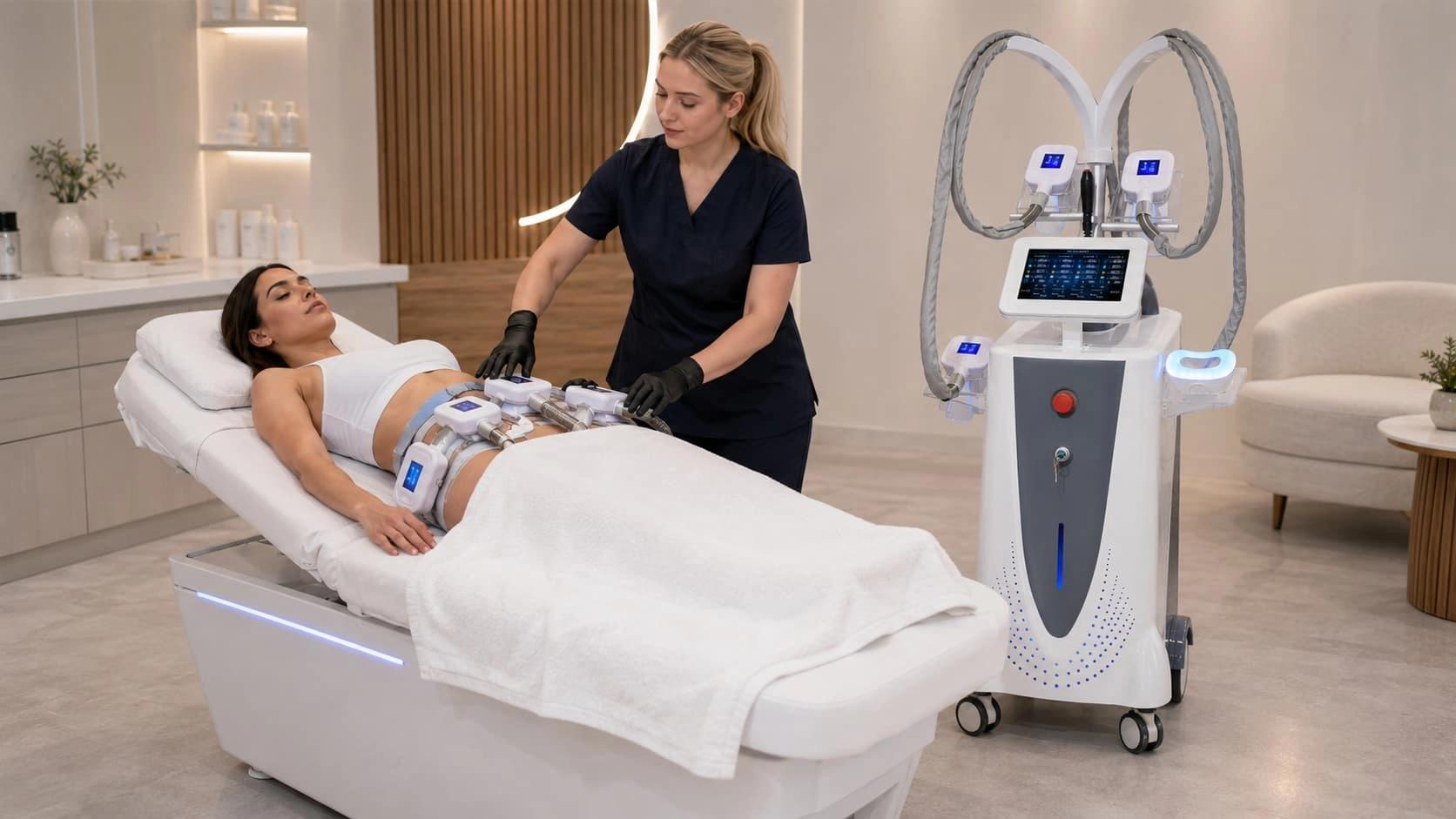
Depending on the device design and authorized indication, an applicator may use vacuum suction to draw a localized fat bulge into a treatment cup. A cooling system then delivers controlled thermal conditions to the selected area for a specified treatment period. Not every cryolipolysis device uses the same applicator configuration, and settings must follow the manufacturer's instructions and the device's authorized use.
The cooling process initiates a biological response in the treated tissue. Over time, the body's inflammatory and clearance mechanisms process affected fat cells and cellular debris. This gradual clearance is the primary reason that contour changes are delayed rather than immediate. The U.S. Food and Drug Administration describes the clearance process as typically occurring over approximately two to three months. FDA: Non-Invasive Body Contouring Technologies.
For professional practitioners, the key is controlled application—not simply achieving the lowest possible temperature. Applicator fit, treatment-area assessment, appropriate protective materials, device-specific parameters, and adherence to operating instructions all matter. Aggressive or improvised settings should never be used to try to accelerate results.
The Cryolipolysis Results Timeline: What Happens Week by Week?
Immediately after treatment: The beginning of the response
The treated area may appear red, swollen, firm, or temporarily uneven. Tenderness, bruising, tingling, or reduced sensation can occur. These early reactions are not reliable indicators of how much fat reduction will eventually occur.
Practitioners should document the baseline appearance and explain expected short-term reactions. Clients should follow the provider's aftercare instructions and report severe, persistent, or worsening symptoms promptly.
Weeks 1–2: Early recovery
During the first two weeks, temporary treatment-related effects may gradually settle, although the duration varies between individuals. The body is still processing the tissue response, so the absence of a visible contour change is not necessarily evidence that the procedure has failed.
Clinics should avoid promising a particular result during this early period. Instead, they can use this stage to answer aftercare questions and confirm whether the client is recovering as expected.
Weeks 3–4: Early visible changes may appear
Some clients begin to notice a subtle change in the treated contour after approximately three weeks. The difference may be easier to see in standardized photographs than in everyday mirror checks. Other clients may see little change at this stage.
Results can differ by treatment area, fat distribution, baseline anatomy, and individual biological response. An early improvement should be treated as a preliminary observation, not the final outcome.
Weeks 6–8: A useful checkpoint
As the body's clearance process continues, contour changes may become easier to assess. For professional clinics, this period can provide a useful opportunity to review photographs, measurements, client feedback, and the original treatment goals.
If further treatment is being considered, practitioners should first assess the response to the initial session, confirm that the client is an appropriate candidate, and follow device-specific and clinical guidance on treatment intervals. A second session should not be scheduled automatically simply because the client wants faster results.
Weeks 8–12: A clearer picture of the outcome
Many clients can assess their results more meaningfully around two to three months after treatment. By this point, the treated fat tissue has had more time to undergo the biological clearance process, and changes in the contour may be easier to compare with baseline records.
A systematic review and meta-analysis published in 2025 found reductions in several adiposity-related measurements at 12 weeks across the studies included. However, the findings do not guarantee the same outcome for every person or every treatment area. Systematic review and meta-analysis.
Months 3–6: Continued assessment when needed
Some clients may continue to observe changes over several months. A three-to-six-month window can be useful when assessing the overall outcome, especially when changes are subtle or a treatment plan involves multiple sessions. This does not mean every client must wait six months to see a difference; it means that final assessment should account for the gradual nature of the process.
Clinics should also monitor for delayed or unexpected changes. A firm, enlarging bulge developing in the treated area several months later requires professional evaluation because paradoxical adipose hyperplasia (PAH), a rare but recognized complication, can cause the treated fat tissue to enlarge rather than shrink. FDA safety information.
What Factors Influence How Quickly Results Become Visible?
Although the general timeline provides a useful guide, several factors influence the final appearance.
1. Treatment area and tissue characteristics
The abdomen, flanks, thighs, upper arms, and submental area differ in anatomy, fat distribution, and applicator requirements. Results in one body area should not be used to predict the exact timeline for another.
2. Individual biological response
Clients process affected tissue at different rates. Age, anatomy, the characteristics of the targeted fat layer, and individual healing responses may all influence how changes develop.
3. Treatment planning and applicator suitability
A suitable applicator must fit the treatment area and be used within its intended specifications. Treatment selection should be based on an assessment of the client's anatomy, goals, and eligibility—not simply on the availability of a particular applicator.
4. Baseline photographs and measurement methods
Lighting, posture, camera distance, clothing, and natural changes in body weight can affect how a result appears. Standardized photographs and consistent measurements provide a more reliable comparison than memory alone.
5. Lifestyle and expectations
Cryolipolysis does not prevent future weight gain or eliminate the need for healthy habits. Weight fluctuations can affect body contour and make treatment outcomes harder to interpret. Clients should understand that localized contour improvement is different from overall weight reduction.
Advantages and Comparison: Why Professional Cryolipolysis Systems Matter
For clinics and aesthetic businesses, the value of a professional cryolipolysis system extends beyond the cooling function. Equipment must support a consistent, documented, and appropriately supervised treatment process.
Controlled operation and treatment consistency
A professional system should provide clearly defined operating parameters and applicator-specific instructions. Consistency helps practitioners follow the intended protocol and document what was delivered. More cooling or a longer treatment is not automatically better and may increase risk when used outside authorized parameters.
Applicators designed for defined treatment areas
Different body areas may require different applicator shapes or sizes. The right configuration can help practitioners position the device appropriately for the client's anatomy, provided that the applicator is authorized for the intended area and used according to the manufacturer's instructions.
Support for consultation and follow-up
A professional treatment workflow includes baseline photography, measurements where appropriate, informed consent, suitability screening, treatment records, and follow-up. These steps help providers evaluate outcomes objectively and explain realistic timelines.
A clearer distinction from consumer home devices
Professional cryolipolysis should not be treated as interchangeable with unverified home-use fat-freezing products. The FDA states that the safety and effectiveness of over-the-counter or home-use fat-freezing devices have not been established. FDA guidance.
Professional equipment should be selected according to local regulatory requirements, intended use, operator qualifications, training, service support, and evidence supporting the specific device. A professional-looking interface or a manufacturer's performance claim alone is not proof of clinical effectiveness.
Applications and Client Needs: Building a Better Treatment Experience
Cryolipolysis may be considered by appropriately screened clients who want to address localized fat bulges that remain despite a stable lifestyle. Depending on the device's authorized indications, treatment areas may include the abdomen, flanks, thighs, upper arms, back, or under-chin region.
The most effective service model begins with an individual consultation. Practitioners should assess the target area, review the client's goals and medical history, explain realistic outcomes, and discuss alternative options where appropriate. Cryolipolysis is not suitable for everyone, including people with certain cold-related disorders or impaired circulation in the treatment area. A qualified provider should review contraindications and relevant risks before proceeding.
A practical client communication plan can include three stages:
- Before treatment: Explain the mechanism, eligibility criteria, expected timeline, possible side effects, and the fact that results are not immediate.
- After treatment: Provide clear aftercare instructions, record any early reactions, and explain when to contact the clinic.
- During follow-up: Compare standardized photographs and measurements, discuss satisfaction, and determine whether additional treatment or clinical evaluation is appropriate.
For distributors and manufacturers, this workflow also illustrates why product value should not be communicated through technical specifications alone. Applicator design, operating clarity, training resources, documentation support, maintenance, and after-sales service all contribute to how confidently a clinic can deliver its service.
A credible equipment supplier helps professional buyers understand the intended application, device limitations, safety requirements, and available technical support. This is more meaningful than promising rapid or guaranteed fat loss.
Conclusion
So, how long does cryolipolysis take to work? Some clients may notice subtle changes after approximately three weeks, while more noticeable contour improvement often develops over the next two to three months. Further changes may be assessed over a period of three to six months, depending on the individual and treatment plan.
The essential point is that fat freezing works through a gradual biological process, not an instant reduction in body weight. For professional clinics, successful treatment delivery depends on appropriate client selection, device-specific protocols, careful documentation, transparent communication, and follow-up.
Choosing a professional cryolipolysis system is therefore not simply a decision about cooling technology. It is a decision about supporting a controlled treatment workflow and a responsible client experience. When realistic expectations are combined with appropriate equipment and professional practice, clinics are better positioned to provide informed body contouring services and build long-term client trust
Founded in 2008, Guangzhou GLM Beauty Spa Equipment Factory specializes in research, development, manufacture and selling of beauty and slimming machines. Our production base is located in Guangzhou City, Guangdong Province, China. Since our foundation, we have introduced advanced technologies and equipment, to assure high quality and high performance of our products. With professional marketing guide and excellent after-sales service, our products have been exported to over 20 countries and regions, including Southeast Asia, the Middle East, Europe and the United States, won worldwide praises and gained a good reputation