Introduction
Unwanted hair remains one of the most common concerns among aesthetic clients, making hair removal services an important part of many professional beauty clinics, medical aesthetic centers, and salons. While traditional methods such as shaving, waxing, and depilatory products can provide temporary results, clients increasingly expect longer-lasting hair reduction, greater treatment efficiency, and a more comfortable professional experience.
This is where diode laser hair removal technology has become an important solution for the professional aesthetics industry.
A diode laser hair removal machine uses concentrated laser energy to target melanin in the hair and deliver controlled thermal energy toward the hair follicle. The objective is to damage the follicular structures responsible for hair growth while limiting unnecessary exposure to surrounding tissue. The U.S. FDA describes light-based hair-removal devices as systems that use thermal energy to target hair follicles for hair removal.
For clinics and professional operators, however, choosing a diode laser is not simply about selecting a machine with a high power rating. Wavelength, energy density, pulse duration, repetition rate, spot size, cooling technology, treatment control, and operator training all influence the overall treatment experience.
Understanding these factors can help clinics choose equipment that better matches their clients, treatment areas, and business model.
Background: Why Professional Hair Removal Technology Matters
Traditional hair-removal methods mainly work at the surface level.
Shaving cuts the hair shaft above the skin. Waxing removes the hair from the root, but the follicle remains capable of producing new hair. As a result, clients usually need to repeat these treatments regularly.
Laser hair removal takes a different approach.
Instead of mechanically removing visible hair, laser technology uses optical energy to selectively heat structures associated with the hair follicle. The goal is to reduce the follicle's ability to produce hair over a series of treatments.
Hair growth is not synchronized across the entire body. Different follicles can be in different stages of the growth cycle at the same time. This is one reason professional laser hair reduction generally requires a treatment plan involving multiple sessions rather than a single procedure.
For clinics, this creates an opportunity to develop hair-removal programs instead of offering one-time services.
A well-designed treatment program can include consultation, skin and hair assessment, parameter selection, treatment, aftercare guidance, and follow-up appointments. The machine becomes part of a broader professional service rather than simply another piece of salon equipment.
Technology and Mechanism: How Diode Laser Hair Removal Works
The basic principle behind diode laser hair removal is the controlled delivery of laser light to the treatment area.
Laser light has a specific wavelength, meaning the distance between successive peaks of the light wave. Different wavelengths interact differently with melanin and biological tissue.
During treatment, the laser energy is absorbed preferentially by pigment within the hair. The absorbed optical energy is converted into heat, creating a localized thermal effect around the follicular structure.
The fundamental concept is often associated with selective photothermolysis: using an appropriate wavelength and treatment parameters to create a desired thermal effect in a target structure while minimizing unnecessary heating of surrounding tissue.
This balance is particularly important in professional treatments because the skin itself contains melanin.
Why Wavelength Matters
Professional diode laser systems commonly use wavelengths around 755nm, 808nm, or 810nm, while some multi-wavelength systems combine 755nm, 808nm, and 1064nm technologies.
These wavelengths have different optical characteristics.
755nm has relatively strong melanin absorption and can be useful when targeting finer or more superficial hair. Because melanin absorption is higher, treatment parameters need to be carefully selected according to the client's skin characteristics.
808nm is widely used in diode laser hair-removal systems and provides a practical balance between melanin absorption and penetration depth. It is commonly positioned as a versatile wavelength for professional body-hair treatments.
1064nm has lower melanin absorption and deeper penetration characteristics. It can therefore be relevant when professional operators are working with deeper follicles or clients with higher levels of epidermal pigmentation, subject to the specific device, indication, regulations, and treatment protocol.
Importantly, a three-wavelength machine should not simply be marketed as “three times more powerful.” Its value is primarily greater treatment flexibility. Recent professional equipment discussions similarly emphasize that combining 755nm, 808nm, and 1064nm can give clinics more options for different hair characteristics and treatment scenarios, but wavelength selection must still be matched with appropriate parameters and cooling.
The Role of Cooling Technology
Laser energy creates heat, so cooling is an important part of modern professional hair-removal systems.
An effective cooling system can help protect the skin surface, improve client comfort, and allow operators to perform treatments more consistently.
Depending on the machine design, cooling may be provided through technologies such as contact cooling, sapphire cooling, water circulation, air cooling, or combinations of different cooling methods.
For busy clinics, cooling performance is not merely a comfort feature.
It can influence:
- Client treatment comfort
- Skin-surface protection
- Operator confidence
- Treatment consistency
- Workflow efficiency
- Overall client experience
This is one area where professional equipment design becomes particularly important. A system intended for frequent clinic use needs to integrate energy delivery and cooling into one controlled treatment platform.
Advantages of Diode Laser Hair Removal for Professional Clinics
1. Long-Term Hair Reduction
One of the biggest reasons clients choose professional laser hair-removal services is the potential for long-term reduction in hair regrowth.
Unlike shaving, which only cuts the visible hair, laser treatment aims to affect the follicular structures responsible for hair production.
The FDA's device classification describes light-based hair-removal systems as using thermal energy to target hair follicles. Some cleared devices are indicated for permanent reduction in hair regrowth, defined by specific long-term measurements following a completed treatment regime.
For clinics, this makes laser hair reduction a service that can be developed around a structured series of appointments.
2. Treatment Efficiency
Large treatment areas such as the legs, arms, back, chest, and abdomen can be time-consuming with traditional methods.
Modern professional laser systems can use relatively large treatment spots and rapid repetition rates to improve treatment efficiency, depending on the specific machine configuration.
For a clinic, shorter treatment times can translate into better room utilization and a more efficient daily schedule.
3. Adjustable Treatment Parameters
Different clients do not have identical skin tones, hair thickness, hair density, or follicle depth.
Professional machines therefore need adjustable parameters rather than a one-setting-fits-all approach.
Common controllable parameters may include:
- Energy density
- Pulse duration
- Frequency
- Treatment mode
- Spot size
- Cooling level
This adjustability allows trained operators to create treatment protocols according to the client's characteristics and the treatment area.
4. Better Service Positioning
Adding professional laser hair removal can also expand the service portfolio of a beauty clinic.
Instead of competing primarily on the price of waxing or shaving, clinics can position laser hair reduction as a technology-based professional service.
This can support package-based treatment plans, repeat appointments, consultation services, and broader aesthetic-care programs.
Diode Laser vs. Traditional Hair Removal Methods
The main difference is the target of the treatment.
| Method | Primary Target | Typical Result | Professional Equipment Requirement |
|---|---|---|---|
| Shaving | Hair shaft | Short-term hair removal | Low |
| Waxing | Hair above/root level | Temporary hair removal | Low to moderate |
| Depilatory products | Hair shaft | Temporary hair removal | Low |
| Diode laser | Hair follicle | Long-term reduction with a treatment course | High |
The comparison does not mean that traditional hair removal methods have no value. They remain useful for maintenance and for clients who are not candidates for laser treatment.
However, diode laser technology allows clinics to offer a different category of service based on controlled optical energy.
Professional Diode Laser vs. Home Hair-Removal Devices
The growth of consumer beauty technology has made home hair-removal devices more accessible. However, professional clinic systems are designed around a different use case.
Professional equipment typically provides greater control over treatment parameters, larger treatment areas, more sophisticated cooling configurations, and interfaces designed for trained operators.
The FDA also distinguishes between consumer and professional laser products, noting that some lasers are intended for professional use and may require appropriate training and licensing depending on the product and jurisdiction.
For professional clinics, the key advantage is therefore not simply “more power.”
It is more control.
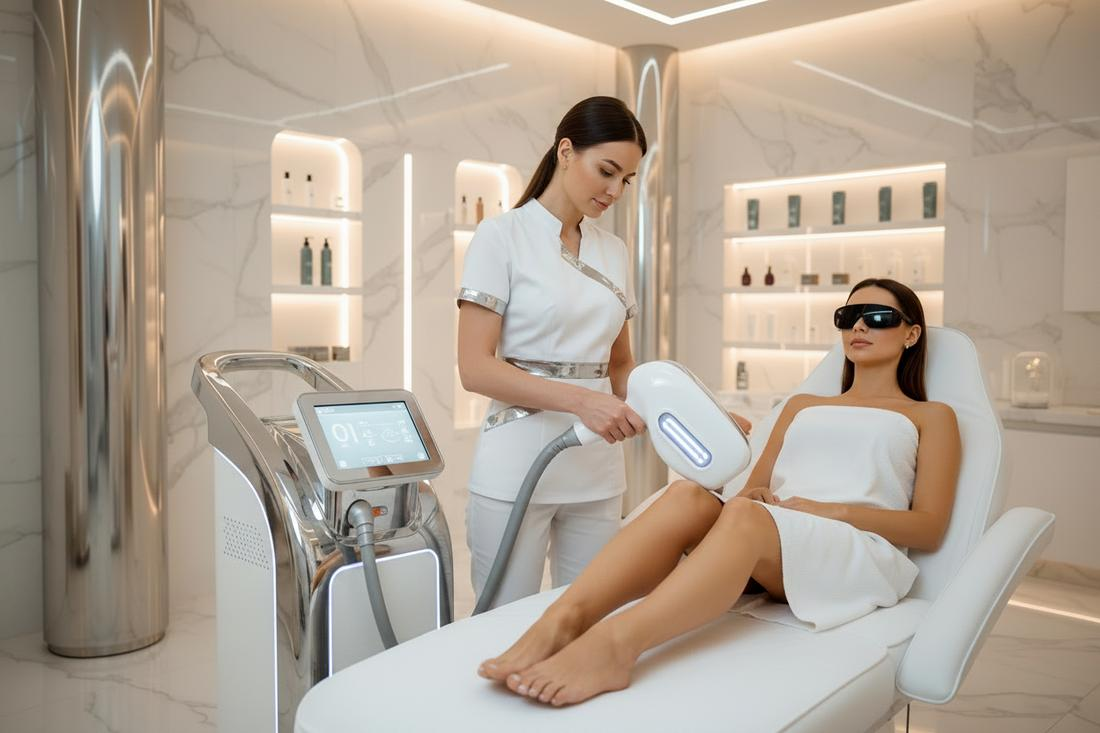
An experienced operator can assess the client's skin and hair characteristics, select an appropriate protocol, monitor the treatment response, and adjust parameters when necessary.
This combination of equipment and professional operation is difficult to replicate with a simplified home device.
Applications: Where Diode Laser Hair Removal Can Be Used
Diode laser systems can be incorporated into a wide range of professional hair-removal services.
Facial Hair
Common treatment areas include:
- Upper lip
- Chin
- Jawline
- Sideburn area
- Selected facial regions
Facial treatments require particular attention to skin sensitivity, hair characteristics, and parameter selection.
Underarms
Underarm hair is one of the most common areas requested by clients.
Because the treatment area is relatively small, a professional operator can typically focus on accurate coverage and client comfort.
Arms and Legs
Large areas such as the arms and legs are well suited to efficient professional laser workflows.
A suitable spot size and fast repetition rate can help reduce treatment time.
Bikini Area
The bikini area is another popular application.
Because hair in this region can be coarse and follicles may be relatively deep, treatment settings should be selected according to individual client characteristics and the manufacturer's approved protocol.
Back and Chest
For male clients in particular, back and chest hair reduction can become a valuable recurring service.
Large treatment areas make treatment speed, handpiece ergonomics, cooling performance, and machine reliability particularly important.
What Clinics Should Look for When Choosing a Diode Laser Machine
A professional clinic should evaluate a diode laser from both a technical and operational perspective.
1. Wavelength Configuration
Consider whether a single-wavelength system is sufficient or whether a multi-wavelength platform would better match your client base.
A 755nm/808nm/1064nm configuration can provide broader technical flexibility, but the actual performance depends on the device's optical design, energy delivery, cooling, and treatment protocols.
2. Cooling System
Cooling should be evaluated as seriously as laser output.
Look for stable cooling performance, practical handpiece design, and a system capable of supporting repeated treatments.
3. Handpiece Ergonomics
Operators may perform multiple treatments per day.
A lightweight, comfortable handpiece can reduce operator fatigue and improve handling, especially when treating large areas.
4. Spot Size and Treatment Speed
Large spot sizes can improve coverage on large body areas, while suitable repetition rates can help create a smoother workflow.
The ideal configuration depends on the clinic's treatment volume and service mix.
5. User Interface and Parameter Control
A clear interface makes it easier for trained operators to select and monitor treatment parameters.
For professional environments, usability can be just as important as technical specifications.
6. Reliability and After-Sales Support
A laser hair-removal machine is a business asset.
For clinics, reliability, component quality, operator training, warranty coverage, spare parts, technical support, and service response can directly affect long-term operating costs.
A machine with impressive specifications but weak after-sales support may create more operational problems than expected.
Meeting Modern Client Expectations
Today's aesthetic clients increasingly look beyond basic hair removal.
They want treatments that are:
- Efficient
- Comfortable
- Professionally delivered
- Personalized
- Consistent
- Supported by modern technology
This changes the role of the clinic.
The equipment is no longer simply a tool for removing hair. It becomes part of the client's overall treatment experience.
A professional diode laser platform can support this shift by combining controlled energy delivery, cooling technology, adjustable parameters, ergonomic handpieces, and efficient workflows.
For equipment manufacturers and distributors, this also means that product development should focus on the complete treatment system rather than a single headline specification.
Conclusion
Diode laser hair removal has become an important technology in the professional aesthetics industry because it offers a targeted approach to reducing unwanted hair through controlled optical energy.
Its effectiveness depends on more than wavelength alone. The interaction between wavelength, energy density, pulse parameters, cooling, spot size, skin characteristics, hair characteristics, and professional operation determines how the technology can be applied in real-world settings.
For clinics, choosing the right machine means looking beyond marketing claims and evaluating the entire treatment platform.
A well-designed professional diode laser system can help clinics expand their hair-removal services, improve workflow efficiency, provide more personalized treatments, and create a technology-driven client experience.
As the professional beauty industry continues to evolve, the strongest equipment solutions will not necessarily be the machines with the biggest specifications. They will be the systems that combine appropriate technology, reliable performance, intelligent controls, effective cooling, operator usability, and practical clinic applications.
For professional beauty clinics and aesthetic centers, that is the real value of modern diode laser hair-removal technology
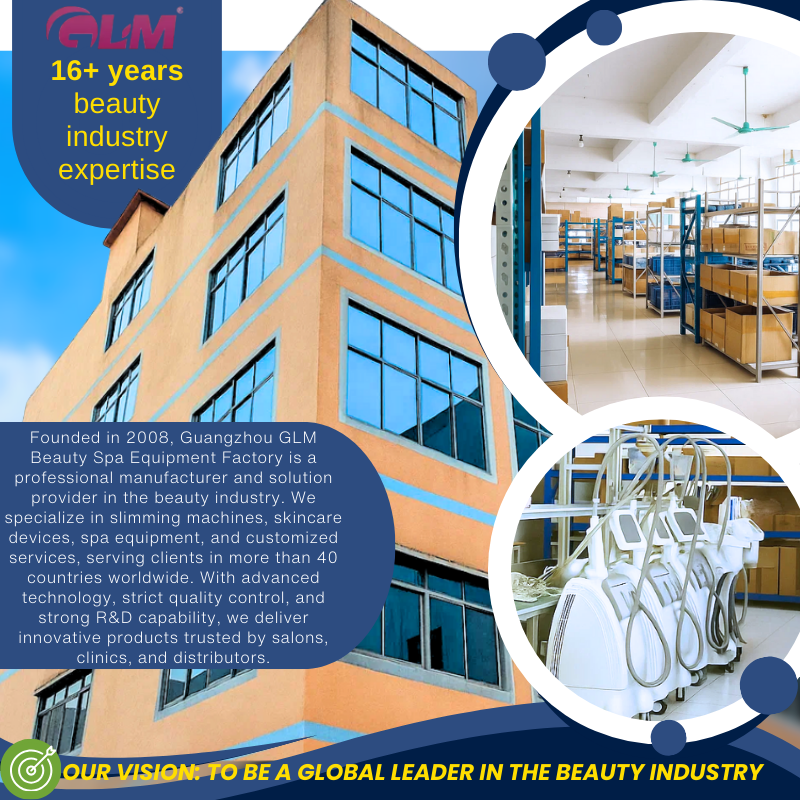
Founded in 2008, Guangzhou GLM Beauty Spa Equipment Factory specializes in research, development, manufacture and selling of beauty and slimming machines. Our production base is located in Guangzhou City, Guangdong Province, China. Since our foundation, we have introduced advanced technologies and equipment, to assure high quality and high performance of our products. With professional marketing guide and excellent after-sales service, our products have been exported to over 20 countries and regions, including Southeast Asia, the Middle East, Europe and the United States, won worldwide praises and gained a good reputation