Introduction
The beauty industry is entering a technology-driven phase in which advanced equipment is no longer judged simply by how powerful it is. In 2026, aesthetic clinics, medspas, dermatology practices, and professional beauty salons are increasingly looking for technologies that can improve treatment precision, personalize client experiences, simplify workflows, and create measurable value.
Artificial intelligence, advanced imaging, energy-based treatments, multifunctional platforms, connected devices, and increasingly intelligent control systems are reshaping how professional beauty services are delivered. Current industry discussions point particularly toward AI-assisted treatment planning, hybrid platforms, and data-driven workflows as important directions for aesthetic businesses.
At the same time, clients are becoming more informed. They want treatments that are not only comfortable and convenient but also professionally explained and tailored to their individual concerns.
This shift creates an important opportunity for professional beauty equipment. The future is not necessarily about replacing the operator with technology. Instead, it is about giving trained professionals better tools to analyze, treat, monitor, and communicate with clients.
So, which emerging technologies are likely to define the beauty industry in 2026 and beyond?
Background: Why Beauty Technology Is Changing
For many years, professional beauty equipment was organized around individual treatment technologies. A clinic might invest in an RF machine for skin tightening, a laser platform for hair reduction, an LED system for phototherapy, or an ultrasound device for specific aesthetic applications.
That model is changing.
Today's operators increasingly need equipment that can support multiple treatment objectives while maintaining professional control. Clients may arrive with several concerns at once: uneven skin tone, visible pores, loss of firmness, signs of aging, body contouring concerns, or simply a desire for healthier-looking skin.
At the same time, competition between beauty clinics has increased. A machine that performs only one function may not always provide the flexibility required to build a broader treatment menu.
The result is a move toward intelligent, multifunctional, data-supported aesthetic technology.
The emergence of AI-powered skin analysis is one example. Modern imaging systems can evaluate visible characteristics such as wrinkles, pigmentation, pores, redness, and texture, helping professionals organize consultation information and monitor changes over time. Importantly, AI is best viewed as a decision-support technology rather than a replacement for professional judgment.
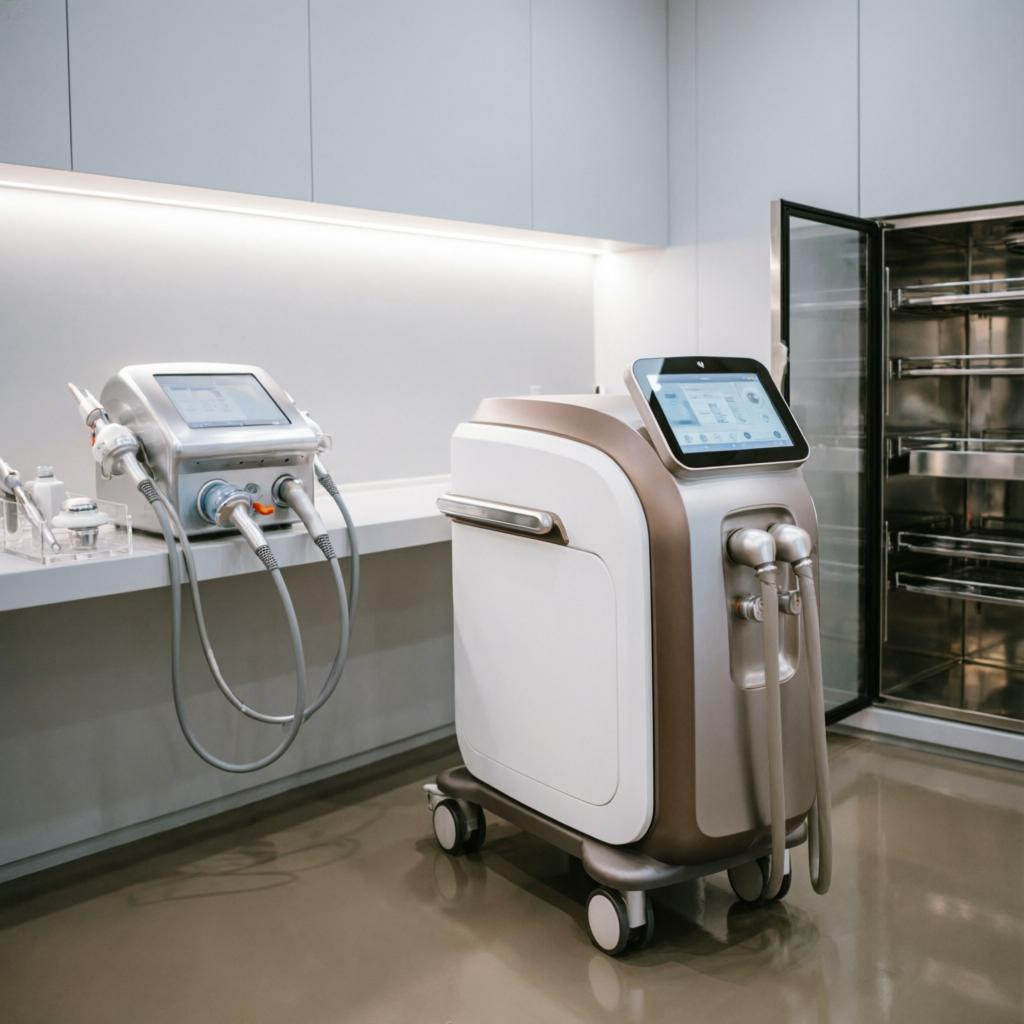
Meanwhile, RF, ultrasound, HIFU, LED, laser, EMS, vacuum, and other energy-based technologies continue to evolve toward greater control and versatility.
1. AI-Powered Skin Analysis and Personalized Treatment Planning
Artificial intelligence is likely to become one of the most influential technologies in professional aesthetics.
Traditional skin consultations depend heavily on visual observation, client descriptions, photographs, and operator experience. These remain valuable, but AI-assisted imaging can introduce another layer of standardized information.
A professional skin analysis system typically combines digital imaging, computer vision, image processing, and algorithmic analysis. Depending on the system, it may identify or quantify visible characteristics such as:
- Fine lines and wrinkles
- Pigmentation and uneven skin tone
- Pore appearance
- Redness
- Skin texture
- Oil-related characteristics
- Visible signs of photoaging
The real value is not simply generating a colorful skin report.
For a professional clinic, the information can help create a more structured consultation process.
For example, a client can receive a skin analysis before starting a treatment program. The professional can then combine the assessment with appropriate technologies such as RF, LED, ultrasound, or other treatments. After several sessions, new images can be captured and compared with the initial baseline.
This transforms the consultation from a one-time conversation into a measurable treatment journey.
It can also improve communication. Instead of simply telling a client that their skin "looks dehydrated" or "needs tightening," an operator can explain visible concerns using standardized images and measurements.
However, responsible implementation matters. AI results can be influenced by lighting, image quality, algorithm design, and training data. Recent research also highlights challenges around how AI systems generalize across different dermatological conditions and populations.
For this reason, the strongest professional model is likely to be:
AI analysis + professional evaluation + customized treatment + progress monitoring.
2. Advanced RF and Controlled Energy Delivery
Radiofrequency technology is not new, but the way RF is being integrated into professional beauty equipment continues to evolve.
RF devices deliver electromagnetic energy that produces controlled thermal effects in tissue. Depending on the device configuration, frequency, electrode design, energy level, treatment area, and control system, RF can be incorporated into professional programs focused on skin firmness and rejuvenation.
The important trend for 2026 is not simply "more energy."
It is better-controlled energy.
Professional operators need to control parameters according to the treatment area and client requirements. Facial areas, the jawline, neck, abdomen, arms, and other body areas may require different treatment approaches.
Modern systems can therefore focus on adjustable intensity, treatment modes, ergonomic handpieces, temperature monitoring, and more precise energy delivery.
Clinical and industry discussions continue to identify RF as an important energy-based technology for collagen-related skin rejuvenation applications.
For clinics, this means RF can function as more than a single treatment. With appropriate configurations and professional protocols, it can become part of a broader treatment portfolio.
3. HIFU and Precision Ultrasound Technology
High-Intensity Focused Ultrasound, or HIFU, represents another important direction in non-invasive aesthetic technology.
Unlike technologies that distribute energy more broadly across the treatment surface, focused ultrasound can concentrate acoustic energy at selected depths. This makes precision an important characteristic of HIFU-based treatment systems.
In professional environments, ultrasound technologies can be considered when clients are looking for non-invasive approaches to skin tightening and rejuvenation.
The technology also demonstrates an important principle that will continue to shape beauty equipment in 2026:
Treatment effectiveness is not determined by power alone.
Depth, energy distribution, treatment parameters, handpiece design, and operator technique all influence how a technology is applied.
This is one reason professional equipment remains valuable. A clinic environment provides trained operators who can select appropriate parameters, position the handpiece correctly, follow treatment protocols, and adjust the procedure according to the client's needs.
4. Multi-Technology and Hybrid Beauty Platforms
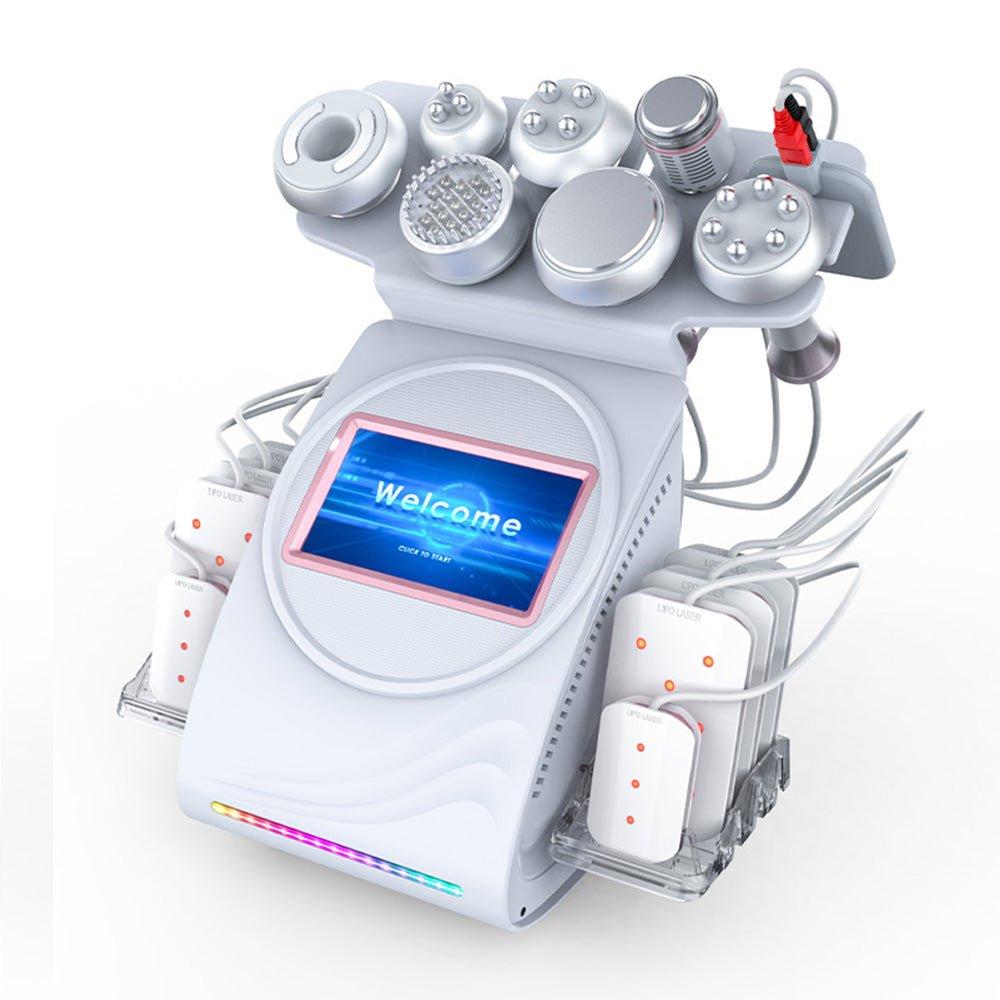
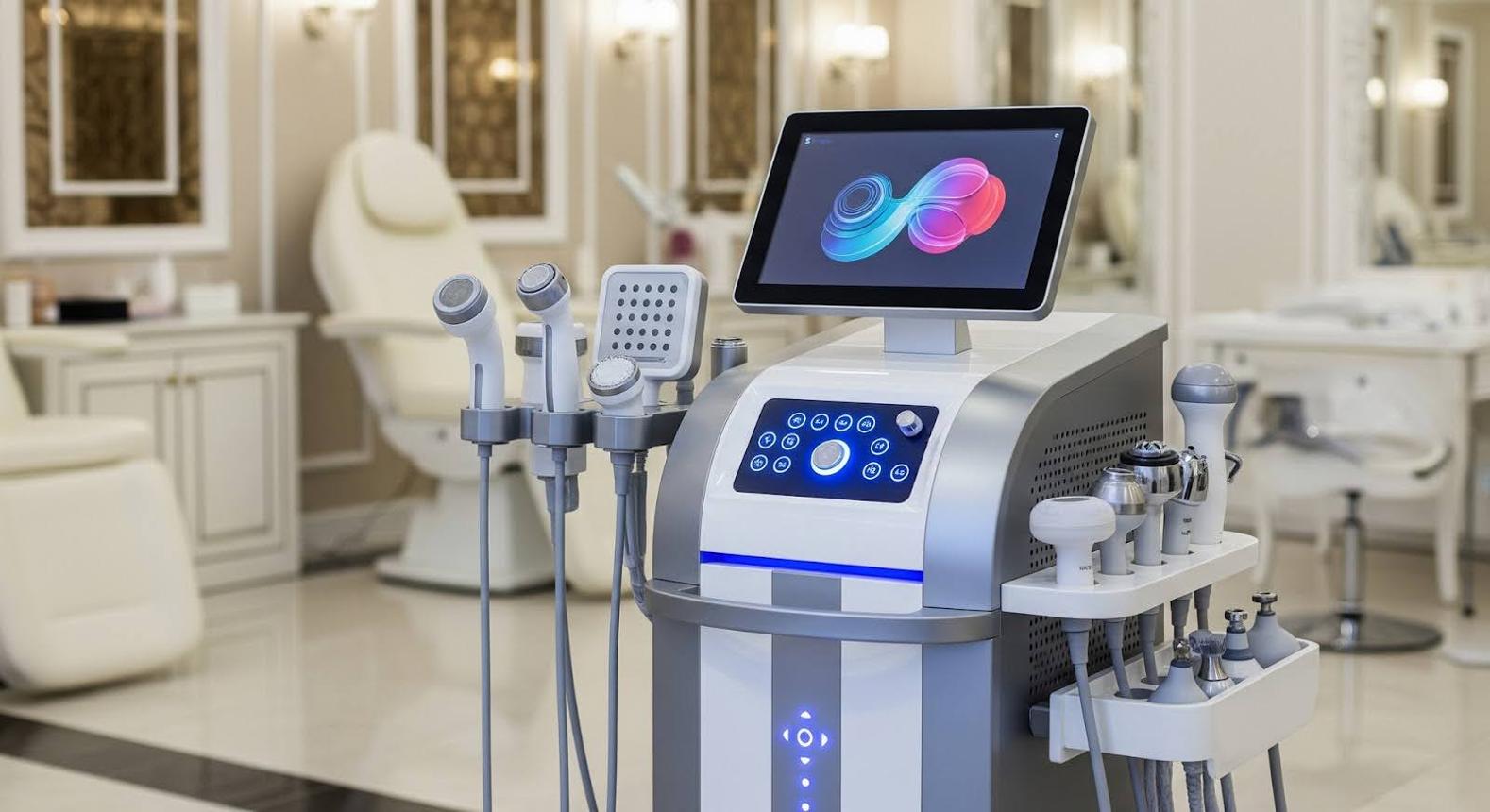
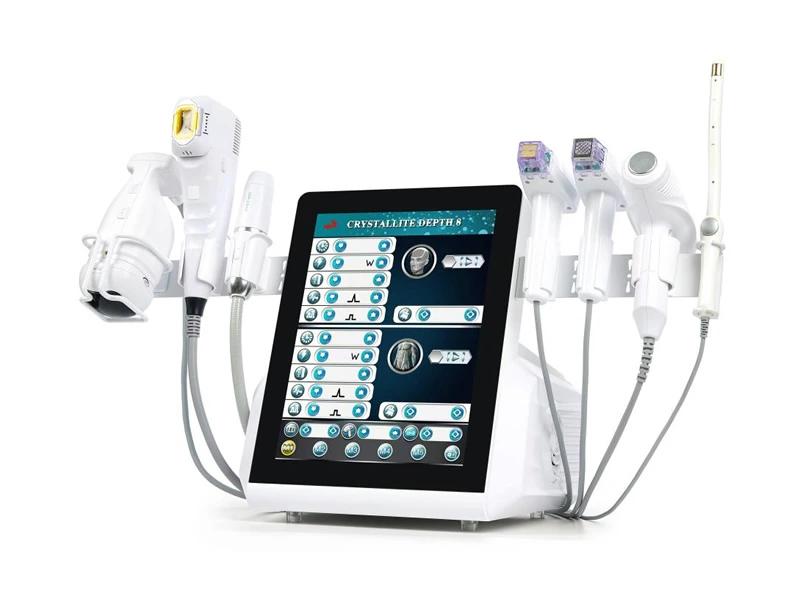
One of the clearest equipment trends for 2026 is the development of multifunctional and hybrid platforms.
Instead of purchasing separate machines for every treatment, clinics can increasingly consider platforms that combine complementary technologies.
Examples may include combinations such as:
- RF + vacuum
- RF + EMS
- RF + LED
- Ultrasound + RF
- Vacuum + cavitation
- LED + cooling or thermal functions
- Multiple facial and body handpieces in one system
The commercial advantage is straightforward.
A multifunctional system can potentially help a clinic create more treatment packages, serve different client needs, and use one equipment platform across multiple service categories.
Industry trend reports also identify hybrid platforms as a major direction in professional aesthetics because practices can gain treatment versatility without necessarily purchasing several independent systems.
However, multifunctionality should not mean unnecessary complexity.
A good professional platform should provide clear operating modes, logical parameter adjustment, ergonomic handpieces, straightforward maintenance, and appropriate safety features.
The goal is not to put as many functions as possible into one machine.
The goal is to create a useful treatment ecosystem.
5. Next-Generation LED and Photobiomodulation
LED technology is another area receiving continued attention.
LED-based treatments use specific wavelengths of light to interact with biological processes in the skin. Red and near-infrared light, for example, are commonly associated with photobiomodulation and are being incorporated into both professional and consumer beauty devices.
In 2026, LED technology is moving beyond the traditional concept of a simple light mask.
Newer systems are exploring:
- Multiple wavelengths
- More uniform light distribution
- Adjustable treatment modes
- Facial and body applications
- Combination with cooling or thermal functions
- Integration with other technologies
Recent 2026 beauty coverage shows how LED systems are increasingly combining multiple wavelengths and additional technologies, while manufacturers are focusing on coverage and more targeted treatment designs.
For professional clinics, LED can be particularly useful as part of customized facial programs or as a complementary technology within broader treatment protocols.
Its non-invasive nature also makes it attractive for businesses seeking treatment options that can fit into recurring skincare programs.
6. Smart EMS and Electrical Stimulation
Electrical stimulation technologies are also becoming more sophisticated.
EMS, or Electrical Muscle Stimulation, uses controlled electrical impulses to stimulate muscles. In beauty applications, EMS may be incorporated into facial or body-focused treatments depending on the equipment design and intended use.
The emerging trend is not simply stronger electrical stimulation.
Instead, manufacturers are focusing on:
- More controlled pulse patterns
- Adjustable intensity
- Multiple operating modes
- Ergonomic applicators
- Combination with RF or LED
- Easier professional operation
For clinics, combination technologies can be particularly interesting because they allow different treatment objectives to be addressed within a single service concept.
A professional operator can also determine when EMS is appropriate, select suitable parameters, and integrate it into a broader treatment program.
This creates a distinction between professional systems and many consumer-oriented gadgets: professional equipment can be designed around repeatable protocols and operator-controlled treatment parameters, rather than simply convenience.
7. Connected Beauty Devices and Treatment Data
Another emerging technology is connectivity.
In the future, professional beauty equipment will increasingly be connected to digital systems that help clinics manage treatment information, client histories, operating parameters, and progress records.
Imagine a workflow in which:
- A client receives an AI-assisted skin analysis.
- The operator creates a personalized treatment plan.
- The selected device records treatment information.
- Progress images are stored digitally.
- The client returns for follow-up analysis.
- The professional compares previous and current information.
This type of workflow can create a more consistent client experience.
It can also help business owners understand which treatments are frequently used, which services generate repeat visits, and how equipment contributes to overall business performance.
The industry is gradually moving from individual machines toward connected treatment ecosystems.
For equipment manufacturers, this creates another opportunity: hardware design increasingly needs to consider software, interfaces, data management, and user experience.
8. More Personalized and Modular Treatment Systems
Personalization will also influence the physical design of beauty equipment.
A single fixed treatment protocol is not ideal for every client. Skin type, treatment area, sensitivity, age, lifestyle, previous treatments, and desired outcomes can all influence how a professional approaches a service.
As a result, modular equipment can become increasingly valuable.
Interchangeable handpieces, adjustable energy levels, multiple treatment modes, and customizable protocols allow professionals to adapt a machine to different services.
For example, a clinic may use different handpieces for facial treatment and body treatment, while changing operating parameters according to the target area.
This flexibility can improve equipment utilization and help clinics create more specialized service menus.
It also makes equipment selection more strategic. Instead of asking only, "How powerful is this machine?" operators may increasingly ask:
How many professional treatment scenarios can this platform support?
Applications: What These Technologies Mean for Professional Beauty Businesses
The convergence of these technologies creates several important applications.
Aesthetic Clinics
Clinics can combine AI-assisted consultation with RF, HIFU, LED, ultrasound, laser, or other technologies to create more structured treatment programs.
Professional Beauty Salons
Salons can use multifunctional platforms to expand their service menus without necessarily investing in a separate machine for every individual function.
Medspas
Medspas can benefit from connected workflows that combine consultation, treatment, documentation, and follow-up.
Skin Rejuvenation Programs
RF, LED, ultrasound, and other technologies can be incorporated into recurring professional programs designed around long-term skin management rather than one-time treatments.
Body Aesthetic Services
Vacuum, RF, EMS, cavitation, and related technologies can support different body-focused services depending on the device specifications, operator training, and applicable local regulations.
Professional Equipment vs. Consumer Beauty Devices
The growth of home beauty technology does not necessarily reduce the value of professional equipment.
Instead, it can make the distinction between the two categories more important.
Consumer devices typically prioritize convenience, portability, simple operation, and lower energy levels. Professional systems can place greater emphasis on treatment flexibility, parameter control, larger treatment areas, specialized handpieces, workflow integration, and operator supervision.
This distinction is becoming particularly important as home-use RF, LED, microcurrent, and other devices become increasingly popular.
For professional businesses, the competitive advantage is therefore not simply owning a stronger machine.
It is being able to combine technology + professional expertise + personalized protocols + client management.
That combination is much harder to replicate with a consumer gadget.
Conclusion
The beauty industry in 2026 is moving toward a smarter, more connected, and more personalized model of professional treatment.
AI-powered skin analysis can make consultations more structured. Advanced RF and ultrasound systems can improve control over energy-based treatments. HIFU continues to represent precision-focused ultrasound technology. Multifunctional platforms can help clinics build broader treatment portfolios. LED and EMS technologies are becoming more sophisticated, while connected systems are beginning to link analysis, treatment, and progress tracking into a single workflow.
But the most important development may not be any individual technology.
It is the integration of technologies into professional treatment systems.
The future beauty clinic may not be defined by one famous machine. Instead, it may be defined by how effectively the clinic combines intelligent analysis, professional equipment, trained operators, personalized protocols, and measurable client experiences.
For beauty equipment manufacturers and professional operators, this creates a clear direction for investment: build equipment that is not only technologically advanced, but also practical, adaptable, easy to operate, and capable of creating real value within the professional treatment environment.
In 2026, the next generation of beauty technology is becoming less about simply adding more functions—and more about making every treatment smarter, more precise, more personalized, and more professionally delivered
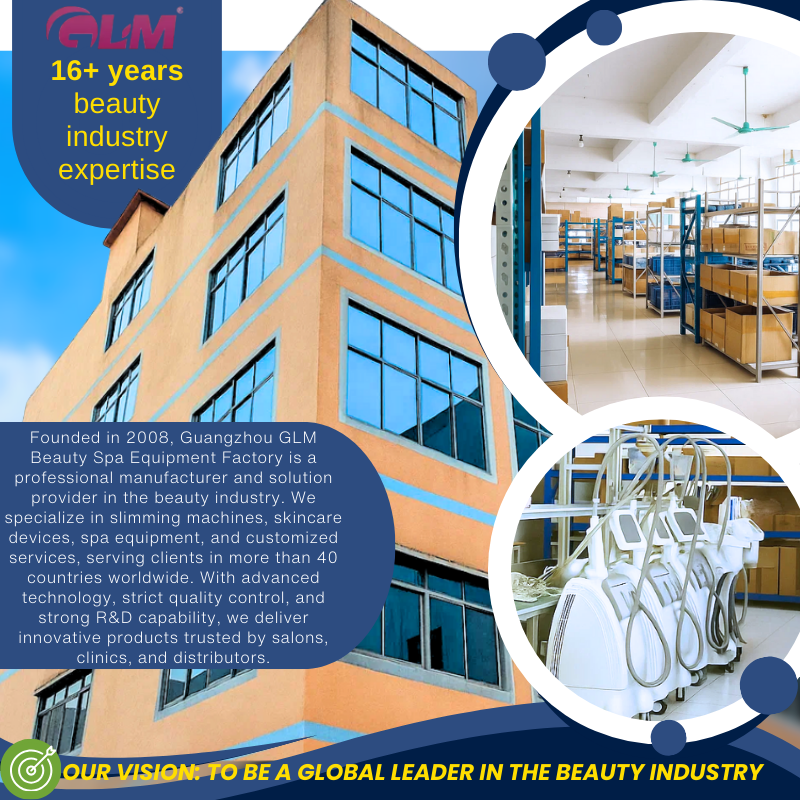
Founded in 2008, Guangzhou GLM Beauty Spa Equipment Factory specializes in research, development, manufacture and selling of beauty and slimming machines. Our production base is located in Guangzhou City, Guangdong Province, China. Since our foundation, we have introduced advanced technologies and equipment, to assure high quality and high performance of our products. With professional marketing guide and excellent after-sales service, our products have been exported to over 20 countries and regions, including Southeast Asia, the Middle East, Europe and the United States, won worldwide praises and gained a good reputation