Introduction
Body contouring has become one of the fastest-growing segments in the aesthetics industry. As more clients seek non-invasive treatments to improve body shape and confidence, beauty professionals frequently encounter questions about common body concerns.
Among the most misunderstood are hip dips and love handles. Many people assume they are the same thing because both affect the silhouette of the waist and hips. However, these concerns have very different causes, appearances, and treatment approaches.
Understanding the distinction is essential not only for clients but also for aesthetic clinics, beauty salons, and body contouring specialists. Proper assessment allows practitioners to recommend more effective treatment plans and achieve better client satisfaction.
In this article, we explore the differences between hip dips and love handles, explain the technologies commonly used in professional body contouring treatments, and discuss how modern aesthetic devices can help create a more balanced body shape.
Background / Problem
What Are Hip Dips?
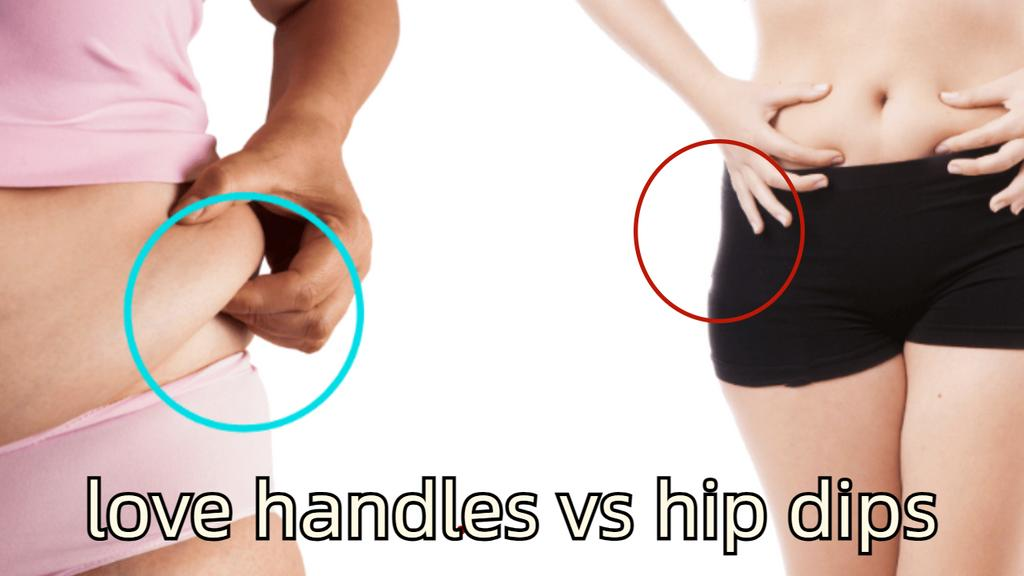
Hip dips, sometimes called "violin hips," refer to the inward curves located between the hips and upper thighs.
They are primarily determined by:
- Bone structure
- Pelvic shape
- Femur positioning
- Muscle distribution
- Genetics
Hip dips are a completely natural anatomical feature. Even individuals with low body fat percentages can have noticeable hip dips.
The key point is that hip dips are not caused by excess fat.
This is why traditional weight loss methods often have little effect on reducing their appearance.
What Are Love Handles?
Love handles refer to localized fat deposits that accumulate around the sides of the waist and lower abdomen.
Common contributing factors include:
- Excess calorie intake
- Sedentary lifestyle
- Hormonal changes
- Aging
- Genetic fat distribution patterns
Unlike hip dips, love handles are directly related to fat accumulation.
As body fat increases, love handles typically become more visible and may affect the overall waistline definition.
Why Clients Often Confuse Them
Both concerns affect the side profile of the body.
From a visual perspective:
- Hip dips create an inward indentation.
- Love handles create outward fullness.
When viewed together, they can make the waist-to-hip transition appear uneven.
As a result, many clients mistakenly believe they are dealing with a single issue when, in reality, multiple anatomical factors may be involved.
This distinction is crucial because treatment strategies differ significantly.
Technology / Mechanism
Professional body contouring devices are designed to address different tissue layers, including fat, skin, connective tissue, and muscle.
Understanding the underlying mechanism helps practitioners choose the appropriate technology.
Technologies Commonly Used for Love Handles
1. Ultrasonic Cavitation
40K cavitation technology uses low-frequency ultrasound waves to target fat cells.
The ultrasound energy creates microscopic bubbles within fatty tissue, disrupting fat cell membranes and facilitating natural metabolic elimination.
Potential benefits include:
- Reduction of localized fat deposits
- Improved body contour definition
- Non-invasive treatment experience
- Suitable for waist and flank areas
Because love handles are primarily fat-related, cavitation remains one of the most popular technologies in body contouring clinics.
2. Radio Frequency (RF)
RF technology delivers controlled heat into deeper tissue layers.
Benefits may include:
- Skin tightening
- Improved elasticity
- Enhanced collagen production
- Better contouring results after fat reduction
Combining RF with cavitation is a common protocol for treating love handles because fat reduction and skin tightening often work best together.
3. Vacuum Therapy and Roller Massage
Vacuum-assisted technologies help stimulate:
- Blood circulation
- Lymphatic drainage
- Tissue mobilization
These systems are commonly integrated into professional body contouring platforms to improve treatment efficiency and client comfort.
Technologies Relevant to Hip Dips
Since hip dips are not primarily a fat issue, the objective is different.
Professional treatments often focus on:
- Improving skin firmness
- Enhancing muscle tone
- Creating smoother body transitions
- Improving overall contour balance
EMS Muscle Stimulation
Electrical Muscle Stimulation (EMS) technology triggers muscle contractions that mimic exercise activity.
Potential benefits include:
- Increased muscle engagement
- Improved muscle tone
- Enhanced body shaping outcomes
For some clients, strengthening the gluteal muscles can help create a fuller appearance around the hip region, reducing the visual prominence of hip dips.
Radio Frequency for Skin Quality
Although RF cannot change bone structure, it may improve:
- Skin texture
- Tightness
- Elasticity
These improvements can contribute to a smoother and more refined appearance.
Advantages / Comparison
Hip Dips vs Love Handles: Key Differences
| Factor | Hip Dips | Love Handles |
|---|---|---|
| Main Cause | Bone structure & anatomy | Fat accumulation |
| Natural Feature | Yes | No |
| Related to Weight Gain | Usually not | Yes |
| Can Exercise Remove It? | Limited | Sometimes |
| Fat Reduction Needed? | Usually not | Often yes |
| Common Professional Treatments | EMS, RF | Cavitation, RF, Vacuum |
Understanding these differences prevents unrealistic expectations.
For example, a client seeking to "remove hip dips" through aggressive fat reduction may actually worsen the indentation because reducing surrounding fat can make the dip more noticeable.
This highlights the importance of professional consultation and individualized treatment planning.
Why Professional Assessment Matters
Successful body contouring is rarely achieved through a one-size-fits-all approach.
Experienced practitioners evaluate:
- Body composition
- Fat distribution
- Muscle structure
- Skin quality
- Client goals
This comprehensive assessment helps determine whether the concern is primarily related to fat, muscle, skin laxity, or anatomical structure.
Professional-grade equipment offers multiple technologies that can be combined according to individual needs, providing more customized outcomes than single-function home devices.
Applications / Client Needs
Common Client Scenarios
Scenario 1: Visible Love Handles with Loose Skin
Recommended technologies:
- Cavitation
- Radio Frequency
- Vacuum Therapy
Goal:
- Reduce localized fat
- Tighten skin
- Improve waistline definition
Scenario 2: Pronounced Hip Dips with Minimal Fat
Recommended technologies:
- EMS
- RF Skin Tightening
Goal:
- Improve muscle tone
- Enhance contour smoothness
- Create a more balanced silhouette
Scenario 3: Combination Concern
Many clients actually present with both hip dips and love handles.
In these cases, treatment plans may combine:
- Cavitation for fat reduction
- RF for tightening
- EMS for muscle stimulation
This multi-technology approach is increasingly popular in professional clinics because it addresses several tissue layers simultaneously.
Growing Demand for Non-Invasive Body Contouring
Today's clients are increasingly seeking alternatives to surgical procedures.
Professional aesthetic devices provide several advantages:
- Minimal downtime
- Comfortable treatments
- Customizable protocols
- Lower risk compared to surgery
- Suitable for ongoing maintenance programs
As technology continues to evolve, clinics can offer more personalized solutions tailored to individual body contouring goals.
Conclusion
Although hip dips and love handles are often discussed together, they are fundamentally different body concerns.
Hip dips are largely determined by anatomy and skeletal structure, while love handles are primarily caused by localized fat accumulation.
Because the underlying causes differ, effective treatment strategies must also differ.
Professional body contouring technologies such as cavitation, radio frequency, vacuum therapy, and EMS allow aesthetic practitioners to address specific concerns more precisely. Through proper consultation and customized treatment plans, beauty clinics can help clients achieve smoother, more balanced body contours while maintaining realistic expectations.
Understanding the difference between hip dips and love handles is the first step toward selecting the most appropriate body contouring solution and delivering results that truly meet client needs
Founded in 2008, Guangzhou GLM Beauty Spa Equipment Factory specializes in research, development, manufacture and selling of beauty and slimming machines. Our production base is located in Guangzhou City, Guangdong Province, China. Since our foundation, we have introduced advanced technologies and equipment, to assure high quality and high performance of our products. With professional marketing guide and excellent after-sales service, our products have been exported to over 20 countries and regions, including Southeast Asia, the Middle East, Europe and the United States, won worldwide praises and gained a good reputation