
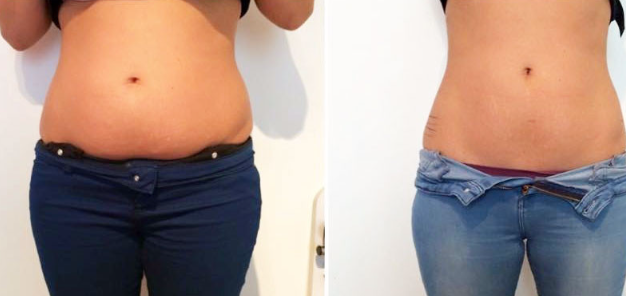
How does laser fat removal compare to fat reduction through cavitation?

Achieving the desired body shape has always been a priority for many individuals. With advancements in technology, there are now non-invasive techniques available for fat reduction. Two popular methods include laser fat removal and fat reduction through cavitation. In this article, we will explore the differences between these two procedures, allowing you to make an informed decision about which one might be right for you.
Understanding Laser Fat Removal
Laser fat removal, alternatively termed laser lipolysis, is a non-invasive procedure leveraging laser energy to precisely target and disrupt fat cells. During this procedure, a laser is carefully directed towards the designated area, penetrating the skin to heat and subsequently rupture the fat cells. These ruptured, or liquefied, fat cells are then naturally processed and eliminated by the body's lymphatic system.
A significant advantage of laser fat removal lies in the minimal pain and discomfort it entails during the treatment. In contrast to traditional surgical fat removal techniques, such as liposuction, laser fat removal often necessitates merely minimal, if any, incisions. This translates into a quicker recovery period and less downtime for patients.
Furthermore, laser fat removal excels in its capacity to pinpoint specific trouble zones. Whether aiming to reduce fat in the abdomen, thighs, or flanks (love handles), the laser can be meticulously directed to these specific areas. This targeted methodology renders laser fat removal an appealing choice for individuals seeking to address particular concerns.
Exploring Fat Reduction through Ultrasonic Cavitation
Fat reduction through ultrasonic cavitation, also known as cavitation, is a non-invasive procedure designed to eliminate unwanted fat cells. This technique employs ultrasonic waves to disrupt and break down the fat cells, which are subsequently naturally eliminated by the body.
Ultrasonic cavitation is a safe and relatively painless procedure. It necessitates neither incisions nor anesthesia, making it an attractive option for individuals seeking to avoid the risks and recovery time associated with surgical interventions. The treatment is generally well-tolerated and does not cause significant discomfort or downtime.
Analogous to laser fat removal, ultrasonic cavitation boasts the ability to specifically target problem areas. The ultrasonic waves can be precisely directed to the desired treatment zone, enabling localized fat reduction. This level of precision is particularly advantageous for individuals who wish to focus on specific regions of their body.
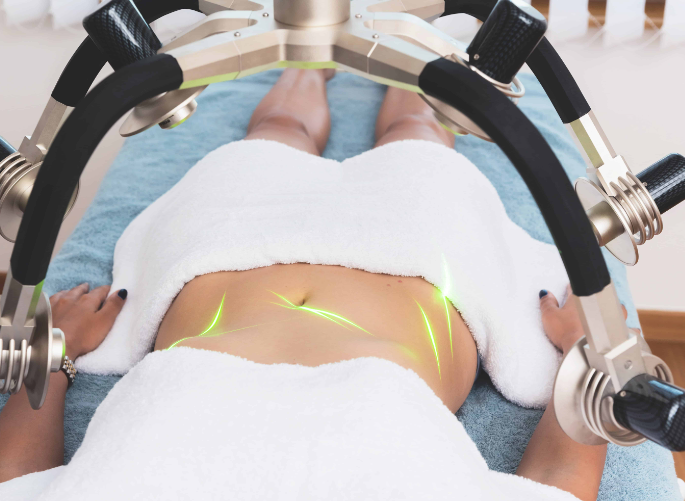
The Differences Between Laser Fat Removal and Ultrasonic Cavitation
Now that we have grasped the fundamental concepts of laser fat removal and ultrasonic cavitation, let's delve deeper into their distinctions.
Treatment Areas: Laser fat removal can be utilized on a wide array of body parts, encompassing the abdomen, thighs, arms, and chin. It is well-suited for both small and expansive areas. Conversely, ultrasonic cavitation can also be applied to various regions, but its effectiveness may be somewhat limited in smaller areas due to the size of the cavitation applicator.
Targeted Fat Reduction: Laser fat removal offers exceptional precision in targeting specific zones and can be highly effective in body contouring. Ultrasonic cavitation, while also capable of targeting particular regions, may exert a broader impact, making it more apt for overall fat reduction rather than isolated spot treatments.
Cost: The pricing of laser fat removal and ultrasonic cavitation can fluctuate based on factors such as the treatment area, the number of sessions required, and the clinic's geographical location. Typically, laser fat removal tends to be priced higher than ultrasonic cavitation, attributed to the precision and sophisticated technology involved.
Safety Considerations: Both laser fat removal and ultrasonic cavitation are deemed safe procedures when administered by qualified professionals. However, it is crucial to consult with your practitioner about any pre-existing medical conditions or concerns prior to undergoing either treatment.
Which Procedure is Right for You?
Deciding between laser fat removal and ultrasonic cavitation hinges on multiple factors, including your age, body type, desired results, and personal inclinations. It is indispensable to consult with a qualified healthcare professional before making a determination. They will assess your unique circumstances and suggest the most appropriate treatment option.
In summary, laser fat removal and ultrasonic cavitation both represent effective non-invasive approaches for fat reduction. Laser fat removal excels in offering precise targeting and contouring capabilities, whereas ultrasonic cavitation is advantageous for achieving overall fat reduction. Reflect on your specific requirements and consult with a professional to ascertain which procedure will best assist you in attaining your desired body contour.
Bear in mind that the cornerstone of successful fat reduction lies in making an informed decision that aligns with your objectives and well-being. By selecting the right option, you will be closer to achieving the body you have always envisioned.