
Introduction
A healthy scalp is the foundation of healthy-looking hair, yet many scalp conditions are difficult to evaluate with the naked eye. Excess sebum, follicle buildup, dandruff, dryness, redness, uneven scalp tone, and changes in hair density may exist beneath the surface or at a scale that is simply too small for conventional visual inspection.
This is where high-resolution scalp scanners are becoming increasingly valuable in professional beauty salons, head spas, scalp care centers, and aesthetic clinics.
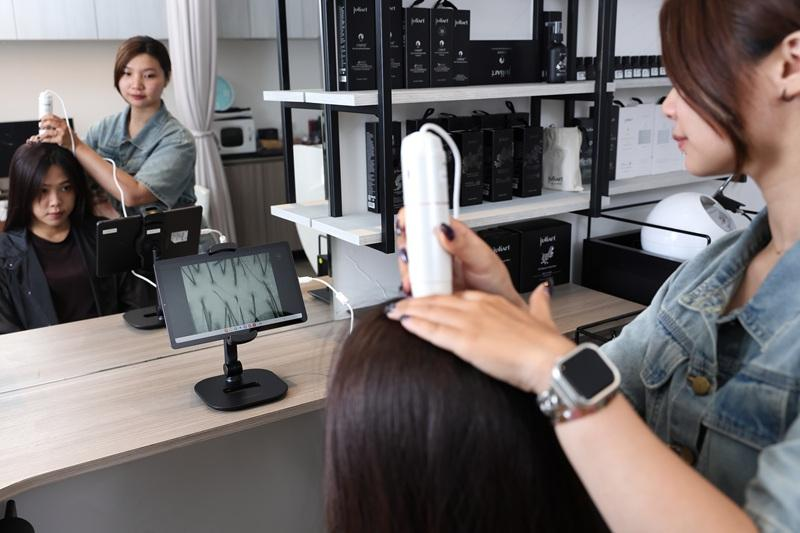
Unlike a basic camera that simply takes a photograph, a professional scalp scanner combines high-definition imaging, magnification, specialized illumination, image processing, and, in some systems, artificial intelligence. These technologies transform small areas of the scalp into enlarged, detailed images that can be viewed and discussed with clients in real time.
Modern commercial systems may offer magnification such as 50× or 200×, multiple lighting modes, digital image storage, and before-and-after comparison functions. Some advanced platforms also combine different spectral imaging technologies with AI-based analysis to evaluate indicators such as sebum, dandruff, follicle density, hair thickness, and scalp sensitivity.
For professional operators, the value is not simply better pictures. A high-resolution scalp scanner can make consultation more visual, treatment planning more structured, and the client experience more professional.
Background: Why Conventional Scalp Observation Is Not Enough
Traditional scalp assessment often starts with visual observation. A professional may look at the scalp, separate the hair with a comb, ask about oiliness or itching, and then recommend a suitable treatment.
This approach remains useful, but it has limitations.
The scalp is a relatively complex biological environment. Hair can cover large areas of the scalp, while follicle openings and surface conditions may be difficult to observe clearly. Subtle differences in oil distribution, follicle blockage, dandruff, redness, or hair density can easily be overlooked under normal room lighting.
For example, a client may complain that the scalp becomes oily quickly. From a normal viewing distance, the scalp may appear relatively clean. Under magnification, however, the operator may see concentrated sebum around follicular openings or visible buildup that would otherwise be difficult to demonstrate.
The same principle applies to scalp dryness and dandruff. A client may not fully understand why a professional recommends a particular cleansing or scalp-care procedure until the condition is displayed on a large screen.
This visual communication is one of the most important reasons professional scalp imaging has become part of modern consultation workflows. Some professional systems specifically provide client records, image storage, treatment comparisons, and digital reports to support ongoing scalp-management programs.
Technology & Mechanism: How Does a High-Resolution Scalp Scanner Work?
A high-resolution scalp scanner can be understood as a combination of four main technologies: high-definition imaging, optical magnification, controlled illumination, and digital analysis.
1. High-Definition Image Capture
The first step is capturing a detailed image of the scalp.
A professional scanner normally uses a dedicated digital camera or microscope-style imaging module rather than a standard smartphone camera. The imaging system is designed to capture close-up details while maintaining sufficient clarity for professional observation.
Some commercial systems use dedicated high-resolution scalp lenses and large displays, allowing operators and clients to see the captured area immediately. Other advanced platforms combine high-resolution cameras with software that processes and organizes images for analysis.
The purpose is straightforward: convert a small physical area of the scalp into a clear digital image that can be enlarged without losing the details needed for professional observation.
2. Optical Magnification
Magnification is one of the defining characteristics of a scalp scanner.
Depending on the system, different lenses may provide different levels of magnification. For example, professional devices commonly offer 50× and 200× views, allowing the operator to switch between a broader scalp view and a more detailed examination of follicular areas.
At lower magnification, the operator can examine general scalp conditions, oil distribution, visible flakes, and hair density.
At higher magnification, the scanner can reveal details around follicular openings, sebum accumulation, surface buildup, and individual hair structures that are difficult to evaluate with normal vision.
The important point is that magnification does not replace professional judgment. Instead, it provides a clearer visual basis for that judgment.
3. Controlled Lighting and Spectral Imaging
High resolution alone is not enough. Lighting strongly influences what a camera can reveal.
Basic scalp scanners may use white LED illumination to provide a clear view of the scalp surface. More advanced systems can add polarized, UV, or other spectral lighting modes.
Different light conditions can emphasize different visual characteristics. For example, white light can help display surface features, sebum, hair fibers, and general scalp appearance. Cross-polarized illumination can reduce surface glare and make certain color differences more visible. UV illumination can reveal fluorescent characteristics associated with substances such as porphyrins and can make certain scalp or dandruff-related features easier to observe.
This is why a professional multi-light scalp scanner can provide more information than simply increasing camera resolution.
4. Image Processing and AI Analysis
The next layer is software.
Once images are captured, image-processing algorithms can enhance, organize, compare, and quantify visual information. Some modern scalp analysis systems incorporate AI to automatically identify or evaluate specific indicators.
Commercial systems currently advertise analysis of parameters including hair density, follicle density, hair thickness, sebum, dandruff, scalp sensitivity, redness, moisture, and other scalp characteristics.
The workflow can therefore become:
Capture → Magnify → Illuminate → Process → Analyze → Report → Compare
This changes the role of the scanner from a simple imaging camera into a professional consultation and documentation tool.
However, AI-generated results should be understood as decision-support information rather than a substitute for medical diagnosis. For beauty salons and scalp-care centers, the strongest application is usually to improve visualization, consistency, consultation quality, and treatment tracking.
Advantages: Why Professional Scalp Scanners Are Different
More Information Than the Naked Eye
The most obvious advantage is visibility.
A professional scanner can reveal details that are difficult to observe during a conventional scalp inspection. High magnification allows operators to move from a general overview to a close examination of selected areas.
This can be particularly useful when clients have concerns such as excessive oiliness, visible dandruff, scalp buildup, dryness, or changes in hair density.
More Professional Client Consultation
Scalp care is often difficult to explain verbally.
Instead of saying, “Your scalp appears oily,” an operator can show the client an enlarged image of the scalp and explain what is visible.
This creates a more interactive consultation.
The client can see the same information as the professional, making the discussion less abstract and more understandable. For clinics and salons, this can also help create a more structured consultation process.
Better Treatment Planning
Different scalp conditions may require different approaches.
A professional operator may use scan results to determine whether a client should focus on cleansing, hydration, soothing care, exfoliation, or a longer-term scalp-management program.
The scanner itself does not perform the treatment. Its role is to provide visual information before the treatment begins.
This is particularly valuable when a salon offers multiple scalp-care services. Instead of recommending the same procedure to every client, the operator can build a more personalized service pathway based on observed conditions.
Before-and-After Comparison
Professional scalp management is usually not a one-time service.
A client may return for multiple sessions, and changes can be difficult to remember from one appointment to another.
Digital image storage and comparison features allow professionals to document selected scalp areas and compare them during subsequent visits. Commercial systems increasingly include image history and before-and-after functions for exactly this purpose.
This creates a more measurable customer journey:
Initial Scan → Treatment → Follow-Up Scan → Comparison → Next-Step Recommendation
For a professional salon, this can help turn an individual treatment into a structured scalp-management program.
More Suitable for Professional Environments
Compared with simple home-use scalp cameras, professional equipment is generally designed around a complete workflow rather than a single image.
Commercial systems may combine multiple lenses, controlled lighting, larger displays, client records, image storage, software analysis, multilingual interfaces, and reporting capabilities.
For a busy salon or clinic, these functions can make the technology more useful across multiple clients and repeated treatment sessions.
Applications & Client Needs
Scalp Care Salons
For scalp-care salons, a high-resolution scanner can become the first step of the service.
The professional can scan several areas of the scalp, identify visible differences, explain the results, and then recommend an appropriate care program.
This creates a consultation process that feels more systematic than simply asking clients about their symptoms.
Head Spas
Head spas increasingly combine relaxation with specialized scalp-care services.
A scanner can be used before a treatment to establish a visual baseline and again afterward to demonstrate changes in surface cleanliness or other visible characteristics.
The imaging process itself can also become part of the customer experience, especially when the scanner is connected to a large display that allows clients to observe their scalp in real time.
Beauty Clinics and Aesthetic Centers
For clinics that offer scalp-related beauty services, documentation becomes particularly important.
A high-resolution scanner can help practitioners record images at standardized locations, maintain client histories, and compare results across appointments.
More advanced systems may also integrate AI-based analysis and reporting, creating a more data-oriented consultation environment.
Hair and Scalp Consultation
Clients often arrive with concerns such as oily scalp, dandruff, thinning-looking hair, dryness, or scalp sensitivity.
A scanner provides a way to move from a general complaint to a visual discussion.
Instead of focusing only on what the client feels, the professional can examine specific scalp areas and use the images to guide the conversation.
Product and Service Recommendations
A professional scalp scanner can also support more targeted recommendations.
For example, if the scan shows significant visible oil accumulation or surface buildup, the operator can explain why a particular cleansing or scalp-management service may be appropriate.
This does not mean the scanner should automatically determine which product a client must purchase. Its greater value is helping professionals connect observations with a logical service recommendation.
Professional Workflow: From Scanning to Treatment
A practical professional workflow can be divided into five stages.
Step 1: Consultation
Ask about the client's main concerns, including oiliness, dryness, dandruff, sensitivity, hair thinning, or previous scalp treatments.
Step 2: Standardized Scanning
Select several representative scalp areas and capture images under consistent conditions. Standardization is important because lighting, magnification, and scan location can affect comparisons.
Step 3: Visual Analysis
Review the images with the client. Identify visible characteristics and explain what they may indicate within the scope of professional scalp care.
Step 4: Treatment Planning
Use the visual information to select an appropriate scalp-care procedure or service combination.
Step 5: Follow-Up
Save the images and repeat the scan during future appointments. Compare the results to track visible changes and adjust the service plan when appropriate.
This workflow illustrates why the real value of a high-resolution scalp scanner is not simply its camera specification. The strongest systems connect imaging technology with the entire professional service process.
Conclusion
High-resolution scalp scanners work by combining advanced digital imaging, optical magnification, controlled lighting, image processing, and, increasingly, AI-assisted analysis.
Their purpose is to make small and difficult-to-see scalp details more visible and easier to communicate. Professional systems can help operators examine follicular areas, observe sebum and surface buildup, assess visible hair-density characteristics, document client conditions, and compare images over time.
For modern beauty salons, head spas, scalp-care centers, and aesthetic clinics, this technology represents more than an upgraded camera. It can become an important part of a professional consultation workflow.
When clients can see what the professional sees, scalp care becomes easier to explain, treatment recommendations become more structured, and follow-up becomes more measurable.
As the professional beauty industry continues moving toward personalized services and data-supported consultation, high-resolution scalp scanning is likely to become an increasingly practical tool for businesses that want to provide more visual, consistent, and technology-driven scalp-care experiences
Founded in 2008, Guangzhou GLM Beauty Spa Equipment Factory specializes in research, development, manufacture and selling of beauty and slimming machines. Our production base is located in Guangzhou City, Guangdong Province, China. Since our foundation, we have introduced advanced technologies and equipment, to assure high quality and high performance of our products. With professional marketing guide and excellent after-sales service, our products have been exported to over 20 countries and regions, including Southeast Asia, the Middle East, Europe and the United States, won worldwide praises and gained a good reputation