Introduction
In today’s results-driven aesthetics industry, achieving true skin balance has become a central goal for both clients and professionals. Whether addressing oiliness, dryness, sensitivity, or aging concerns, balanced skin is widely recognized as the foundation of healthy, radiant appearance. However, restoring this balance is rarely straightforward.
Professional salons and clinics are increasingly turning to advanced technologies to enhance treatment outcomes—and temperature therapy has emerged as a powerful, science-backed approach. By precisely controlling thermal stimulation, practitioners can influence skin physiology in ways that topical products alone cannot achieve.
Unlike traditional facials that rely heavily on manual techniques, temperature-based treatments introduce a new level of control, consistency, and depth. From warming therapies that activate circulation to cooling techniques that calm inflammation, temperature modulation is now an essential component in modern skincare protocols.
Background / Problem
Skin imbalance is one of the most common concerns in aesthetic practice. Clients often present with multiple, overlapping issues such as:
- Excess sebum production in the T-zone
- Dehydration in other areas
- Enlarged pores
- Sensitivity or redness
- Uneven texture and tone
These conditions are frequently caused by disrupted skin homeostasis—the natural ability of the skin to regulate oil, moisture, and barrier function. External factors such as climate, pollution, stress, and improper skincare routines can further aggravate this imbalance.
Traditional treatments often focus on surface-level correction, such as applying hydrating serums or oil-control products. While these methods can provide temporary relief, they do not always address underlying physiological processes like:
- Microcirculation inefficiency
- Impaired lymphatic drainage
- Barrier dysfunction
- Reduced cellular activity
As a result, improvements may be short-lived, requiring repeated treatments without long-term stabilization.
For professional clinics aiming to deliver lasting results, this presents a clear challenge: how to influence deeper skin functions safely and effectively while maintaining a high level of client comfort.
Technology / Mechanism
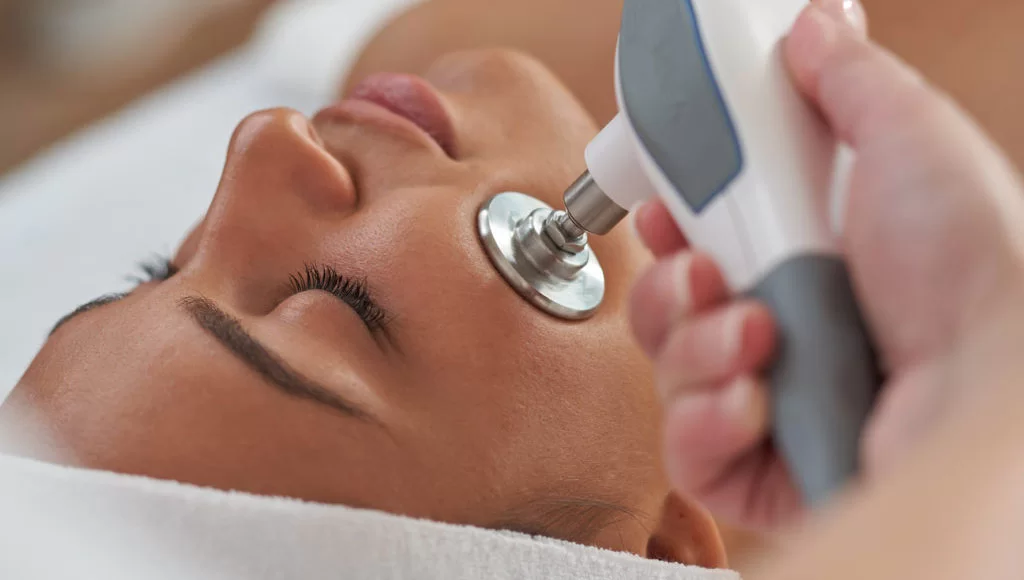
Temperature therapy devices are designed to apply controlled heating and cooling to the skin, triggering specific biological responses. These treatments are not random but carefully calibrated to target different layers and functions of the skin.
1. Controlled Heating (Thermal Activation)
When the skin is exposed to moderate heat, several beneficial processes are activated:
- Vasodilation: Blood vessels expand, increasing oxygen and nutrient delivery to skin cells
- Enhanced metabolism: Cellular activity accelerates, promoting regeneration
- Sebum softening: Oil and debris within pores become easier to remove
- Improved product absorption: Open pores allow active ingredients to penetrate more effectively
Professional devices maintain precise temperature ranges to ensure safety and consistency, avoiding the risks associated with uncontrolled heat application.
2. Controlled Cooling (Thermal Regulation)
Cooling functions serve a different but equally important role:
- Vasoconstriction: Blood vessels contract, reducing redness and inflammation
- Pore tightening: Helps refine skin texture and minimize the appearance of pores
- Soothing effect: Calms sensitive or irritated skin after intensive treatments
- Moisture retention: Supports the skin barrier by reducing transepidermal water loss
3. Alternating Thermal Therapy
Many advanced systems combine heating and cooling in a single protocol. This alternating approach creates a “thermal workout” for the skin, stimulating circulation while reinforcing barrier function.
4. Integration with Other Technologies
In professional settings, temperature therapy is often combined with complementary modalities such as:
- Ultrasound for deeper product infusion
- Radiofrequency for collagen stimulation
- LED therapy for targeted skin concerns
This integration enhances overall treatment efficacy, making temperature control a foundational component rather than a standalone feature.
Advantages / Comparison
1. Deeper Physiological Impact
Compared to traditional skincare methods, temperature therapy directly influences the skin’s biological processes. It goes beyond surface hydration or cleansing, targeting circulation, metabolism, and barrier repair.
2. Precision and Consistency
Professional devices allow practitioners to control exact temperature levels and treatment duration. This ensures consistent results across sessions and clients—something difficult to achieve with manual techniques or home care tools.
3. Enhanced Treatment Synergy
Temperature therapy significantly improves the effectiveness of other treatments. For example, warming the skin before serum application increases absorption, while cooling afterward helps lock in benefits and reduce irritation.
4. Client Comfort and Experience
Thermal treatments are not only effective but also highly sensory. The contrast between warmth and coolness creates a relaxing, spa-like experience that enhances client satisfaction and perceived value.
5. Superiority Over Home Devices
While some at-home tools offer basic heating or cooling functions, they lack the precision, power, and safety mechanisms of professional equipment. In clinical environments, devices are designed for sustained performance and customizable protocols, enabling practitioners to address complex skin conditions more effectively.
Applications / Client Needs
Temperature therapy is highly versatile and can be adapted to a wide range of skin concerns commonly treated in professional environments.
1. Oily and Acne-Prone Skin
Heating helps loosen sebum and unclog pores, making extractions more effective. Cooling afterward reduces inflammation and minimizes pore appearance, creating a balanced result.
2. Dry and Dehydrated Skin
Warmth enhances the penetration of hydrating ingredients, while cooling helps seal moisture within the skin, improving long-term hydration levels.
3. Sensitive and Reactive Skin
Gentle cooling therapies calm redness and irritation, making them ideal for clients with compromised skin barriers or post-procedure sensitivity.
4. Aging and Dull Skin
By stimulating circulation and cellular activity, temperature therapy promotes a healthier complexion and supports anti-aging treatments. When combined with other technologies, it can enhance collagen production and improve elasticity.
5. Pre- and Post-Treatment Enhancement
Temperature control plays a critical role before and after advanced procedures such as chemical peels, microneedling, or laser treatments. It prepares the skin for better absorption and aids recovery by reducing inflammation.
6. Customized Professional Protocols
In high-end salons and clinics, temperature therapy is rarely used in isolation. Instead, it is integrated into multi-step treatment programs, allowing practitioners to tailor each session based on real-time skin conditions and client goals.
Conclusion
As the demand for effective, non-invasive skincare solutions continues to grow, temperature therapy stands out as a key innovation in professional aesthetics. By harnessing the power of controlled heat and cooling, practitioners can influence skin function at a deeper level—achieving results that go beyond traditional treatments.
For salons and clinics, incorporating temperature-based devices is more than a technological upgrade; it is a strategic move toward precision skincare. It enhances treatment performance, improves client satisfaction, and reinforces a professional, results-oriented brand image.
Ultimately, balanced skin is not achieved through isolated products or single techniques—it requires a holistic approach grounded in science and supported by advanced equipment. Temperature therapy provides that critical link, transforming skincare from routine maintenance into targeted, high-performance treatment.
Founded in 2008, Guangzhou GLM Beauty Spa Equipment Factory specializes in research, development, manufacture and selling of beauty and slimming machines. Our production base is located in Guangzhou City, Guangdong Province, China. Since our foundation, we have introduced advanced technologies and equipment, to assure high quality and high performance of our products. With professional marketing guide and excellent after-sales service, our products have been exported to over 20 countries and regions, including Southeast Asia, the Middle East, Europe and the United States, won worldwide praises and gained a good reputation.