Microcurrent and radiofrequency cosmetic techniques: an in-depth analysis of the mechanism of action and clinical application
introduction
In the field of non-invasive facial rejuvenation, microelectric current therapy and radiofrequency technology have become the two mainstream biophysical therapy methods. Although both of them aim at improving skin relaxation and anti-aging, their mechanisms of action, tissue targeting and clinical effects are fundamentally different. In this paper, we will systematically discuss the basis of biophysics, cellular and molecular mechanisms, technical parameters of equipment and clinical application strategies, so as to provide scientific basis for the selection of clinical treatment.
I. Bioelectric mechanism and clinical application of microcurrent therapy
1.1 Technical definition and basis of bioelectricity
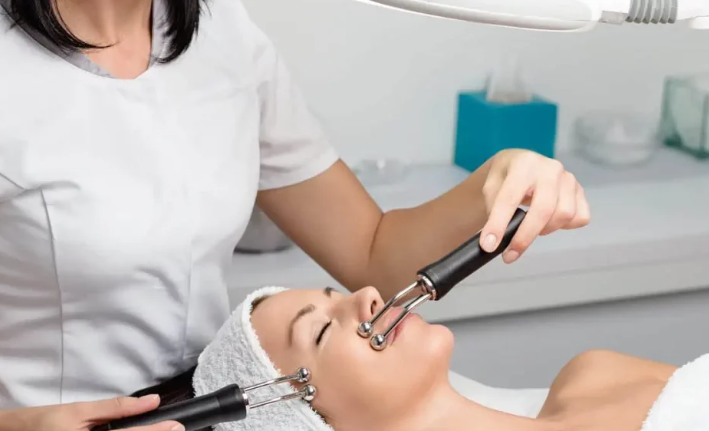
Microcurrent Therapy (MCT) is a bioelectrical stimulation technique that uses low-intensity direct current of 50-1000μA class. The technology simulates the human body's endogenous biological current system (such as skin injury potential 0.5-1.5mV) to regulate cellular metabolic activities through exogenous electrical signals. Studies have shown that the human epidermis has a transmembrane potential of 5-10mV in resting state, and the injury potential of up to 30mV can be generated at the wound site. These bioelectrical phenomena provide a theoretical basis for MCT.
1.2 Molecular action mechanism
Regulation of ATP synthesis: The efficiency of ATP synthesis can be increased by 500% by micro-current stimulation (Cheng et al., 1982), which involves changes in mitochondrial membrane potential and activation of electron transport chain. Experimental data showed that 100μA current stimulation can increase the ATP content of fibroblasts by 228% in 20 minutes.
Promotion of protein synthesis: by activating calcium ion channels, leading to an increase in intracellular Ca² concentration of 0.5-1μmol/L (physiological concentration 0.1μmol/L), which in turn activates the protein kinase C pathway and promotes collagen mRNA expression. Clinical studies have shown that 8 weeks of continuous treatment can increase the amount of type I collagen synthesis by 36%.
Enhanced lymphatic drainage: 0.3mA current can significantly increase the frequency of lymphatic vessel contraction (+42%), promote the return of tissue fluid through the electroporation effect, and improve facial edema.
1.3 Technical Specifications of the device
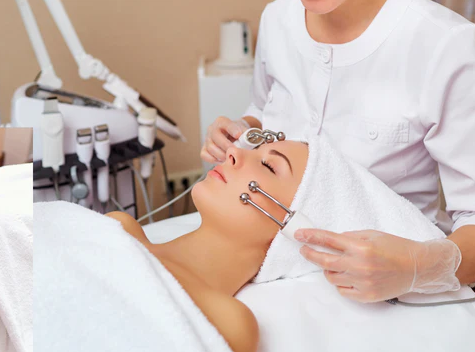
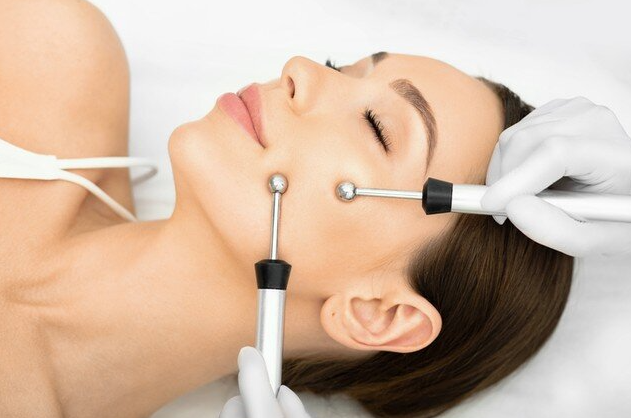
Professional-grade devices, such as MyoLift QT, use a two-phase rectangular wave with adjustable frequencies of 0.3-600Hz and a titanium alloy guide to ensure stable current output. Household devices, such as the NuFACE Trinity, typically limit current strength to less than 300μA and use a self-limiting circuit design for safety. The treatment should be combined with a conductive medium containing sodium chloride (conductivity >5S/m) to maintain the effective current density (15-20mA/cm²).
2. Thermodynamic effects and tissue remodeling of radio frequency technology
2.1 Technical principles and electromagnetic characteristics
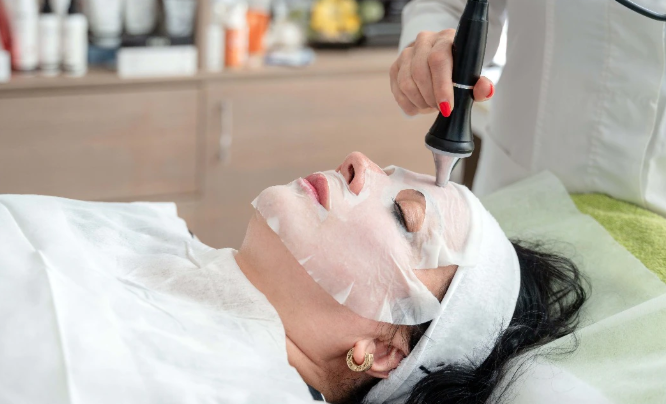
Radiofrequency (RF) therapy uses 0.3-10MHz high-frequency alternating current to achieve a dermal selective thermal effect through capacitive coupling or resistive heating. According to the Arrhenius damage equation, the expression of heat shock protein (HSP70) can be activated when the tissue temperature reaches 42-45℃, while the immediate collagen contraction can be induced at 60-65℃.
2.2 Characteristics of stratified thermal effect
Skin protection mechanism: Modern equipment such as Thermage FLX uses a dynamic cooling system (contact cooling temperature 4-10 ° C, duration 10-100ms) to ensure that the skin temperature is maintained below 38 ° C.
Dermal thermal damage: A unipolar radio frequency (e.g. 6MHz) at a depth of 3mm can produce a high temperature of 55-65 ° C, which promotes the development of the collagen triple helix structure (denaturation temperature 56-62 ° C), and then activates the wound healing response.
Subcutaneous fat regulation: Some devices (such as Accent Prime), combined with bipolar radio frequency and ultrasound, can target shallow fat cells and induce apoptosis at 55 ° C for 2 minutes.
2.3 Equipment technology innovation
The third generation of multi-source phased RF (such as EndyMed Pro) uses 3DEEP multipole technology to achieve a uniform thermal field distribution up to 4.5mm deep through six electrode rotation emission. The integrated impedance feedback system can monitor the tissue resistance change in real time (normal dermal impedance 200-300Ω), automatically adjust the energy output, and control the temperature fluctuation in the treatment area within ±1.5℃.
3. Comparative analysis of key technical parameters
Parametric microcurrent therapy radiofrequency technique
Energy form Direct current pulse (0.05-1mA) High frequency electromagnetic wave (0.3-10MHz)
Penetration depth Epidermis - superficial muscle (0-3mm) Deep dermis - subcutaneous tissue (1-6mm)
Action temperature Non-thermal effect (<37℃) Thermal effect (42-65℃)
Immediate effect muscle contraction increases contour collagen contraction by about 20-30%
Late effect ATP-mediated cell regeneration (peak at 72h) Collagen remodeling (peak at 3-6 months)
The treatment cycle is 2-3 times a week, once a month for 6-8 weeks, and 3-5 sessions
Duration 48-72 hours (continuous treatment required) 12-24 months (single treatment)
4. Clinical decision path and combination treatment plan
4.1 Indication selection criteria
Microcurrent preferred case:
Dynamic wrinkles (forehead lines, crow's feet)
Muscle relaxation (blurred mandibular margin)
Postoperative lymphedema (within 72 hours after liposuction)
Rf preferred case:
Static wrinkles (nasolabial furrows, neck lines)
Loss of skin elasticity (postpartum abdominal laxity)
Superficial fat accumulation (double chin)
4.2 Collaborative treatment mode
Sequential treatment: radiofrequency deep heating (55 ° C /3mm) was performed first, and micro-current promoted repair was administered 48 hours later. Studies have shown that this regimen can increase the rate of collagen proliferation by 62% (vs monotherapy).
Simultaneous therapy: Using an integrated device (such as Venus Viva) to perform MCT immediately after RF treatment can shorten the recovery period by 3-5 days.
Targeted enhancement: MCT (300μA) was used for the periorbital sensitive area, while RF (4MHz/3.5mm) was used for precision treatment of the lower face.
5. Safety and adverse reaction management
5.1 Microcurrent therapy risk control
Contraindicated management: Patients with pacemakers should maintain a safe distance of 10cm, and θ wave (4-8Hz) procedures should be prohibited in patients with epilepsy.
Acute reaction treatment: When muscle twitch occurs, the current intensity is immediately reduced to less than 50μA.
5.2 Prevention of RF adverse reactions
Heat damage prevention: Use a contact temperature probe to monitor the bone protrusions (zygomatic arch, mandibular Angle) to ensure that the temperature is less than 43℃.
Countermeasures for abnormal pigmentation: Fitzpatrick type IV and above skin was treated with segmented treatment (2cm apart), combined with Q-switched Nd:YAG postoperative care.
6. Technological frontier and development trend
Nanopulse technology: The microcurrent pulse width is compressed to 300ns, which can induce the change of selective membrane permeability and improve the transdermal rate of active ingredients by 8-12 times.
Smart impedance matching: New generation RF devices such as Alma Harmony XL are equipped with AI algorithms that dynamically adjust frequencies (0.5-2MHz) based on real-time impedance data for personalized heat distribution.
Mitochondrial targeted therapy: Combined with photocurrent technology (630nm red light +50μA current), the activity of mitochondrial cytochrome c oxidase was increased by 3 times, significantly prolongating the duration of therapeutic effect.
Conclusion
In clinical practice, the choice of technique is based on the patient's facial aging characteristics (changes in muscle dynamics or structural changes in connective tissue), skin biophysical parameters (electrical impedance, thermal diffusion coefficient), and treatment expectations. In the future, with the development of multi-modal energy platforms, the collaborative application of micro-current and RF will promote the new development of accurate and personalized facial rejuvenation treatment.
GLM is a specialized beauty instrument factory that produces instruments for a variety of functions, including weight loss devices. We have vacuum negative press, radio frequency fat blasting equipment, frozen fat dissolving machine and EMS body shaping machine. GLM is a 14 year old supplier of beauty instruments with guaranteed quality.