1. Introduction
In 2026, body wellness is becoming an increasingly important part of the professional beauty and aesthetics industry. Clients are no longer focused exclusively on facial treatments or visible skin improvements. They are also seeking professional body care services that promote relaxation, support circulation, improve physical comfort, and complement their overall wellness routines.
Among these services, lymphatic drainage has gained growing attention in beauty salons, medical spas, wellness centers, and professional body treatment facilities. By combining specialized massage techniques with modern compression therapy equipment, practitioners can provide structured body care experiences tailored to different client needs.
The lymphatic system plays an essential role in maintaining fluid balance and supporting immune function. Unlike the cardiovascular system, which relies on the heart to circulate blood, the lymphatic system depends on muscle movement, breathing, and the contraction of lymphatic vessels to move lymph fluid throughout the body.
This is why movement-based massage and controlled compression techniques have become valuable components of professional body wellness programs.
For beauty professionals, lymphatic drainage is more than a traditional massage service. It represents an opportunity to introduce specialized treatment equipment, develop differentiated service packages, and provide clients with more consistent and comfortable treatment experiences.
As professional beauty technology continues to advance, understanding how massage and compression therapy work together is essential for salons and clinics looking to expand their body wellness services.
2. Background and Problem: Why Lymphatic Drainage Matters
The lymphatic system is a network of vessels, lymph nodes, and organs responsible for transporting lymph fluid and supporting the body's immune defenses. It helps return excess fluid from body tissues to the bloodstream and participates in the removal of cellular waste products through normal physiological processes.
However, several everyday factors can influence how comfortable people feel in their bodies. Prolonged sitting, limited physical activity, extended standing, and certain lifestyle habits may contribute to feelings of heaviness, temporary swelling, and reduced physical comfort.
For some clients, these concerns become particularly noticeable in the legs, ankles, arms, and abdominal area.
It is important to understand that ordinary feelings of heaviness or temporary fluid retention do not necessarily indicate a lymphatic disorder. Persistent or unexplained swelling should be evaluated by a qualified healthcare professional rather than treated as a routine beauty concern.
Nevertheless, these common wellness concerns have increased interest in professional massage and compression-based body care.
Traditional manual lymphatic drainage uses gentle, rhythmic, and carefully directed movements to encourage lymph flow. Unlike conventional deep-tissue massage, it generally involves light pressure and follows the anatomical pathways of the lymphatic system.
Although manual techniques remain important, they can require considerable practitioner training and consistent technique. Treatment quality may also vary depending on the therapist's experience, treatment duration, and individual client needs.
This creates an opportunity for professional equipment to complement manual care.
Modern lymphatic drainage devices are designed to provide controlled pressure, repeatable treatment patterns, and adjustable operating parameters. When appropriately selected and used, they can help professional practitioners deliver more standardized body care services while maintaining a comfortable treatment experience.
3. Technology and Mechanism: How Massage and Compression Therapy Work
Professional lymphatic drainage services commonly combine manual techniques, mechanical massage, and pneumatic compression. Each approach works differently, but all can contribute to a structured body wellness program.
3.1 Manual Lymphatic Drainage
Manual lymphatic drainage is a specialized massage technique that uses gentle, repetitive movements to stimulate superficial lymphatic vessels.
Unlike traditional massage, which may focus on deeper muscle tissue, manual lymphatic drainage generally applies light, controlled pressure to the skin and underlying superficial tissues.
Practitioners follow specific anatomical pathways, taking into account the location of lymph nodes and the direction of lymphatic drainage.
A typical professional session may involve:
-
Assessing the client's treatment goals and relevant health history.
-
Preparing the treatment area with comfortable positioning.
-
Using gentle, rhythmic movements along appropriate lymphatic pathways.
-
Adjusting pressure and treatment duration according to client tolerance.
-
Providing aftercare guidance and monitoring the client's response.
This approach requires professional knowledge of anatomy and appropriate technique. It is particularly useful when personalized treatment and direct practitioner assessment are important.
3.2 Mechanical Massage Technology
Professional body massage equipment can complement manual techniques by providing controlled mechanical stimulation.
Depending on the device design, treatment may involve vibration, rolling movements, rhythmic mechanical pressure, or other forms of external stimulation.
Some professional body contouring and massage platforms use rotating rollers or motor-driven massage components to apply repeated mechanical movements to selected body areas.
These technologies are commonly used in professional body care services designed to improve massage efficiency, support relaxation, and enhance the overall treatment experience.
For lymphatic drainage-related services, it is important to distinguish between general mechanical body massage and clinically established manual lymphatic drainage. Not every massage or body contouring device is specifically designed or validated to stimulate lymphatic flow.
Professional operators should therefore select equipment according to its intended function, operating parameters, and manufacturer guidance rather than assuming that all massage technologies provide equivalent lymphatic benefits.
3.3 Pneumatic Compression Therapy
Pneumatic compression is another important technology used in professional body wellness and specialized lymphatic care.
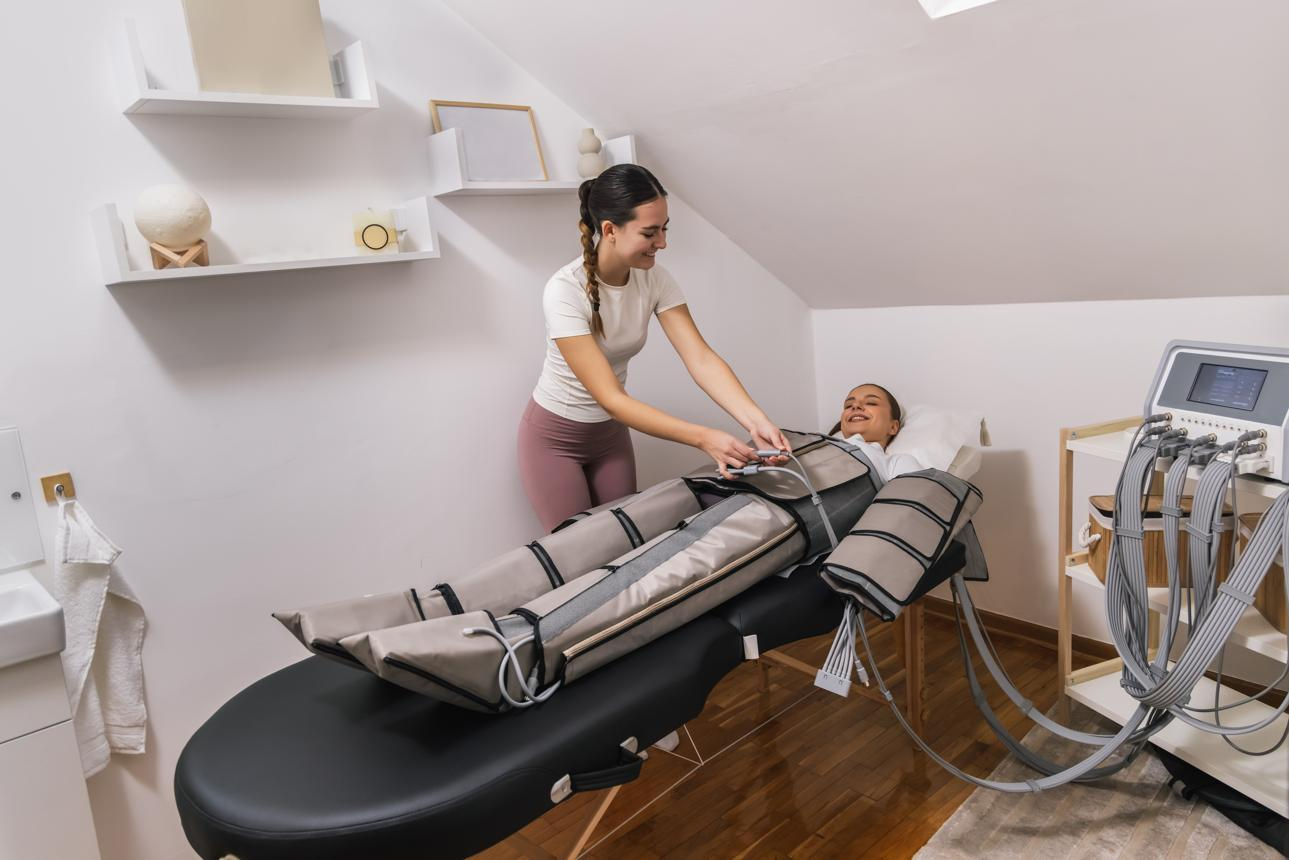
These systems typically include inflatable garments, air chambers, a control unit, and connecting tubes. The equipment delivers controlled air pressure to different body areas according to a preset or adjustable sequence.
Many systems use sequential compression, in which individual air chambers inflate and deflate in a coordinated pattern.
For example, a multi-chamber leg compression system may apply pressure progressively from the lower part of the limb toward the upper section. This creates a controlled compression sequence designed to support fluid movement and venous return.
Depending on the system, operators may be able to adjust:
-
Pressure intensity.
-
Compression and release cycles.
-
Treatment duration.
-
Chamber activation sequence.
-
Treatment modes for different body areas.
Professional pneumatic compression devices are particularly useful when consistent treatment parameters and repeatable operating sequences are important.
However, pressure settings must be selected carefully. Stronger compression does not automatically produce better results, and treatment should always follow the equipment manufacturer's instructions and appropriate professional screening procedures.
3.4 Combining Massage and Compression Therapy
One of the most practical developments in professional body wellness is the integration of different treatment methods.
Manual massage provides personalized practitioner control, mechanical massage supports structured external stimulation, and pneumatic compression offers adjustable, sequential pressure.
When appropriate for the client, these approaches can be incorporated into a broader body care program.
For example, a professional wellness session may include an initial consultation, gentle manual massage, a suitable compression treatment, and post-session comfort assessment.
The treatment sequence should be determined by the client's needs, the equipment's intended use, and the practitioner's professional judgment.
The objective is not to apply as many technologies as possible, but to create a comfortable, consistent, and appropriately designed treatment experience.
4. Advantages and Comparison: Professional Equipment vs. Traditional Massage and Home Devices
As demand for professional body wellness services grows, salons and clinics are evaluating how specialized equipment can improve service delivery.
Professional devices offer several practical advantages when compared with relying exclusively on manual massage or basic home-use products.
4.1 More Consistent Treatment Parameters
Manual massage depends heavily on the practitioner's technique, experience, and physical condition.
Professional compression equipment can provide adjustable pressure levels, predefined operating sequences, and controlled treatment durations.
This helps practitioners maintain more consistent treatment parameters across sessions, provided that the equipment is properly configured and operated.
Consistency is particularly valuable for businesses offering structured service packages.
4.2 Improved Treatment Efficiency
Long-duration manual massage requires continuous practitioner involvement.
Compression systems can perform programmed inflation and deflation cycles while the practitioner monitors the client's comfort and treatment response.
This allows professionals to organize their workflow more efficiently and potentially combine equipment-based services with other appropriate treatments.
However, equipment does not eliminate the need for professional supervision, client assessment, or proper treatment planning.
4.3 Adjustable Treatment Experiences
Different clients have different comfort levels, body proportions, and treatment expectations.
Professional devices often provide multiple operating modes and adjustable parameters, allowing practitioners to select more appropriate settings within the equipment's specifications.
This flexibility is important for creating a more individualized service experience.
4.4 Greater Suitability for Professional Service Environments
Compared with many basic home-use products, professional equipment is often designed around more demanding operating requirements.
Depending on the manufacturer and model, professional systems may offer:
-
More comprehensive control functions.
-
Multiple compression chambers or treatment attachments.
-
Adjustable pressure and timing parameters.
-
Durable construction for repeated commercial use.
-
Professional operating instructions and technical support.
These features can be particularly valuable for beauty salons, medical spas, rehabilitation facilities, and wellness centers.
Nevertheless, professional equipment is not automatically more effective for every individual. The appropriate choice depends on treatment objectives, device specifications, safety features, and practitioner qualifications.
5. Applications and Client Needs: Where Professional Lymphatic Drainage Equipment Fits
Lymphatic drainage and compression-based services can support different professional body wellness programs. Understanding the needs of different client groups helps salons and clinics design more relevant treatment options.
5.1 Leg Comfort and Everyday Fatigue
Clients who spend long hours standing or sitting may experience tired, heavy, or uncomfortable legs.
Professional massage and suitable compression services can be incorporated into relaxation-focused body care programs.
Sequential pneumatic compression may be particularly useful in settings where controlled lower-limb compression is appropriate.
Practitioners should assess the client's health history and screen for conditions that make compression unsuitable before providing treatment.
5.2 Post-Exercise Recovery and Relaxation
Fitness enthusiasts and physically active clients often seek professional massage services as part of their recovery routines.
Mechanical massage and selected compression treatments may help improve relaxation and provide temporary relief from feelings of muscle tension or heaviness.
These services should be positioned as supportive wellness options rather than substitutes for medical treatment or proven recovery interventions.
5.3 Body Wellness and Aesthetic Care Programs
Professional beauty salons increasingly incorporate body massage, relaxation treatments, and body contouring services into comprehensive treatment packages.
Some clients are interested in combining body massage with aesthetic treatments to create a more complete service experience.
For example, a salon may offer a body wellness program that includes a consultation, mechanical massage, selected compression services, and personalized aftercare recommendations.
However, lymphatic drainage should not be marketed as a direct fat-loss treatment. It does not destroy fat cells or independently produce lasting weight reduction.
Any temporary changes in body measurements or appearance should be explained accurately and should not be confused with permanent body contouring results.
5.4 Post-Procedure Care
Specialized lymphatic drainage may be recommended in certain post-procedure care plans, particularly when temporary swelling is expected.
However, the appropriate timing and type of treatment depend on the procedure performed and the individual's recovery status.
Beauty salons should never independently prescribe post-surgical compression or massage protocols.
Clients recovering from surgery or aesthetic procedures should follow their treating clinician's instructions. Professional operators should only provide services when they are appropriately qualified and the treatment has been cleared by the responsible healthcare provider.
5.5 Expanding Professional Service Offerings
For beauty equipment distributors, salon owners, and clinic operators, lymphatic drainage technology also represents a business development opportunity.
Rather than offering only traditional massage, businesses can build differentiated service packages around professional compression systems and complementary massage equipment.
When evaluating a device, buyers should consider:
-
Intended treatment applications.
-
Number and design of compression chambers.
-
Available pressure adjustment ranges.
-
Operating modes and cycle settings.
-
Garment sizes and treatment area compatibility.
-
Noise levels and cleaning requirements.
-
Safety functions and operating instructions.
-
Warranty, maintenance, and technical support.
For manufacturers, clearly communicating these specifications helps international buyers understand the equipment's practical value and suitability for their businesses.
6. Safety and Professional Considerations
Although massage and compression therapy can be useful components of body wellness services, they are not appropriate for everyone.
Professional screening is essential before treatment.
Compression therapy may be unsuitable or require medical clearance for individuals with conditions such as acute deep vein thrombosis, severe peripheral arterial disease, decompensated heart failure, certain infections, or other conditions identified in clinical guidelines and device instructions.
Unexplained swelling, sudden pain, redness, warmth, or one-sided limb swelling should not be treated as an ordinary beauty concern. Such symptoms require medical evaluation.
Practitioners should also avoid excessive pressure, follow equipment-specific instructions, maintain proper hygiene, and monitor client comfort throughout the session.
For professional facilities, staff training and clear treatment protocols are just as important as equipment selection.
A reliable body wellness service combines appropriate technology, informed practitioners, client communication, and responsible treatment boundaries.
7. Conclusion: The Future of Professional Lymphatic Drainage
In 2026, lymphatic drainage is becoming an increasingly recognized component of professional body wellness services. As clients seek more personalized and comprehensive body care experiences, beauty salons, medical spas, and wellness centers have opportunities to expand their offerings through specialized massage and compression technologies.
Manual lymphatic drainage, mechanical massage, and pneumatic compression each have different functions and applications. When selected appropriately, they can complement one another within a structured professional service program.
For beauty equipment manufacturers and international distributors, this growing interest highlights the importance of developing practical, reliable, and user-friendly professional systems.
The future of body wellness is not simply about introducing more advanced machines. It is about combining suitable technology with professional expertise, consistent operating procedures, and a clear understanding of client needs.
By investing in appropriate equipment and professional training, beauty businesses can build more differentiated body wellness services while delivering comfortable, responsible, and consistent treatment experiences
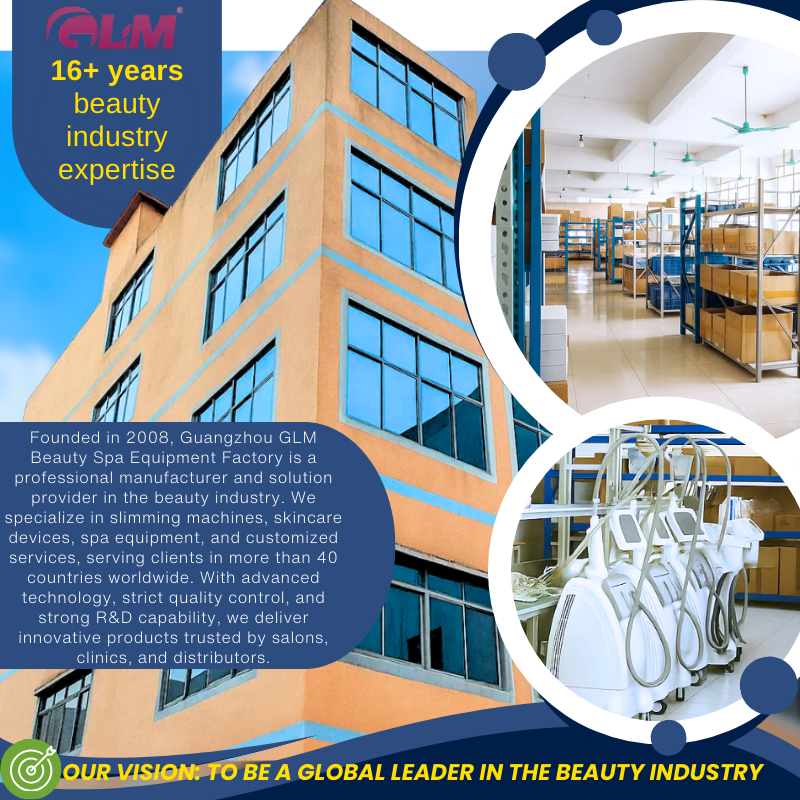
Founded in 2008, Guangzhou GLM Beauty Spa Equipment Factory specializes in research, development, manufacture and selling of beauty and slimming machines. Our production base is located in Guangzhou City, Guangdong Province, China. Since our foundation, we have introduced advanced technologies and equipment, to assure high quality and high performance of our products. With professional marketing guide and excellent after-sales service, our products have been exported to over 20 countries and regions, including Southeast Asia, the Middle East, Europe and the United States, won worldwide praises and gained a good reputation