Introduction
Modern clients are becoming more informed about skincare, but they are also becoming more demanding. A basic cleanser, moisturizer, or facial mask may help maintain healthy-looking skin, yet many clients visiting professional beauty clinics are looking for more targeted solutions for dehydration, dullness, fine lines, uneven texture, and early signs of skin aging.
This has increased interest in professional aesthetic treatments such as mesotherapy, microneedling, electroporation, oxygen infusion, ultrasonic delivery, radio frequency, and other device-assisted skincare technologies.
Among these options, mesotherapy is particularly interesting because it takes a different approach from traditional topical skincare. Instead of relying primarily on ingredients applied to the surface of the skin, mesotherapy involves delivering selected substances into superficial skin layers through multiple small injections. Depending on the formulation and technique, the treatment may be used as part of a professional skin-rejuvenation protocol.
Traditional skincare, by contrast, generally focuses on supporting the skin barrier, improving hydration, protecting against environmental stressors, and delivering cosmetic ingredients through topical application.
So, is mesotherapy better than traditional skincare?
The answer is not simply yes or no. For professional clinics, the more useful question is: which treatment approach is appropriate for the client's skin condition, expectations, tolerance, and treatment goals?
Background: Why Traditional Skincare May Not Always Be Enough
The skin is designed to protect the body from external substances. The stratum corneum, the outermost layer of the epidermis, acts as an important barrier that limits the penetration of many ingredients.
This barrier is beneficial for skin health, but it also creates a challenge for cosmetic delivery. Some active ingredients, particularly larger or water-soluble molecules, may have limited ability to pass through the skin barrier and reach deeper viable layers. Recent research into microneedle-based cosmetic delivery specifically highlights this challenge and the growing interest in technologies that can temporarily improve skin permeability.
Traditional skincare remains essential. Daily cleansing, moisturizing, sunscreen use, and properly selected active ingredients provide the foundation of long-term skin management.
However, professional clients often expect more than routine maintenance.
For example, a client may want to address:
- Dehydrated or tired-looking skin
- Fine lines and early signs of aging
- Uneven skin texture
- Loss of firmness
- Dull complexion
- Reduced skin radiance
- Specific areas requiring more intensive treatment
This is where professional treatment protocols can complement conventional skincare.
Rather than replacing everyday skincare, advanced treatments can become another layer of a structured professional program.
What Is Mesotherapy?
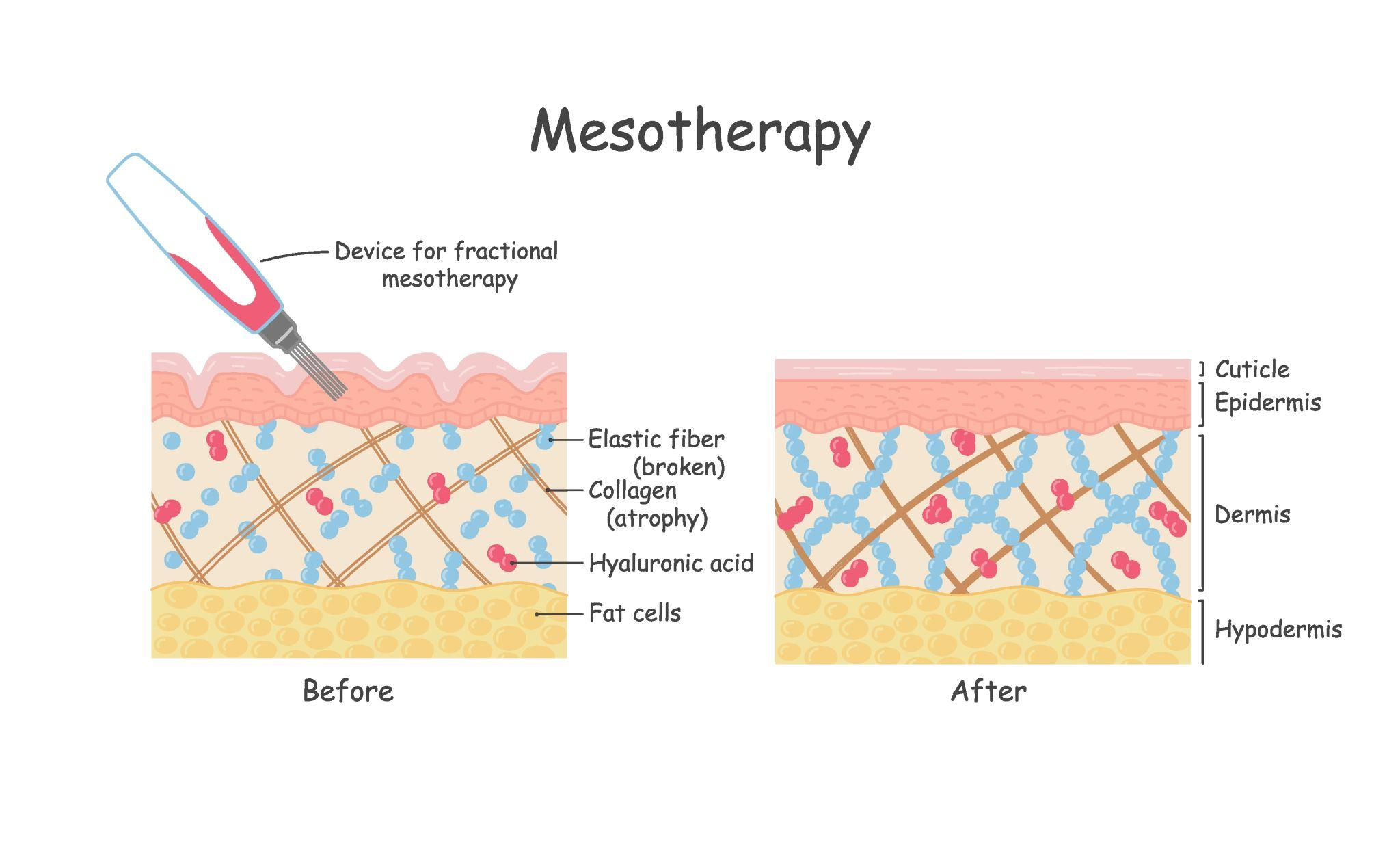
Mesotherapy is a treatment technique in which small amounts of selected substances are introduced into the skin through multiple injections. In aesthetic applications, formulations may include substances such as hyaluronic acid and other ingredients depending on the protocol, product, indication, and local regulations.
The important point is that mesotherapy is primarily a delivery technique, not one single universal formula.
Different clinics may use different products, injection techniques, treatment depths, and protocols. Research on hyaluronic-acid-based facial mesotherapy has examined techniques including serial micropuncture, nappage, depot, and micro-linear approaches.
This makes professional assessment extremely important.
The operator needs to consider the client's skin condition, treatment objective, product selection, contraindications, injection technique, hygiene requirements, and aftercare.
For this reason, mesotherapy should not be viewed as simply “a stronger facial.” It is a professional procedure requiring appropriate training, clinical judgment, and compliance with applicable regulations.
Mesotherapy vs Traditional Skincare: How the Mechanisms Differ
The biggest difference between the two approaches is where and how the active ingredients are delivered.
Traditional Skincare: Surface-Level Support
Traditional skincare primarily works through topical application.
Products such as serums, creams, masks, and lotions are applied directly to the skin. Their roles can include supporting hydration, maintaining the skin barrier, improving surface texture, and providing cosmetic benefits through carefully selected ingredients.
This approach is convenient and suitable for frequent maintenance.
For beauty salons, traditional skincare can also be integrated into facial treatments, cleansing protocols, exfoliation, massage, LED sessions, oxygen treatments, and other non-invasive services.
Its biggest advantage is consistency.
Clients can continue a home-care routine between professional appointments, helping maintain the results and overall condition of the skin.
Mesotherapy: Targeted Intradermal Delivery
Mesotherapy takes a more direct delivery approach.
Instead of depending entirely on topical penetration, the practitioner introduces small amounts of a selected formulation into targeted skin layers.
This can create a more localized treatment strategy, particularly when the goal is to improve skin quality rather than simply moisturize the surface.
However, the clinical evidence for cosmetic mesotherapy is not uniform. Some studies and reviews report potential improvements in hydration, elasticity, firmness, or skin appearance, while other controlled studies have found limited or statistically insignificant changes. Therefore, clinics should avoid presenting mesotherapy as a guaranteed anti-aging solution.
This distinction is important for professional marketing: technology can improve treatment control, but it does not replace appropriate patient selection or evidence-based protocols.
Where Professional Beauty Devices Fit In
Modern aesthetic clinics are increasingly combining manual techniques with technology-assisted treatments.
This is where professional beauty devices can provide an important bridge between traditional skincare and more advanced procedures.
For example, non-invasive technologies may be used to support professional facial protocols through controlled energy, mechanical stimulation, exfoliation, or enhanced topical delivery.
Microneedling devices are one example. Controlled micro-injuries can temporarily increase skin permeability while activating wound-healing responses. Research has associated microneedling with processes involving fibroblast activity, collagen and elastin production, and changes in skin permeability.
Similarly, microdermabrasion and microvibration devices can provide controlled mechanical stimulation. A 2026 review of device-based skin-renewal approaches examined microneedling, microdermabrasion, and microvibration and found that these modalities can influence skin texture, epidermal renewal, and remodeling pathways, although the strength of evidence varies between technologies.
This creates several treatment possibilities for professional clinics.
Instead of choosing between “traditional skincare” and “mesotherapy,” practitioners can develop different protocols according to client needs.
For example:
Basic maintenance:
Cleansing + exfoliation + serum + hydration + LED therapy
Intensive non-invasive facial:
Deep cleansing + mechanical exfoliation + ultrasonic or infusion technology + mask + LED
Skin-renewal program:
Professional assessment + microneedling or another suitable device-based procedure + post-treatment skincare
Medical-aesthetic protocol:
Professional consultation + appropriately regulated mesotherapy procedure + supportive device-based or topical treatments + aftercare
The exact combination should always depend on the practitioner's qualifications, the device's intended use, the products being used, and applicable local regulations.
Advantages and Comparison
| Treatment Approach | Main Mechanism | Typical Professional Role | Key Advantage |
|---|---|---|---|
| Traditional Skincare | Topical application | Daily maintenance and facial care | Convenient and repeatable |
| Professional Facial Devices | Mechanical, thermal, optical, acoustic, or infusion-based mechanisms | Enhanced professional treatments | Greater treatment control |
| Microneedling | Controlled micro-injury and temporary permeability changes | Skin texture and renewal programs | Combines stimulation with controlled delivery pathways |
| Mesotherapy | Small-volume intradermal delivery | Targeted aesthetic procedures | Direct delivery into selected skin layers |
| Combination Protocols | Multiple complementary mechanisms | Customized clinic programs | Can address different treatment objectives |
The table illustrates an important point: these approaches do not necessarily compete with each other.
A professional clinic can use traditional skincare as the foundation, device-based treatments as an enhancement, and more advanced procedures when appropriate.
This layered model is increasingly relevant to modern aesthetic businesses because clients rarely have only one concern.
A client may simultaneously experience dehydration, uneven texture, reduced firmness, and visible signs of aging. A single cream may not address every concern, while a single advanced procedure may not be appropriate either.
A structured treatment plan can therefore be more valuable than promoting one technology as a universal solution.
Why Professional Devices Can Add Value
One major difference between professional beauty equipment and basic home skincare is control.
Professional equipment can allow trained operators to adjust treatment parameters according to the treatment objective and the device's intended use.
Depending on the technology, this may involve variables such as:
- Treatment intensity
- Energy level
- Treatment duration
- Operating mode
- Contact method
- Treatment area
- Number of passes
- Applicator or handpiece selection
This level of control can make professional treatments more standardized than simply applying a skincare product manually.
For beauty salons and clinics, equipment can also improve service differentiation.
A basic facial can become a structured treatment protocol supported by professional technology. This gives practitioners an opportunity to create treatment packages around hydration, skin texture, rejuvenation, cleansing, firming, or maintenance.
The equipment itself is not the treatment result. Rather, it is a tool that helps trained professionals deliver a more controlled and repeatable treatment experience.
Applications: Matching Treatment to Client Needs
1. Clients With Mild Dehydration
For clients whose primary concern is dryness or temporary dehydration, traditional skincare may remain the most appropriate foundation.
Professional facials can enhance the experience through cleansing, exfoliation, hydration masks, and suitable device-assisted infusion or treatment technologies.
Mesotherapy may be considered in appropriate professional settings when a more targeted approach is desired, but it should not automatically replace basic skin maintenance.
2. Clients Concerned About Fine Lines
Fine lines can have multiple causes, including dehydration, photoaging, reduced elasticity, and structural changes associated with aging.
A clinic may therefore use a combination of skincare, light-based treatments, microneedling, radio-frequency technology, or other professional modalities depending on the client's condition.
Mesotherapy may also be considered as part of a broader rejuvenation strategy, but treatment claims should remain realistic because published evidence is mixed.
3. Clients Seeking Improved Skin Texture
Texture concerns may respond well to controlled mechanical treatments.
Microneedling and microdermabrasion are examples of professional device-assisted approaches that can influence epidermal renewal and skin remodeling.
For these clients, the value of professional equipment lies in controlled application rather than simply using stronger skincare products.
4. Clients Looking for a More Personalized Treatment
Personalization is becoming increasingly important in aesthetic clinics.
Instead of offering the same facial to every client, practitioners can assess skin condition and develop different treatment pathways.
For example:
Dry + dull skin:
Hydration-focused facial + infusion technology + LED
Uneven texture:
Exfoliation + microneedling or another appropriate device-based treatment
Early skin aging:
Professional skincare + energy-based treatment + structured maintenance
Advanced rejuvenation needs:
Medical consultation + appropriately regulated procedures + supportive professional skincare
This approach positions the clinic as a professional treatment provider rather than simply a place to purchase skincare products.
Mesotherapy and Traditional Skincare Can Work Together
The most practical answer to the comparison is that mesotherapy and traditional skincare serve different roles.
Traditional skincare is generally designed for continuous maintenance.
Mesotherapy is a professional treatment technique involving intradermal delivery and therefore requires a higher level of professional control.
Professional beauty devices occupy a broad middle ground.
They can provide non-invasive or minimally invasive treatment options, depending on the technology, while offering practitioners greater control than ordinary manual skincare.
This makes devices particularly valuable for clinics building treatment portfolios.
A modern beauty business does not necessarily need to choose one technology.
Instead, it can build a treatment ecosystem:
Assessment → Preparation → Device-Based Treatment → Advanced Procedure When Appropriate → Recovery/Aftercare → Home Maintenance
This type of workflow can improve treatment consistency while creating more opportunities for personalized services.
What Should Clinics Consider Before Choosing a Treatment?
Before introducing mesotherapy or a device-based treatment, professional operators should evaluate several factors.
First, treatment objective.
Is the goal hydration, texture improvement, skin rejuvenation, cleansing, firmness, or another concern?
Second, invasiveness.
Does the client want a non-invasive treatment, or are they suitable for a minimally invasive professional procedure?
Third, operator training.
Some procedures require specific professional qualifications and clinical training.
Fourth, product compatibility.
Not every cosmetic ingredient or serum is suitable for use with every device or invasive technique.
Fifth, safety and regulation.
The device, consumables, products, treatment claims, and operator qualifications should comply with applicable local requirements.
Finally, client expectations.
Professional treatment should be positioned around realistic outcomes rather than guaranteed transformations.
These considerations are especially important when a clinic is selecting professional equipment. A device should not be evaluated only by the number of functions it offers. Ease of operation, parameter control, handpiece design, treatment consistency, maintenance, training, and after-sales support can be equally important.
Conclusion
Mesotherapy and traditional skincare represent two different approaches to skin management.
Traditional skincare focuses primarily on topical maintenance, hydration, barrier support, and long-term daily care. Mesotherapy uses a targeted intradermal delivery approach and is generally positioned as a professional aesthetic procedure. Meanwhile, modern beauty devices provide additional options for controlled mechanical, thermal, optical, acoustic, or delivery-based treatments.
For professional beauty salons and aesthetic clinics, the goal should not be to determine which method is universally “better.”
The more effective strategy is to understand the strengths and limitations of each approach and build treatment protocols around actual client needs.
Professional equipment can play an important role in this process. By providing controlled parameters, specialized handpieces, and repeatable treatment procedures, beauty technology can help clinics expand beyond traditional facials and create more structured, personalized treatment experiences.
Ultimately, the future of professional skincare is less about choosing one method and more about combining the right technology, treatment technique, professional expertise, and home-care strategy for the right client
Founded in 2008, Guangzhou GLM Beauty Spa Equipment Factory specializes in research, development, manufacture and selling of beauty and slimming machines. Our production base is located in Guangzhou City, Guangdong Province, China. Since our foundation, we have introduced advanced technologies and equipment, to assure high quality and high performance of our products. With professional marketing guide and excellent after-sales service, our products have been exported to over 20 countries and regions, including Southeast Asia, the Middle East, Europe and the United States, won worldwide praises and gained a good reputation