
Introduction
Microneedling has become one of the most sought-after aesthetic treatments in professional clinics and beauty salons worldwide. Once regarded as a niche procedure, it is now widely recognized for its ability to improve skin texture, reduce visible signs of aging, minimize acne scars, and enhance overall skin quality without extensive downtime.
The growing demand for minimally invasive treatments has encouraged aesthetic professionals to invest in advanced microneedling systems that deliver safer, more consistent, and more predictable outcomes than traditional manual methods. Modern professional devices combine precision engineering, adjustable treatment parameters, and hygienic disposable cartridges, allowing practitioners to customize every session according to individual skin conditions.
For beauty clinics, medi-spas, dermatology centers, and aesthetic salons, microneedling is more than just another skincare treatment. It has become a versatile service that fits into comprehensive skin rejuvenation programs, supports combination therapies, and helps improve client satisfaction through visible, long-lasting results.
Understanding how professional microneedling technology works—and why equipment quality matters—is essential for practitioners seeking to provide effective treatments while maintaining high standards of safety and client comfort.
Understanding the Growing Demand for Professional Microneedling
Today's skincare consumers are more educated than ever before. Rather than looking for quick cosmetic fixes, many clients now seek treatments that stimulate the skin's natural regenerative processes instead of masking imperfections temporarily.
Several factors have contributed to the rapid growth of professional microneedling services:
- Increasing awareness of collagen induction therapy
- Rising demand for minimally invasive aesthetic procedures
- Preference for treatments with short recovery periods
- Greater interest in personalized skincare programs
- Growing popularity of combination facial therapies
Unlike aggressive resurfacing procedures that may require significant downtime, professional microneedling offers gradual yet noticeable skin improvement. This balance between effectiveness and recovery has made it suitable for a broad range of clients across different age groups.
Younger clients often pursue microneedling to address enlarged pores, acne scars, oily skin, and uneven texture. Meanwhile, mature clients typically seek improvements in skin firmness, fine lines, wrinkles, and overall skin rejuvenation. This versatility allows clinics to serve multiple customer segments using a single technology platform.
Why Home Microneedling Isn't the Same as Professional Treatment
The popularity of home-use dermarollers has introduced many consumers to the concept of microneedling. However, professional practitioners understand that there is a substantial difference between consumer devices and clinical-grade equipment.
Professional microneedling systems are specifically engineered to deliver controlled, vertical needle penetration at adjustable depths. This precision helps minimize unnecessary skin trauma while creating consistent microchannels that stimulate the skin's natural healing response.
Home devices, on the other hand, generally use fixed needle lengths and manual rolling techniques. These limitations can reduce treatment consistency and may increase the likelihood of uneven penetration, skin irritation, or improper application when used without professional guidance.
Clinical-grade systems also offer advantages such as:
- Adjustable needle depth for different treatment areas
- High-speed motorized operation
- Sterile disposable needle cartridges
- Stable and consistent penetration
- Improved treatment efficiency
- Better comfort during procedures
- Compatibility with professional treatment protocols
For aesthetic clinics, investing in professional equipment is not only about achieving better results—it also demonstrates a commitment to treatment quality, client safety, and professional standards.
Common Skin Concerns Addressed by Professional Microneedling
One reason microneedling has become a cornerstone treatment in aesthetic practices is its versatility. Rather than targeting a single condition, professional systems can address multiple skin concerns through customized treatment protocols.
Professional microneedling is commonly incorporated into treatment plans for:
Fine Lines and Wrinkles
As collagen production naturally declines with age, the skin gradually loses firmness and elasticity. Controlled micro-injuries created during microneedling encourage natural collagen remodeling, helping soften the appearance of early aging signs over time.
Acne Scars
Post-acne scarring remains one of the most challenging concerns for many clients. Microneedling supports gradual skin remodeling by stimulating tissue regeneration, making it particularly suitable for atrophic acne scars when performed as part of a professional treatment series.
Enlarged Pores
Although pore size cannot be permanently changed, strengthening the surrounding skin structure may help pores appear smaller and less noticeable. Many clients report smoother skin texture following multiple professional treatments.
Uneven Skin Texture
Environmental damage, previous acne, and aging often contribute to rough or uneven skin texture. Professional microneedling promotes healthier skin renewal, leading to a smoother and more refined appearance.
Mild Pigmentation Irregularities
When combined with appropriate professional skincare protocols, microneedling may support a more balanced skin tone by encouraging natural skin renewal. Treatment plans should always be individualized based on skin type and pigmentation risk.
Overall Skin Rejuvenation
Many clinics also offer microneedling as part of preventive anti-aging programs for clients who wish to maintain healthy, youthful-looking skin before more significant signs of aging develop.
Why Professional Equipment Matters
The success of a microneedling treatment depends not only on practitioner skill but also on the performance of the equipment itself.
Modern professional systems are designed with features that improve both treatment quality and operational efficiency. Adjustable speed settings, precise needle-depth control, ergonomic handpieces, and digital interfaces allow practitioners to tailor treatments for different facial areas and skin conditions.
Advanced devices also support strict hygiene standards through single-use sterile cartridges, reducing the risk of cross-contamination while streamlining treatment preparation.
For clinics with growing client volumes, reliable equipment can improve workflow consistency, reduce maintenance requirements, and contribute to a more professional treatment experience.
As the aesthetic industry continues to evolve, investing in high-quality microneedling technology enables clinics to expand their service offerings while meeting increasing expectations for safety, comfort, and clinical performance
Technology & Mechanism
How Professional Microneedling Technology Works
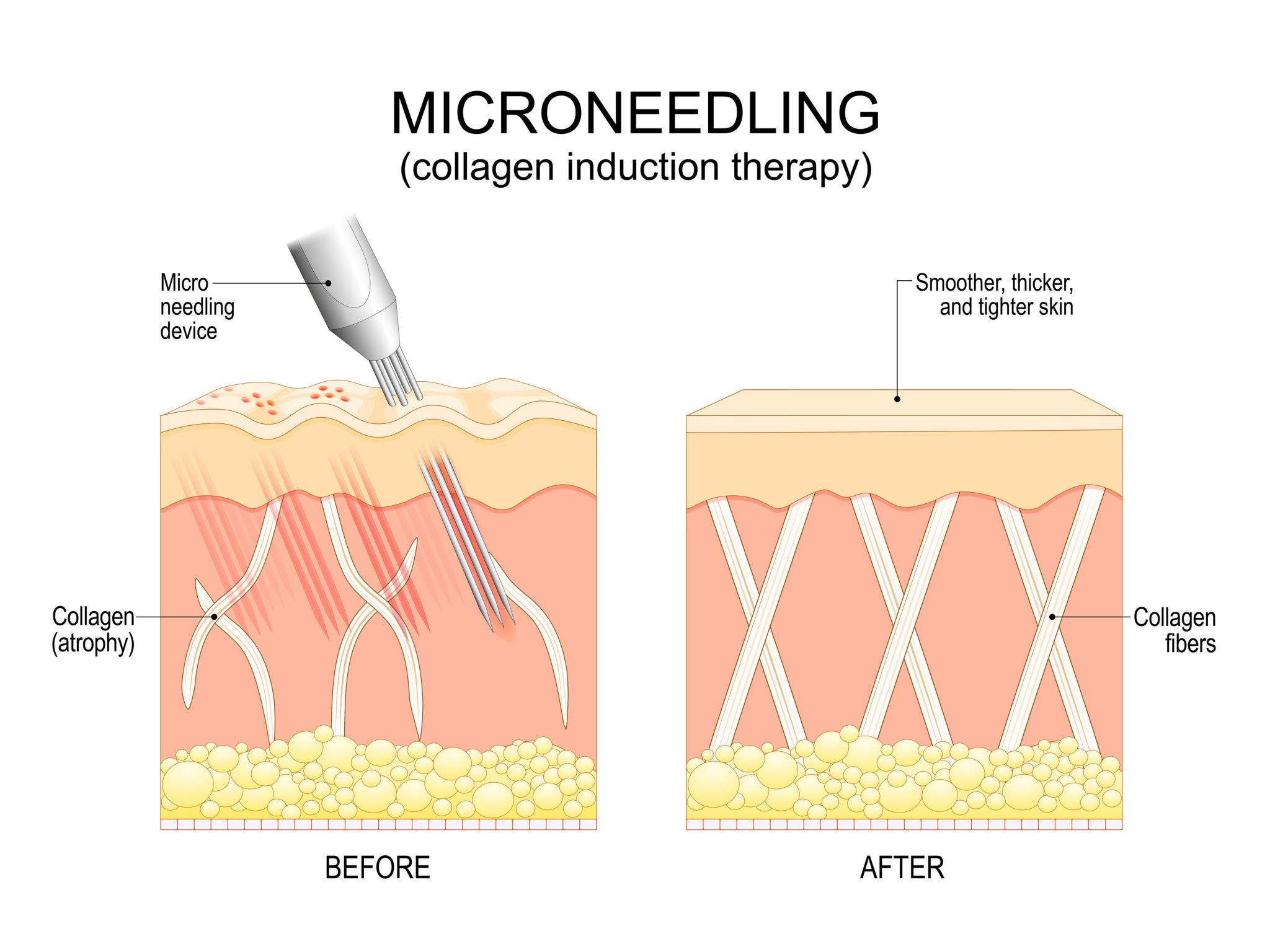
Professional microneedling is based on the principle of controlled collagen induction. Instead of removing layers of skin or relying on thermal energy, the technology creates thousands of precise microchannels in the epidermis and superficial dermis using fine, sterile needles.
These microscopic channels trigger the skin's natural wound-healing response without causing significant tissue damage. Because the channels are carefully controlled in both depth and density, the surrounding tissue remains largely intact, allowing the skin to recover relatively quickly while initiating biological repair processes.
Unlike manual dermarollers, professional microneedling devices use a motorized handpiece that moves the needles vertically at high speed. This controlled motion produces uniform penetration across the treatment area, helping practitioners deliver consistent results while minimizing unnecessary skin trauma.
The treatment process can generally be divided into four stages:
- Controlled Microchannel Creation – Fine needles create thousands of evenly distributed micro-injuries.
- Inflammatory Response – The skin activates its natural repair mechanisms and releases growth factors.
- Cellular Regeneration – Fibroblasts become more active, supporting tissue renewal.
- Collagen Remodeling – New collagen and elastin gradually strengthen the skin over the following weeks and months.
Because these biological processes continue long after the treatment session has ended, clients often notice progressive improvements rather than immediate dramatic changes.
The Science Behind Collagen Induction Therapy
Collagen is the primary structural protein responsible for skin firmness, elasticity, and resilience. As people age, collagen production naturally slows, leading to wrinkles, reduced elasticity, enlarged pores, and a rougher skin texture.
Professional microneedling stimulates the body's own regenerative capacity instead of introducing synthetic fillers or removing large amounts of tissue.
During treatment, controlled micro-injuries encourage the release of signaling molecules that activate fibroblasts—the cells responsible for producing collagen, elastin, and other components of the extracellular matrix. Over time, this remodeling process helps improve the overall quality and appearance of the skin.
This mechanism explains why microneedling is commonly incorporated into treatment plans for:
- Fine lines and early wrinkles
- Acne scar remodeling
- Skin texture refinement
- Mild skin laxity
- Enlarged pores
- General skin rejuvenation
Because collagen remodeling occurs gradually, most professional treatment plans recommend multiple sessions spaced several weeks apart. This approach allows the skin adequate time to regenerate between treatments while building cumulative improvements.
Why Adjustable Needle Depth Matters
Not all areas of the face—or body—require the same treatment intensity. Skin thickness varies significantly depending on the anatomical location, making adjustable needle depth one of the most valuable features of professional microneedling devices.
For example:
| Treatment Area | Typical Professional Depth* |
|---|---|
| Forehead | 0.25–0.75 mm |
| Around Eyes | 0.25–0.50 mm |
| Cheeks | 0.50–1.50 mm |
| Acne Scars | Up to 2.0 mm (where appropriate) |
| Neck | 0.50–1.00 mm |
*Treatment depth should always be determined by a trained professional based on skin condition, treatment goals, and applicable regulations.
This level of customization allows practitioners to tailor treatments to individual clients rather than relying on a one-size-fits-all approach. It also helps balance treatment effectiveness with client comfort and recovery.
The Advantages of Digital Microneedling Systems
Modern professional devices have evolved far beyond traditional manual rollers. Digital microneedling systems provide greater precision, improved efficiency, and enhanced treatment consistency through advanced engineering.
Key technological features often include:
- High-speed motorized operation for smooth, vertical needle movement
- Adjustable needle depth to accommodate different treatment areas
- Variable speed settings for personalized treatment protocols
- Disposable sterile cartridges that support hygiene and simplify preparation
- Ergonomic handpieces designed to reduce operator fatigue during extended procedures
- Digital interfaces that allow practitioners to adjust settings quickly and accurately
These features help reduce variability between treatments and make it easier to achieve predictable outcomes across a wide range of skin concerns.
Enhanced Delivery of Professional Skincare
One additional benefit of microneedling is the temporary formation of microchannels within the skin. During the treatment window, these channels may enhance the penetration of selected professional topical products when used according to clinical protocols.
Many clinics incorporate compatible serums containing ingredients such as:
- Hyaluronic acid
- Peptides
- Growth factor–based formulations
- Vitamin complexes
- Skin-conditioning ingredients
The choice of products should always be based on the client's skin condition and the practitioner's professional judgment. Only products specifically intended for use with microneedling should be applied during or immediately after treatment.
This combination of controlled microchannel creation and carefully selected skincare can support a comprehensive treatment program aimed at improving hydration, texture, and overall skin appearance.
Why Professional Systems Deliver More Consistent Results
Consistency is one of the defining advantages of professional microneedling technology.
Manual devices rely heavily on user technique, including rolling pressure, angle, and speed. Variations in these factors can lead to uneven penetration and inconsistent treatment outcomes.
Professional motorized systems, by contrast, are designed to maintain:
- Stable vertical needle insertion
- Uniform treatment depth
- Consistent needle speed
- Even coverage across the treatment area
- Greater procedural efficiency
These characteristics help practitioners standardize treatment protocols, particularly in busy clinics where reproducibility and operational efficiency are essential.
As aesthetic technology continues to advance, professional microneedling systems have become an integral part of modern skin rejuvenation programs. Their combination of precision, customization, and reliable performance makes them well suited for clinics seeking to deliver high-quality treatments while meeting increasing client expectations
Advantages & Comparison
Why Professional Microneedling Has Become a Preferred Treatment
As the aesthetic industry continues to evolve, clinics are increasingly looking for treatments that deliver visible results while fitting into efficient, client-friendly workflows. Professional microneedling meets these expectations by combining proven skin rejuvenation principles with modern device technology.
Compared with many traditional aesthetic procedures, microneedling offers a practical balance between effectiveness, versatility, and recovery time. It can be adapted to different skin concerns, incorporated into customized treatment plans, and performed throughout the year for many clients when appropriate.
For professional practices, this flexibility makes microneedling a valuable addition to a comprehensive service portfolio rather than a standalone procedure.
Professional Microneedling vs. Home Dermarollers
Although home dermarollers have increased public awareness of microneedling, they are fundamentally different from professional systems in both design and performance.
| Feature | Home Dermaroller | Professional Microneedling Device |
|---|---|---|
| Needle Movement | Rolling | Vertical motorized stamping |
| Needle Depth | Fixed | Fully adjustable |
| Treatment Precision | Limited | High precision |
| Hygiene | Reusable in many cases | Sterile disposable cartridges |
| Treatment Efficiency | Lower | Higher |
| Suitable Skin Concerns | Basic skincare support | Comprehensive professional treatments |
| Operator | Consumer | Trained practitioner |
One of the most significant differences is needle motion. Rolling devices enter the skin at an angle, which may increase dragging across the surface. Professional motorized devices insert needles vertically, reducing unnecessary tissue disruption and improving treatment consistency.
For clients with concerns such as acne scarring, visible signs of aging, or uneven skin texture, professional systems provide practitioners with greater control over treatment depth, speed, and technique.
Microneedling vs. Chemical Peels
Chemical peels and microneedling are both widely used for skin rejuvenation, but they improve the skin through different mechanisms.
Chemical peels rely on carefully formulated acids to exfoliate damaged outer layers of skin, encouraging cellular turnover. They are often selected for concerns such as superficial pigmentation, dullness, and uneven tone.
Microneedling, in contrast, focuses on stimulating the skin's internal repair process through controlled collagen induction.
Chemical Peels
Advantages
- Improve superficial skin texture
- Brighten dull skin
- Address certain pigmentation concerns
- Relatively simple procedure
Considerations
- Results depend on peel type and skin tolerance
- Some peels involve visible peeling and downtime
- Certain formulations require careful seasonal planning
Professional Microneedling
Advantages
- Stimulates collagen remodeling
- Improves skin texture from within
- Suitable for multiple treatment goals
- Minimal disruption to the skin surface
- Can complement broader skin rejuvenation programs
Rather than replacing one another, these treatments are often combined in professional clinics as part of a staged treatment strategy tailored to individual client needs.
Microneedling vs. Fractional Laser Treatments
Fractional laser technology is another established option for skin resurfacing and collagen stimulation. Both treatments aim to improve skin quality, but they differ in how energy is delivered.
Fractional lasers use thermal energy to create microscopic treatment zones within the skin. Depending on the laser system and treatment settings, recovery time may be longer, and post-treatment care is often more intensive.
Microneedling creates controlled mechanical microchannels without relying on heat, making it an attractive option for many clients seeking collagen stimulation with comparatively shorter recovery.
Fractional Laser
- Uses thermal energy
- Effective for selected resurfacing indications
- May involve more downtime
- Treatment planning depends on skin type and clinical goals
Professional Microneedling
- Mechanical collagen induction
- No thermal tissue injury
- Flexible treatment protocols
- Broad compatibility with comprehensive skincare programs
The most appropriate treatment depends on the client's skin condition, expectations, medical history, and practitioner assessment. Many advanced aesthetic clinics offer both technologies, selecting the most suitable approach for each case.
Why Clinics Choose Professional Microneedling Systems
Beyond treatment outcomes, professional equipment also supports day-to-day clinic operations.
Modern microneedling systems are designed to help practitioners deliver consistent services efficiently while maintaining high standards of safety and hygiene.
Key operational benefits include:
Customizable Treatment Protocols
Adjustable speed and needle depth allow practitioners to personalize treatments for different skin conditions, facial areas, and treatment objectives.
Improved Client Comfort
Stable vertical needle motion helps reduce unnecessary skin dragging, contributing to a smoother treatment experience.
Efficient Workflow
Quick cartridge replacement, intuitive digital controls, and ergonomic handpieces can reduce preparation time and simplify daily operation in busy clinics.
High Hygiene Standards
Single-use sterile needle cartridges help support infection-control protocols and provide reassurance for both practitioners and clients.
Broad Treatment Applications
Instead of purchasing separate devices for multiple skin concerns, clinics can incorporate professional microneedling into services targeting skin rejuvenation, acne scar management, texture refinement, pore appearance, and preventive anti-aging programs.
Business Value for Professional Aesthetic Practices
From a business perspective, microneedling technology offers advantages that extend beyond clinical performance.
Because the treatment can be adapted to a wide range of skin concerns, clinics often include it within comprehensive treatment plans, maintenance programs, or combination therapies. This flexibility enables practitioners to create personalized service packages based on each client's goals.
Professional microneedling may also contribute to:
- A broader treatment portfolio
- Increased opportunities for repeat visits through multi-session plans
- Greater treatment personalization
- Integration with complementary aesthetic technologies
- Enhanced client confidence through modern equipment and standardized protocols
For equipment distributors, beauty clinics, and aesthetic practices, investing in reliable microneedling technology is not simply about acquiring another device. It is about offering a treatment platform that aligns with current industry trends, supports practitioner expertise, and responds to growing demand for minimally invasive skin rejuvenation.
As client expectations continue to evolve, professional devices that combine precision, adaptability, and dependable performance are becoming an essential component of modern aesthetic practice
Applications & Client Needs
Professional microneedling has evolved from a standalone treatment into a versatile platform that can be integrated into comprehensive skin management programs. For aesthetic clinics, medi-spas, dermatology practices, and professional beauty salons, its adaptability allows practitioners to address a wide range of client concerns while creating personalized treatment plans.
Rather than offering the same procedure to every client, experienced practitioners evaluate skin condition, treatment history, age, lifestyle, and aesthetic goals before selecting appropriate treatment parameters. This individualized approach helps optimize outcomes and reinforces the value of professional care.
Which Clients Benefit Most from Professional Microneedling?
One of the greatest strengths of professional microneedling is its suitability for diverse client groups. While treatment protocols vary, the technology can be incorporated into plans for clients seeking both corrective and preventive skin improvement.
Clients in Their 20s and Early 30s
Younger clients often seek treatment for concerns related to skin texture rather than aging.
Common treatment goals include:
- Acne scar improvement
- Enlarged pore appearance
- Uneven skin texture
- Mild post-inflammatory marks
- Overall skin refinement
For this group, professional microneedling is frequently included in long-term skin maintenance programs designed to support healthy-looking skin and address the visible effects of previous acne.
Clients in Their 30s and 40s
As collagen production gradually decreases, many clients begin noticing subtle changes in skin firmness and elasticity.
Typical concerns include:
- Fine lines
- Early wrinkles
- Reduced skin firmness
- Mild skin laxity
- Dull complexion
Microneedling can support collagen remodeling as part of a preventive anti-aging strategy, helping clients maintain smoother, firmer-looking skin over time.
Mature Clients
Clients over 50 often present with multiple skin concerns simultaneously, including reduced elasticity, uneven texture, and more pronounced wrinkles.
In these cases, practitioners frequently combine microneedling with other professional technologies and skincare protocols to create a comprehensive rejuvenation program tailored to the client's needs.
Integrating Microneedling into Combination Treatments
Modern aesthetic practice increasingly emphasizes combination therapies rather than relying on a single treatment modality. Professional microneedling complements a variety of non-invasive technologies because it focuses on stimulating the skin's natural regenerative processes.
Depending on the clinic's treatment portfolio and practitioner assessment, microneedling may be incorporated alongside:
LED Light Therapy
LED therapy is commonly used to support post-treatment skin recovery and improve client comfort. Different wavelengths may be selected according to treatment objectives, making LED a practical addition to many microneedling protocols.
Professional Hydradermabrasion Treatments
Hydradermabrasion focuses on cleansing, exfoliation, and hydration. When appropriately scheduled as part of an overall treatment plan, it can complement microneedling by helping prepare the skin or maintain skin quality between sessions.
Radio Frequency Technologies
Some clinics combine collagen induction with radio frequency-based skin tightening procedures as part of a broader anti-aging strategy. The sequencing and suitability of these treatments should always be determined by trained professionals based on the client's skin condition.
Professional Skincare Programs
Clinical-grade serums, moisturizers, and barrier-support products are often recommended before and after treatment to support recovery and help maintain results. A consistent home-care routine also plays an important role in long-term skin health.
This integrated approach enables practitioners to provide customized solutions instead of isolated procedures, enhancing both treatment flexibility and the overall client experience.
Designing Professional Treatment Plans
Successful microneedling outcomes depend not only on the device itself but also on careful treatment planning.
Professional practitioners typically begin with a comprehensive skin consultation that includes:
- Skin type assessment
- Medical history review
- Lifestyle considerations
- Previous aesthetic treatments
- Client expectations
- Treatment goals
Based on this evaluation, practitioners can determine appropriate treatment intervals, needle depth, treatment intensity, and complementary skincare recommendations.
Rather than promising immediate transformation, experienced professionals educate clients about the gradual nature of collagen remodeling. Improvements often become more noticeable over several weeks as the skin progresses through its natural repair cycle.
This realistic communication helps establish appropriate expectations and encourages better treatment adherence.
Improving Client Satisfaction Through Professional Equipment
Client experience extends far beyond visible results. Comfort, efficiency, hygiene, and practitioner confidence all contribute to overall satisfaction.
Professional microneedling systems are designed to support these expectations through features such as:
- Smooth motorized operation
- Precise depth adjustment
- Stable treatment performance
- Ergonomic handpieces
- Sterile disposable cartridges
- Intuitive digital controls
These technological advantages help practitioners perform treatments more consistently while providing clients with a professional clinical experience.
As clients become increasingly informed about aesthetic procedures, many also recognize the difference between consumer-grade devices and professional medical or aesthetic equipment. High-quality technology can therefore strengthen client confidence in both the treatment and the clinic providing it.
Supporting Long-Term Clinic Growth
From a business perspective, professional microneedling represents more than a single treatment service.
Its versatility allows clinics to:
- Expand their range of skin rejuvenation services
- Personalize treatment plans for different client profiles
- Combine multiple technologies within comprehensive aesthetic programs
- Encourage repeat visits through structured treatment courses
- Strengthen long-term client relationships with ongoing skin maintenance
Because the technology addresses multiple concerns—including texture, scars, visible aging, and overall skin quality—it remains relevant across changing market trends and seasonal treatment demands.
For equipment manufacturers and suppliers, this broad clinical applicability also makes professional microneedling systems an attractive investment for beauty salons, medi-spas, and aesthetic clinics seeking reliable, multifunctional technology.
Conclusion
Professional microneedling has become a cornerstone of modern aesthetic practice by combining scientifically grounded collagen induction with advanced device technology. Its ability to address a wide variety of skin concerns, support personalized treatment protocols, and integrate seamlessly with complementary therapies has made it an essential solution for clinics focused on non-invasive skin rejuvenation.
While the principles behind microneedling are well established, treatment quality depends heavily on practitioner expertise and equipment performance. Digital professional systems offer precise needle control, adjustable treatment parameters, and hygienic disposable cartridges, enabling practitioners to deliver consistent, customized care across diverse skin types and treatment goals.
As demand for minimally invasive aesthetic procedures continues to grow, clinics are increasingly seeking technologies that balance clinical effectiveness, operational efficiency, and client satisfaction. Professional microneedling meets these expectations by providing a flexible treatment platform suitable for acne scar management, skin rejuvenation, texture refinement, and preventive anti-aging care.
For beauty professionals, investing in high-quality microneedling equipment is not simply about adopting another aesthetic device. It is about expanding treatment capabilities, enhancing the client experience, and supporting sustainable business growth in an increasingly competitive aesthetic market