
1. Introduction
The professional beauty industry is evolving rapidly in 2026. As client expectations continue to rise, beauty salons, medical spas, and aesthetic clinics are looking for more efficient ways to deliver personalized treatments while maintaining high service standards. Technology is playing an increasingly important role in this transformation, particularly through the development of multi-technology beauty devices.
Traditionally, professional beauty businesses often invested in separate machines for different treatment purposes, such as skin cleansing, hydration, radiofrequency skin tightening, ultrasound treatments, and body contouring. Although these specialized devices can deliver targeted functions, managing multiple machines can increase equipment costs, occupy valuable treatment-room space, and make daily operations more complicated.
Multi-technology beauty devices offer a more integrated approach. By combining several treatment technologies within one system, these all-in-one platforms allow professional operators to perform different procedures using a single equipment setup. Depending on the device configuration, a system may integrate technologies such as hydrodermabrasion, oxygen infusion, radiofrequency, ultrasonic treatment, vacuum therapy, LED light therapy, or other aesthetic technologies.
The purpose of this integration is not simply to add more functions to one machine. It is to create a more flexible treatment environment, improve workflow efficiency, and help beauty businesses respond to a wider range of client needs. For modern salons and aesthetic clinics, choosing the right multi-technology equipment can become an important part of long-term business development.
2. Background: Why Are Beauty Salons Moving Toward All-in-One Systems?
The growing interest in multi-functional beauty equipment reflects several practical challenges within the professional beauty industry.
Rising Demand for Personalized Treatments
Today's beauty clients are increasingly interested in treatments tailored to their individual skin conditions, aesthetic goals, and personal preferences. Some clients prioritize deep cleansing and hydration, while others are more interested in skin firmness, texture improvement, or body-care services.
A salon that relies on only one treatment technology may find it difficult to accommodate different service expectations. Purchasing multiple independent machines can expand treatment options, but it also requires additional investment, training, maintenance, and storage space.
All-in-one beauty systems help address this challenge by providing several treatment functions within one platform. Operators can select suitable handpieces and treatment modes according to the service being performed, provided that the device is designed and approved for those applications.
Limited Treatment-Room Space
Space is an important operational consideration, especially for independent beauty salons, boutique medspas, and smaller aesthetic clinics.
A traditional treatment room may need to accommodate a facial bed, trolley, skincare products, storage cabinets, and multiple beauty machines. Adding more equipment can make the room feel crowded and reduce the operator's freedom of movement.
An integrated system can consolidate several functions into a smaller equipment footprint. This makes treatment-room organization easier and helps businesses use their available space more efficiently.
The Need for Better Operational Efficiency
Professional beauty businesses must balance treatment quality with appointment scheduling, staff productivity, and operating costs.
Switching between several machines during a treatment may require additional setup time, cable management, accessory replacement, and equipment adjustments. When different treatment functions are integrated into one system, operators may be able to streamline these processes.
This is particularly useful for salons offering multiple facial and body-care services throughout the day.
3. Technology and Mechanism: How Do Multi-Technology Beauty Devices Work?
Multi-technology beauty devices combine different aesthetic technologies within one equipment platform. Each technology has its own operating principle and intended application. Understanding these mechanisms helps professional operators choose appropriate treatment combinations.
Hydrodermabrasion and Water-Based Skin Cleansing
Hydrodermabrasion systems use controlled liquid delivery and specialized treatment tips to cleanse the skin surface and assist with the removal of accumulated impurities and dead skin cells.
Some systems combine water-based exfoliation with suction to help remove loosened debris from the treatment area. Depending on the configuration, the device may also deliver selected skincare solutions during the procedure.
This technology is commonly incorporated into professional facial treatments focused on cleansing, skin preparation, and hydration.
Radiofrequency Technology for Skin Tightening Treatments
Radiofrequency (RF) technology uses electromagnetic energy to generate heat within targeted tissue layers. In professional aesthetic applications, controlled thermal energy is used to support treatments focused on skin firmness and the appearance of skin texture.
Different RF configurations may operate with different electrode designs, frequencies, and energy delivery methods. Professional operators must follow the manufacturer's treatment protocols and adjust settings according to the device specifications and client suitability.
When integrated into a multi-functional platform, RF can complement other facial treatment technologies as part of a structured aesthetic service.
Ultrasonic Technology
Ultrasonic beauty devices use high-frequency mechanical vibrations for different professional applications.
Depending on the handpiece design, ultrasonic technology may be used for skin cleansing, cosmetic product application, or selected body-care procedures. Different ultrasonic systems should not be treated as interchangeable, because their frequencies, power levels, and intended functions can vary considerably.
In an integrated beauty system, ultrasonic handpieces allow operators to add another treatment option without requiring an entirely separate machine.
Oxygen Infusion and Hydration Technology
Some professional facial devices incorporate oxygen-related delivery systems or specialized serum application technologies.
These functions are designed to support cosmetic treatment routines involving hydration and skincare product application. Their actual mechanisms differ by equipment design, and oxygen infusion should not automatically be interpreted as medical oxygen therapy.
When combined with cleansing and other facial technologies, these functions can form part of a multi-step professional facial experience.
LED Light Therapy
LED light therapy uses specific wavelengths of visible or near-visible light for cosmetic skin-care applications.
Different wavelengths are associated with different treatment objectives. For example, red light is commonly incorporated into professional facial routines focused on the appearance of skin vitality, while blue light is frequently used in cosmetic routines designed for oily or blemish-prone skin.
The wavelength, irradiance, treatment distance, and exposure time all influence the application. Professional operators should follow the manufacturer's specifications and appropriate eye-protection guidance.
Vacuum and Body-Care Technologies
Certain multi-technology platforms are designed for body-care applications and may incorporate vacuum suction, mechanical massage, or other body-contouring-related functions.
Vacuum systems use controlled negative pressure to create suction at the treatment surface. Depending on the handpiece design, this may be combined with massage or rolling movements to support professional body-care services.
These technologies are not included in every multi-functional beauty machine. Buyers should verify the actual configuration rather than assuming that all-in-one systems offer identical functions.
4. Advantages and Comparison: Why Choose Multi-Technology Beauty Devices?
The main advantage of an all-in-one beauty system is its ability to consolidate multiple treatment functions into one professional platform. However, its value extends beyond equipment consolidation.
Improved Space Utilization
One integrated system can potentially replace several individual machines, reducing the number of equipment units required in a treatment room.
For small salons and boutique clinics, this can create a more organized working environment. Operators can keep treatment accessories within reach, reduce unnecessary equipment movement, and maintain a cleaner room layout.
A more efficient space arrangement also contributes to a professional impression, helping clients feel more comfortable during their visits.
More Flexible Service Combinations
Multi-technology systems allow salons to design different treatment programs around available technologies.
For example, a professional facial service may combine cleansing, hydration, and selected skin-care technologies in a structured sequence. A body-care service may incorporate different massage or suction functions, if supported by the device.
This flexibility gives businesses more opportunities to develop service packages, introduce new treatment combinations, and respond to changing market demand.
However, more functions do not automatically mean better results. Treatment combinations should be based on compatibility, client suitability, and the manufacturer's guidelines.
Streamlined Treatment Workflows
When several functions are integrated into one device, operators may spend less time moving between machines and preparing separate equipment.
A well-designed system can provide centralized controls, organized handpiece connections, and easier access to treatment settings.
This can help improve appointment transitions and make staff workflows more consistent. The actual efficiency gains depend on equipment design, operator experience, and the complexity of the treatment protocol.
Potentially Lower Total Equipment Investment
Purchasing separate machines for every treatment category can create a substantial initial investment.
An all-in-one system may offer a more economical alternative for businesses that need several complementary treatment functions but have limited purchasing budgets.
However, buyers should compare the total cost of ownership rather than focusing only on the purchase price. Important factors include warranty coverage, consumables, replacement handpieces, maintenance requirements, training, and after-sales technical support.
A More Consistent Client Experience
Clients often value treatments that feel organized, comfortable, and professionally delivered.
An integrated platform can help operators create a smoother service sequence, reducing unnecessary interruptions caused by switching equipment.
It can also support more personalized service planning. Rather than offering the same single-function treatment to every client, professionals can select appropriate technologies according to individual needs and the available equipment configuration.
Multi-Technology Systems vs. Single-Function Machines
| Comparison | Multi-Technology Systems | Single-Function Machines |
|---|---|---|
| Treatment options | Multiple integrated functions | One primary function |
| Space requirements | Often more compact overall | May require several units |
| Service flexibility | Supports varied treatment programs | More specialized applications |
| Initial investment | Potentially lower than buying several machines | Lower per unit, but costs accumulate |
| Operation | Centralized controls in many designs | Separate controls and setups |
| Maintenance | More functions within one system | Maintenance distributed across units |
| Ideal users | Salons and clinics offering varied services | Businesses focused on a specific treatment |
It is important to recognize that integrated systems do not necessarily outperform dedicated professional machines in every individual treatment category. A specialized device may offer more advanced parameters or a more targeted design for a particular procedure.
The best choice depends on the business model, treatment volume, service requirements, and available budget.
5. Applications and Client Needs: Where Do All-in-One Beauty Systems Fit?
Multi-technology beauty devices can serve different professional environments, depending on their technical configuration and intended applications.
Professional Beauty Salons
Beauty salons frequently provide facial cleansing, hydration, skin-care maintenance, and selected body-care services.
An integrated facial platform can help salons organize several treatment steps within one service workflow. Instead of preparing separate machines for every procedure, operators can access compatible functions through one equipment system.
This is especially useful for salons that want to expand their treatment menus without significantly increasing their equipment footprint.
Medical Spas and Aesthetic Clinics
Medical spas and aesthetic clinics often require more structured treatment planning and consistent operating procedures.
Multi-technology platforms can support complementary cosmetic treatments, provided that the selected functions are appropriate for the service, the operator's qualifications, and local regulations.
For businesses offering different facial-care programs, integrated systems may provide additional flexibility in treatment planning.
It is essential to distinguish cosmetic beauty applications from medical procedures. Equipment selection, advertising claims, and treatment protocols must comply with the relevant regulatory requirements in each market.
Beauty Equipment Distributors
For beauty equipment distributors, all-in-one systems can provide an attractive product category for customers seeking versatile equipment solutions.
A single platform with several clearly defined functions may appeal to salons that are opening new locations, upgrading existing treatment rooms, or expanding their service offerings.
Distributors should provide accurate technical specifications, explain the differences between available configurations, and help buyers identify the functions that match their target markets.
Startups and Newly Established Salons
New beauty businesses often face budget and space limitations during the early stages of operation.
Instead of purchasing multiple machines immediately, owners may consider starting with an integrated platform that covers their most important treatment categories.
As the business grows, they can gradually introduce specialized equipment based on actual customer demand and service performance.
This approach can make equipment investment more manageable while allowing the business to develop a broader treatment portfolio.
6. How to Choose the Right Multi-Technology Beauty Device
Not every all-in-one beauty machine is suitable for every professional business. A careful purchasing decision should consider several factors.
First, evaluate the actual technologies included. Review the complete handpiece list, technical specifications, treatment functions, and intended applications. Avoid choosing a device simply because it advertises a large number of functions.
Second, consider treatment quality and performance. Check whether the system provides appropriate parameter adjustments, stable energy delivery, and clear operating protocols for each function.
Third, assess usability and staff training requirements. A professional device should have an intuitive interface, clearly organized controls, and accessible operating instructions. Proper training is essential for safe and consistent operation.
Fourth, review manufacturing quality and after-sales support. Important considerations include component quality, quality-control procedures, warranty terms, spare-part availability, and technical assistance.
Finally, consider customization options. For distributors and established beauty businesses, OEM and ODM services, logo customization, packaging, and handpiece configurations can help align equipment with brand positioning and local market requirements.
A reliable manufacturer should be able to explain the technical differences between models and provide clear information about what each configuration can actually deliver.
7. Conclusion
In 2026, multi-technology beauty devices are becoming an increasingly relevant solution for professional salons, medical spas, and aesthetic clinics seeking greater operational flexibility.
By integrating complementary technologies into one platform, all-in-one systems can help businesses optimize treatment-room space, simplify equipment management, expand service options, and create more organized client experiences.
Nevertheless, the value of a multi-functional machine should not be measured by the number of handpieces alone. Technology compatibility, treatment performance, manufacturing quality, operator training, and after-sales support are equally important.
For professional beauty businesses, the right integrated system is not simply a machine with more functions. It is an equipment solution that matches the business's treatment strategy, customer expectations, and long-term development goals.
As the industry continues to evolve, investing in well-designed multi-technology equipment may help beauty businesses build more adaptable treatment environments and remain competitive in an increasingly demanding market
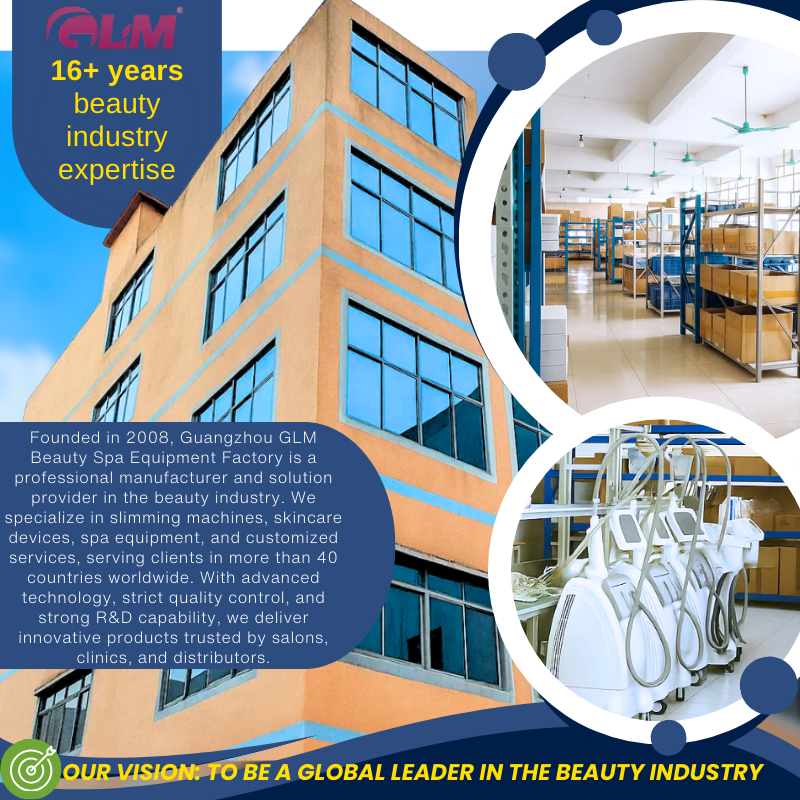
Founded in 2008, Guangzhou GLM Beauty Spa Equipment Factory specializes in research, development, manufacture and selling of beauty and slimming machines. Our production base is located in Guangzhou City, Guangdong Province, China. Since our foundation, we have introduced advanced technologies and equipment, to assure high quality and high performance of our products. With professional marketing guide and excellent after-sales service, our products have been exported to over 20 countries and regions, including Southeast Asia, the Middle East, Europe and the United States, won worldwide praises and gained a good reputation