1. Introduction: The Rise of Multi-Technology Beauty Devices in 2026
The professional aesthetics industry is evolving beyond single-function beauty equipment. In 2026, aesthetic clinics, medical spas, and professional beauty salons are increasingly interested in treatment platforms that combine complementary technologies, improve service flexibility, and support personalized treatment planning.
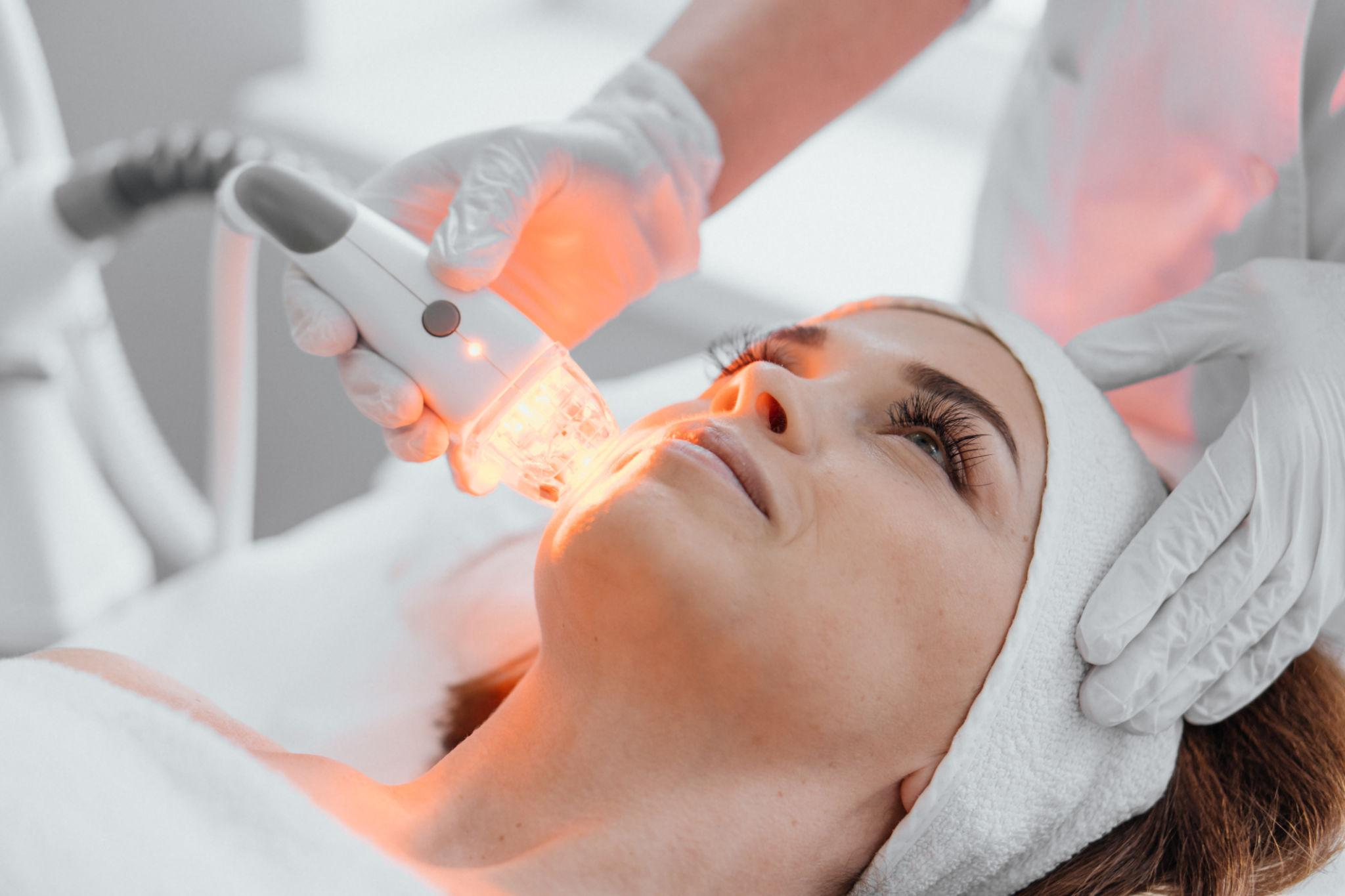
Among the technologies attracting attention are radiofrequency (RF), light-emitting diode (LED) phototherapy, and ultrasound. Each interacts with skin tissue differently, making their combination an interesting option for professionals seeking to address multiple skin concerns within a structured treatment program.
RF is commonly used in aesthetic treatments designed to improve the appearance of skin laxity and fine lines. LED devices deliver selected wavelengths of light for specific photobiomodulation applications, while certain ultrasound systems use acoustic energy for skin-focused or deeper-tissue treatments, depending on their design.
Rather than treating these technologies as interchangeable, professional operators can evaluate how their distinct mechanisms may complement one another. A well-designed multi-technology beauty device can provide a more versatile service platform, allowing practitioners to select appropriate functions according to client needs, device indications, and treatment goals.
For beauty equipment manufacturers, distributors, and clinic owners, the opportunity is not simply to offer more functions. It is to create a practical treatment solution that balances versatility, usability, safety, and long-term business value.
2. Background and Problem: Why Single-Technology Treatments May Not Be Enough
Skin aging is a multifactorial process. Changes in collagen and elastin, reduced skin elasticity, uneven texture, environmental exposure, and other biological factors can contribute to visible signs of aging. These changes do not necessarily respond to the same treatment approach.
For example, a client concerned about mild skin laxity may have different priorities from someone primarily seeking to improve the appearance of uneven texture or dull-looking skin. Some clients may also prefer gradual, maintenance-oriented treatments rather than procedures involving substantial downtime.
A single technology can be useful for a clearly defined treatment objective. However, it may not address every concern a client presents during a consultation. This creates a practical challenge for professional providers: how can they build treatment programs that are more adaptable without making their equipment portfolio unnecessarily complicated?
Multi-technology platforms offer one possible approach. By integrating several modalities into one system, manufacturers can give professionals more options for designing services. Depending on the device, these options may include different treatment modes, interchangeable handpieces, adjustable operating parameters, and protocols that combine complementary functions.
Industry coverage of aesthetic technology trends in 2026 has highlighted the growing interest in combination platforms and personalized treatment approaches. Nevertheless, combining technologies does not automatically produce better results. Each function must have a clear purpose, and the treatment sequence must be appropriate for the device and the client.
The commercial objective is therefore twofold: deliver a more tailored client experience and help the business use its equipment more effectively.
3. Technology and Mechanism: How RF, LED, and Ultrasound Work Together
3.1 Radiofrequency: Supporting Skin Tightening and Firmness
Radiofrequency technology uses electromagnetic energy to generate heat in targeted tissue. In aesthetic applications, the resulting thermal effect depends on the device design, electrode configuration, energy settings, treatment duration, and tissue characteristics.
Certain professional RF systems are designed to heat dermal tissue in a controlled manner. This may support collagen remodeling and improve the appearance of mild skin laxity or fine lines over time. Results vary according to the technology used, treatment protocol, individual characteristics, and the indication being addressed.
RF is not a single standardized treatment category. Monopolar, bipolar, and multipolar systems differ in electrode arrangements and energy-delivery characteristics. Surface RF systems also differ from RF microneedling devices, which introduce electrodes into the skin and have distinct indications and risk profiles.
For professional clinics, the important consideration is controllability rather than simply maximum output. Adjustable parameters, appropriate contact methods, temperature monitoring where available, and clear operating instructions can help practitioners follow a consistent protocol.
3.2 LED Phototherapy: A Light-Based Approach to Skin Care
LED phototherapy uses selected wavelengths of light to interact with biological processes in the skin. Different wavelengths have different optical properties and may be investigated or used for different aesthetic applications.
Red and near-infrared light are commonly associated with photobiomodulation research involving cellular signaling and tissue responses. Blue light is used in certain acne-focused applications because of its interaction with light-sensitive compounds associated with some acne-causing bacteria.
However, not every LED device delivers the same wavelengths, irradiance, dose, or treatment duration. A device's specifications and intended use determine which applications can reasonably be considered.
LED generally does not rely on the same tissue-heating mechanism as RF. This distinction makes it a potentially complementary modality within a broader treatment plan, provided that the selected device and protocol are appropriate.
For salons and clinics, LED functions may support the development of dedicated light-based services or be incorporated into suitable treatment programs. Providers should avoid assuming that every wavelength treats every skin concern or that a particular color guarantees a specific result.
3.3 Ultrasound: Acoustic Energy and Targeted Tissue Interaction
Ultrasound technology uses high-frequency sound waves to transfer acoustic energy into tissue. Its effects depend on frequency, intensity, delivery pattern, focal characteristics, and the intended application.
Different ultrasound technologies serve different purposes. Some systems are designed for superficial facial treatments, while others use focused ultrasound to create thermal effects at selected tissue depths. These categories should not be treated as equivalent.
In appropriate applications, ultrasound may be used to support specific skin-focused treatments or targeted tissue effects. Focused ultrasound systems intended for skin tightening, for example, require appropriate treatment planning, device-specific training, and careful attention to anatomical considerations.
Ultrasound should therefore be evaluated according to its actual technical configuration rather than marketed as a universal solution for lifting, hydration, collagen stimulation, and every other skin concern.
For professional buyers, important purchasing considerations include the operating frequency, energy-delivery method, available handpieces, treatment depth where applicable, operating parameters, and the manufacturer's instructions for use.
3.4 Why Combine the Three Technologies?
RF, LED, and ultrasound are based on different physical mechanisms. RF delivers electromagnetic energy, LED delivers optical energy, and ultrasound delivers acoustic energy.
Their potential value lies in offering different treatment options within one professional platform rather than assuming that the energies automatically reinforce one another.
For example, a clinic may use an appropriate RF treatment as part of a program focused on skin firmness, while an LED service may be selected for a separate light-based objective. A suitable ultrasound function may provide another option when the device's intended use matches the client's needs.
Some systems allow these modalities to be selected separately, while others support defined combined protocols. The order, timing, and compatibility of treatments must follow the manufacturer's instructions and the professional's assessment.
A multi-technology platform is most useful when each function addresses a clear service requirement and can be operated safely and consistently.
4. Advantages and Comparison: What Multi-Technology Devices Offer Professionals
4.1 Greater Treatment Flexibility
A platform with RF, LED, and ultrasound functions may support a broader range of service options than a device dedicated to one modality. Practitioners can select functions according to the client's primary concern, treatment suitability, and the device's permitted applications.
This flexibility may help clinics serve different client segments without purchasing a separate machine for every service.
However, additional functions create value only when they are relevant to the clinic's customer base and used regularly.
4.2 More Structured Treatment Planning
Multi-technology systems can support more organized service design when their operating modes and protocols are clearly documented. Practitioners can establish consultation procedures, treatment records, follow-up schedules, and maintenance recommendations around specific client objectives.
Standardization also makes it easier to train staff and evaluate the performance of different services. It does not eliminate the need for professional judgment, and treatment plans should not be identical for every client.
4.3 Potentially Better Equipment Utilization
From a business perspective, a multifunctional device may create opportunities to introduce additional services, develop treatment packages, and reduce the need for multiple standalone platforms.
For example, a clinic may offer separate RF-focused, LED-focused, and ultrasound-focused services where appropriate, while using selected combinations only when the device and treatment plan support them.
These options may increase equipment utilization, but profitability is not guaranteed. Purchase price, consumables, maintenance, staff training, treatment time, client demand, and local pricing all influence the financial outcome.
Clinic owners should evaluate the expected number of treatments, realistic booking rates, operating costs, and payback period before purchasing a new system.
4.4 Professional Systems Versus Home-Use Devices
Home-use beauty devices can serve certain consumer maintenance needs, but they are not automatically equivalent to professional systems.
Professional platforms may offer more specialized handpieces, broader parameter adjustment, larger treatment interfaces, more detailed operating documentation, and workflows designed for repeated commercial use. The actual capabilities depend on the model and manufacturer.
Professional equipment also places greater responsibility on operators. More adjustable settings do not automatically mean better treatment, and greater energy output is not a substitute for training.
The appropriate comparison should consider the intended user, treatment indication, technical specifications, safety features, service support, and applicable regulatory requirements—not merely the number of functions advertised.
5. Applications and Client Needs: Building Professional Rejuvenation Services
5.1 Clients Concerned About Skin Firmness
Clients who notice mild skin laxity or fine lines may be interested in non-surgical treatment options. Where indicated, an appropriate RF system may be incorporated into a professional plan designed to improve the appearance of skin firmness.
Practitioners should explain that results are variable, may develop gradually, and may require a series of treatments or maintenance according to the device's instructions.
LED or ultrasound should be added only when their intended applications provide a relevant benefit to the treatment plan.
5.2 Clients Seeking a More Comprehensive Skin-Care Program
Some clients prefer a structured program rather than a single isolated procedure. Depending on the equipment and service scope, a clinic may develop a plan that combines selected energy-based treatments with appropriate cleansing, moisturization, and routine skin-care guidance.
For instance, an LED service may be suitable for a defined light-based objective, while RF may be considered separately for an appropriate firmness-related concern. The clinic should explain the role of each modality rather than presenting the combination as a guaranteed solution for all signs of aging.
Treatment intervals and sequencing should be based on device instructions, the client's skin condition, and professional assessment.
5.3 Clients With Different Budgets and Expectations
Not every client needs a multi-step or multi-technology program. Some may prefer a single service, while others may value a longer-term treatment plan.
A professional consultation should establish the client's main concern, medical and treatment history, expectations, budget, and willingness to attend follow-up appointments. Practitioners should explain the expected benefits, limitations, possible adverse effects, and alternatives before recommending a service.
This approach helps clinics match the treatment to the client instead of selling the maximum number of functions.
5.4 Safety, Contraindications, and Professional Responsibilities
Energy-based aesthetic devices require appropriate training and screening. Before treatment, professionals should review the manufacturer's instructions, identify contraindications, assess the treatment area, and confirm that the selected modality is suitable.
RF may be unsuitable for some clients, including those with certain active implanted electronic devices or relevant metal implants in the treatment area. Exact restrictions vary by device and application.
Ultrasound systems also require device-specific screening and appropriate attention to treatment depth and anatomy. LED devices should be used according to their wavelength, output, intended application, and relevant precautions.
Additional caution is necessary when considering combined or sequential treatments. Multiple modalities can introduce additional complexity, and a combination should never be assumed safe simply because each function is available on the same machine.
In October 2025, the U.S. Food and Drug Administration issued a safety communication about serious complications reported with certain uses of RF microneedling, including burns, scarring, fat loss, and nerve damage. These risks relate to specific RF microneedling applications and should not be generalized to every RF device, but they reinforce the importance of appropriate training, device selection, and clinical oversight.
Providers should also follow local regulations, maintain treatment records, explain realistic outcomes, and refer clients for medical assessment when necessary.
6. Conclusion: Choosing the Right Multi-Technology Beauty Device in 2026
RF, LED, and ultrasound each offer distinct approaches to aesthetic treatment. RF can support selected skin-firmness applications through controlled thermal effects; LED provides wavelength-specific light-based options; and ultrasound delivers acoustic energy for applications determined by its design.
When these technologies are integrated into a well-designed professional platform, they can give clinics greater flexibility in service planning, treatment customization, and equipment utilization. Their commercial value depends on more than the number of functions available.
For clinic owners, distributors, and beauty equipment buyers, the most important considerations include technical specifications, intended applications, operator training, safety features, service support, maintenance requirements, and realistic demand in the target market.
For manufacturers, the opportunity is to develop equipment that combines useful functionality with reliable operation, clear protocols, ergonomic design, and practical after-sales support.
In 2026, a successful multi-technology beauty device should not promise every result through one machine. It should help trained professionals deliver appropriate, clearly defined services with greater operational flexibility.
The strongest investment is not necessarily the device with the most technologies, but the one whose functions match client needs, professional capabilities, and the long-term business strategy of the clinic
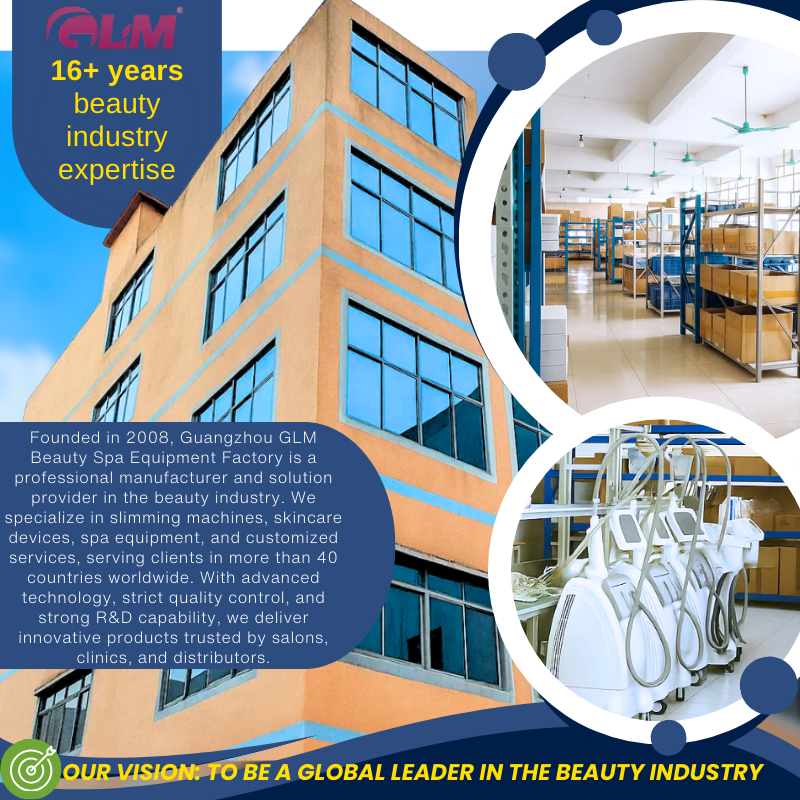
Founded in 2008, Guangzhou GLM Beauty Spa Equipment Factory specializes in research, development, manufacture and selling of beauty and slimming machines. Our production base is located in Guangzhou City, Guangdong Province, China. Since our foundation, we have introduced advanced technologies and equipment, to assure high quality and high performance of our products. With professional marketing guide and excellent after-sales service, our products have been exported to over 20 countries and regions, including Southeast Asia, the Middle East, Europe and the United States, won worldwide praises and gained a good reputation.