1. Introduction
The development of modern aesthetic and medical technology is increasingly focused on treatments that deliver meaningful biological effects without relying on excessive heat, invasive procedures, or prolonged recovery periods. Among these innovations, non-thermal laser therapy has attracted growing attention for its potential to support cellular activity, tissue repair, inflammation management, and skin rejuvenation.
Unlike conventional laser treatments that primarily use controlled thermal energy to target specific tissues, non-thermal laser therapy works through photobiomodulation (PBM), a process in which specific wavelengths of light interact with cellular components to influence biological responses. This approach is commonly associated with low-level laser therapy (LLLT) and red or near-infrared light technology.
In 2026, photobiomodulation is becoming an increasingly important topic across dermatology, rehabilitation, wound management, and aesthetic medicine. Its appeal lies in its non-invasive treatment approach and its potential to complement existing clinical procedures.
For professional beauty salons, dermatology clinics, and medical aesthetic centers, this technology also creates opportunities to expand treatment menus. Professional LED phototherapy systems and low-level laser devices can provide controlled light delivery for different treatment objectives, helping practitioners develop more structured and personalized service protocols.
Understanding how non-thermal laser technology works is therefore essential for professionals evaluating the next generation of light-based treatment equipment.
2. Background: Why Is Non-Thermal Laser Therapy Gaining Attention?
Traditional aesthetic laser treatments often rely on selective photothermolysis, in which light energy is absorbed by specific targets and converted into heat. This mechanism is widely used in applications such as hair removal, pigmentation treatment, and certain skin resurfacing procedures.
However, not every treatment objective requires thermal tissue destruction. In many situations, practitioners are more interested in supporting the skin's natural repair processes, improving tissue recovery, or managing inflammation without intentionally creating significant thermal damage.
This is where non-thermal laser technology becomes relevant.
Photobiomodulation uses non-ionizing light, generally within the red and near-infrared wavelength ranges, to stimulate biological responses. Rather than removing or destroying tissue, it aims to influence cellular signaling and energy metabolism.
Several factors have contributed to the growing interest in PBM:
-
Demand for non-invasive treatments: Clients increasingly prefer procedures with minimal discomfort and little downtime.
-
Interest in cellular health: Modern aesthetic treatments are moving beyond surface-level improvements toward supporting underlying biological processes.
-
Complementary treatment possibilities: PBM may be incorporated into broader treatment plans involving skin rejuvenation, recovery support, and selected dermatological applications.
-
Advances in light-based equipment: Improvements in LED arrays, laser diodes, wavelength control, and treatment programming have made professional light therapy systems more versatile.
A 2026 umbrella review published in Lasers in Medical Science examined 100 systematic reviews of low-level light therapy. It identified potential benefits across selected clinical applications while emphasizing that differences in treatment parameters and limitations in study quality still affect the certainty of the evidence.
This distinction is important: non-thermal laser therapy is a promising technology, but its effectiveness should be evaluated according to the specific condition, treatment protocol, and available clinical evidence.
3. Technology and Mechanism: How Does Photobiomodulation Work?
3.1 Red and Near-Infrared Light Absorption
Photobiomodulation primarily uses red light and near-infrared light.
Red light is commonly associated with wavelengths around 620–700 nm, while near-infrared light generally occupies a broader range above 700 nm.
These wavelengths interact with endogenous cellular photoacceptors. One of the most extensively studied targets is cytochrome c oxidase, a component of the mitochondrial electron transport chain.
When cells absorb appropriate light energy, changes in mitochondrial activity and intracellular signaling may occur. These responses can influence cellular energy production, redox balance, and tissue-related biological processes.
The exact response depends on several variables, including wavelength, power density, energy density, exposure time, and treatment frequency.
3.2 Mitochondrial Activity and ATP Production
Mitochondria are responsible for producing much of the energy required for cellular activity.
During photobiomodulation, light absorption by mitochondrial photoacceptors may influence the electron transport chain and ATP production.
ATP, or adenosine triphosphate, serves as the primary energy carrier in cells. It supports essential biological activities such as protein synthesis, cellular migration, and tissue maintenance.
By influencing mitochondrial signaling, PBM may help regulate cellular processes associated with recovery and tissue remodeling.
However, it is important to understand that more light does not necessarily produce better results. Photobiomodulation demonstrates a biphasic dose-response relationship, meaning that insufficient or excessive energy may produce limited or undesirable responses.
This makes accurate equipment calibration and professional treatment planning essential.
3.3 Cellular Signaling and Tissue Repair
In addition to mitochondrial activity, photobiomodulation may influence several signaling pathways associated with inflammation, cellular proliferation, and tissue regeneration.
These processes may contribute to:
-
Fibroblast activity and collagen-related remodeling.
-
Keratinocyte migration and skin repair.
-
Regulation of inflammatory responses.
-
Microcirculation and tissue oxygenation.
-
Cellular migration and tissue recovery.
For aesthetic applications, these mechanisms are particularly interesting because healthy skin appearance depends on multiple interconnected biological processes.
For example, collagen production is associated with skin firmness and structural support, while balanced inflammatory responses are important for maintaining normal tissue recovery.
Nevertheless, PBM should not be described as an instant collagen replacement treatment or a guaranteed solution for skin aging. Its role is better understood as a light-based approach that may support selected cellular and tissue processes.
3.4 Why Is the Treatment Called Non-Thermal?
The term non-thermal refers to the intended biological mechanism rather than the complete absence of any temperature change.
Photobiomodulation uses controlled light doses designed to produce photochemical and photobiological responses without relying on substantial tissue heating.
This distinguishes it from treatments such as ablative laser resurfacing, where controlled thermal injury is intentionally created to stimulate tissue remodeling.
Non-thermal approaches are therefore attractive for treatment protocols that prioritize comfort, minimal invasiveness, and repeated sessions.
4. Advantages and Comparison: Professional Non-Thermal Laser Technology
4.1 Non-Invasive Treatment Experience
One of the main advantages of photobiomodulation is its non-invasive nature.
Unlike procedures involving needles, tissue removal, or intensive thermal energy, appropriately administered PBM generally does not require deliberate tissue injury.
This makes it an interesting option for clinics looking to develop treatment programs centered on skin recovery, comfort, and complementary aesthetic care.
4.2 Versatile Treatment Applications
Different wavelengths and light-delivery configurations can be selected according to treatment objectives.
For example:
-
Red light systems are commonly investigated for skin rejuvenation and tissue repair.
-
Near-infrared systems are studied for applications involving deeper tissue targets.
-
Selected blue-light technologies are used in dermatological treatments, although their mechanisms and indications should be distinguished from conventional red/NIR PBM.
A professional multi-wavelength device can offer greater flexibility when practitioners need to accommodate different client concerns.
4.3 Professional Equipment Versus Home-Use Devices
Home-use LED masks and handheld light therapy devices have become increasingly accessible. However, professional equipment offers several practical advantages.
| Comparison | Home-Use Devices | Professional Systems |
|---|---|---|
| Power and output | Generally lower | Designed for professional treatment specifications |
| Treatment coverage | Usually limited | Can accommodate larger treatment areas |
| Parameter control | Often simplified | More detailed treatment settings |
| Treatment planning | Primarily self-directed | Managed by trained practitioners |
| Clinical integration | Limited | Can be incorporated into structured service protocols |
Professional devices may offer more consistent output specifications, larger treatment areas, adjustable operating parameters, and better integration into clinic workflows.
However, a higher-powered device is not automatically more effective. Appropriate wavelength selection, irradiance, treatment distance, energy density, and exposure duration are more important than power alone.
Professional operators should also verify device specifications and follow the manufacturer's instructions rather than assuming that all LED or laser systems deliver equivalent biological effects.
5. Applications and Client Needs: Where Can Non-Thermal Laser Therapy Be Used?
5.1 Skin Rejuvenation and Anti-Aging Treatments
Skin rejuvenation remains one of the most commercially relevant applications of photobiomodulation.
As skin ages, collagen organization, cellular activity, and tissue recovery gradually change. Red and near-infrared light systems are being investigated for their ability to influence cellular signaling associated with these processes.
In professional aesthetic centers, PBM may be incorporated into broader skin rejuvenation programs to complement other non-invasive treatments.
Potential treatment objectives include supporting skin appearance, improving the overall treatment experience, and providing an additional option for clients who prefer light-based procedures.
5.2 Acne Management and Post-Treatment Skin Care
Light-based technologies are also used in selected acne management protocols.
Certain blue-light systems target acne-associated bacteria through photochemical mechanisms, while red-light treatments are investigated for their potential role in modulating inflammation.
These technologies should not be treated as interchangeable. Their wavelengths, mechanisms, and treatment indications differ.
Professional clinics can select appropriate light-based equipment according to the client's skin condition and the intended treatment objective.
For clients receiving other aesthetic procedures, carefully selected PBM protocols may also be considered as complementary care when clinically appropriate.
5.3 Hair and Scalp Care
Low-level light therapy has also attracted attention in hair restoration.
Certain red-light laser and LED devices are used in the investigation and treatment of androgenetic alopecia. Proposed mechanisms include influencing cellular activity around hair follicles and supporting the hair growth cycle.
Professional scalp treatment systems may incorporate controlled light delivery into broader hair and scalp care programs.
For aesthetic businesses, this creates opportunities to expand beyond traditional facial services and provide more specialized scalp treatment options.
However, results vary between individuals, and PBM should not be presented as a guaranteed solution for every type of hair loss.
5.4 Wound Healing and Tissue Recovery
One of the most actively studied medical applications of PBM is wound healing.
Research suggests that selected light-based protocols may influence fibroblast activity, collagen deposition, microcirculation, and inflammatory signaling.
These effects have generated interest in applications involving chronic wounds, diabetic ulcers, and other tissue-repair challenges.
A 2026 review of chronic wound management highlighted the potential of PBM to support re-epithelialization and tissue repair. At the same time, it emphasized the importance of optimized dosimetry and better-standardized clinical protocols.
For medical facilities, this demonstrates how non-thermal light technology may extend beyond aesthetic services into broader supportive healthcare applications.
Importantly, wound treatment requires appropriate medical assessment and should never be replaced by an unverified cosmetic light therapy protocol.
5.5 Rehabilitation and Pain Management
PBM is also being investigated in rehabilitation and pain-related applications.
By influencing inflammatory signaling and cellular responses, low-level light therapy may help support certain rehabilitation protocols involving musculoskeletal discomfort and peripheral nerve conditions.
For clinics offering integrated aesthetic and wellness services, this technology may provide an additional platform for selected supportive treatments.
Its use must remain indication-specific and consistent with applicable medical regulations.
6. Conclusion: The Future of Non-Thermal Laser Technology in Professional Clinics
Non-thermal laser therapy represents an important development in modern light-based treatment technology. Through photobiomodulation, controlled red and near-infrared light may influence mitochondrial activity, cellular signaling, and biological processes associated with tissue recovery.
In 2026, growing interest in non-invasive treatments, cellular repair, and personalized clinical protocols is creating new opportunities for professional LED phototherapy and low-level laser equipment.
From skin rejuvenation and acne management to scalp care, wound healing, and rehabilitation, PBM demonstrates potential across several treatment fields. Nevertheless, its clinical value depends on appropriate indications, scientifically supported parameters, operator training, and realistic expectations.
For beauty salons, dermatology clinics, and medical aesthetic centers, investing in professional light-based equipment should involve more than simply selecting a device with multiple wavelengths. Practitioners should evaluate output specifications, treatment coverage, wavelength accuracy, safety features, usability, and the manufacturer's technical support.
As the aesthetic industry continues to evolve, professional non-thermal laser systems may become increasingly valuable components of comprehensive treatment programs. The future of photobiomodulation will ultimately depend on combining technological innovation with reliable clinical evidence and responsible treatment practices
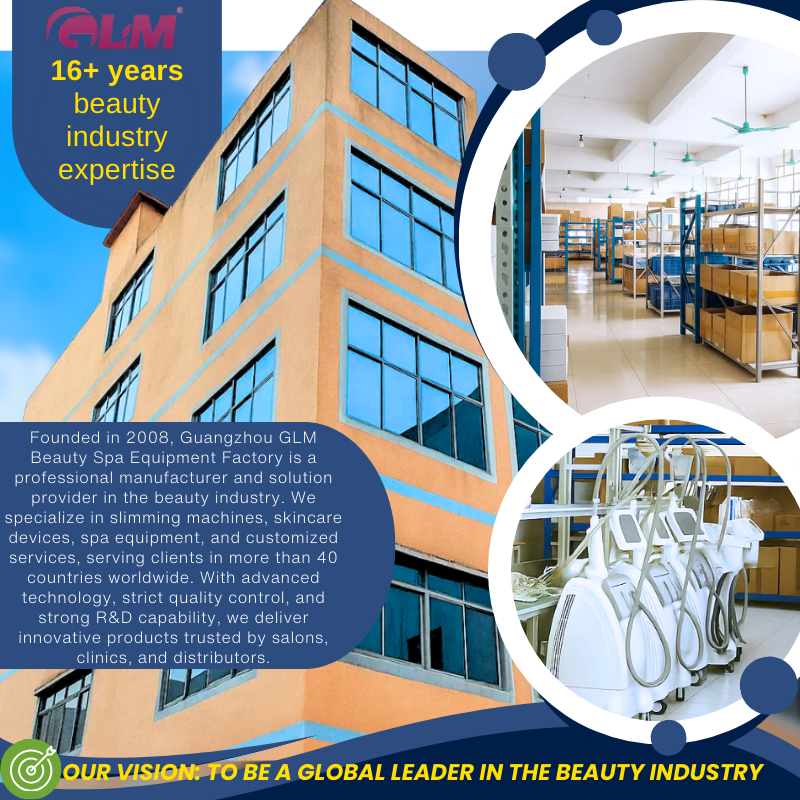
Founded in 2008, Guangzhou GLM Beauty Spa Equipment Factory specializes in research, development, manufacture and selling of beauty and slimming machines. Our production base is located in Guangzhou City, Guangdong Province, China. Since our foundation, we have introduced advanced technologies and equipment, to assure high quality and high performance of our products. With professional marketing guide and excellent after-sales service, our products have been exported to over 20 countries and regions, including Southeast Asia, the Middle East, Europe and the United States, won worldwide praises and gained a good reputation