Introduction
In the modern aesthetics industry, non-surgical skin rejuvenation treatments continue to gain popularity among clients seeking smoother, firmer, and younger-looking skin without invasive procedures. As beauty clinics and professional skincare centers expand their treatment offerings, two technologies are frequently compared for skin renewal and anti-aging applications: plasma fibroblast therapy and laser resurfacing.
Both treatments are designed to improve skin texture, reduce visible signs of aging, and stimulate collagen production. However, they operate through very different technologies and produce different treatment experiences, recovery times, and clinical outcomes.
For professional clinics, understanding the differences between plasma fibroblast systems and laser resurfacing devices is essential when choosing equipment, designing treatment plans, and meeting diverse client expectations. While both technologies can deliver impressive results, the “better” option often depends on skin conditions, treatment goals, downtime tolerance, and practitioner expertise.
This article explores how plasma fibroblast and laser resurfacing technologies work, their advantages, limitations, and which applications may benefit most from each treatment approach.
Background / Problem
Skin aging is one of the most common concerns in aesthetic clinics worldwide. Over time, collagen production naturally declines, leading to wrinkles, fine lines, skin laxity, enlarged pores, pigmentation irregularities, and uneven texture.
Environmental factors such as UV exposure, pollution, stress, smoking, and poor skincare habits can accelerate these changes. Many clients begin searching for treatments that can restore skin firmness and smoothness while avoiding surgery or long recovery periods.
Traditional surgical procedures like facelifts may provide dramatic results, but not every client is ready for invasive treatment. As a result, demand has increased for minimally invasive technologies capable of stimulating collagen remodeling and skin regeneration.
This is where plasma fibroblast and laser resurfacing treatments have become highly attractive in professional aesthetic settings.
Although both procedures target skin rejuvenation, many clients and even newer clinic owners struggle to understand the difference between the two technologies. Questions commonly include:
- Which treatment produces faster results?
- Which option is safer for different skin tones?
- Which technology offers less downtime?
- Which is more suitable for delicate areas like around the eyes?
- Which device provides better long-term clinic value?
For professional beauty clinics, choosing the right technology is not only about treatment effectiveness but also about versatility, client comfort, operational efficiency, and return on investment.
Technology / Mechanism
How Plasma Fibroblast Technology Works
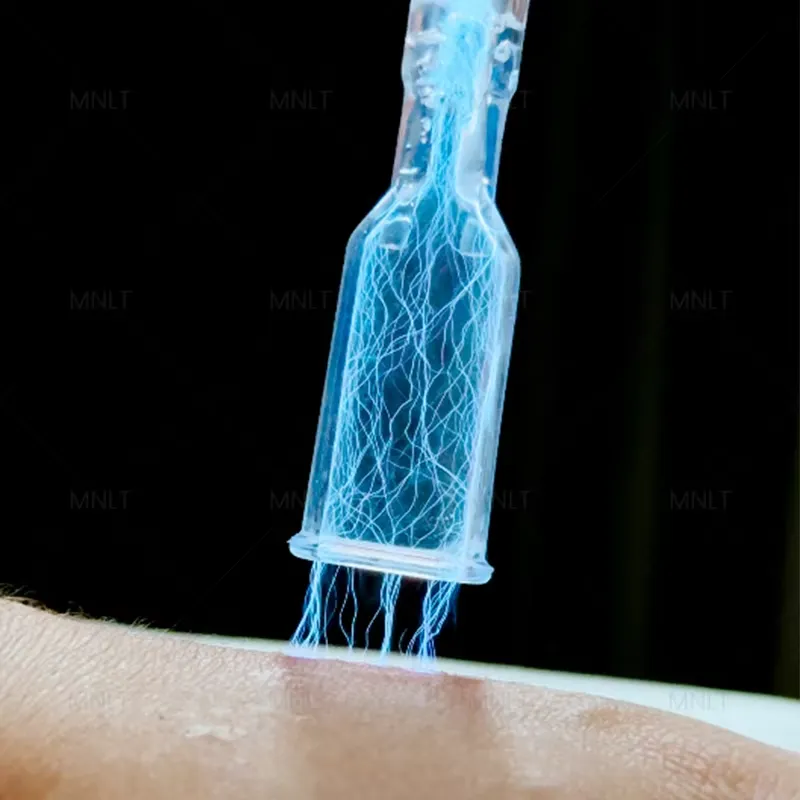
Plasma fibroblast therapy uses a plasma arc generated between the device tip and the skin surface without direct contact. The plasma energy creates tiny controlled micro-injuries on the epidermis, triggering the skin’s natural healing response.
These micro-injuries stimulate fibroblast activity, which plays a critical role in collagen and elastin production. As collagen remodeling occurs over time, the skin gradually becomes firmer, tighter, and smoother.
Professional plasma fibroblast devices are commonly used for:
- Skin tightening
- Eyelid lifting
- Fine line reduction
- Wrinkle improvement
- Acne scar reduction
- Stretch mark treatments
- Localized skin laxity
One of the reasons plasma fibroblast systems have gained popularity in clinics is their precision. Practitioners can target smaller treatment zones, especially delicate facial areas, with relatively controlled energy delivery.
Unlike many traditional resurfacing technologies, plasma fibroblast treatments mainly affect the superficial skin layers while stimulating deeper regenerative responses indirectly.
How Laser Resurfacing Technology Works
Laser resurfacing devices use concentrated light energy to remove damaged skin layers or heat deeper tissue structures to promote collagen renewal.
There are two primary categories of professional laser resurfacing systems:
Ablative Lasers
Ablative lasers remove the outer skin layer while heating underlying tissue. Common examples include CO2 lasers and Er:YAG lasers.
These systems are widely used for:
- Deep wrinkles
- Severe sun damage
- Advanced acne scars
- Skin texture correction
- Surgical scar improvement
Ablative laser resurfacing often delivers dramatic results but usually involves more downtime and post-treatment care.
Non-Ablative Lasers
Non-ablative systems heat deeper skin layers without significantly damaging the skin surface.
These treatments are generally associated with:
- Shorter recovery
- Mild to moderate rejuvenation
- Gradual collagen stimulation
- Reduced redness and downtime
Modern professional laser platforms may combine multiple wavelengths and adjustable settings, allowing clinics to customize treatments for different skin conditions and skin types.
Compared with plasma fibroblast technology, laser resurfacing systems typically offer broader treatment coverage and greater versatility for full-face rejuvenation.
Advantages / Comparison
Treatment Precision
Plasma fibroblast technology is often preferred for smaller and more delicate treatment areas. Around the eyes, upper eyelids, crow’s feet, and localized wrinkles, plasma devices provide targeted skin tightening with high treatment precision.
Laser resurfacing, particularly fractional laser systems, is more efficient for larger treatment areas such as full-face resurfacing or widespread texture correction.
For clinics specializing in localized anti-aging procedures, plasma fibroblast devices can become valuable niche treatment tools.
Downtime and Recovery
Downtime is one of the biggest differences between these treatments.
Plasma fibroblast procedures typically create visible carbon crusts or dot patterns that remain during healing. Recovery usually takes several days to over a week depending on treatment intensity.
Ablative laser resurfacing may involve more redness, peeling, swelling, and sensitivity, especially with aggressive settings. Full recovery can sometimes require several weeks.
Non-ablative laser treatments generally provide shorter downtime but may require more sessions to achieve visible improvements.
For busy clients seeking minimal interruption to daily life, treatment planning becomes an important consultation factor.
Skin Tightening Performance
Plasma fibroblast treatments are widely recognized for localized skin tightening effects. Many clinics promote these procedures as non-surgical alternatives for mild eyelid lifting or tightening loose skin around smaller facial zones.
Laser resurfacing also stimulates collagen production, but its primary strength often lies in texture refinement, scar improvement, and overall skin rejuvenation.
In many professional clinics, practitioners may combine technologies depending on the client’s goals.
Suitability for Different Skin Types
Skin type compatibility is a major clinical consideration.
Certain aggressive laser resurfacing treatments carry higher risks of post-inflammatory hyperpigmentation in darker skin tones. Professional assessment and device parameter adjustment are essential.
Plasma fibroblast treatments may also present pigmentation risks if improperly performed, especially on higher Fitzpatrick skin types.
This highlights the importance of professional operator training, advanced device control systems, and customized treatment protocols.
Compared with home-use beauty devices, professional clinic equipment offers more precise energy adjustment, safety features, and treatment customization, which significantly improves treatment reliability and consistency.
Treatment Comfort
Modern aesthetic clients increasingly prioritize comfort alongside results.
Many newer professional plasma systems now include adjustable energy settings designed to improve treatment tolerability.
Advanced laser platforms may also feature:
- Integrated cooling systems
- Fractional delivery modes
- Pulse duration adjustment
- Smart skin scanning technologies
These innovations help professional clinics create more comfortable treatment experiences while reducing unnecessary tissue trauma.
Clinic Business Perspective
From a clinic operation standpoint, both technologies offer different business advantages.
Plasma Fibroblast Devices
Advantages:
- Lower entry cost in some cases
- Strong demand for eyelid tightening
- Compact equipment design
- High profitability for localized treatments
- Popular non-surgical positioning
Limitations:
- Smaller treatment coverage
- Longer visible healing appearance
- Operator skill sensitivity
Laser Resurfacing Systems
Advantages:
- Broader treatment applications
- Full-face rejuvenation capability
- Scar and pigmentation correction
- Higher-end clinic positioning
- Multi-functional platform potential
Limitations:
- Higher equipment investment
- More complex operator training
- Maintenance requirements
For growing clinics, equipment selection often depends on treatment specialization, target clientele, and long-term service expansion plans.
Applications / Client Needs
When Plasma Fibroblast May Be the Better Option
Plasma fibroblast treatments are often ideal for clients seeking:
- Mild to moderate skin tightening
- Non-surgical eyelid rejuvenation
- Spot-specific wrinkle correction
- Localized anti-aging treatments
- Compact treatment sessions
Clients who prefer avoiding more aggressive resurfacing procedures may also feel more comfortable starting with plasma technology.
Professional operators can create highly customized treatments for smaller facial zones where precision is essential.
When Laser Resurfacing May Be More Effective
Laser resurfacing is often preferred for clients with:
- Severe acne scars
- Deep wrinkles
- Extensive sun damage
- Uneven skin texture
- Large treatment areas
- Advanced photoaging
Professional laser systems also offer greater flexibility for clinics wanting to provide comprehensive skin rejuvenation programs.
Modern multi-functional laser platforms can combine resurfacing, pigmentation management, vascular treatments, and collagen stimulation within one professional system.
The Growing Trend Toward Combination Treatments
In advanced aesthetic clinics, combination therapy is becoming increasingly popular.
Rather than viewing plasma fibroblast and laser resurfacing as competitors, many practitioners use them strategically together depending on treatment phases and skin concerns.
For example:
- Plasma fibroblast for targeted eyelid tightening
- Fractional laser resurfacing for full-face texture refinement
- Combined collagen stimulation protocols
- Multi-session skin rejuvenation programs
This layered treatment strategy often creates more personalized outcomes while increasing clinic treatment versatility.
Conclusion
Plasma fibroblast and laser resurfacing technologies both play important roles in modern aesthetic medicine, but they are designed for different treatment goals and client needs.
Plasma fibroblast therapy excels in precision-based skin tightening and localized rejuvenation, especially around delicate facial areas. It has become a valuable treatment option for clinics focusing on non-surgical anti-aging solutions.
Laser resurfacing remains one of the most powerful technologies for comprehensive skin renewal, texture improvement, scar reduction, and large-area rejuvenation.
Ultimately, the better option depends on the client’s skin condition, expectations, downtime tolerance, and desired results.
For professional beauty clinics and aesthetic centers, investing in advanced, customizable, and operator-friendly equipment is increasingly important as clients demand safer, more personalized, and more effective non-invasive treatments.
As aesthetic technology continues evolving, clinics that combine professional expertise with advanced treatment systems will remain best positioned to deliver high-quality skin rejuvenation outcomes.
Founded in 2008, Guangzhou GLM Beauty Spa Equipment Factory specializes in research, development, manufacture and selling of beauty and slimming machines. Our production base is located in Guangzhou City, Guangdong Province, China. Since our foundation, we have introduced advanced technologies and equipment, to assure high quality and high performance of our products. With professional marketing guide and excellent after-sales service, our products have been exported to over 20 countries and regions, including Southeast Asia, the Middle East, Europe and the United States, won worldwide praises and gained a good reputation.