
1. Introduction
Skin tightening remains an important service category for aesthetic clinics and professional beauty businesses in 2026. As clients seek alternatives to more invasive cosmetic procedures, interest continues in treatments designed to improve the appearance of fine lines, localized skin laxity, and visible signs of aging. Among the technologies discussed in this space, the plasma pen has attracted attention for its distinctive approach to treating the skin's surface.
However, successful treatment involves more than selecting a device or following a popular beauty trend. Professionals need to understand how plasma technology works, which concerns it may address, what results clients can realistically expect, and which risks must be considered before treatment.
For beauty clinics, the plasma pen is not simply another handheld beauty instrument. It represents a specialized treatment option that requires appropriate training, careful client assessment, suitable equipment, and a clearly defined safety protocol.
This guide explores plasma pen skin tightening in 2026, including its operating principles, potential benefits, limitations, safety considerations, and role in professional aesthetic practice.
2. Background: Why Is Plasma Pen Skin Tightening Getting Attention?
Skin aging is a complex process influenced by intrinsic aging, ultraviolet exposure, environmental factors, and lifestyle. Over time, collagen and elastin structures change, skin may become less resilient, and fine lines or localized laxity can become more noticeable.
These changes create demand for aesthetic treatments that aim to improve skin texture and firmness without the recovery requirements associated with surgery. Nevertheless, not every treatment described as non-surgical is non-invasive, and not every device marketed for skin tightening produces the same biological effects.
Plasma pens are often promoted for areas with fine lines or localized skin laxity. Depending on the device, intended use, operator qualifications, and local regulations, treatment may be offered in medical aesthetic settings or other appropriately authorized professional environments.
The appeal lies in the technology's localized treatment approach. Instead of applying energy across a broad area in the same way as some radiofrequency systems, a plasma pen typically creates controlled, point-by-point treatment effects at the skin surface.
Yet this approach also requires precision. Excessive energy, inappropriate treatment spacing, poor technique, or unsuitable client selection can increase the likelihood of complications, including burns, prolonged discoloration, scarring, and infection.
For clinic owners, understanding these limitations is essential. A treatment should be selected according to client needs, clinical suitability, operator competence, and the quality of supporting evidence—not marketing claims alone.
3. Technology and Mechanism: How Does a Plasma Pen Work?
3.1 Understanding Plasma Technology
Plasma is commonly described as an ionized gas containing charged particles. In plasma pen systems designed to generate an electrical discharge near the skin, the device creates a localized plasma arc or discharge under specific operating conditions.
The discharge can interact with the skin surface, producing a small, localized thermal effect. In aesthetic procedures, practitioners may use a series of carefully positioned treatment points to create a controlled pattern over a selected area.
The exact mechanism depends on the device design. Not every instrument sold as a plasma pen uses identical technology, delivers the same energy, or has the same authorized indications. Therefore, specifications and intended uses must be verified for each model.
3.2 What Happens During Treatment?
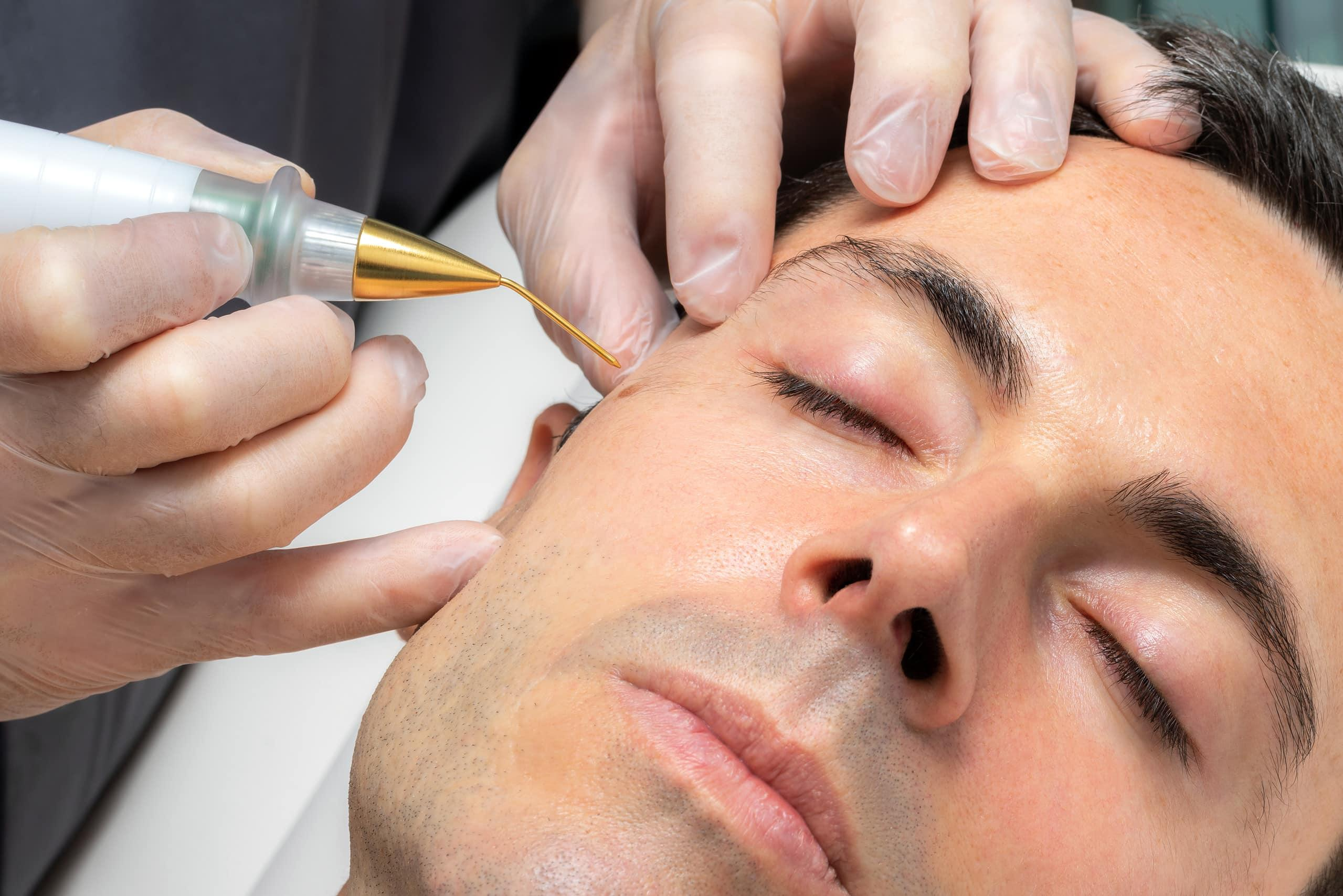
In procedures commonly described as plasma fibroblast treatments, the practitioner applies a series of small treatment points without intentionally making a conventional surgical incision. The localized thermal effect can cause immediate contraction of superficial tissue, while the subsequent healing process may influence the appearance of the treated area.
The skin then undergoes a recovery process. Small crusts or scabs may develop at treatment points and eventually detach as healing progresses. Redness, swelling, tenderness, and temporary changes in pigmentation may also occur.
The appearance of tighter skin immediately after treatment should not be interpreted as proof of permanent collagen remodeling. Early changes may reflect tissue contraction, swelling, or other short-term responses. Longer-term results vary and require appropriate follow-up to evaluate.
3.3 Does a Plasma Pen Stimulate Collagen?
Plasma fibroblast treatments are commonly marketed as procedures that stimulate fibroblasts and support collagen remodeling. However, the extent and clinical significance of these effects depend on the specific treatment, device, treatment parameters, and individual healing response.
It is important to distinguish a plausible biological mechanism from a clinically proven outcome. Claims that a plasma pen consistently eliminates wrinkles, permanently lifts skin, or delivers results equivalent to surgery should not be accepted without strong supporting evidence.
For professional providers, accurate consultation is part of treatment quality. Clients should understand that improvement may be modest, results are variable, and some concerns may be better addressed by other technologies or medical procedures.
4. Advantages and Comparisons: Plasma Pen vs. Other Skin Tightening Technologies
Different aesthetic technologies address skin concerns through different energy delivery methods. The most appropriate option depends on the treatment objective, target area, skin characteristics, risk profile, and professional scope of practice.
4.1 Plasma Pen vs. Radiofrequency Skin Tightening
Radiofrequency (RF) systems deliver electromagnetic energy that generates heat in tissue. Depending on the system and its intended use, RF treatments may be designed to improve the appearance of skin laxity through controlled heating and associated tissue responses.
A plasma pen generally works through a localized discharge at individual treatment points, whereas many RF systems deliver energy through contact electrodes or other applicators across a larger treatment area.
For clinics, RF may be more suitable when a broader area needs to be treated with a consistent treatment pattern. A plasma pen may be considered for selected localized concerns when its intended use and safety requirements support that application.
Neither technology is universally superior. Their treatment protocols, contraindications, recovery expectations, and evidence bases differ.
4.2 Plasma Pen vs. Ultrasound-Based Treatments
Certain ultrasound-based aesthetic systems deliver acoustic energy to targeted tissue depths. Depending on the device, these systems may be intended to improve the appearance of skin laxity or support lifting effects.
A plasma pen acts primarily at the surface where the discharge is generated, while ultrasound-based technologies are designed to deliver energy beneath the skin according to their specific engineering and treatment protocols.
These approaches should not be treated as interchangeable. A professional clinic should choose based on the concern being addressed, the technology's approved or legally permitted use, the available evidence, and the client's medical and aesthetic needs.
4.3 Professional Devices vs. Home-Use Beauty Gadgets
One important distinction is the difference between a professionally intended treatment system and a consumer beauty gadget.
Professional equipment should be evaluated through its technical documentation, quality controls, electrical safety, instructions for use, maintenance requirements, and applicable regulatory status. Operators also need training that matches the procedure's risks.
Home-use products may have different energy outputs, intended uses, and safety limitations. A consumer device should never be assumed to reproduce a professional procedure simply because it uses similar terminology.
For treatments involving electrical discharge, controlled thermal effects, or intentional skin injury, unsupervised experimentation can be particularly risky. Consumers should not attempt professional plasma fibroblast procedures at home using unverified equipment.
For manufacturers and distributors, transparent product specifications, clear intended-use statements, reliable technical support, and appropriate training materials help professional buyers assess whether a device fits their business and regulatory environment.
5. Applications and Client Needs: Where May Plasma Pen Treatments Fit?
5.1 Localized Fine Lines and Skin Texture
Plasma pen treatments are frequently marketed for selected areas with fine lines or superficial skin laxity. Suitability depends on the specific device, treatment location, the individual's skin characteristics, and the provider's qualifications.
A consultation should establish whether the concern is primarily related to superficial texture, deeper volume loss, muscle movement, or more substantial skin laxity. A surface-focused treatment may not address concerns caused mainly by deeper structural changes.
5.2 Areas Around the Eyes
The eye area is often featured in plasma pen marketing because fine lines and mild laxity may become noticeable there. However, this is also a delicate anatomical region in which incorrect treatment can cause serious harm.
The proximity of the eye, the potential for swelling, the risk of burns, and the possibility of pigment changes require particular caution. Treatment close to the eyelids or eyes should only be considered within the provider's authorized scope, using a device specifically suitable for the intended area and an appropriate protective protocol.
It should never be assumed that a device is safe for eyelid treatment simply because a supplier advertises it for facial rejuvenation.
5.3 Consultation and Client Selection
Not every client is a suitable candidate. A professional assessment should consider medical history, current medications, previous procedures, healing tendencies, history of abnormal scarring, skin type, active skin conditions, and the likelihood of post-inflammatory hyperpigmentation.
Darker skin tones may face a greater risk of noticeable post-inflammatory pigmentation following some forms of thermal injury. This does not mean that skin tone alone determines suitability, but it makes individualized risk assessment especially important.
Clients with active infection, compromised healing, relevant medical contraindications, or unrealistic expectations may need to avoid treatment or obtain medical assessment first. The exact exclusion criteria must follow the device instructions and the relevant clinical protocol.
A responsible provider should explain alternatives, expected downtime, aftercare requirements, possible complications, and the limits of available evidence before obtaining informed consent.
5.4 Building a Professional Treatment Offering
For aesthetic businesses, a new technology should fit a clear service strategy rather than being added solely because it is trending online.
Before introducing a plasma pen service, clinic managers should evaluate:
-
The device's intended use and regulatory status in the local market.
-
The qualifications and training required for operators.
-
The manufacturer's technical documentation and safety instructions.
-
The treatment area's suitability and the clinic's emergency procedures.
-
Consumables, maintenance, service support, and total operating costs.
-
Client demand, realistic outcomes, consultation time, and follow-up needs.
A professional service is built around the complete treatment process, not just the device itself. Reliable equipment, competent operators, careful selection, and consistent aftercare all contribute to client experience and business credibility.
6. Results and Recovery: What Should Clients Expect?
Results from plasma pen procedures vary according to the treatment area, device, settings, operator technique, skin characteristics, and individual healing response.
Some clients may notice a change in the appearance of localized skin laxity after recovery. Others may see only limited improvement or may be dissatisfied with the result. The degree of improvement cannot be guaranteed, and a single treatment should not be presented as a universal solution.
Recovery can involve redness, swelling, small crusts, tenderness, and temporary changes in skin color. Depending on the treatment and individual response, visible healing may take days to weeks, while residual redness or pigmentation changes may persist longer.
Clients should follow the treating professional's aftercare instructions, avoid picking or removing crusts, protect the area from ultraviolet exposure, and use only products recommended for the healing stage. Signs of infection, worsening pain, unusual discharge, increasing swelling, or eye-related symptoms require prompt medical assessment.
Before-and-after photographs can help document changes, but they should be taken under consistent lighting, positioning, and camera conditions. Images should not be digitally altered in ways that exaggerate outcomes, and individual results should not be presented as guaranteed typical results.
Clinics should also explain that some clients may require alternative treatment, further assessment, or no additional intervention at all. Good outcome management includes knowing when not to repeat a procedure.
7. Safety and Risk Management: What Professionals Must Know
Safety is central to the use of plasma pen devices. Because treatment may involve localized thermal injury, complications can occur even when a procedure is marketed as non-surgical.
Potential risks include burns, infection, scarring, prolonged redness, post-inflammatory hyperpigmentation or hypopigmentation, delayed healing, and changes in skin texture. Treatment near the eyes carries additional risks, including injury to sensitive structures.
A professional safety framework should include the following measures:
Verify the device and its intended use. Confirm the manufacturer's instructions, technical specifications, contraindications, and local regulatory requirements. Do not assume that all products labeled “plasma pen” have equivalent quality or authorization.
Train operators appropriately. Training should cover device operation, client assessment, treatment planning, infection prevention, eye protection where applicable, adverse-event recognition, and referral procedures.
Use individualized treatment planning. Energy settings, treatment density, and treatment location should follow the specific device instructions and a suitable professional protocol. More energy or more treatment points do not necessarily produce better results.
Maintain infection prevention standards. Follow the device's instructions for cleaning, disinfection, and any single-use components. Maintain a clean treatment environment and avoid treating unsuitable or infected skin.
Provide informed consent and aftercare. Explain expected recovery, potential complications, alternative options, and circumstances that require medical attention. Document the treatment and follow-up appropriately.
Check local legal requirements. Depending on the country or region, plasma fibroblast procedures may be restricted to certain licensed healthcare professionals or may be subject to specific device and facility requirements. A product being available for purchase does not establish that a particular person is legally permitted to use it.
These safeguards protect clients and support a more sustainable professional business model. Marketing should never replace training, evidence, or compliance.
8. Conclusion: Choosing the Right Plasma Pen Strategy in 2026
Plasma pen skin tightening occupies a specialized position in the aesthetic device market. Its localized discharge-based approach distinguishes it from many RF and ultrasound systems, but that difference does not automatically make it more effective, safer, or appropriate for every client.
For professional clinics, the key is to assess the technology realistically: understand its mechanism, verify the device's intended use, evaluate the evidence, select clients carefully, and establish clear treatment and aftercare protocols. Results should be discussed in measured terms, with no promises of permanent lifting or surgical equivalence.
For manufacturers and distributors, product value extends beyond hardware. Clear specifications, traceable quality controls, practical training resources, responsive technical support, and transparent safety information help professional buyers make informed decisions.
In 2026, a credible aesthetic business is not defined by how many trending devices it offers. It is defined by how responsibly it matches technology to client needs. When a plasma pen is legally permitted, appropriately indicated, and operated by a suitably qualified professional, it may be considered as one option within a carefully designed aesthetic treatment portfolio
Founded in 2008, Guangzhou GLM Beauty Spa Equipment Factory specializes in research, development, manufacture and selling of beauty and slimming machines. Our production base is located in Guangzhou City, Guangdong Province, China. Since our foundation, we have introduced advanced technologies and equipment, to assure high quality and high performance of our products. With professional marketing guide and excellent after-sales service, our products have been exported to over 20 countries and regions, including Southeast Asia, the Middle East, Europe and the United States, won worldwide praises and gained a good reputation
