Introduction
Acne remains one of the most common skin concerns encountered in professional beauty clinics and aesthetic practices. Excess sebum, follicular congestion, microbial imbalance, inflammation, and an impaired skin barrier can all contribute to the development and persistence of acne. For professional operators, this means that acne care is rarely about addressing a single problem. A well-designed treatment program needs to consider the condition of the skin, the severity of inflammatory lesions, sensitivity, recovery needs, and the client's long-term skincare routine.
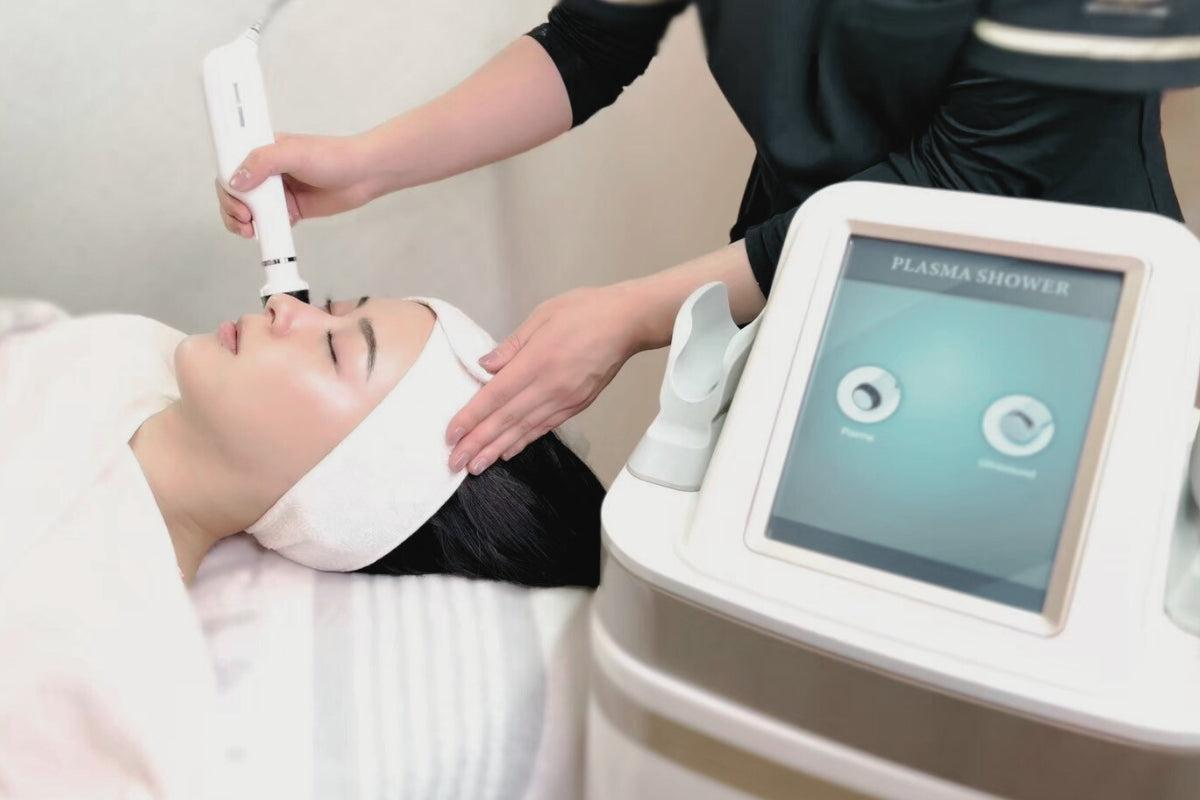
This is where plasma-based skincare technology is attracting increasing attention. A professional Plasma Shower uses controlled plasma energy at the skin surface to create a treatment environment that may support antimicrobial care, skin conditioning, and the management of inflammatory-looking skin.
Cold atmospheric plasma, often abbreviated as CAP, is generated from ionized gas under atmospheric-pressure conditions. Unlike high-temperature plasma used in industrial applications, cold atmospheric plasma can be designed for interaction with biological tissue at relatively low temperatures. Research into plasma dermatology has explored its antimicrobial, anti-inflammatory, tissue-supporting, and skin-conditioning properties.
For beauty clinics, the value of Plasma Shower technology is therefore not simply the "plasma" itself. The real value lies in how a professional device can provide controlled energy delivery, repeatable treatment parameters, and a structured procedure that can be incorporated into an acne-focused facial program.
Background: Why Acne Requires More Than Basic Cleansing
Acne is a multifactorial skin condition. Sebum production, follicular blockage, inflammation, and changes in the skin microbiome can interact to produce comedones, papules, pustules, and other visible lesions.
Traditional acne care may include cleansing, topical products, exfoliation, prescription medications, or other professional treatments. However, some clients experience dryness, irritation, sensitivity, or poor compliance with conventional routines. This creates demand for professional treatment technologies that can complement—not necessarily replace—established dermatological care.
For an aesthetic clinic, another challenge is treatment consistency.
A manual facial treatment can vary considerably depending on operator technique. A professional energy-based device, by comparison, can provide defined operating parameters and a standardized workflow. This is particularly useful when a clinic wants to establish repeatable protocols for different skin conditions.
Plasma Shower technology can become one component of this workflow.
Rather than positioning plasma as a universal solution for every type of acne, professional operators can view it as a technology that may be incorporated into selected acne-care protocols, particularly where surface microbial control, inflammation management, and skin recovery are relevant treatment considerations.
Recent clinical research has increased interest in this area. A 2025 randomized, controlled pilot study investigated cold atmospheric plasma as an add-on approach for mild acne papulopustulosa and reported improvements in acne-related clinical measures compared with the control condition, although the study was relatively small and should not be interpreted as definitive evidence for every acne population.
Technology and Mechanism: How Does a Plasma Shower Work?
Plasma is sometimes described as the fourth state of matter. In practical skincare applications, cold atmospheric plasma is produced by supplying energy to a gas and creating a partially ionized mixture containing charged particles and reactive species.
Depending on the device design, plasma systems may use different discharge technologies and working gases. Research literature describes direct plasma sources as well as plasma jets and other atmospheric-pressure configurations.
When plasma interacts with the surrounding air and skin surface, reactive oxygen and nitrogen species can be generated. These reactive species are one of the major areas of interest in plasma medicine.
For acne-oriented professional treatments, the mechanism can be understood through several interconnected pathways.
1. Surface Microbial Environment
Acne is associated with changes in the skin microbiome, including the involvement of Cutibacterium acnes. Plasma has demonstrated antimicrobial activity in laboratory and clinical research, which is one reason it has attracted attention for dermatological applications.
However, professional communication should avoid saying that a Plasma Shower "kills all acne bacteria" or permanently eliminates acne. Acne is multifactorial, and microbial balance is only one part of the condition.
2. Support for Inflammatory Skin
Inflammation plays an important role in the appearance of papules and pustules. Plasma-generated reactive species can interact with biological signaling pathways, and anti-inflammatory effects have been investigated in plasma dermatology research.
For professional operators, this makes plasma particularly interesting as part of a treatment strategy designed for skin that appears congested, inflamed, or difficult to manage with basic facial treatments.
3. Skin Environment and Recovery
Plasma research has also examined effects related to tissue repair, cellular signaling, and skin barrier behavior. These properties have contributed to interest in plasma technology beyond simple surface cleansing.
This does not mean that every commercial plasma device produces identical biological effects. Output characteristics, gas type, power, treatment distance, exposure time, and device construction can all influence treatment behavior. Professional protocols should therefore be based on the specifications and intended use of the actual equipment.
4. Controlled Energy Delivery
One of the important differences between professional equipment and improvised or low-cost home devices is control.
A professional Plasma Shower can be designed around adjustable treatment parameters, defined applicator geometry, operating modes, safety features, and repeatable treatment procedures. For a clinic, this allows the operator to create a more consistent experience across different clients and treatment sessions.
Advantages and Comparison: Professional Plasma vs. Basic Home Acne Care
A professional Plasma Shower should not be presented simply as a stronger version of a home skincare tool. The difference is primarily in treatment control, workflow, customization, and professional operation.
More Controlled Treatment Parameters
Professional equipment can offer defined operating settings that allow trained operators to adapt the procedure according to the treatment area and skin condition.
This is important because acne-prone skin is not always identical from one client to another. A client with oily, congested skin may require a different approach from a client with sensitive, dehydrated skin and occasional inflammatory lesions.
Integration Into Professional Facial Protocols
Plasma technology can be incorporated into a broader treatment sequence rather than used as a standalone step.
For example, a clinic may structure a session around:
- Skin consultation and assessment
- Gentle cleansing
- Preparation of the treatment area
- Plasma Shower application according to the device protocol
- Soothing or hydrating professional skincare
- Barrier-supportive aftercare
- Progress evaluation during follow-up visits
This workflow gives the equipment a clear role within a professional service rather than treating it as an isolated beauty gadget.
Better Repeatability
Consistency is especially important for clinics serving multiple clients. A standardized device-based procedure can help operators maintain similar treatment conditions from session to session.
For equipment manufacturers and distributors, this also creates a practical advantage: a professional plasma system can be positioned not only as a machine, but as part of a repeatable service model for facial clinics, aesthetic centers, spas, and professional skincare businesses.
More Appropriate for Professional Assessment
Acne severity varies significantly. Some clients may have occasional comedones, while others may have extensive inflammatory lesions, nodules, scarring, or pigmentation.
A professional operator can identify when a client may be appropriate for a cosmetic treatment protocol and when referral to a dermatologist or medical professional is more appropriate.
This is one area where professional treatment differs fundamentally from unsupervised home use.
Applications and Client Needs
Acne-Prone Facial Care
The most obvious application is professional facial care for clients with acne-prone or congested skin.
A Plasma Shower can be incorporated into a clinic's facial menu as a technology-focused treatment designed to support skin hygiene, surface conditioning, and a more comprehensive acne-care routine.
Mild to Moderate Inflammatory Acne Support
Clinical studies have specifically investigated CAP in mild to moderate acne. A 2026 study involving 47 participants compared Plasma Shower with a 585 nm Q-switched laser and reported improvement in acne grading scores in the Plasma Shower group after four weeks. The researchers also observed a stronger response in inflammatory papules and pustules, while emphasizing different applications for the laser treatment.
This type of evidence is useful for professional clinics because it suggests that plasma may have a role in targeted acne protocols. At the same time, a single study does not establish that the technology will work equally well for every client or every type of acne.
Post-Extraction Skin Care
Professional facials sometimes include comedone extraction or other cleansing procedures. Following such procedures, the skin may appear temporarily sensitive or stressed.
A plasma-based protocol may be considered as part of a professional post-treatment skin-conditioning workflow when the specific device is designed and cleared for the intended use.
The key is appropriate parameter selection and operator training rather than simply increasing treatment intensity.
Oily and Congested Skin Programs
For beauty clinics, acne is not the only client concern. Some customers primarily complain about excessive oiliness, visible pores, blackheads, or recurring congestion.
In these cases, Plasma Shower technology can be positioned as one component of a broader skin-management program rather than as an "acne cure."
Combination Professional Treatments
One of the strongest commercial applications of professional plasma equipment is its ability to fit into combination treatment programs.
Depending on local regulations, device indications, and professional qualifications, clinics may combine plasma technology with cleansing, hydration, LED-based skincare, infusion procedures, or other facial services.
The objective is not to combine as many technologies as possible. Instead, each step should have a defined purpose and should be selected according to the client's skin condition.
What Should Professional Operators Consider?
A professional Plasma Shower is only as effective as the protocol surrounding it.
Before treatment, the operator should assess the client's skin condition, treatment history, sensitivity, active lesions, medications, and relevant contraindications according to the device manufacturer's instructions and applicable professional guidelines.
Treatment parameters should not be copied blindly from another machine. Plasma output differs between technologies, and parameters such as power, treatment time, distance, gas, and applicator design can influence the treatment environment.
Operators should also manage client expectations.
Acne is a chronic and multifactorial condition. Even when a client responds positively to a professional treatment, ongoing skincare, lifestyle factors, hormonal influences, and medical treatment may still affect the long-term course of acne.
Therefore, the strongest professional positioning is not "one treatment eliminates acne." Instead, plasma technology can be presented as a controlled professional tool that may support a broader, individualized acne-management program.
Conclusion
Plasma Shower technology represents an interesting development in professional acne care because it combines energy-based treatment with the biological potential of cold atmospheric plasma.
Research has explored plasma's antimicrobial, anti-inflammatory, and tissue-supporting properties, while recent clinical studies have specifically investigated its use in acne. Evidence is encouraging but still developing, and treatment outcomes depend on the device, protocol, patient population, and clinical context.
For beauty clinics and aesthetic centers, the practical value of professional plasma equipment lies in controlled application, repeatable procedures, and integration into customized facial programs.
When used with appropriate assessment, professional training, and realistic expectations, Plasma Shower technology can become more than another facial device. It can form part of a structured approach to caring for acne-prone, congested, and inflammatory-looking skin while giving professional operators another technology to incorporate into modern aesthetic treatment menus
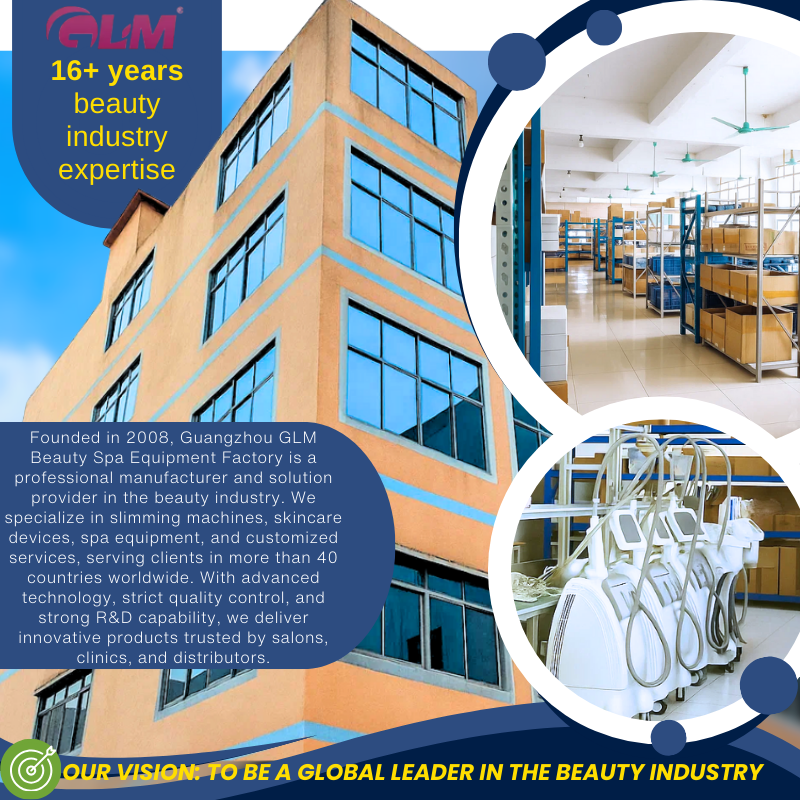
Founded in 2008, Guangzhou GLM Beauty Spa Equipment Factory specializes in research, development, manufacture and selling of beauty and slimming machines. Our production base is located in Guangzhou City, Guangdong Province, China. Since our foundation, we have introduced advanced technologies and equipment, to assure high quality and high performance of our products. With professional marketing guide and excellent after-sales service, our products have been exported to over 20 countries and regions, including Southeast Asia, the Middle East, Europe and the United States, won worldwide praises and gained a good reputation