
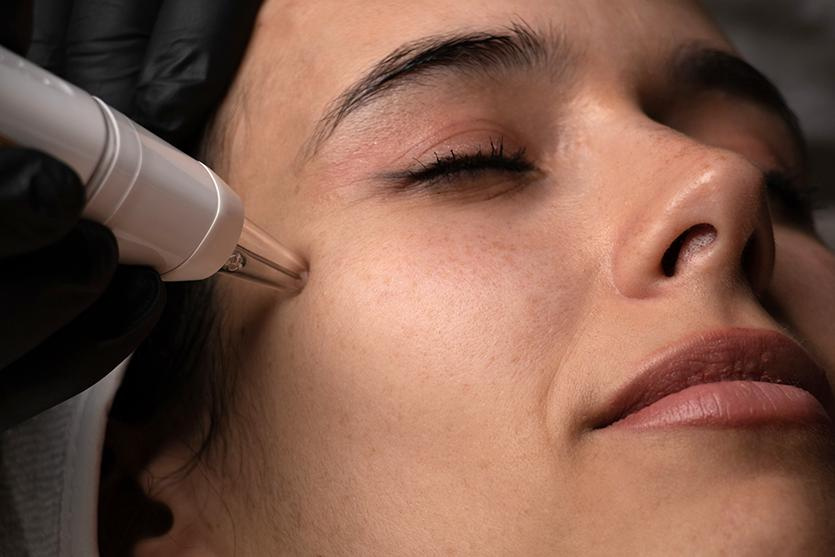
1. Introduction
The professional aesthetics industry is increasingly shifting toward treatments that focus not only on improving the visible appearance of the skin but also on supporting its underlying structure. As clients become more interested in long-term skin quality, collagen stimulation, and non-laser rejuvenation technologies, plasma-based treatments are attracting growing attention in aesthetic clinics and professional beauty centers.
Skin aging is a gradual biological process involving collagen degradation, reduced elastin production, slower cellular renewal, and cumulative environmental damage. These changes contribute to wrinkles, uneven texture, loss of firmness, enlarged pores, and other visible signs of aging. Traditional skincare products can help maintain hydration and improve the skin's surface condition, but they generally have limited ability to influence deeper structural changes.
Plasma technology offers another approach. By generating ionized gas and delivering controlled energy to targeted skin areas, certain plasma-based systems can create carefully controlled thermal or biological interactions that support skin renewal and remodeling. Depending on the technology, these treatments may help improve skin texture, reduce the appearance of fine lines, and stimulate processes associated with collagen regeneration.
In 2026, plasma technology represents an interesting development within the wider energy-based aesthetics market. For professional beauty salons and dermatology clinics, understanding how different plasma systems work is essential for selecting suitable equipment, establishing treatment protocols, and meeting increasingly diverse client expectations.
This article explores the science behind plasma skin regeneration, its potential role in collagen remodeling, its advantages compared with other aesthetic technologies, and the opportunities it offers professional treatment providers.
2. Background: Why Aging Skin Needs More Than Surface-Level Care
To understand the value of plasma skin regeneration, it is important to examine what happens to the skin as it ages.
Collagen is one of the primary structural proteins in the dermis. It provides support, firmness, and resistance to mechanical stress. Elastin contributes to flexibility, allowing the skin to return to its original shape after movement or stretching. Together with hyaluronic acid and other components of the extracellular matrix, these substances help maintain a smooth, hydrated, and resilient appearance.
However, natural aging gradually changes this structure. Fibroblast activity becomes less efficient, collagen production declines, and existing collagen fibers become fragmented and disorganized. At the same time, exposure to ultraviolet radiation, air pollution, oxidative stress, and lifestyle factors can accelerate the breakdown of important skin components.
These changes often appear as:
-
Fine lines around the eyes, mouth, and forehead.
-
Reduced skin firmness and elasticity.
-
Uneven skin texture and roughness.
-
Enlarged-looking pores and superficial irregularities.
-
Sun-related pigmentation and visible photoaging.
-
Loss of overall skin radiance and youthful appearance.
One important challenge for professional skincare providers is that different aging concerns may involve different skin structures. A hydrating facial can temporarily improve surface moisture, while a deeper energy-based treatment may target dermal remodeling. This is why professional aesthetic treatments increasingly incorporate technologies that address skin quality at multiple levels.
Plasma skin regeneration is one of the approaches being explored for this purpose. Rather than simply applying cosmetic ingredients to the skin, plasma-based systems use controlled energy or reactive plasma components to interact with tissue and initiate specific responses.
It is important to recognize that plasma is not a single treatment category. Thermal plasma resurfacing, plasma fibroblast devices, and cold atmospheric plasma systems operate through different mechanisms. Their indications, treatment intensity, recovery requirements, and clinical evidence are not interchangeable.
3. Technology and Mechanism: How Plasma Stimulates Skin Remodeling
3.1 Understanding Plasma Technology
Plasma is commonly described as the fourth state of matter, alongside solids, liquids, and gases. It consists of ionized gas containing charged particles, electrons, ions, and, depending on the system, reactive chemical species.
In aesthetic applications, specialized equipment generates plasma through electrical energy and delivers it to the skin in a controlled manner. The exact process depends on the device design, gas source, operating temperature, energy output, and treatment method.
Two broad technological approaches are particularly important in professional skin rejuvenation.
Thermal Plasma Skin Resurfacing
Thermal plasma resurfacing systems commonly use ionized inert gases, such as nitrogen or helium, to transfer controlled thermal energy to the skin. The energy can produce a localized thermal effect involving the epidermis and superficial dermis.
Depending on the system and treatment settings, this controlled thermal interaction may remove or modify damaged superficial tissue, produce tissue contraction, and initiate a wound-healing response.
During recovery, the skin undergoes a sequence of biological processes involving inflammation, re-epithelialization, fibroblast activity, and extracellular matrix remodeling. These processes can contribute to new collagen formation and improvements in skin texture and fine lines.
Cold Atmospheric Plasma
Cold atmospheric plasma, often abbreviated as CAP, operates at temperatures much lower than those used in conventional thermal plasma resurfacing.
It generates a mixture of reactive oxygen and nitrogen species, charged particles, and other short-lived active components. These species can interact with biological tissues and influence cellular signaling pathways.
Research has investigated the potential effects of CAP on microbial activity, wound healing, inflammation, and skin regeneration. Some experimental studies suggest that low-temperature plasma may influence fibroblast behavior and collagen-related processes.
However, its biological mechanisms and clinical applications are still being investigated. Evidence from laboratory studies should not automatically be interpreted as proof of established anti-aging outcomes in human patients.
3.2 The Relationship Between Plasma Energy and Collagen Remodeling
Collagen remodeling is a central concept in many professional skin rejuvenation treatments.
In thermal plasma resurfacing, controlled tissue heating or injury initiates a repair response. Fibroblasts, the cells responsible for producing collagen and other extracellular matrix components, participate in the subsequent remodeling process.
The general process can be understood through several stages:
Stage 1: Controlled Energy Delivery
A professional plasma device delivers a predetermined amount of energy to the selected treatment area. The operator must follow the equipment's specifications and appropriate treatment parameters to achieve the intended tissue interaction.
Stage 2: Activation of the Skin's Repair Response
In thermal plasma treatments, localized thermal effects can trigger a controlled healing response. In nonthermal plasma research, reactive species may influence cellular signaling without relying on the same degree of tissue heating.
Stage 3: Fibroblast Activity
Fibroblasts participate in tissue repair and extracellular matrix production. Their activity is associated with the formation and organization of collagen fibers, which contribute to dermal support.
Stage 4: Collagen Remodeling
As the skin progresses through the recovery process, collagen fibers undergo reorganization. Over time, this remodeling may contribute to improvements in skin firmness, texture, and the appearance of fine lines.
Stage 5: Gradual Skin Quality Improvement
The visible outcome depends on the technology, treatment intensity, individual skin condition, and healing response. Improvements may develop progressively rather than appearing as a complete result immediately after treatment.
It is worth emphasizing that collagen remodeling is a biological process, not an instant cosmetic effect. Plasma treatments do not stop aging, and the degree of improvement varies between individuals.
3.3 Why Professional Energy Control Matters
The performance of a plasma-based treatment depends on more than the presence of plasma energy. Device engineering, energy consistency, treatment distance, pulse characteristics, temperature management, and operator technique all influence how energy interacts with the skin.
Professional equipment should provide clearly defined operating parameters and appropriate safety mechanisms. Depending on the platform, useful design considerations may include adjustable energy settings, stable output, ergonomic handpieces, controlled pulse delivery, and clear operating feedback.
For clinics and professional beauty centers, these features support more standardized treatment procedures and help operators adapt treatment plans to different skin conditions.
4. Advantages and Comparison: Plasma Technology in Professional Aesthetics
4.1 A Different Approach to Skin Rejuvenation
Plasma technology provides an alternative to more established aesthetic energy platforms, including radiofrequency, laser, and ultrasound systems.
Each technology has its own physical mechanism and treatment strengths.
-
Plasma technology: Uses ionized gas and, depending on the system, thermal energy or reactive plasma components to interact with skin tissue.
-
Radiofrequency (RF): Uses electrical energy to generate heat within tissue, supporting collagen contraction and remodeling.
-
Laser technology: Uses specific wavelengths of light to target selected tissue components or create controlled resurfacing effects.
-
Ultrasound technology: Uses acoustic energy to deliver thermal effects at selected tissue depths, depending on the platform.
The main difference is not that one technology is universally better than another. Instead, each addresses different treatment objectives and tissue targets.
For example, RF devices are widely used for skin tightening, while fractional lasers are commonly selected for resurfacing and texture-related concerns. Ultrasound systems are often used when deeper tissue tightening is the primary objective. Plasma systems offer another energy-based approach, particularly in applications involving controlled superficial tissue interaction.
Professional providers should choose equipment according to its intended use, clinical evidence, regulatory status, and the needs of the target client population.
4.2 Potential Benefits for Aging Skin
Depending on the plasma technology and its approved or intended application, potential treatment objectives may include:
Improving Fine Lines and Skin Texture
Controlled resurfacing can encourage the replacement of damaged superficial tissue and support subsequent remodeling. This may help improve the appearance of fine lines and uneven skin texture.
Supporting Skin Firmness
Thermal plasma systems can produce localized tissue contraction and initiate collagen-related repair processes. These effects may contribute to a firmer-looking appearance over time.
Addressing Photoaging
Certain plasma resurfacing approaches have been investigated for visible changes associated with cumulative sun exposure, including wrinkles, surface irregularities, and pigmentation-related concerns.
Supporting Skin Renewal Research
Cold atmospheric plasma is also being studied for its potential role in wound healing, microbial control, and cellular responses relevant to skin regeneration. These applications remain distinct from established thermal resurfacing procedures.
The strength of available evidence differs considerably across these applications. Professional communication should distinguish between clinically established uses, early clinical observations, and experimental research.
4.3 Professional Equipment Versus Home Beauty Devices
The growing popularity of home beauty devices has made consumers more familiar with technologies such as LED light therapy, microcurrent, and low-level radiofrequency. However, professional plasma treatments involve different levels of technical complexity and may produce substantially different tissue effects.
Professional systems are designed around more specific treatment objectives and may require trained operators, controlled treatment environments, and structured recovery protocols.
Several factors distinguish professional equipment:
-
More clearly defined energy delivery parameters.
-
Specialized handpieces designed for particular treatment areas.
-
Adjustable operating settings, where supported by the device.
-
Equipment-level safety features and operating controls.
-
Professional training and treatment documentation.
-
More structured consultation, assessment, and follow-up procedures.
Home devices should not be assumed to provide the same performance or clinical outcomes as professional plasma systems. In particular, thermal plasma resurfacing and plasma fibroblast procedures should not be replicated with unverified consumer equipment.
For beauty businesses, investing in appropriate professional equipment is not simply about offering a more advanced-looking treatment. It is about establishing a reliable service process, maintaining treatment consistency, and matching equipment capabilities with client expectations.
5. Applications and Client Needs: Where Plasma Technology Fits into Professional Treatments
5.1 Facial Rejuvenation
Facial rejuvenation remains one of the most recognized areas of interest for plasma-based aesthetic treatments.
Clients may seek professional solutions for fine lines, uneven texture, early signs of skin laxity, and visible photoaging. Depending on the specific device and treatment indication, plasma resurfacing may form part of a broader facial rejuvenation strategy.
For professional providers, the first step should be a detailed skin assessment. Treatment planning should consider skin condition, treatment history, sensitivity, pigmentation risk, and the client's recovery expectations.
5.2 Fine Lines Around Delicate Areas
The eye area and the skin around the mouth are common concerns among clients seeking visible improvements in aging skin.
These areas have different anatomical characteristics and may require specialized treatment approaches. Some plasma-based systems have been investigated for periocular wrinkles and superficial skin laxity, but treatment near the eyes requires particular caution.
Only equipment specifically intended and authorized for the relevant treatment area should be considered. Appropriate eye protection, operator training, and patient selection are essential.
5.3 Skin Texture and Surface Irregularities
Uneven texture, roughness, and superficial irregularities can make the skin appear older even when deeper wrinkles are limited.
Certain resurfacing technologies, including thermal plasma systems, are designed to interact with superficial skin layers and initiate renewal processes. Professional assessment helps determine whether a plasma approach is suitable or whether another modality would be more appropriate.
5.4 Combining Plasma Treatments with Other Aesthetic Services
Modern aesthetic clinics increasingly organize services into treatment programs rather than relying on one isolated procedure.
Depending on compatibility, regulatory requirements, and professional judgment, plasma treatments may be considered alongside other services such as:
-
Gentle cleansing and hydration treatments.
-
LED photobiomodulation.
-
Professional skin-conditioning procedures.
-
Selected collagen-supporting treatments.
-
Post-treatment skincare and sun protection programs.
Combination treatments should be planned carefully. More energy or more procedures do not automatically produce better results. The skin needs adequate recovery time, and potentially irritating treatments should not be combined without an appropriate clinical rationale.
5.5 Meeting Different Client Expectations
Not every client has the same treatment priorities.
Some prioritize fine-line improvement, while others are more concerned about skin texture, firmness, or the visible effects of sun exposure. Recovery time, comfort, budget, and treatment frequency also influence purchasing decisions.
Professional clinics can improve client satisfaction by explaining realistic outcomes before treatment. This includes discussing the expected recovery process, the possibility of temporary redness or swelling, potential pigmentation changes, and the need for ongoing sun protection.
A well-designed treatment consultation is therefore just as important as the equipment itself.
6. Safety, Treatment Planning, and Professional Considerations
Although plasma technology offers interesting possibilities, it should not be described as automatically risk-free or suitable for every skin type.
Thermal plasma resurfacing can cause redness, swelling, crusting, peeling, and temporary pigmentation changes. More intensive treatments may involve longer recovery periods. Inappropriate energy delivery or poor aftercare can increase the risk of burns, infection, scarring, and unwanted pigmentation.
Cold atmospheric plasma has a different safety and biological profile, and its suitability depends on the particular device, application, and supporting clinical evidence.
Before introducing a plasma treatment into a professional service menu, providers should evaluate:
-
Device classification and regulatory status: Confirm the equipment's authorized indications in the relevant market.
-
Operator qualifications: Ensure that treatments are performed by appropriately trained professionals within their legal scope of practice.
-
Client assessment: Review skin condition, medical history, previous procedures, contraindications, and pigmentation risk.
-
Treatment parameters: Follow the manufacturer's instructions and avoid unvalidated operating settings.
-
Infection control: Maintain appropriate hygiene, equipment maintenance, and treatment-room procedures.
-
Aftercare: Provide clear instructions on cleansing, moisturizing, sun protection, and avoiding premature removal of crusts or peeling skin.
-
Follow-up: Monitor recovery and document treatment outcomes.
Clinics should also avoid presenting plasma devices as universal replacements for lasers, RF, or other established technologies. A responsible equipment strategy focuses on selecting the right platform for the right application.
7. Conclusion: The Future of Plasma Skin Regeneration in Professional Beauty
As the aesthetics industry continues to develop in 2026, the focus is moving beyond short-term cosmetic improvements toward technologies that can support skin quality and structural remodeling.
Plasma technology is an interesting part of this development. Through controlled thermal interaction or nonthermal plasma-related biological effects, different plasma systems offer potential applications in skin resurfacing, rejuvenation research, and tissue repair.
For professional beauty salons and aesthetic clinics, the value of plasma technology lies in its distinct operating principles, specialized treatment possibilities, and potential role within a broader skin rejuvenation program.
However, choosing the right equipment requires a clear understanding of the differences between thermal plasma resurfacing, plasma fibroblast technology, and cold atmospheric plasma. Their mechanisms, indications, safety requirements, and levels of clinical evidence must be evaluated separately.
Looking ahead, the development of more precise energy delivery, improved treatment controls, and stronger clinical research may help clarify where plasma technology fits within professional aesthetics.
For equipment manufacturers and treatment providers, the opportunity is not simply to follow a new technology trend. It is to offer reliable, application-focused solutions that combine technical performance, professional training, responsible treatment planning, and realistic client expectations.
Ultimately, effective skin rejuvenation depends on the right technology, the right operator, and the right treatment strategy working together
Founded in 2008, Guangzhou GLM Beauty Spa Equipment Factory specializes in research, development, manufacture and selling of beauty and slimming machines. Our production base is located in Guangzhou City, Guangdong Province, China. Since our foundation, we have introduced advanced technologies and equipment, to assure high quality and high performance of our products. With professional marketing guide and excellent after-sales service, our products have been exported to over 20 countries and regions, including Southeast Asia, the Middle East, Europe and the United States, won worldwide praises and gained a good reputation
