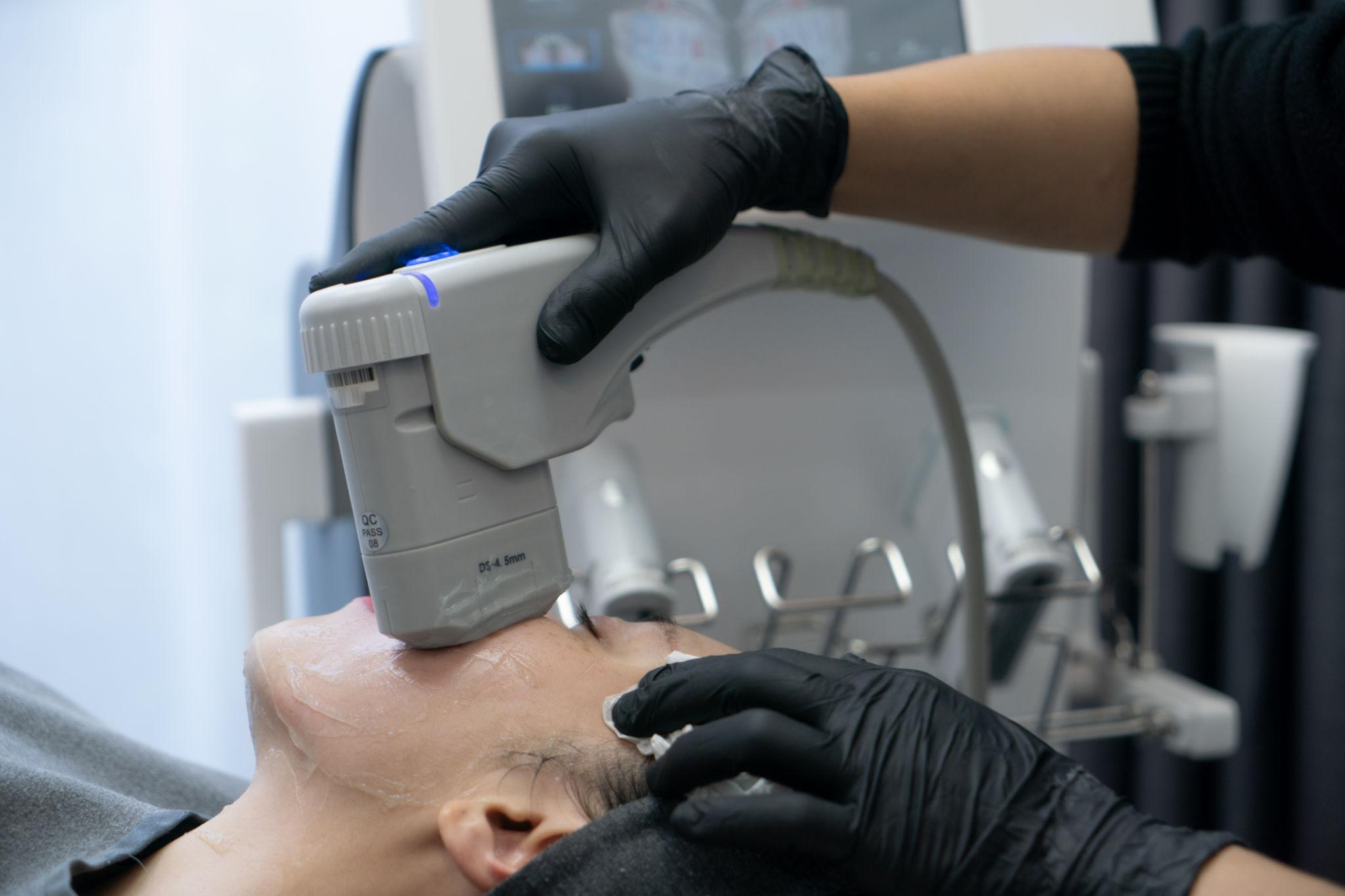
Skin tightening remains an important service category for aesthetic clinics, medical spas, and professional beauty salons in 2026. As clients increasingly seek firmer-looking skin, improved facial contours, and non-surgical aesthetic options, providers are exploring more sophisticated ways to combine energy-based technologies.
Radiofrequency (RF) and high-intensity focused ultrasound (HIFU) are two prominent technologies in this field. Although both can support skin rejuvenation, they work through different energy-delivery mechanisms and do not produce identical tissue effects. Other technologies, including microneedling RF, LED photobiomodulation, and selected laser systems, may also contribute to a broader treatment strategy when their indications and safety requirements are carefully considered.
But does combining technologies actually deliver better skin tightening?
The answer depends on the technologies selected, the client's skin condition, treatment parameters, device quality, and the professional's ability to develop an appropriate treatment plan. A multi-technology approach can address different aesthetic concerns, but adding more energy sources does not automatically produce better results. Successful combination treatments depend on complementary mechanisms, suitable treatment intervals, and realistic expectations.
For professional beauty businesses, understanding these differences is essential not only for treatment planning but also for selecting equipment that can support a safe, versatile, and commercially sustainable service portfolio.
Background: Why Skin Tightening Often Requires a Personalized Approach
Skin laxity develops through several interconnected processes. With age, collagen fibers become less organized, elastin function changes, and the skin's ability to maintain structural support gradually declines. Changes in subcutaneous fat, facial ligaments, and underlying tissue can also affect the appearance of sagging and contour definition.
Sun exposure, smoking, environmental stressors, weight fluctuations, and hormonal changes may further influence skin quality. However, these factors do not affect every client in the same way. Two people with similar-looking facial laxity may have different tissue characteristics and respond differently to the same treatment.
This is one reason why a single technology cannot address every skin-tightening concern equally well.
Some clients primarily want improved skin firmness and texture. Others are concerned about a less-defined jawline, mild sagging around the cheeks, or changes in the neck area. Certain clients may benefit from treatments that target superficial skin quality, while others require approaches that reach deeper tissue structures.
It is also important to distinguish skin tightening from lifting and fat reduction. These outcomes are related but not interchangeable. A treatment designed to improve skin firmness should not automatically be presented as a substitute for surgical lifting or as a reliable method of removing localized fat.
For clinics, the first step is therefore a proper consultation and assessment. Understanding the client's main concern, skin characteristics, medical history, treatment tolerance, and expectations helps determine whether RF, HIFU, another modality, or a combination is appropriate.
Technology and Mechanism: How RF, HIFU, and Other Modalities Work
1. Radiofrequency: Controlled Heating for Skin Firmness
Radiofrequency devices deliver electromagnetic energy that generates heat as tissue resists the electrical current. Depending on the device design, electrode configuration, frequency, power settings, and treatment technique, RF can heat targeted tissue regions to support collagen remodeling.
Controlled thermal stimulation can cause immediate changes in collagen structure and initiate biological processes associated with longer-term remodeling. Over time, these processes may contribute to improvements in skin firmness and the appearance of fine lines.
RF systems vary considerably. Monopolar, bipolar, and multipolar designs distribute energy differently, and their effects depend on the complete device system rather than the electrode configuration alone. Some systems are intended for superficial cosmetic treatments, while others are designed for more intensive professional applications.
For aesthetic clinics, RF can be attractive because it may be incorporated into facial and selected body treatments, depending on the device's intended use. Treatment plans should nevertheless account for skin sensitivity, thermal exposure, contraindications, and the manufacturer's operating instructions.
2. HIFU: Focused Ultrasound at Selected Tissue Depths
High-intensity focused ultrasound uses acoustic energy concentrated at designated focal points. At these points, energy can generate localized thermal effects while limiting direct energy deposition along much of the ultrasound pathway.
Depending on the system and its approved or intended application, focal depths may be selected to target particular tissue layers. Some aesthetic HIFU systems are designed to work at deeper levels than conventional surface-focused RF treatments.
This difference makes HIFU a potential option for clients concerned about selected areas of facial or body laxity. However, the treatment outcome depends on the device's actual focal characteristics, treatment protocol, anatomical location, and operator technique.
HIFU is not a universal solution for sagging, and deeper treatment is not automatically better. Inappropriate depth selection or excessive energy may increase the risk of pain, burns, nerve injury, or unwanted changes in facial fat. Professional training, anatomical knowledge, and careful patient selection are therefore essential.
3. RF Microneedling: Combining Needling with Radiofrequency
RF microneedling delivers RF energy through fine needles inserted into the skin. The needles provide access to selected depths, while the emitted energy creates controlled thermal zones that may stimulate collagen remodeling.
This technology is often considered when textural irregularities, certain types of acne scarring, enlarged pores, or skin laxity are part of the treatment concern. Its invasive nature distinguishes it from non-needle RF systems.
Because RF microneedling penetrates the skin, it requires appropriate infection-control procedures, operator training, patient screening, and aftercare. Risks can include infection, pigmentation changes, scarring, and thermal injury. Device selection and treatment depth must reflect the client's skin type, condition, and clinical indication.
4. LED and Other Complementary Technologies
LED photobiomodulation uses selected wavelengths of light to influence cellular signaling. Depending on the wavelength, dose, device, and treatment indication, LED may be used as an adjunct in certain skin-care protocols.
It should not be described as equivalent to RF or HIFU, nor should it be assumed to produce the same degree of tissue contraction. Its potential role is complementary rather than interchangeable.
Certain laser systems and other energy-based devices may also be incorporated into broader aesthetic plans when the target concern warrants them. For example, a provider may distinguish between treatments intended primarily for pigmentation, vascular concerns, surface texture, or deeper tissue laxity.
The key is to match the technology to the treatment objective instead of combining devices simply because they are available.
Advantages and Comparison: Can Combination Treatments Deliver Better Results?
RF and HIFU: Different Mechanisms, Potentially Complementary Roles
RF and HIFU are often discussed together because they deliver energy differently. RF generates heat through electrical resistance, while HIFU concentrates acoustic energy at focal points.
In selected clients, these approaches may address different aspects of skin laxity. A carefully planned combination could provide broader coverage of relevant tissue targets than a single modality alone. However, the result depends on the specific systems used, the client's anatomy, the treatment sequence, and the evidence supporting that protocol.
There is no guarantee that combining RF and HIFU will outperform either treatment used alone. High-quality comparative evidence is limited for many specific device combinations, and results from one system cannot automatically be generalized to another.
The safest approach is to evaluate each technology independently before considering whether an additional modality offers a meaningful benefit.
Combining RF with Microneedling
RF microneedling may be relevant when a client has both skin laxity and textural concerns. Yet this combination is already integrated into a single treatment technology, rather than necessarily requiring two separate devices.
Adding another RF procedure in the same session may increase thermal exposure without providing a proportional improvement. Treatment spacing and sequencing should be determined by the device instructions, the indication, the client's recovery, and the professional's clinical judgment.
Combining Energy-Based Treatments with LED
LED may be considered as an adjunct in selected protocols, particularly when the provider wants to address skin-care goals beyond tightening alone. Nevertheless, evidence varies by wavelength, dose, and indication.
Providers should avoid promising that LED will substantially enhance collagen contraction or guarantee faster recovery unless reliable evidence supports that specific claim.
Professional Devices Versus Home-Use Equipment
Home-use beauty devices may offer convenience for routine cosmetic care, but their output, treatment depth, control systems, and intended uses differ from those of professional equipment.
Professional RF and HIFU systems may provide more adjustable treatment parameters, specialized applicators, and protocols designed for trained operators. These features can support more individualized treatment planning, but they also demand stronger technical knowledge and more rigorous safety procedures.
Professional equipment is not automatically more effective simply because it is more powerful. Results depend on appropriate indications, device performance, correct settings, operator competency, and client suitability.
For salons and clinics, the commercial value of professional equipment lies in the ability to deliver clearly defined services consistently, document treatment parameters, and build protocols around identifiable client needs.
Applications and Client Needs: Building a Professional Treatment Strategy
1. Clients with Mild Skin Laxity
Clients with early signs of laxity may be suitable for a non-invasive RF treatment when the device's intended use and the client's condition align. The consultation should establish realistic expectations and clarify that visible improvement may be gradual rather than immediate.
A clinic may begin with one modality and reassess the response before introducing additional treatments. This approach helps avoid unnecessary energy exposure and makes it easier to understand which intervention is contributing to the outcome.
2. Clients Concerned About Facial Contours
For clients concerned about the jawline, lower face, or selected neck areas, HIFU may be considered when the treatment target is appropriate for the specific system. RF may be useful for different or overlapping concerns, depending on the device.
The provider should assess tissue thickness, facial anatomy, existing volume loss, and other factors that could affect the outcome. Clients with significant skin excess or advanced laxity may need referral for medical assessment rather than increasingly aggressive energy-based treatments.
3. Clients with Texture and Firmness Concerns
Where surface texture and laxity coexist, RF microneedling or a carefully selected combination of treatments may be considered. The provider should evaluate whether the expected benefit justifies the additional downtime and risks.
A treatment plan should also distinguish between concerns that respond to energy-based procedures and those better managed through other professional interventions.
4. Clients Seeking Preventive or Maintenance Care
Some clients seek maintenance treatments after completing an initial course or achieving a satisfactory result. A maintenance plan should be based on the device's instructions, treatment response, skin condition, and appropriate intervals rather than a fixed schedule for every client.
Providers should also explain that aging continues and that results vary. No device can permanently stop collagen degradation or guarantee a specific duration of improvement.
5. Choosing Equipment for a Salon or Clinic
For business owners evaluating RF, HIFU, or multi-technology equipment, purchasing decisions should extend beyond headline specifications.
Important considerations include:
-
Treatment purpose: Identify the main concerns your target clients want to address.
-
Energy delivery: Understand the device's mechanism, focal depths where relevant, applicators, and adjustable parameters.
-
Safety systems: Review temperature monitoring, energy controls, emergency functions, and applicable safeguards.
-
Training and support: Confirm operator training, technical assistance, maintenance arrangements, and access to operating documentation.
-
Evidence and compliance: Review the device's intended use, relevant regulatory status, available clinical evidence, and local requirements.
-
Business suitability: Evaluate consumable costs, maintenance, treatment time, service demand, and the ability to integrate the equipment into existing workflows.
A multi-technology platform can be commercially useful if its individual functions are genuinely relevant to the clinic's services. However, a system with more features is not necessarily the best investment. Equipment should be selected according to client demand, technical reliability, staff competency, and the quality of support available.
Safety, Treatment Sequencing, and Realistic Expectations
Combination treatments require more than selecting several technologies from a product catalogue. Each modality has its own contraindications, thermal or mechanical effects, recovery considerations, and operating requirements.
Before treatment, professionals should review relevant medical history, skin condition, medications, previous procedures, and factors that could increase risk. Depending on the technology, additional screening may be required for implanted electronic devices, active skin infections, impaired sensation, pregnancy, or other contraindications specified by the manufacturer and applicable clinical guidance.
When multiple procedures are planned, providers should consider whether they can safely be performed in the same session or whether treatment should be staged. More energy is not necessarily better, and overlapping thermal exposure may increase adverse-event risk.
Clients should receive clear information about expected results, possible side effects, aftercare, and the possibility of limited improvement. Photographs and standardized assessments, where appropriate and consented to, can help track progress without guaranteeing a particular outcome.
RF microneedling and HIFU can cause significant adverse effects when used incorrectly. Professional providers should follow device-specific instructions and applicable medical regulations. Treatments that penetrate the skin or deliver energy to deeper structures should only be performed by appropriately trained and legally authorized practitioners.
Conclusion: A Better Strategy Starts with the Right Combination
In 2026, RF combination treatments offer aesthetic clinics an opportunity to design more individualized skin-tightening services. RF, HIFU, RF microneedling, LED, and other technologies have different mechanisms and potential applications. When carefully selected, some may complement one another by addressing different client concerns.
However, combination treatment is not a shortcut to guaranteed superior results. Outcomes depend on the client's anatomy and skin condition, device performance, treatment parameters, professional expertise, and the quality of the evidence supporting the chosen protocol.
For beauty salons, medical spas, and aesthetic clinics, the most effective strategy is to begin with a clear treatment objective, select equipment with appropriate capabilities, and build protocols around safety and measurable client needs. Rather than offering the largest number of technologies, successful providers focus on delivering the right treatment, for the right client, at the right time.
Founded in 2008, Guangzhou GLM Beauty Spa Equipment Factory specializes in research, development, manufacture and selling of beauty and slimming machines. Our production base is located in Guangzhou City, Guangdong Province, China. Since our foundation, we have introduced advanced technologies and equipment, to assure high quality and high performance of our products. With professional marketing guide and excellent after-sales service, our products have been exported to over 20 countries and regions, including Southeast Asia, the Middle East, Europe and the United States, won worldwide praises and gained a good reputation