Introduction
In recent years, GLP-1 medications have transformed the weight management landscape. Originally developed to help regulate blood sugar levels, these medications are now widely recognized for their effectiveness in supporting significant weight loss. As millions of people achieve healthier body weights through GLP-1 therapy, a new trend has quietly emerged across aesthetic clinics and medical spas.
Weight loss is no longer the final goal.
Instead, many patients are discovering that rapid fat reduction often leaves behind loose skin, reduced facial volume, and changes in body contours that traditional skincare products cannot adequately address. This growing concern has created what many professionals describe as the "second wave" of aesthetic demand—skin tightening and tissue remodeling after successful weight loss.
For beauty clinics, medical spas, and aesthetic professionals, this shift presents an important opportunity. Clients who once focused primarily on reducing body fat are now seeking treatments that restore firmness, redefine contours, and improve skin quality without surgery.
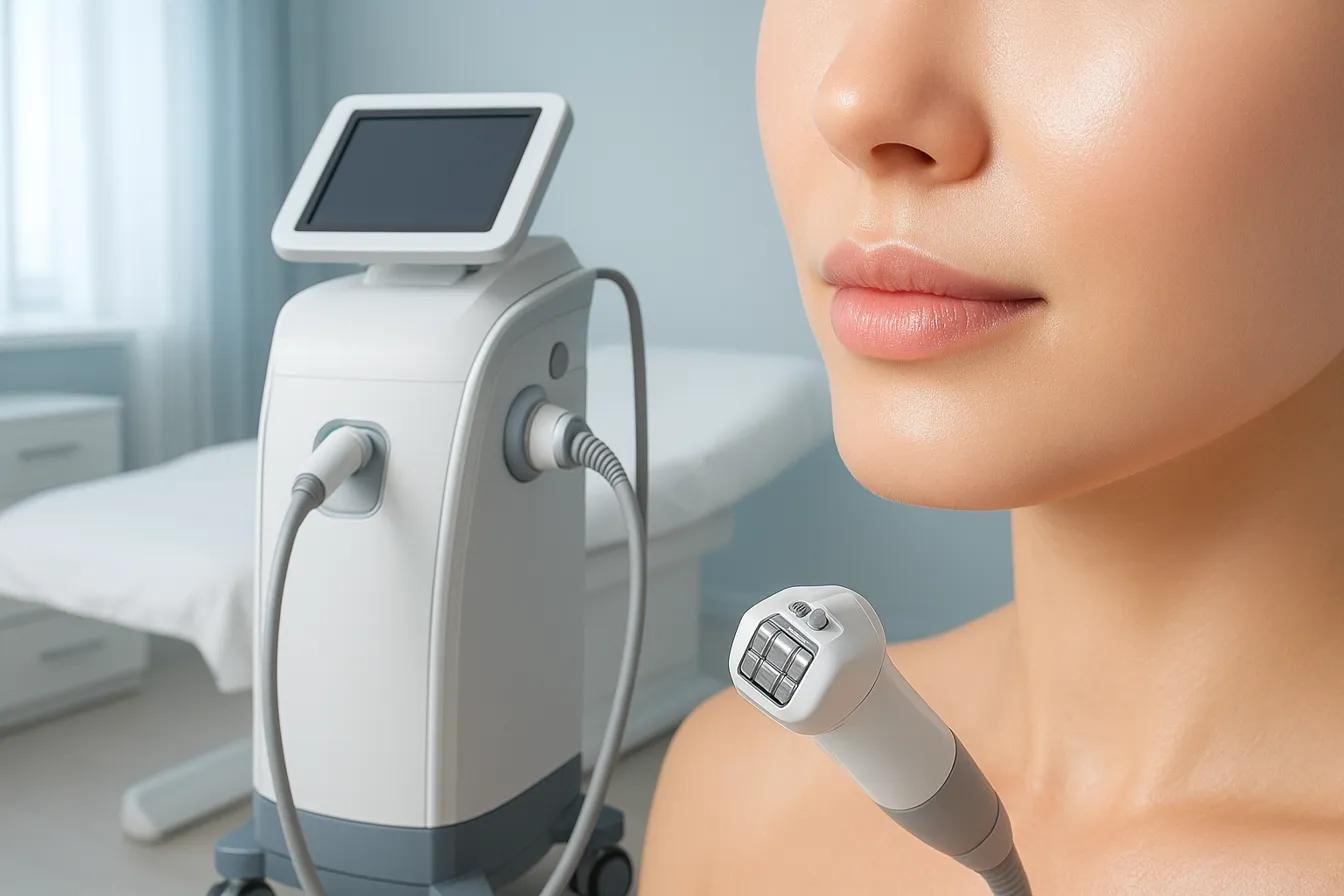
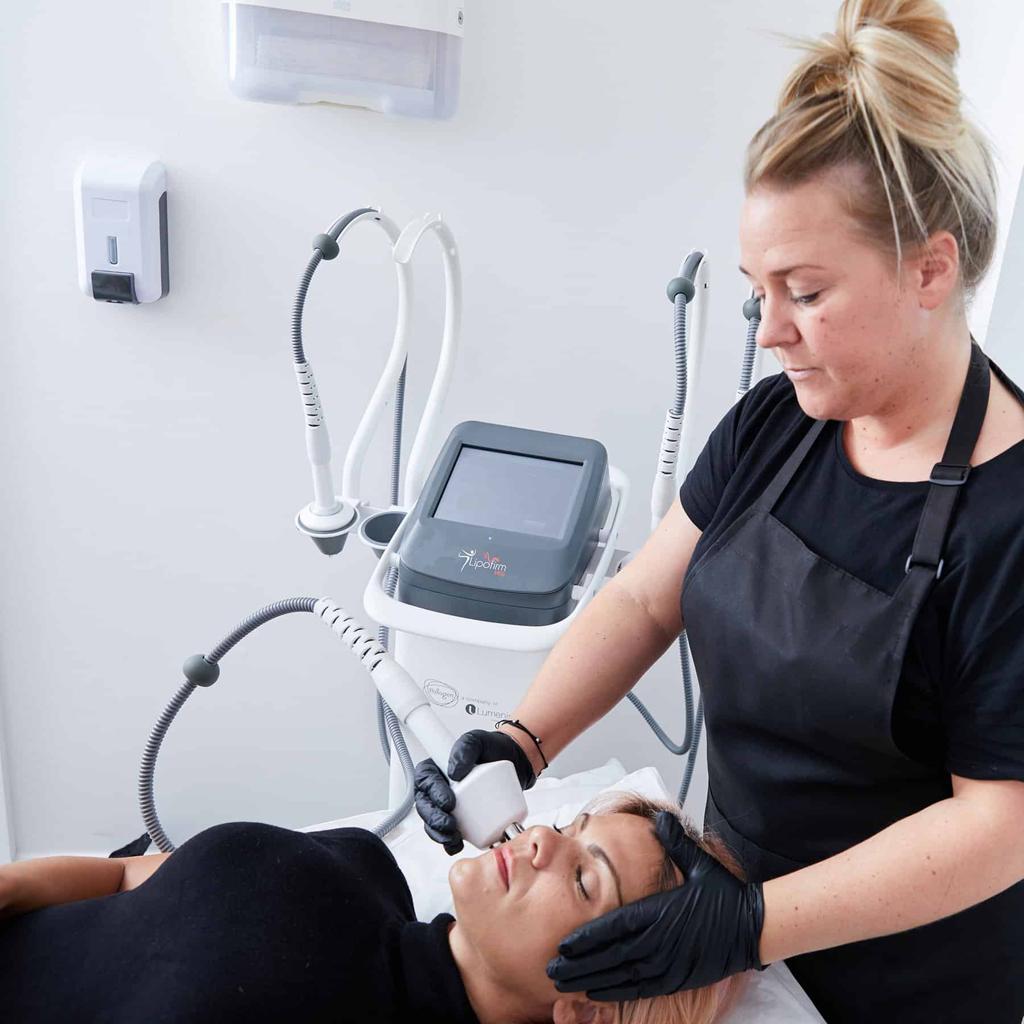
Professional skin tightening technologies—including radio frequency (RF), High-Intensity Focused Ultrasound (HIFU), microcurrent, and multi-energy combination systems—have become essential tools for addressing these post-weight-loss concerns. Rather than replacing weight-loss treatments, these technologies complement them by helping patients achieve a more balanced and youthful final result.
As consumer expectations continue to evolve, understanding why skin tightening devices are becoming increasingly important can help aesthetic businesses better serve both existing and new clients.
The New Reality: Weight Loss Doesn't Always Mean Aesthetic Satisfaction
The popularity of GLP-1 medications has changed patient expectations. Previously, many clients measured success simply by the number on the scale. Today, however, appearance, confidence, and body harmony play equally important roles.
Rapid weight reduction affects more than body fat.
When fat volume decreases quickly, the skin may not have enough time to naturally contract, especially in adults whose collagen production has already begun to decline. This can lead to concerns such as:
- Loose skin around the jawline
- Sagging cheeks and facial volume loss
- Neck laxity
- Wrinkled skin around the abdomen
- Loose upper arms
- Inner thigh skin laxity
- Reduced skin elasticity after significant body contour changes
For many clients, these changes can diminish the emotional satisfaction that comes with successful weight loss. While they may feel healthier, they may not feel as confident about their appearance as expected.
This is precisely where professional aesthetic treatments begin to play a meaningful role.
Instead of viewing loose skin as an unavoidable consequence of weight loss, many clinics now position skin tightening treatments as the natural continuation of a patient's transformation journey
Why Post-GLP-1 Patients Represent a Growing Market
Unlike traditional anti-aging clients, post-GLP-1 patients often share several unique characteristics.
First, they have already demonstrated a strong commitment to improving their health and appearance. Individuals who successfully complete a medically supervised weight-loss program are generally more willing to continue investing in treatments that enhance their overall results.
Second, these clients often seek comprehensive treatment plans rather than one-time procedures. Aesthetic improvements after major weight loss typically require multiple sessions, personalized treatment protocols, and ongoing maintenance.
Third, the treatment goals extend beyond wrinkle reduction. Clients are looking for improvements in:
- Skin firmness
- Facial contour definition
- Neck tightening
- Body skin elasticity
- Collagen regeneration
- Overall skin quality
As a result, clinics are increasingly adopting integrated treatment strategies that combine facial rejuvenation with body contour refinement.
This evolution has also increased demand for multifunctional aesthetic platforms capable of performing several skin remodeling procedures using a single system. For equipment manufacturers and distributors, versatile professional devices offer clinics greater flexibility while improving return on investment.
Background: Understanding Why Skin Laxity Happens After GLP-1 Weight Loss
To appreciate the growing demand for skin tightening technologies, it is helpful to understand the biological processes involved.
Human skin consists of three primary layers:
- The epidermis
- The dermis
- The subcutaneous fat layer
Collagen and elastin fibers within the dermis provide structural support, elasticity, and resilience. During gradual weight gain, the skin stretches over time to accommodate increased fat volume. When weight is lost slowly, these fibers may partially recover.
However, GLP-1-assisted weight loss can occur relatively quickly, particularly during the first several months of treatment. As body fat decreases faster than collagen remodeling can occur, excess skin may remain.
Several factors influence the degree of skin laxity:
Age
Collagen production naturally declines with age. Older patients typically experience less skin recoil than younger individuals.
Amount of Weight Lost
The greater the weight reduction, the more noticeable loose skin may become, particularly after losing 20–30 kilograms or more.
Genetics
Individual skin elasticity varies considerably, affecting how well the skin adapts to body changes.
Lifestyle Factors
Smoking, poor nutrition, dehydration, chronic sun exposure, and inadequate protein intake can all reduce the skin's ability to recover after weight loss.
Treatment Timing
Many aesthetic professionals now recommend introducing collagen-stimulating treatments before severe skin laxity develops. Early intervention may help support skin quality throughout the weight-loss journey rather than waiting until loose skin becomes more pronounced.
This preventive approach is becoming increasingly popular in advanced aesthetic practices, where long-term treatment planning often delivers more consistent and satisfying outcomes than reactive care alone
Technology / Mechanism
The growing demand for skin tightening treatments after GLP-1 weight loss has accelerated innovation in professional aesthetic technology. Rather than relying on a single treatment method, modern clinics increasingly adopt multi-modality approaches that target different skin layers and biological processes.
The objective is not simply to "tighten" the skin mechanically. Instead, professional devices stimulate the body's natural regenerative response by encouraging collagen remodeling, elastin production, tissue contraction, and improved circulation. Because different technologies work at different depths, experienced practitioners can customize treatment plans based on each client's degree of skin laxity, treatment area, and desired outcome.
Radio Frequency (RF): Controlled Heat for Collagen Remodeling
Among all non-invasive skin tightening technologies, Radio Frequency (RF) remains one of the most widely used in professional aesthetic clinics.
RF devices deliver controlled electromagnetic energy into the dermis, where resistance within the tissue generates heat. When skin reaches an optimal therapeutic temperature, existing collagen fibers contract while fibroblasts become more active, encouraging the production of new collagen and elastin over the following weeks and months.
Unlike lasers, RF energy is not dependent on skin pigment, making it suitable for a broad range of skin types when used appropriately.
Professional RF systems are commonly used for:
- Facial skin tightening
- Jawline definition
- Neck rejuvenation
- Abdomen firmness
- Arm tightening
- Post-weight-loss body contour refinement
For GLP-1 patients, RF is particularly valuable because it addresses mild to moderate skin laxity without interrupting daily activities. Results develop gradually, matching the body's natural remodeling process rather than creating an artificial appearance.
High-Intensity Focused Ultrasound (HIFU): Lifting from Deeper Layers
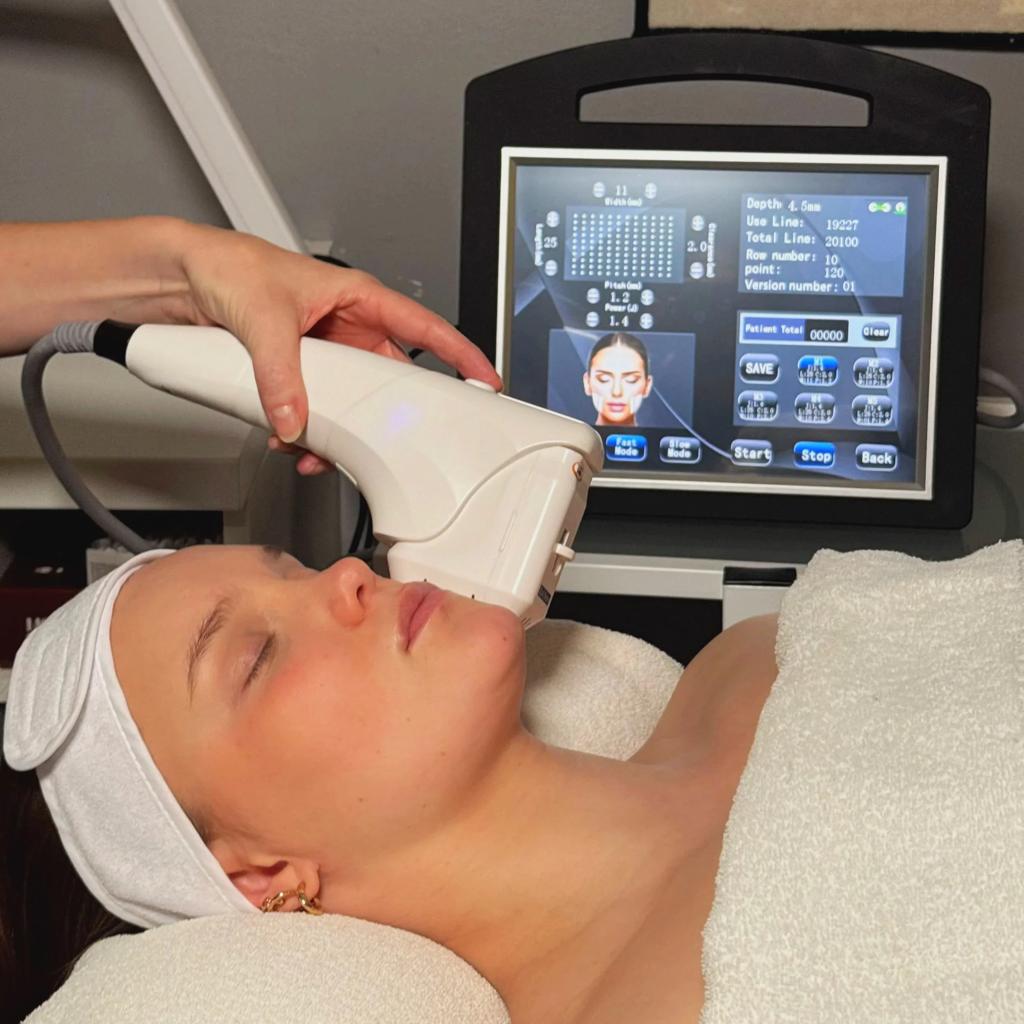
While RF primarily targets the dermis, High-Intensity Focused Ultrasound (HIFU) reaches deeper structural tissues, including the Superficial Musculoaponeurotic System (SMAS)—the same layer often addressed during surgical facelifts.
Focused ultrasound energy creates precise thermal coagulation points beneath the skin surface without damaging surrounding tissue. As healing progresses, collagen remodeling and tissue contraction gradually improve facial definition.
For clients who experience facial volume loss after rapid weight reduction—sometimes referred to as "GLP-1 face"—HIFU can help improve:
- Jawline definition
- Cheek support
- Neck contour
- Lower face firmness
Because improvements continue over several months, HIFU is frequently incorporated into long-term treatment plans rather than viewed as a one-time procedure.
Microneedling RF: Dual Stimulation for Challenging Cases
Patients who develop more pronounced skin laxity may benefit from combining mechanical stimulation with thermal energy.
Microneedling RF systems use insulated or non-insulated needles to create controlled microchannels while simultaneously delivering RF energy directly into targeted tissue depths.
This dual-action approach offers several advantages:
- More precise energy delivery
- Enhanced collagen remodeling
- Improved skin texture
- Better scar remodeling
- Reduced appearance of enlarged pores
- Increased treatment customization
Following significant weight loss, some clients notice not only loose skin but also reduced skin density and uneven texture. Microneedling RF addresses multiple concerns simultaneously, making it an increasingly popular option in advanced aesthetic practices.
Multi-Energy Platforms: Greater Clinical Flexibility
One of the most significant trends in professional aesthetics is the adoption of multifunctional treatment platforms.
Instead of purchasing separate devices for RF, ultrasound, vacuum therapy, EMS, or LED therapy, many clinics prefer integrated systems that combine several technologies within one platform.
For practitioners, this offers several operational advantages:
- Greater treatment versatility
- Personalized treatment protocols
- Improved clinic workflow
- Higher equipment utilization
- Lower long-term equipment investment
- Ability to address facial and body concerns using one system
For manufacturers, multifunctional platforms also provide greater value to clinics seeking scalable solutions that can adapt as market demand evolves
Why Professional Devices Outperform Home-Use Alternatives
The popularity of home beauty devices has increased significantly over the past decade. While these products appeal to consumers seeking convenience, they are generally designed with lower energy outputs and simplified treatment protocols to prioritize safety for unsupervised use.
Professional aesthetic equipment serves a different purpose.
Clinic-grade systems are engineered to deliver consistent, measurable energy under the supervision of trained practitioners. This allows treatments to be tailored according to skin condition, treatment area, and patient response while maintaining a high standard of safety.
Several factors distinguish professional systems:
Higher and More Consistent Energy Delivery
Professional devices generate energy levels that are capable of reaching therapeutic tissue temperatures more efficiently than most consumer devices. Consistent energy delivery is essential for predictable collagen remodeling.
Customized Treatment Parameters
Experienced practitioners can adjust energy intensity, pulse duration, treatment depth, and application technique based on individual clinical assessments. This level of customization is difficult to achieve with standardized home-use products.
Comprehensive Treatment Planning
Professional skin tightening is rarely a standalone procedure. Clinics often combine RF, HIFU, LED therapy, lymphatic drainage, skincare protocols, and follow-up evaluations to optimize outcomes. This integrated approach addresses multiple aspects of skin health rather than focusing on a single modality.
Broader Treatment Areas
Professional equipment is designed to treat not only the face but also larger body areas such as the abdomen, thighs, upper arms, buttocks, and neck—regions commonly affected by skin laxity after substantial weight loss.
Improved Patient Confidence
Clients undergoing post-GLP-1 transformation often seek reassurance that their treatment plan is evidence-based and professionally supervised. Regular assessments, progress tracking, and personalized protocols help build confidence while supporting realistic expectations.
Rather than competing directly with home-use devices, professional technologies occupy a distinct role. They provide clinics with the capability to address more advanced skin concerns through structured treatment plans and clinically controlled energy delivery.
Advantages for Aesthetic Clinics
The rise of post-GLP-1 skin tightening demand represents more than a short-term trend. It reflects a broader shift in patient expectations—from simply losing weight to achieving balanced, natural-looking body contours and healthier skin.
For aesthetic clinics and medical spas, this creates opportunities to:
- Expand services beyond traditional anti-aging treatments.
- Develop comprehensive post-weight-loss programs.
- Increase repeat visits through staged treatment protocols.
- Offer personalized combinations of RF, HIFU, microneedling RF, and complementary therapies.
- Differentiate their practice with advanced multifunctional equipment.
As awareness of post-weight-loss skin laxity continues to grow, clinics equipped with versatile, professional-grade technologies are well positioned to meet evolving client needs while enhancing treatment outcomes
Applications / Client Needs
As post-GLP-1 weight loss becomes more common, aesthetic providers are seeing a noticeable shift in consultation requests. Rather than asking exclusively about fat reduction, many clients now ask a different question:
"How can I make my skin look as good as my weight-loss results?"
This change reflects a broader understanding that body transformation does not end when weight is lost. For many individuals, the final stage is restoring skin quality, improving facial definition, and achieving balanced body contours.
Professional skin tightening technologies allow clinics to address these concerns through personalized treatment plans instead of one-size-fits-all solutions.
Common Treatment Areas After GLP-1 Weight Loss
Although every client presents differently, several treatment areas consistently receive the highest demand.
Face and Jawline
Rapid fat loss may reduce facial fullness, making skin laxity more noticeable around the cheeks, jawline, and lower face.
Professional RF and HIFU treatments can help improve tissue firmness, redefine facial contours, and support a smoother transition between the face and neck.
Neck
The neck often shows signs of laxity earlier than other areas because the skin is naturally thinner.
Energy-based tightening treatments can improve skin elasticity while complementing facial rejuvenation procedures.
Abdomen
Following significant weight reduction, loose abdominal skin is one of the most common concerns.
While severe cases may ultimately require surgery, many individuals with mild or moderate laxity seek non-invasive treatments before considering surgical intervention. Professional RF systems and combination therapies may improve skin firmness and overall appearance over a series of treatments.
Upper Arms
Loose upper-arm skin—sometimes referred to as "bat wings"—is another frequent complaint after weight loss.
By stimulating collagen remodeling, professional skin tightening devices can help improve skin texture and firmness, particularly when combined with healthy lifestyle habits.
Thighs and Buttocks
Inner thighs and buttocks may experience decreased elasticity after substantial fat reduction.
Multifunctional body-contouring platforms that combine RF, vacuum therapy, EMS, or other complementary technologies enable practitioners to create customized protocols for these larger treatment areas.
Building Long-Term Client Relationships
One of the most valuable aspects of post-GLP-1 skin tightening treatments is that they naturally support long-term patient care.
Unlike single-session aesthetic procedures, skin remodeling typically develops gradually over several weeks or months. This creates opportunities for regular follow-up visits, progress evaluations, and treatment adjustments based on individual responses.
Many successful clinics now structure treatment journeys rather than isolated appointments.
A typical pathway may include:
- Initial skin assessment and consultation
- Personalized treatment planning
- Sequential RF or HIFU sessions
- Combination therapies when appropriate
- Maintenance treatments to support long-term collagen health
This patient-centered approach helps establish trust while encouraging realistic expectations and sustainable outcomes.
For clinics, it also supports stronger client retention by emphasizing continuous skin health rather than quick cosmetic fixes.
Conclusion
The widespread adoption of GLP-1 medications has created a new chapter in aesthetic medicine.
As more individuals achieve meaningful weight-loss goals, attention is naturally shifting toward skin quality, facial balance, and body contour refinement. This "second wave" of demand is reshaping the services offered by aesthetic clinics, medical spas, and professional beauty centers around the world.
Professional skin tightening technologies—including Radio Frequency, HIFU, Microneedling RF, and multifunction energy platforms—are well positioned to address these evolving needs. By stimulating collagen remodeling and supporting the skin's natural regenerative processes, these treatments help bridge the gap between successful weight loss and satisfying aesthetic outcomes.
For equipment manufacturers, this trend also highlights the growing importance of versatile, clinic-grade systems that enable practitioners to deliver customized, evidence-informed treatment protocols across both facial and body applications.
As consumer expectations continue to evolve, the most successful clinics will not simply offer individual devices—they will provide comprehensive treatment solutions. Investing in advanced professional aesthetic technology is no longer just about expanding a service menu; it is about meeting the next generation of client expectations with confidence, flexibility, and measurable clinical value
Founded in 2008, Guangzhou GLM Beauty Spa Equipment Factory specializes in research, development, manufacture and selling of beauty and slimming machines. Our production base is located in Guangzhou City, Guangdong Province, China. Since our foundation, we have introduced advanced technologies and equipment, to assure high quality and high performance of our products. With professional marketing guide and excellent after-sales service, our products have been exported to over 20 countries and regions, including Southeast Asia, the Middle East, Europe and the United States, won worldwide praises and gained a good reputation