Introduction
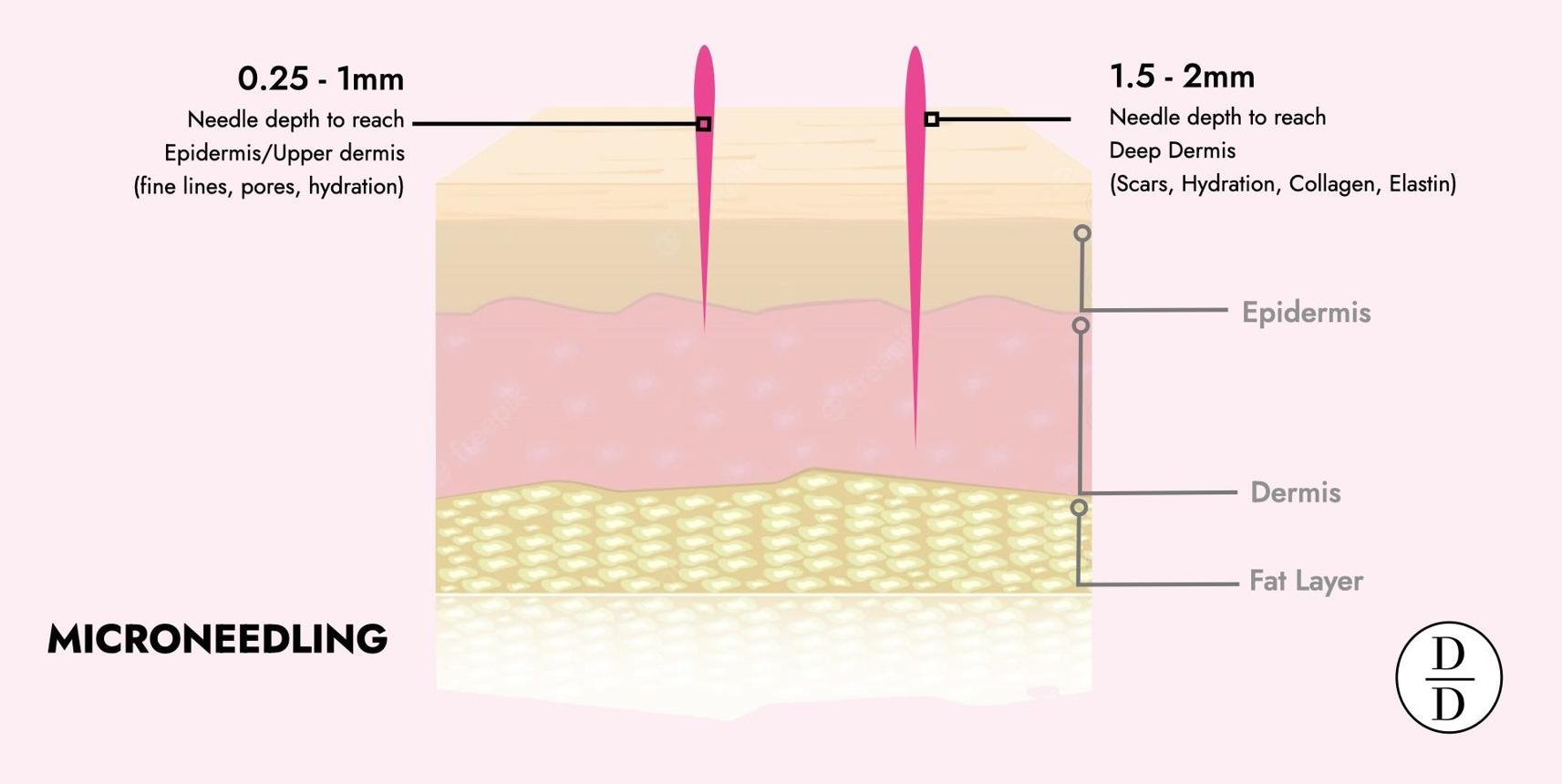
In professional aesthetic treatments, success often comes down to details that are almost invisible to the naked eye. A difference of 0.25mm in needle penetration may appear insignificant, yet it can determine whether a treatment merely refreshes the skin or effectively remodels collagen in deeper tissue.
As demand for minimally invasive skin rejuvenation continues to grow, RF microneedling has become one of the most versatile technologies in modern aesthetic clinics. Unlike conventional microneedling, RF microneedling combines controlled mechanical stimulation with precisely delivered radiofrequency energy, enabling practitioners to target different skin layers according to specific clinical goals.
However, achieving predictable outcomes requires much more than selecting a device and pressing "Start." Treatment success depends on carefully matching needle depth, energy level, pulse duration, and treatment area. Even experienced practitioners recognize that inappropriate settings can reduce efficacy or unnecessarily increase downtime.
This is why many professional clinics now rely on standardized needle depth and energy charts. Rather than using one universal setting for every patient, these protocols help practitioners personalize treatments for facial anatomy, skin thickness, treatment indications, and recovery expectations.
This article explains why a seemingly small adjustment of 0.25mm can significantly influence clinical outcomes, explores how needle depth interacts with RF energy, and provides a practical reference chart for professional aesthetic applications.
Background / Problem
Microneedling has evolved considerably over the past decade. Early mechanical rollers primarily relied on controlled skin injury to stimulate collagen production. While effective for certain indications, traditional microneedling often produced variable results because treatment depth depended heavily on operator technique and pressure.
The introduction of fractional RF microneedling systems transformed this approach. Instead of relying solely on mechanical injury, insulated or non-insulated needles deliver radiofrequency energy directly into targeted dermal layers, creating precise thermal coagulation zones while minimizing unnecessary epidermal damage.
Despite these technological advances, one misconception remains surprisingly common:
Deeper penetration does not automatically produce better results.
In reality, every facial region has unique anatomical characteristics.
- The forehead has relatively thin skin.
- The cheeks contain thicker dermal tissue.
- The periorbital area is extremely delicate.
- The jawline often benefits from deeper collagen stimulation.
- Acne scars may require different depths than pigmentation concerns.
- Stretch marks often demand entirely different treatment parameters.
Using identical settings across all treatment areas can lead to inconsistent outcomes, unnecessary discomfort, or prolonged recovery.
Professional practitioners therefore approach RF microneedling much like surgeons approach anatomy—every millimeter matters.
Why Does 0.25mm Matter?
Human skin consists of multiple functional layers:
- Epidermis
- Papillary dermis
- Reticular dermis
- Subcutaneous tissue
Each layer contains different cellular structures responsible for skin quality.
For example:
- Superficial dermal treatments primarily improve texture and pigmentation.
- Mid-dermal treatments stimulate collagen remodeling.
- Deeper penetration influences skin laxity and acne scar remodeling.
A difference of only 0.25mm may determine whether RF energy reaches fibroblast-rich tissue or remains too superficial to trigger optimal collagen production.
Conversely, treating too deeply in delicate regions may increase inflammation without improving outcomes.
For this reason, professional systems with 0.25mm incremental adjustments provide significantly greater clinical flexibility than devices offering only coarse depth selections.
Technology & Mechanism
Understanding Needle Depth and RF Energy Together
Needle depth alone does not determine treatment effectiveness.
Instead, practitioners should think of RF microneedling as a combination of two adjustable variables:
- Mechanical penetration depth
- Radiofrequency energy delivery
These parameters work together to determine where thermal stimulation occurs and how much collagen remodeling is initiated.
A simplified relationship looks like this:
| Needle Depth | Primary Target | Typical Clinical Goal |
|---|---|---|
| 0.25–0.50 mm | Epidermis & superficial dermis | Texture refinement, enlarged pores, mild pigmentation |
| 0.50–1.00 mm | Upper dermis | Fine lines, skin rejuvenation, prevention |
| 1.00–2.00 mm | Mid dermis | Wrinkles, acne scars, collagen induction |
| 2.00–3.00 mm | Deep dermis | Skin tightening, moderate laxity |
| 3.00–4.00 mm | Deep connective tissue | Body treatments, stretch marks, severe scars |
Notice that depth selection always influences energy strategy.
Higher RF energy applied superficially may create excessive epidermal heating, while insufficient energy at deeper levels may fail to stimulate adequate collagen remodeling.
Experienced clinicians therefore adjust both parameters simultaneously rather than independently.
Clinical Energy Distribution
Another major advantage of professional RF microneedling devices is controlled energy distribution.
Instead of generating heat randomly, modern systems precisely release RF energy once the needles have reached the programmed depth.
This creates three distinct biological responses:
- Controlled microchannels produced by the needles
- Thermal coagulation around each needle tip
- Natural wound-healing cascades that stimulate fibroblast activity
The result is a combination of mechanical stimulation and thermal remodeling, producing stronger collagen induction than mechanical microneedling alone while maintaining controlled treatment zones.
Clinical Illustration: Needle Depth and RF Energy Distribution
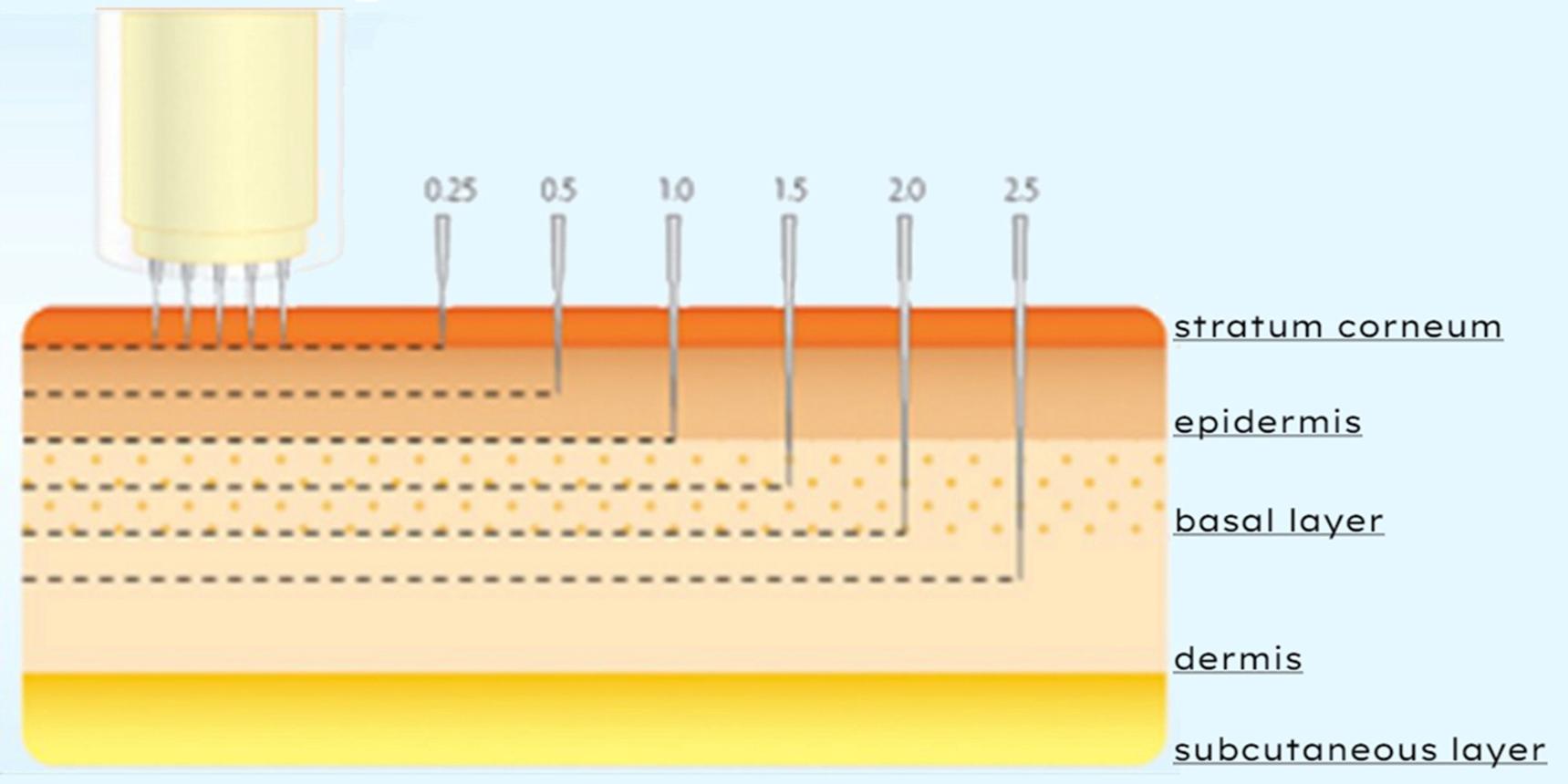
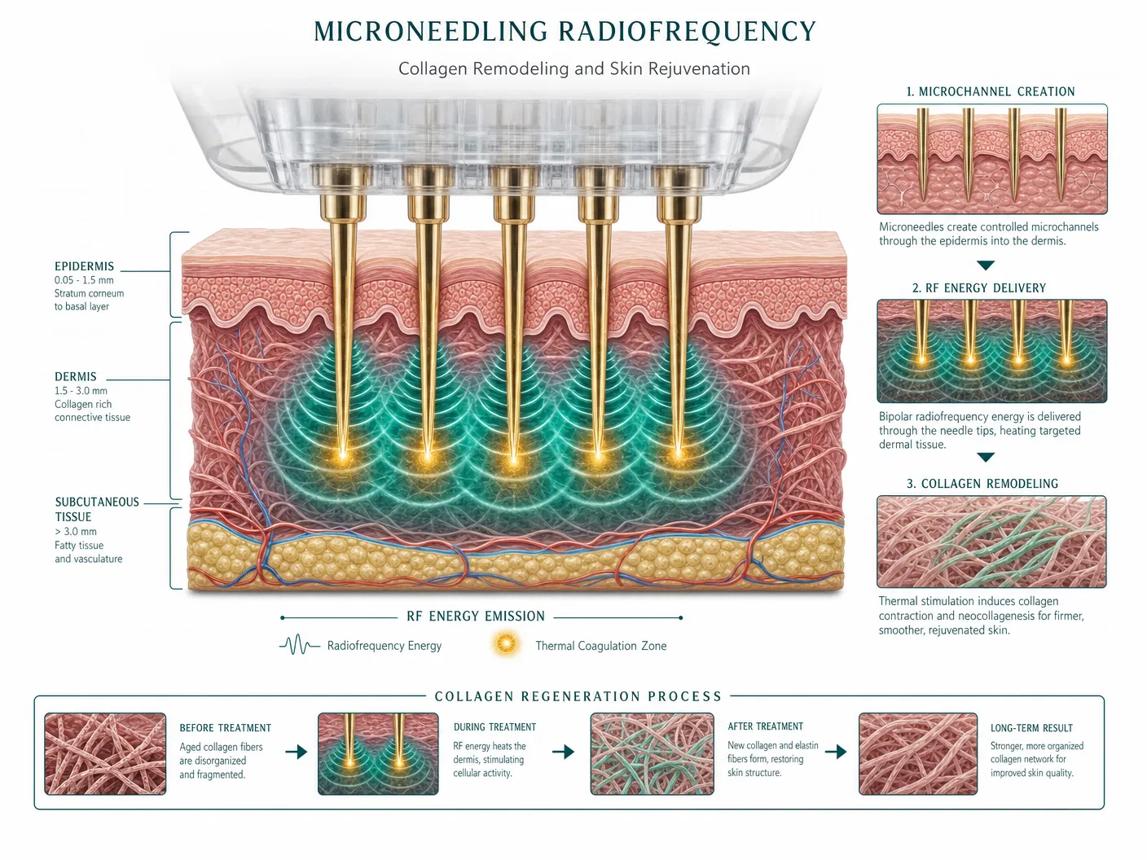
The illustration above demonstrates why accurate depth control is essential. Rather than dispersing heat across the skin surface, RF energy is concentrated within predetermined dermal layers, allowing practitioners to customize treatments according to individual indications.
For example, superficial settings can focus on improving skin texture with minimal downtime, whereas deeper configurations are more suitable for scar remodeling and tissue tightening. This level of precision is one of the defining advantages of professional clinic-grade systems over basic mechanical microneedling devices
The Ultimate Clinical Needle Depth & Energy Chart
Although every patient requires an individualized assessment, experienced practitioners generally follow evidence-based treatment ranges rather than using identical parameters for every indication. Skin thickness, treatment goals, age, scar severity, and tolerance all influence the final settings.
The following chart serves as a practical clinical reference for professional RF microneedling treatments.
| Treatment Area | Recommended Needle Depth | Relative RF Energy | Primary Treatment Goals |
|---|---|---|---|
| Forehead | 0.25–0.50 mm | Low | Fine lines, skin texture, enlarged pores |
| Around Eyes | 0.25–0.50 mm | Low | Crepey skin, fine wrinkles |
| Nose | 0.25–0.75 mm | Low | Pore refinement, oil control |
| Cheeks | 1.00–1.50 mm | Medium | Collagen stimulation, acne scars |
| Temples | 0.75–1.25 mm | Medium | Skin rejuvenation |
| Jawline | 1.50–2.00 mm | Medium–High | Skin tightening, contour support |
| Chin | 1.00–1.50 mm | Medium | Texture improvement, mild laxity |
| Neck | 0.75–1.25 mm | Low–Medium | Fine lines, tightening |
| Décolletage | 0.75–1.25 mm | Low | Photoaging, wrinkles |
| Abdomen | 2.00–3.00 mm | Medium–High | Stretch marks, skin laxity |
| Thighs | 2.50–3.50 mm | High | Scar remodeling, tightening |
This chart illustrates an important principle:
Treatment depth should follow anatomy—not assumptions.
For instance, the forehead has relatively little soft tissue covering the frontal bone. A setting appropriate for the cheek may be unnecessarily aggressive on the forehead, increasing discomfort without improving outcomes.
Conversely, shallow treatment depths on thicker areas such as the jawline or abdomen may fail to reach the dermal structures responsible for collagen remodeling.
Needle Depth Is Only Half the Equation
Depth determines where the energy is delivered.
RF power determines how much thermal stimulation reaches the tissue.
Pulse duration determines how long that stimulation lasts.
These three variables work together to produce controlled dermal remodeling.
A useful way to visualize the relationship is:
Needle Depth → Target Layer
↓
RF Energy → Thermal Effect
↓
Pulse Duration → Treatment Intensity
↓
Biological Response → Collagen & Elastin Remodeling
Changing only one parameter while ignoring the others often leads to inconsistent clinical outcomes.
Professional RF microneedling systems allow practitioners to independently adjust these variables, creating treatment protocols tailored to each patient's needs.
Clinical Examples
Case 1: Enlarged Pores
Patient Profile
- Oily skin
- Visible pores
- Minimal wrinkles
Typical Strategy
- Needle depth: 0.5 mm
- Low RF energy
- Short pulse duration
Goal
Improve skin texture while minimizing downtime.
Case 2: Acne Scar Remodeling
Patient Profile
- Atrophic acne scars
- Uneven skin surface
- Thick cheek dermis
Typical Strategy
- Needle depth: 1.5–2.0 mm
- Moderate RF energy
- Longer pulse duration
Goal
Stimulate deep collagen remodeling beneath depressed scars.
Case 3: Jawline Tightening
Patient Profile
- Mild skin laxity
- Early facial aging
Typical Strategy
- Needle depth: 1.5–2.0 mm
- Medium-to-high RF energy
Goal
Generate deeper thermal stimulation to improve tissue firmness.
These examples demonstrate why standardized protocols improve treatment consistency while still allowing practitioners to individualize settings.
Professional Systems Offer Greater Precision
One of the defining advantages of clinic-grade RF microneedling platforms is precision control.
Professional devices typically provide:
- Adjustable needle depths in 0.25 mm increments
- Multiple RF power levels
- Custom pulse durations
- Insulated or non-insulated needle options
- Stable energy output across the treatment area
- Disposable sterile cartridges
- Real-time treatment parameter adjustment
By contrast, many consumer-grade devices offer only limited depth adjustment, reduced energy output, or purely mechanical microneedling without RF technology.
For professional clinics, this additional level of control supports more predictable treatment planning across a wider range of skin conditions.
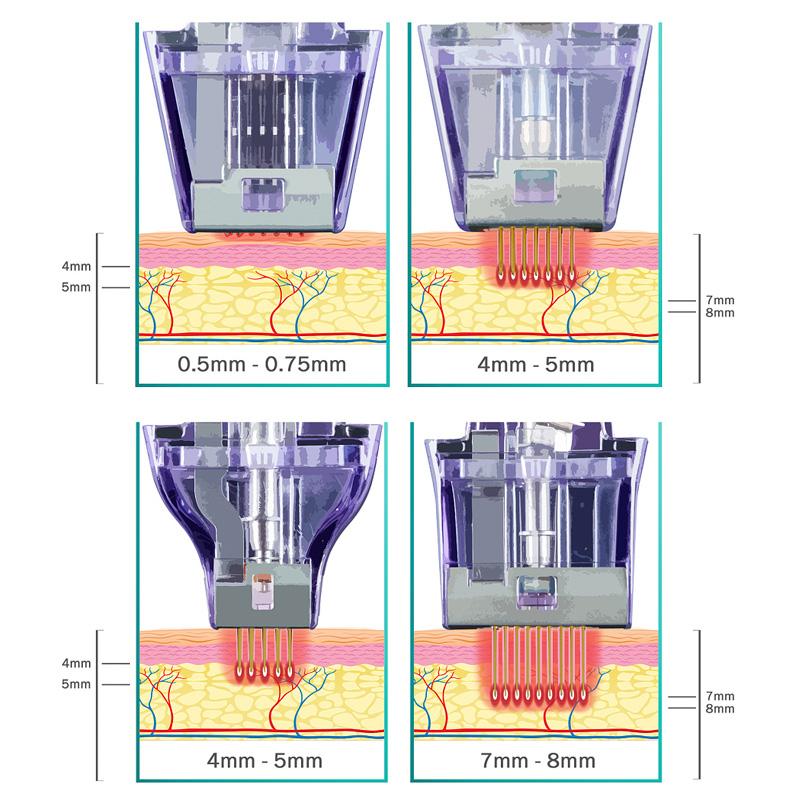
Clinical Illustration: Recommended Needle Depth by Treatment Area
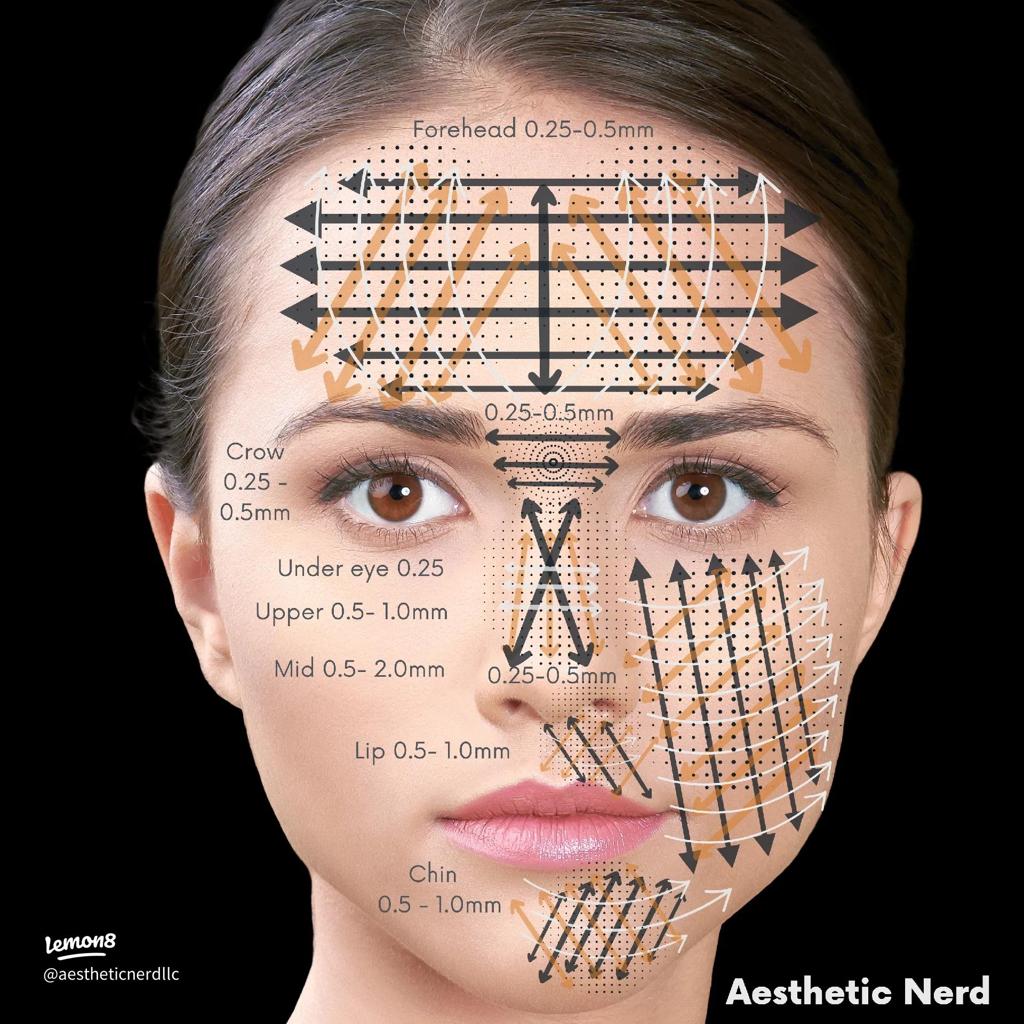
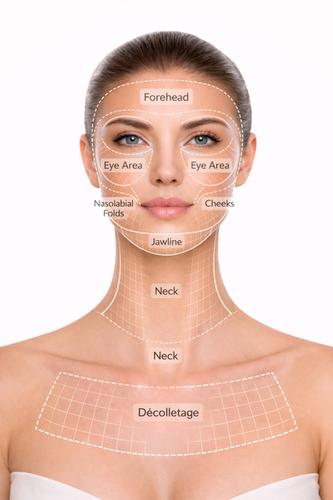
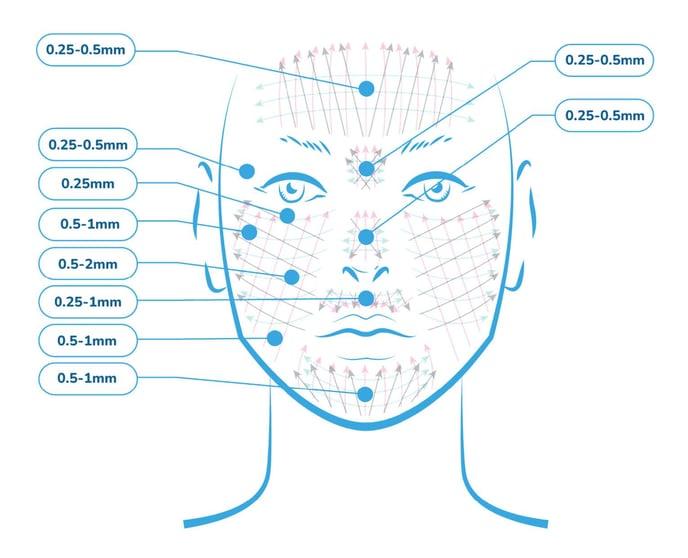
The diagram highlights how treatment depth varies across different anatomical regions. Rather than applying a single setting to the entire face, experienced practitioners adapt parameters according to tissue thickness and treatment objectives, improving both safety and clinical consistency.
Advantages & Comparison
Why Precision Outperforms Aggressive Treatment
A common misconception among new practitioners is that deeper penetration and higher energy always produce superior results.
In reality, effective RF microneedling is built on precision rather than intensity.
Accurate parameter selection offers several clinical advantages:
- Better collagen stimulation with less unnecessary tissue trauma.
- More consistent results across different facial and body regions.
- Reduced risk of post-treatment erythema, edema, and prolonged downtime.
- Greater patient comfort during treatment.
- Easier customization for different skin types and indications.
This is particularly important when treating delicate areas such as the periorbital region or neck, where conservative settings often deliver excellent outcomes with fewer adverse reactions.
Compared with traditional mechanical microneedling, RF-assisted systems provide an additional dimension of control by combining mechanical stimulation with targeted thermal energy. This dual-action mechanism enables practitioners to address a broader range of concerns—including skin laxity, acne scars, enlarged pores, fine lines, and overall skin quality—within a single treatment platform
Applications & Client Needs
How Professional Clinics Apply Needle Depth & Energy Control
Modern aesthetic clinics are no longer focused on one-size-fits-all procedures. Today’s clients expect personalized treatments designed around their skin condition, lifestyle, and desired recovery time.
For professional operators, RF microneedling systems provide the flexibility needed to create customized treatment plans. By adjusting needle depth and RF energy parameters, practitioners can address different concerns while maintaining controlled treatment experiences.
1. Facial Rejuvenation: Improving Overall Skin Quality
Facial rejuvenation remains one of the most common applications of RF microneedling.
Many clients visit aesthetic clinics with concerns such as:
- Fine lines
- Uneven texture
- Enlarged pores
- Early signs of aging
- Dull skin appearance
For these cases, practitioners usually focus on superficial to medium-depth treatments.
Typical approach:
- Needle depth: 0.5–1.0 mm
- RF energy: Low to medium
- Treatment focus: Epidermal renewal and collagen stimulation
The goal is not aggressive resurfacing but gradual improvement through controlled skin remodeling.
Professional RF microneedling equipment allows clinics to provide these treatments with greater consistency compared with manual microneedling because energy delivery remains stable throughout the procedure.
2. Acne Scar Treatment: Reaching Deeper Remodeling Layers
Acne scars represent one of the more challenging aesthetic concerns because the problem often exists beneath the surface.
Atrophic scars, including rolling scars and boxcar scars, require stimulation within deeper dermal layers where collagen restructuring can occur.
Typical approach:
- Needle depth: 1.5–2.5 mm
- RF energy: Medium to high
- Treatment focus: Fibroblast stimulation and collagen remodeling
Unlike surface-only procedures, RF microneedling creates controlled thermal zones beneath the skin, helping trigger natural repair mechanisms.
For clinics specializing in advanced skin treatments, this ability to precisely target deeper tissue is one of the reasons RF microneedling has become an important technology in professional treatment portfolios.
3. Skin Tightening and Anti-Aging Treatments
Skin laxity is one of the primary concerns among mature clients.
As collagen and elastin production naturally decline with age, skin gradually loses firmness and elasticity.
Common treatment areas include:
- Lower face
- Jawline
- Neck
- Décolletage
Typical approach:
- Needle depth: 1.5–2.0 mm
- RF energy: Medium to high
- Treatment focus: Deep dermal heating and collagen contraction
Controlled RF energy creates thermal stimulation that encourages collagen remodeling while supporting improved skin firmness over time.
For clinics, combining precise depth control with RF technology allows practitioners to offer a minimally invasive alternative for clients who are not ready for surgical procedures.
4. Body Applications: Beyond Facial Treatments
Although RF microneedling is widely recognized for facial rejuvenation, professional systems are increasingly used for body treatments.
Common applications include:
- Stretch marks
- Loose abdominal skin
- Surgical scars
- Body texture improvement
Because body skin is generally thicker than facial skin, deeper needle penetration is often required.
Typical approach:
- Needle depth: 2.0–3.5 mm
- RF energy: Medium to high
This expanded application range allows professional beauty clinics to increase treatment options and serve a wider client base.
Meeting Different Client Expectations
A successful aesthetic treatment is not only about technology—it is also about matching the technology with client needs.
Different clients may prioritize different outcomes:
| Client Concern | Preferred Treatment Strategy |
|---|---|
| First signs of aging | Gentle collagen stimulation |
| Visible wrinkles | Medium-depth RF remodeling |
| Acne scars | Deeper collagen restructuring |
| Skin laxity | Controlled deep thermal stimulation |
| Sensitive skin | Lower energy and conservative depth |
| Body scars | Deeper penetration protocols |
Professional practitioners use consultation, skin analysis, and treatment planning to determine the most appropriate parameters.
This personalized approach is where advanced professional equipment creates value.
The machine itself provides the technology, but the ability to precisely control parameters allows practitioners to transform technology into predictable clinical experiences.
Conclusion
The Future of Microneedling Is Precision-Based
The difference between average microneedling results and advanced clinical outcomes is often measured in millimeters.
A 0.25mm adjustment may seem small, but it represents a significant difference in how energy interacts with biological tissue. The correct needle depth determines where stimulation occurs, while RF energy determines how effectively collagen remodeling is activated.
For professional aesthetic clinics, the goal is not simply to use deeper needles or stronger energy. The goal is to create the right combination of:
- Accurate needle depth
- Controlled RF energy
- Appropriate treatment area selection
- Personalized clinical protocols
Modern RF microneedling technology provides practitioners with the precision required to deliver customized treatments for rejuvenation, acne scars, skin tightening, and body applications.
As the aesthetic industry continues moving toward personalized and minimally invasive solutions, devices that offer advanced depth adjustment and energy control will remain essential tools for professional clinics.
Ultimately, the 0.25mm difference represents more than a measurement—it represents the importance of precision in modern aesthetic technology
Founded in 2008, Guangzhou GLM Beauty Spa Equipment Factory specializes in research, development, manufacture and selling of beauty and slimming machines. Our production base is located in Guangzhou City, Guangdong Province, China. Since our foundation, we have introduced advanced technologies and equipment, to assure high quality and high performance of our products. With professional marketing guide and excellent after-sales service, our products have been exported to over 20 countries and regions, including Southeast Asia, the Middle East, Europe and the United States, won worldwide praises and gained a good reputation