
Introduction
Aging skin is not simply a surface-level problem. As the skin matures, collagen production gradually declines, connective tissue becomes less supportive, and facial contours can begin to lose definition. Fine lines may become more visible, the jawline may appear softer, and areas such as the cheeks, neck, and brow can develop noticeable laxity.
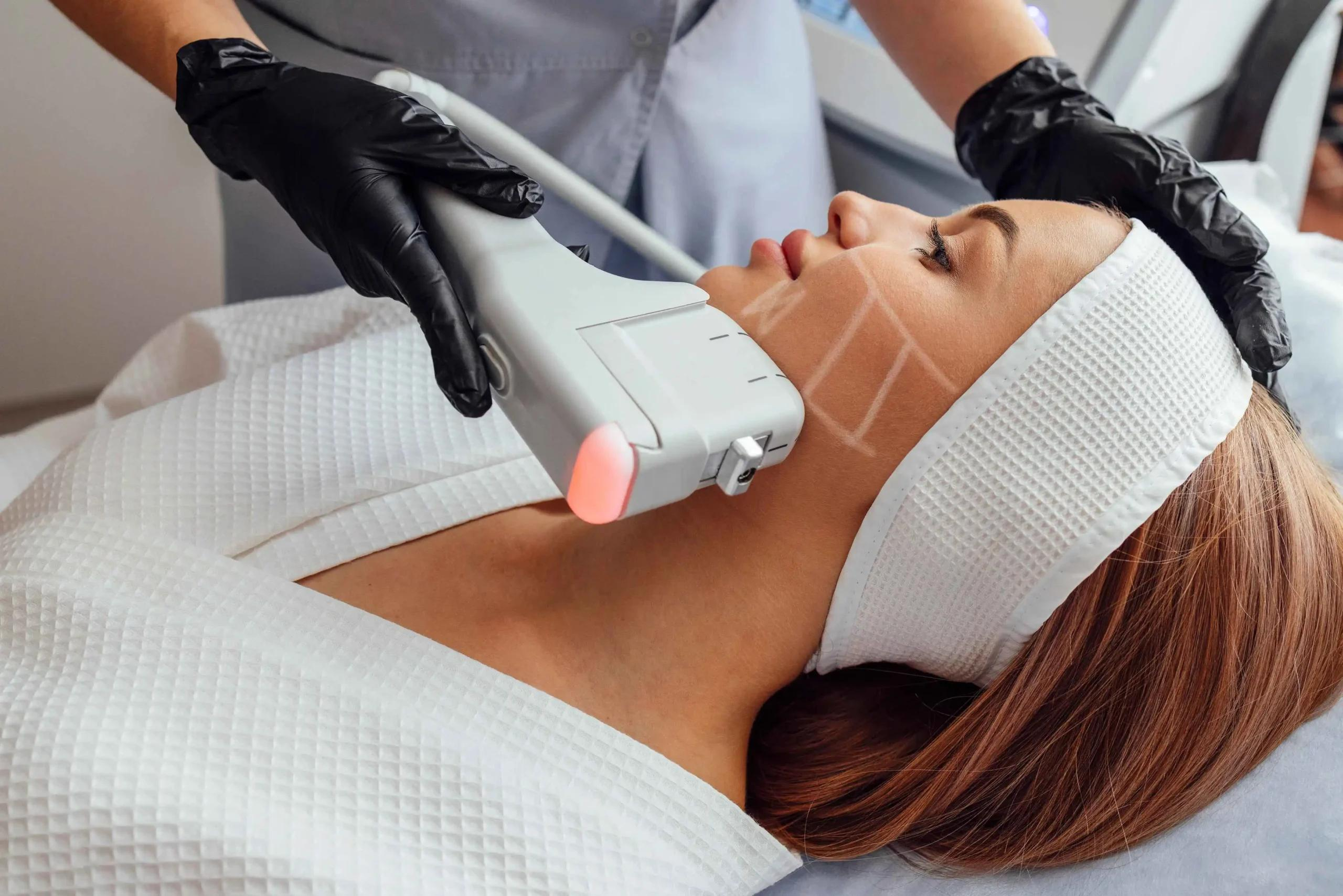
For beauty clinics and professional aesthetic practices, this has created growing demand for non-surgical anti-aging treatments that can improve firmness without significantly disrupting a client's daily routine. HIFU, or High-Intensity Focused Ultrasound, has become an important technology in this category because it can deliver concentrated ultrasound energy beneath the skin surface.
Unlike conventional skincare products that primarily work at or near the surface, professional HIFU equipment is designed to deliver controlled energy to selected tissue depths. This allows trained practitioners to approach skin laxity from a deeper structural level while supporting the body's natural collagen remodeling process.
The anti-aging value of HIFU therefore goes beyond simply making the skin appear temporarily smoother. When appropriately selected and professionally administered, the treatment is intended to encourage gradual tissue tightening and remodeling, producing a more defined and refreshed appearance over time. Clinical literature supports HIFU and microfocused ultrasound as useful approaches for mild-to-moderate facial skin laxity and rejuvenation.
Background: Why Skin Loses Firmness With Age
One of the most important changes associated with skin aging is the gradual reduction and remodeling of collagen and elastin.
Collagen provides much of the structural support within the skin, while elastin contributes to its ability to stretch and return to shape. With age, the balance between collagen production and breakdown changes. The extracellular matrix also becomes less organized, contributing to reduced firmness and elasticity.
These changes can appear in several ways:
- Softer facial contours
- Less-defined jawlines
- Mild to moderate skin sagging
- Fine lines and wrinkles
- Reduced firmness around the cheeks
- Loose skin around the neck and submental area
- Loss of definition around the brow and lower face
Traditional skincare remains valuable for maintaining the skin barrier, hydration, and surface appearance. However, topical products have limitations when the primary concern involves deeper tissue laxity.
This is where professional aesthetic equipment can provide a different treatment approach.
Rather than focusing only on the outermost layer of the skin, HIFU uses focused ultrasound energy to create controlled thermal effects at selected depths beneath the surface. Depending on the device and treatment protocol, different depths can be used to address different tissue layers. Research reviews describe focused ultrasound treatments using depths in the approximate range of 1.5 to 4.5 mm for aesthetic applications.
For clinics, this deeper treatment capability makes HIFU particularly relevant to clients who want visible rejuvenation but are not ready for surgical procedures.
Technology and Mechanism: How HIFU Supports Anti-Aging
HIFU works through the controlled delivery of focused ultrasound energy.
Instead of spreading energy broadly across the skin, the technology concentrates ultrasound waves at predetermined focal points. At these points, acoustic energy is converted into a localized thermal effect. The surrounding tissue is comparatively spared, while the targeted areas receive the treatment stimulus.
This creates a controlled biological response that can be understood in several stages.
1. Focused Energy Delivery
The handpiece delivers ultrasound energy to a selected depth according to the treatment area, device configuration, and treatment protocol.
Different facial areas may require different approaches. The cheek, jawline, submental area, and neck do not necessarily have the same tissue thickness or treatment objectives. Professional systems with multiple cartridges or depth options allow practitioners to adapt treatment more precisely.
For example, some HIFU systems use transducers designed for superficial dermal layers, while others are intended for deeper structural tissues. Certain focused ultrasound technologies can reach the dermis and deeper fibromuscular layers, including the SMAS region.
2. Controlled Thermal Stimulation
At the focal point, the concentrated ultrasound energy produces a localized thermal effect.
The objective is not to heat the entire skin surface. Instead, controlled thermal zones are created within the selected tissue layer. This is one of the defining characteristics of focused ultrasound technology.
These localized treatment points initiate a wound-healing and remodeling response. Research on microfocused ultrasound describes a sequence involving tissue response, fibroblast activity, collagen production, and subsequent extracellular-matrix remodeling.
3. Collagen Remodeling
Collagen remodeling is one of the most important reasons HIFU is associated with anti-aging treatments.
Following controlled thermal stimulation, the body begins a repair process. Existing collagen can contract and reorganize, while fibroblast activity contributes to the production of new collagen and other extracellular-matrix components.
This process does not happen overnight.
Instead, skin firmness can progressively change over the following weeks and months as collagen remodeling develops. Clinical reviews have reported improvements in skin tightening and wrinkle-related outcomes following focused ultrasound treatments, particularly in patients with mild-to-moderate laxity.
4. Gradual Lifting and Firming
As remodeling progresses, treated areas may appear firmer and more defined.
This gradual development is particularly attractive in professional aesthetic practice. Many clients do not want an obviously altered appearance. They are often looking for a more refreshed facial contour, improved firmness, and a natural-looking reduction in visible signs of aging.
HIFU is therefore better understood as a tissue-remodeling technology rather than an instant facelift
Advantages of HIFU for Professional Anti-Aging Treatments
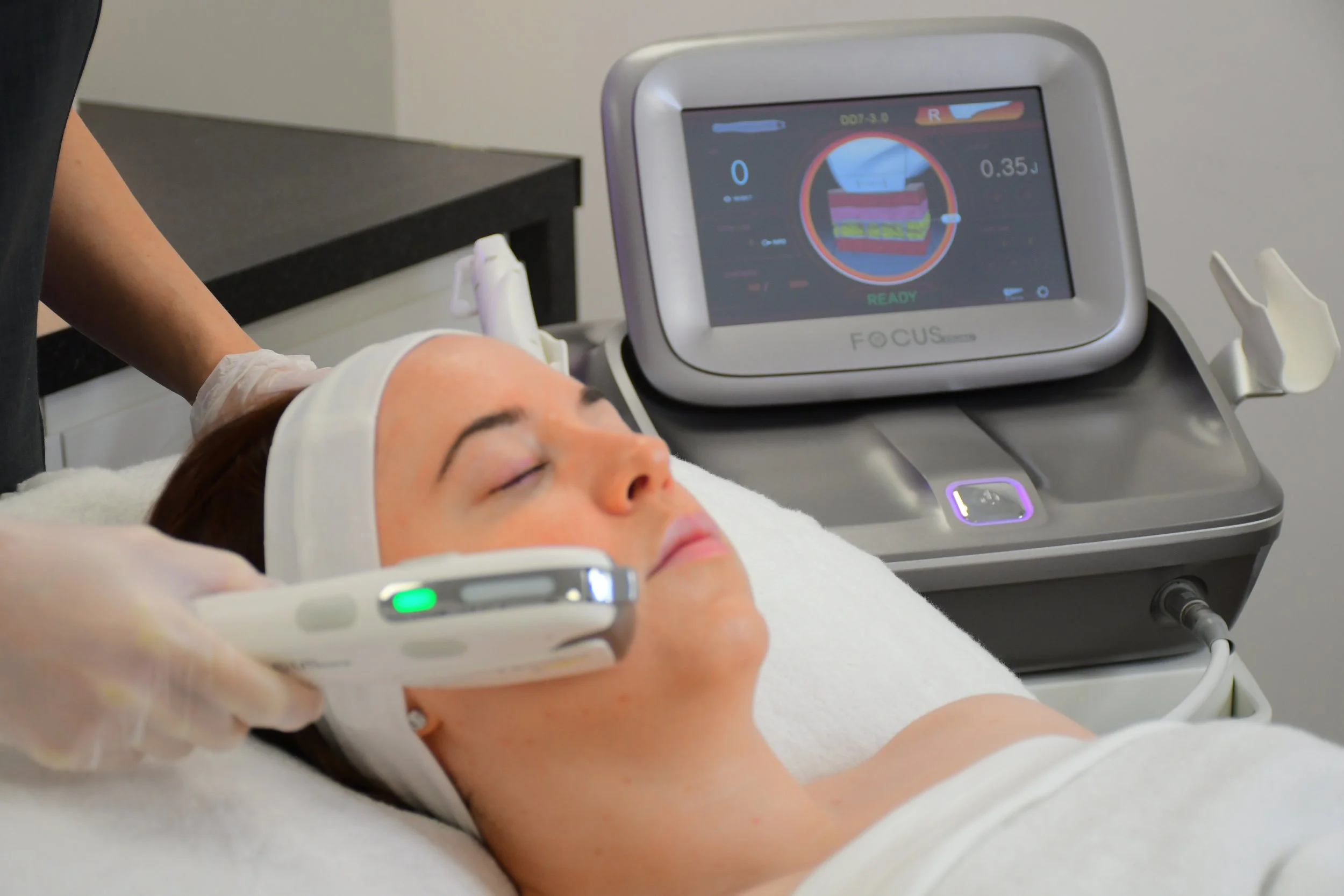
Non-Surgical Approach
One of HIFU's major advantages is that it does not require surgical incisions.
For clients who are concerned about early signs of aging but do not want surgery, a non-surgical energy-based treatment can provide another option. This makes HIFU particularly suitable for aesthetic clinics offering graduated treatment plans based on the severity of skin laxity.
It should not, however, be presented as an equivalent replacement for a surgical facelift. HIFU is generally more appropriate for selected clients with mild-to-moderate laxity and realistic expectations.
Deeper Treatment Than Surface Skincare
Creams, serums, and masks primarily interact with the skin surface and upper layers. HIFU takes a different approach by delivering focused energy to predetermined tissue depths.
This distinction gives professional HIFU equipment a clear role within a broader aesthetic treatment portfolio.
A clinic can position HIFU as a technology-focused service for clients whose primary concerns involve firmness, contour definition, and deeper tissue laxity rather than simply dryness or surface texture.
Gradual, Natural-Looking Results
Another advantage is the progressive nature of collagen remodeling.
Rather than relying entirely on a temporary cosmetic effect, HIFU treatments are designed to stimulate the body's own remodeling response. Improvements can develop gradually, which may help create a more natural transition in appearance.
For professional practitioners, this also creates opportunities for structured consultation, follow-up assessment, photography, and personalized maintenance planning.
Flexible Treatment Areas
Professional HIFU treatments can be used across several areas depending on the device, applicators, practitioner expertise, and local regulations.
Common aesthetic applications include:
- Forehead and brow area
- Cheeks
- Lower face
- Jawline
- Submental area
- Neck
- Décolletage
- Selected body areas with appropriate protocols
This versatility can make HIFU equipment a valuable addition to clinics that want one technology platform capable of supporting multiple treatment programs.
HIFU vs. Traditional Anti-Aging Methods
HIFU should not necessarily be viewed as a competitor to every other aesthetic technology. In a professional clinic, different technologies can serve different treatment objectives.
Topical skincare is useful for hydration, barrier support, pigmentation management, and ongoing home maintenance. However, its effect is primarily associated with the skin surface and upper layers.
Laser treatments can be highly valuable for resurfacing, pigmentation, vascular concerns, and texture improvement. Depending on the technology, lasers primarily target specific chromophores or tissue layers rather than using focused ultrasound to create deeper thermal points.
RF treatments use radiofrequency energy to generate controlled heating within tissue and are widely used for skin tightening and skin-quality applications. HIFU differs in its ability to focus ultrasound energy at specific depths.
HIFU, meanwhile, is particularly relevant when the treatment objective is deeper tightening and structural support. Recent reviews continue to describe focused ultrasound as a technology capable of producing controlled thermal effects at selected tissue depths and stimulating collagen remodeling.
For this reason, an experienced clinic may combine technologies rather than treating them as mutually exclusive.
Applications and Client Needs
From a professional operator's perspective, successful HIFU treatment starts before the device is switched on.
A consultation should evaluate the client's skin condition, degree of laxity, facial structure, treatment expectations, and relevant contraindications. The practitioner can then determine whether HIFU is appropriate and develop a treatment strategy based on the target area.
Clients With Early Signs of Aging
Clients who notice reduced firmness but do not have significant skin laxity may be interested in HIFU as part of an early anti-aging strategy.
The objective is not to dramatically change facial anatomy, but to support firmness and maintain clearer facial contours.
Clients Concerned About Jawline Definition
The lower face and jawline are common areas where age-related laxity becomes noticeable.
A professional HIFU protocol may target appropriate tissue depths around the lower face and submental area to support tightening and contour refinement.
Clients Seeking Non-Surgical Rejuvenation
Some clients are interested in anti-aging treatments but are unwilling or not yet ready to consider surgery.
For these clients, HIFU can be positioned as part of a non-surgical aesthetic program, provided that expectations are realistic and the client is an appropriate candidate.
Clients Looking for Long-Term Skin Maintenance
Anti-aging does not need to be treated as a one-time event.
Professional clinics can integrate HIFU into broader maintenance programs that may include skincare, RF, laser treatments, injectables, or other technologies depending on the client's needs and professional assessment.
The role of HIFU is particularly relevant when maintaining firmness and facial contour becomes a central treatment objective.
Why Professional HIFU Equipment Matters
The effectiveness of an energy-based treatment depends on more than simply owning a machine.
Professional equipment should provide consistent energy delivery, appropriate treatment depths, ergonomic handpieces, reliable controls, and treatment parameters that allow trained operators to work systematically.
Operator knowledge is equally important.
Energy level, treatment depth, treatment density, anatomical location, and patient selection all influence the treatment strategy. More energy is not automatically better; recent commentary in aesthetic medicine emphasizes the importance of matching thermal dose to anatomy, treatment objectives, and device-specific safety limits.
This is one reason professional HIFU systems should be regarded as clinical or aesthetic treatment platforms rather than simply upgraded skincare devices.
For manufacturers and beauty-equipment suppliers, features such as multiple cartridges, adjustable parameters, clear interfaces, stable energy output, treatment mapping, and ergonomic applicators can directly support professional workflow.
A well-designed device helps practitioners deliver repeatable protocols while providing a better treatment experience for both operators and clients.
Conclusion
The anti-aging benefits of HIFU are closely connected to its ability to deliver focused ultrasound energy beneath the skin and initiate a controlled tissue-remodeling response.
By stimulating collagen remodeling and supporting tissue tightening, HIFU can help address common concerns such as mild-to-moderate skin laxity, softer facial contours, reduced jawline definition, and visible signs of aging.
Its greatest value in professional aesthetics is not simply that it is non-surgical. The more important advantage is the combination of controlled energy delivery, adjustable treatment depth, collagen remodeling, and gradual results.
For beauty clinics and aesthetic practices, HIFU can therefore become more than an individual treatment. It can form part of a professional anti-aging service strategy that combines technology, practitioner expertise, personalized protocols, and long-term client care.
As clients increasingly seek natural-looking rejuvenation without surgery, professional HIFU equipment provides clinics with a practical technology for expanding their skin-tightening and anti-aging treatment portfolio
Founded in 2008, Guangzhou GLM Beauty Spa Equipment Factory specializes in research, development, manufacture and selling of beauty and slimming machines. Our production base is located in Guangzhou City, Guangdong Province, China. Since our foundation, we have introduced advanced technologies and equipment, to assure high quality and high performance of our products. With professional marketing guide and excellent after-sales service, our products have been exported to over 20 countries and regions, including Southeast Asia, the Middle East, Europe and the United States, won worldwide praises and gained a good reputation