Introduction
Professional skincare is increasingly moving beyond simple product application toward technology-assisted treatment. Clients want visible skin improvements, but they also expect treatments to be comfortable, efficient, non-invasive, and easy to integrate into their regular beauty routines. For salons, spas, and aesthetic clinics, this creates an opportunity to combine professional skincare formulations with controlled delivery technologies.
High-pressure oxygen skin therapy is one such approach. Using a professional oxygen facial machine, a controlled stream of oxygen is directed toward the skin, often together with a fine mist of skincare solutions or customized serums. Rather than relying entirely on manual application, the treatment uses pressure, airflow, and atomization to create a more controlled delivery process.
The value of this technology is not simply the word “oxygen.” A professional treatment is about controlling how oxygen, pressure, and active skincare formulations interact with the skin surface. This makes high-pressure oxygen therapy particularly interesting for professional environments where treatment consistency and client experience matter.
For modern beauty businesses, the technology can also serve as a flexible treatment platform. Depending on the machine configuration and compatible formulations, oxygen-based treatments can be incorporated into hydration, brightening, soothing, pre-event, and post-facial care programs.
Background: Why Traditional Skincare Delivery Has Limitations
The outermost layer of the skin, known as the stratum corneum, acts as an important protective barrier. This barrier is essential for maintaining skin integrity, but it also limits how easily many cosmetic ingredients move into the skin.
Traditional skincare application generally depends on spreading a product across the skin and allowing it to absorb naturally. This method remains important for everyday skincare, but professional treatments often require a more controlled approach.
For example, a salon client with dehydrated or dull-looking skin may already be using high-quality serums at home. However, applying another layer of serum does not necessarily create a significantly different treatment experience. Professional equipment can introduce another variable: the delivery method.
High-pressure oxygen systems use a controlled airflow to distribute oxygen and, in many systems, atomized treatment solutions over the skin. The fine mist can provide more even coverage while the pressure and airflow create a distinct sensory experience compared with manual application.
It is important to keep expectations realistic. High-pressure oxygen therapy should not be confused with systemic oxygen therapy or hyperbaric oxygen treatment. In professional skincare, its primary value is as a non-invasive topical treatment and delivery technology. Current industry discussions also emphasize that visible effects are often associated with hydration, temporary plumping, smoother texture, and improved radiance rather than permanent structural changes to the skin.
Technology and Mechanism: How High-Pressure Oxygen Skin Therapy Works
A professional high-pressure oxygen facial system typically combines several technical elements: an oxygen source or concentrator, pressure regulation, airflow control, a treatment handpiece, and sometimes a serum or solution delivery system.
1. Controlled Oxygen Delivery
The machine generates or supplies a concentrated oxygen stream and delivers it through a specialized handpiece. Depending on the equipment design, the oxygen concentration, flow rate, and pressure can be controlled to suit the treatment protocol.
Unlike simply spraying water onto the face, the controlled airflow creates a more precise treatment environment. Professional devices are designed to provide repeatable output, which is important when aestheticians perform the same service on multiple clients.
Some professional systems on the market use oxygen concentrations around 90–95%, although specifications vary considerably between machines.
2. Pressure-Assisted Delivery
Pressure is another important part of the technology.
When oxygen and a skincare solution are delivered together through a specialized handpiece, the moving air can help distribute very small droplets across the skin surface. In oxygen infusion systems, pressure can also assist the movement of suitable cosmetic formulations across the outer skin layers.
This is one reason professional oxygen infusion differs from simply applying a serum by hand. The treatment is not only about the formula itself; it is also about the way the formula is delivered.
The concept can be compared to the difference between manually painting a surface and using a controlled spray system. The material may be similar, but the delivery process can produce a different level of coverage and treatment consistency.
3. Fine Atomization
Many oxygen facial systems use an airbrush-style or nebulizing handpiece to transform a liquid formulation into a fine mist.
Fine atomization allows the practitioner to distribute a treatment solution evenly across larger facial areas while maintaining a lightweight, comfortable sensation.
This can be particularly useful when working with hydrating or soothing formulations. Ingredients commonly associated with professional oxygen facial protocols include hyaluronic acid, peptides, vitamins, antioxidants, and botanical extracts, depending on the manufacturer's formulation and treatment protocol.
4. Skin Surface Conditioning
The combination of airflow, mist, and skincare ingredients creates an immediate conditioning effect on the skin surface.
After treatment, clients may notice that the skin feels smoother and more hydrated and appears brighter or more refreshed. These effects can make oxygen therapy particularly attractive as a finishing treatment following cleansing or other non-invasive facial procedures.
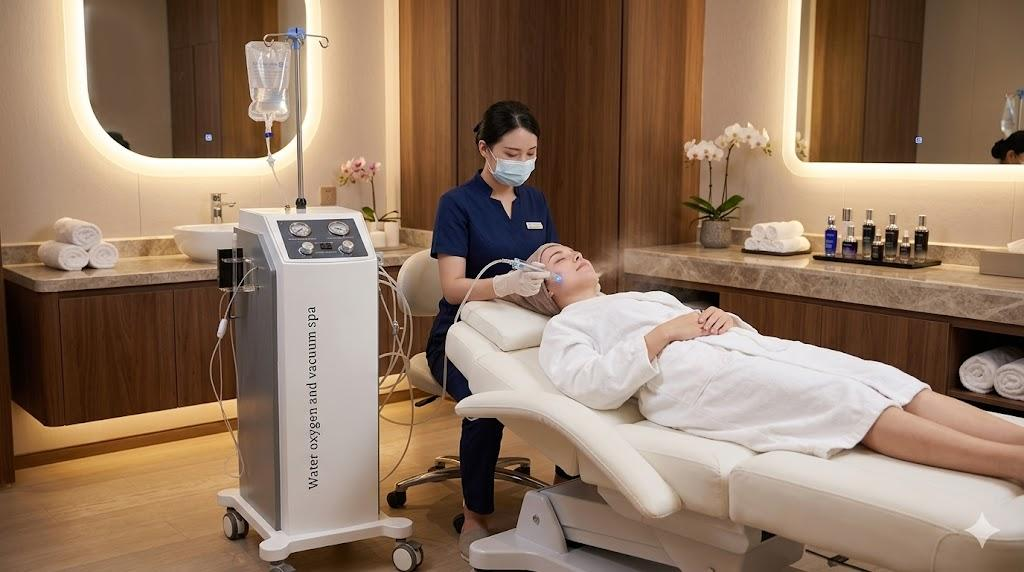
Figure 1. Professional high-pressure oxygen therapy combines controlled airflow, fine mist delivery, and skincare formulations in a non-invasive facial treatment.
Advantages of High-Pressure Oxygen Skin Therapy
1. Enhanced Treatment Experience
One of the most immediate advantages is the client experience.
The gentle sensation of an oxygen stream and fine mist can feel refreshing, especially after cleansing or exfoliation. Compared with treatments involving needles, strong mechanical abrasion, or aggressive energy delivery, oxygen therapy can provide a comfortable alternative for clients who prefer low-discomfort procedures.
This makes it suitable for beauty menus that emphasize relaxation and premium skincare experiences.
2. Supports Hydration and Skin Plumpness
Hydration is one of the most recognizable benefits associated with oxygen facial treatments.
When oxygen delivery is combined with humectant-rich formulations such as hyaluronic acid-based serums, the treatment can help improve the appearance and feel of dehydrated skin. Hydrated skin often appears smoother because temporary surface hydration can soften the appearance of fine dehydration lines.
This makes oxygen therapy especially suitable for clients preparing for events, photography, travel, or occasions when they want a fresher-looking complexion.
The effect should be positioned accurately: oxygen facial treatments are generally better understood as hydration and skin-conditioning services rather than permanent anti-aging procedures.
3. Helps Deliver Professional Skincare Formulations
For professional operators, the delivery system can be just as important as the serum.
A high-pressure oxygen device allows practitioners to build treatment protocols around different cosmetic formulations. For example, a hydration protocol can focus on moisture-binding ingredients, while a brightening-oriented service can use an appropriate cosmetic formulation designed for uneven-looking skin tone.
This creates a more flexible treatment menu without requiring a completely different machine for every skincare concern.
4. Non-Invasive and Low-Downtime
High-pressure oxygen therapy is attractive to clients who do not want injections, needles, or aggressive resurfacing.
Because the treatment is non-invasive, it can be positioned as a regular maintenance service or used as an additional step within a broader facial program, subject to the professional's assessment and the product manufacturer's instructions.
This low-downtime profile can also make it easier for salons to schedule oxygen treatments during normal business hours.
5. More Consistent Than Manual Application Alone
Professional equipment can improve treatment standardization.
A trained aesthetician can control handpiece distance, movement speed, pressure, solution volume, treatment duration, and coverage area. These parameters make the treatment easier to reproduce from one appointment to another.
For a growing beauty business, consistency matters. A service that can be standardized is easier to train staff on, easier to package into treatment programs, and easier to communicate to clients.
Professional Oxygen Therapy vs. Traditional Skincare Application
The difference between professional oxygen therapy and conventional skincare is not necessarily the ingredients themselves. The major distinction is the delivery method.
| Feature | Traditional Application | High-Pressure Oxygen Therapy |
|---|---|---|
| Product application | Manual | Device-assisted |
| Delivery | Passive absorption | Controlled airflow and mist |
| Treatment consistency | Depends heavily on operator | More standardized |
| Client sensation | Cream/serum application | Cooling or refreshing mist |
| Customization | Mainly product-based | Product + device parameters |
| Professional use | Basic skincare | Advanced facial service |
| Treatment positioning | Daily maintenance | Professional treatment program |
This comparison does not mean that oxygen therapy replaces traditional skincare. Instead, the two approaches can complement each other.
Home skincare is primarily designed for ongoing maintenance. Professional oxygen equipment adds controlled technology to the treatment process, allowing salons and clinics to create a more structured service around skincare formulations.
Applications in Professional Salons and Aesthetic Clinics
High-pressure oxygen technology can be integrated into several types of professional treatment programs.
Hydration Treatments
For clients with visibly dry or dehydrated-looking skin, oxygen infusion can be combined with appropriate hydrating formulations. The treatment can become a dedicated hydration facial or an enhancement added to another facial service.
Pre-Event Facial Programs
Because oxygen facials can provide an immediate refreshed appearance with little or no downtime, they are often suitable for clients preparing for weddings, photography, business events, parties, or other occasions.
A professional salon can create short-term “glow” programs that combine cleansing, gentle preparation, oxygen infusion, and finishing skincare.
Dull and Tired-Looking Skin
Urban environments, stress, travel, and irregular lifestyles can contribute to skin that appears dull or fatigued.
Oxygen-based facial treatments can be positioned as a refreshing maintenance service, particularly when combined with hydrating and antioxidant-oriented cosmetic formulations.
Post-Facial Conditioning
Oxygen therapy can also be used as a finishing step after selected non-invasive facial procedures.
For example, after cleansing or gentle exfoliation, an oxygen infusion step can provide a comfortable finishing treatment while delivering a customized serum or mist.
The exact combination should always depend on the treatment protocol, skin condition, product compatibility, and manufacturer's operating instructions.
Premium Facial Packages
For clinics and salons looking to build higher-value service packages, oxygen technology can be combined with other professional facial modalities.
Rather than selling “oxygen” as a single isolated feature, businesses can build complete treatment journeys around skin analysis, cleansing, preparation, targeted serum infusion, oxygen conditioning, and aftercare.
This approach changes the conversation from selling a machine feature to delivering a professional treatment experience.
Figure 2. Oxygen technology can be integrated into structured facial protocols for hydration, radiance, maintenance, and premium skincare services.
Why Professional Equipment Matters
For a professional salon or clinic, the difference between a consumer product and professional equipment is often found in controllability rather than simply power.
Professional systems are designed around repeatable operation. Adjustable pressure, airflow, treatment time, handpiece design, solution compatibility, and ergonomic operation can all affect the treatment workflow.
A professional device can also support multiple treatment protocols. Instead of providing a single fixed experience, the operator can adjust the treatment according to the client's skin condition and the selected formulation.
Equipment design therefore becomes part of service quality.
A well-designed oxygen facial machine should be easy to operate, stable during repeated use, simple to clean and maintain, and suitable for professional treatment environments. For clinics and salons, these operational factors can be just as important as the headline oxygen concentration.
Client Needs and Treatment Positioning
The best way to introduce high-pressure oxygen therapy is to match the technology with realistic client needs.
Clients looking for immediate hydration and a refreshed appearance may appreciate oxygen infusion as a standalone treatment.
Clients already receiving professional facials may benefit from adding oxygen delivery as a treatment enhancement.
Clients who prefer non-invasive procedures can consider it as an alternative to more aggressive technologies, depending on their individual skin condition and treatment goals.
At the same time, professionals should avoid presenting oxygen therapy as a universal solution. It does not replace medical treatment for skin disease, and it should not be marketed as a substitute for systemic oxygen therapy. A professional consultation, appropriate product selection, hygiene procedures, and correct device operation remain essential.
Conclusion
High-pressure oxygen skin therapy represents a practical combination of skincare formulation and professional delivery technology.
Its appeal comes from several factors: a comfortable treatment experience, support for skin hydration, fine-mist delivery, customizable skincare protocols, and compatibility with professional facial services. More importantly, oxygen technology gives salons and aesthetic clinics another way to turn skincare products into structured, technology-assisted treatment experiences.
The strongest value of a professional oxygen facial machine is therefore not simply the oxygen itself. It is the combination of controlled pressure, airflow, atomization, treatment parameters, professional formulations, and operator technique.
As professional skincare continues to evolve, technologies that improve treatment consistency while maintaining a comfortable, non-invasive client experience can occupy an important place in modern salon and aesthetic clinic menus
Founded in 2008, Guangzhou GLM Beauty Spa Equipment Factory specializes in research, development, manufacture and selling of beauty and slimming machines. Our production base is located in Guangzhou City, Guangdong Province, China. Since our foundation, we have introduced advanced technologies and equipment, to assure high quality and high performance of our products. With professional marketing guide and excellent after-sales service, our products have been exported to over 20 countries and regions, including Southeast Asia, the Middle East, Europe and the United States, won worldwide praises and gained a good reputation