Introduction
The future of beauty devices is no longer defined simply by higher energy, more functions, or more sophisticated-looking machines. For professional beauty clinics, medspas, and aesthetic centers, the next generation of equipment is increasingly about precision, personalization, integration, and operational efficiency.
In recent years, technologies such as radio frequency (RF), ultrasound, HIFU, LED light therapy, laser, EMS, vacuum, cavitation, and advanced skin analysis have become important parts of professional treatment menus. At the same time, artificial intelligence and digital imaging are beginning to influence how clinics assess clients, design treatment plans, and monitor progress.
This shift reflects a broader change in client expectations. People are increasingly looking for treatments that feel personalized rather than standardized. They want professional explanations, visible progress, convenient treatment experiences, and solutions that fit their individual concerns.
For clinics, this creates an important opportunity. The value of a beauty device is no longer determined only by its technical specifications. The more important question is how effectively the technology fits into a complete professional treatment workflow.
The future belongs not necessarily to the machine with the most features, but to the equipment that helps professionals deliver more controlled, flexible, and meaningful services.
Background: Why Beauty Clinics Are Rethinking Equipment
Traditional beauty equipment investment was relatively straightforward. A clinic might purchase an RF machine for skin tightening, a laser for hair reduction, an ultrasound system for body treatments, or an LED device for light-based skincare.
This single-function approach still has a place, particularly when a clinic has strong demand for a specific service. However, the professional beauty market is becoming more competitive, and treatment rooms have limited space and operating hours.
Modern clients may have several concerns at the same time: loss of firmness, uneven skin tone, visible pores, fine lines, dullness, localized body concerns, or a desire for overall skin maintenance.
This has encouraged clinics to think beyond individual machines and instead build technology-supported treatment programs.
Recent industry discussions increasingly emphasize AI-assisted analysis, multifunction platforms, hybrid technologies, and personalized treatment planning. A 2026 systematic review also highlights the growing role of artificial intelligence, augmented reality, and other technologies in aesthetic practice, particularly in assessment, decision support, and patient engagement.
The implication is important: technology is becoming part of the entire client journey rather than being used only during the treatment itself.
A modern workflow may look like:
Analyze → Consult → Select Technology → Treat → Monitor → Adjust → Maintain
This approach gives professional equipment a much larger role than simply delivering energy.
Technology and Mechanism: What Will Define the Next Generation?
1. AI-Powered Skin Analysis Will Support Better Consultations
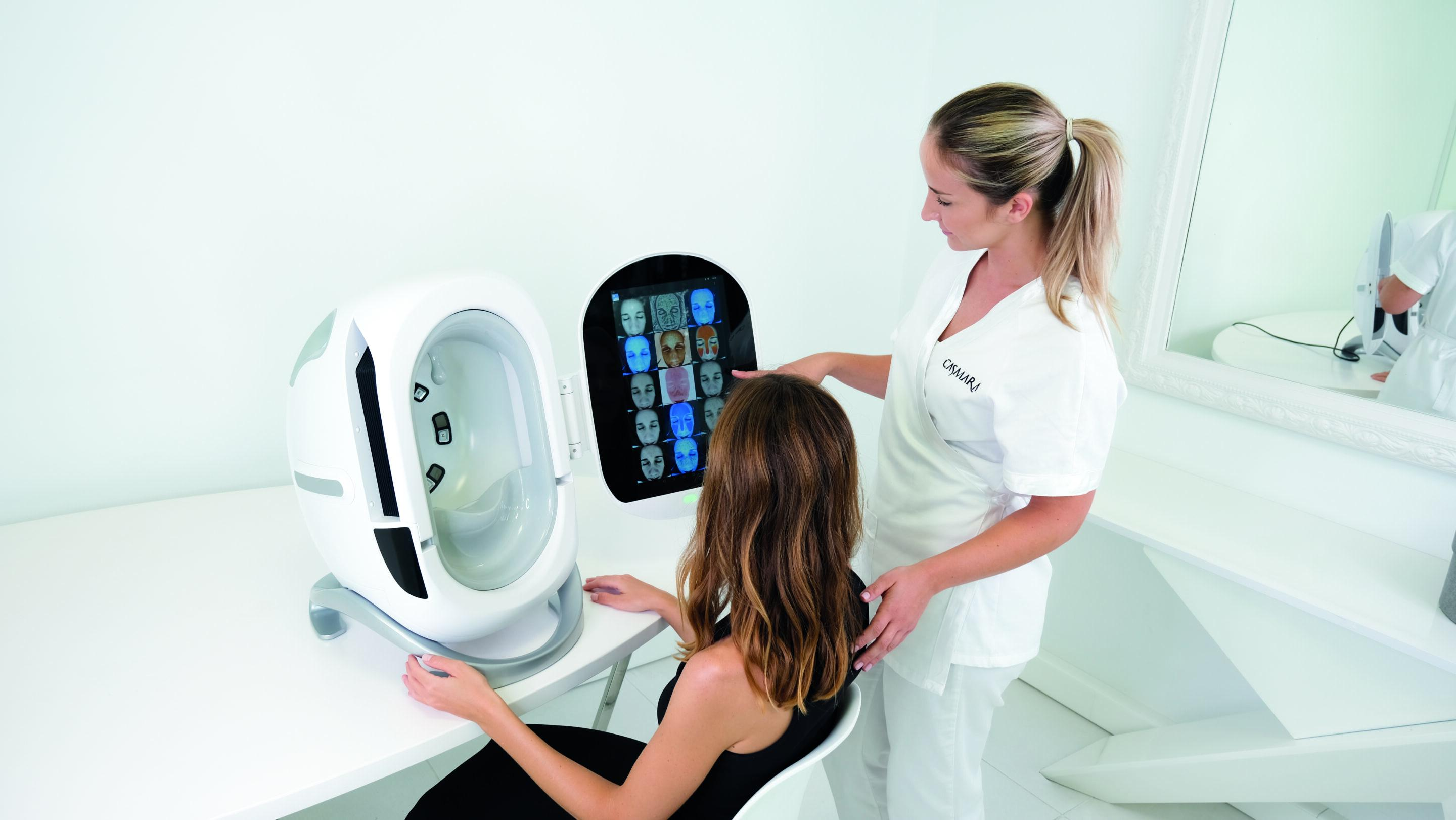
One of the most important developments in professional beauty technology is the integration of AI-assisted skin analysis.
Traditional skin assessment depends heavily on visual observation and operator experience. These remain essential, but digital imaging can provide another layer of information by helping visualize and document characteristics such as pigmentation, wrinkles, pores, redness, and skin texture.
AI can then assist with organizing this information and identifying areas that may deserve attention.
The key point is that AI does not need to replace the professional.
Instead, it can function as a decision-support tool.
For example, a clinic can capture standardized images before a treatment program begins. After several sessions, new images can be taken under comparable conditions. This creates a visual record that helps the practitioner evaluate changes and explain the treatment journey to the client.
This is particularly valuable from a commercial perspective.
When clients can see a structured assessment and understand why a particular treatment was selected, the consultation becomes more informative and easier to communicate.
Modern clinics are already incorporating professional skin analysis into treatment pathways, with some practices using standardized imaging to make results more measurable and comparable over time.
The future is therefore likely to involve:
AI-assisted analysis + professional judgment + device-based treatment.
Not AI alone.
2. Energy-Based Devices Will Become More Precise
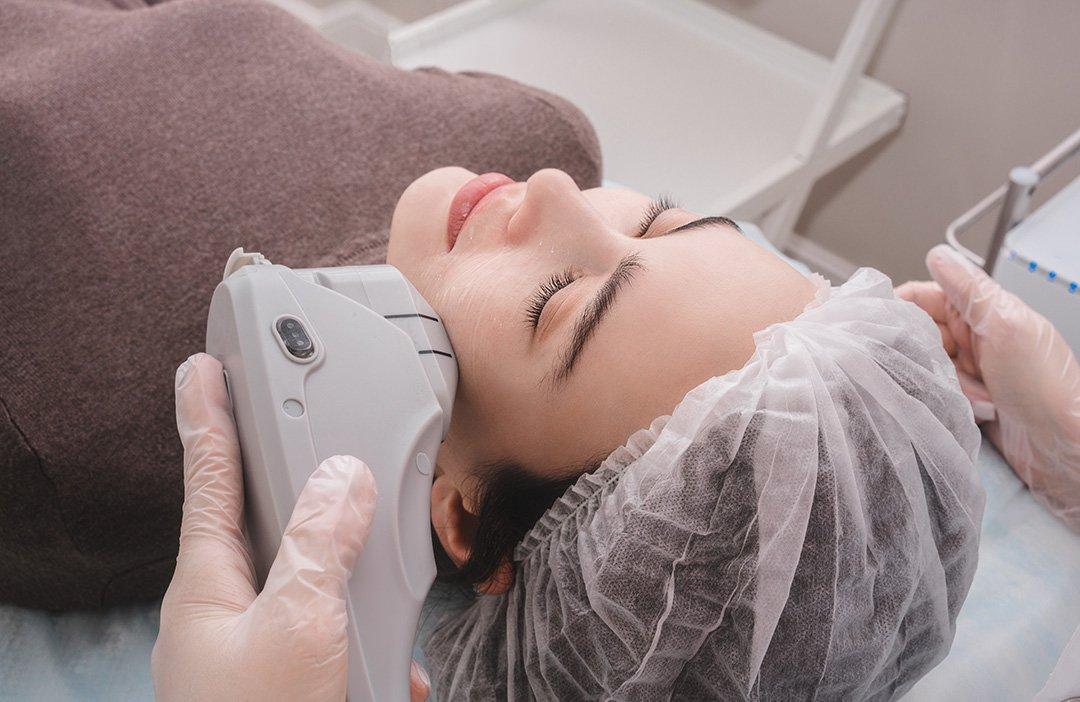
RF, ultrasound, HIFU, laser, IPL, LED, and other energy-based technologies will continue to be important in professional aesthetics.
What is changing is not necessarily the basic science behind these technologies, but the way energy is controlled, delivered, and integrated into treatment protocols.
RF devices use electromagnetic energy to create controlled thermal effects in tissue. Ultrasound uses acoustic energy, while laser and light-based systems rely on specific wavelengths and their interaction with targeted structures.
For professional operators, simply increasing power is not the goal.
Treatment quality depends on factors such as:
- Energy level
- Treatment depth
- Pulse or exposure duration
- Treatment area
- Applicator design
- Temperature control
- Movement technique
- Operator training
- Client suitability
This is why modern professional equipment increasingly emphasizes adjustable parameters, ergonomic handpieces, treatment monitoring, and user-friendly interfaces.
A well-designed machine gives the operator greater control over how the technology is applied
3. Multifunction Platforms Will Become More Practical
Another major direction is multifunction equipment.
Instead of purchasing a separate machine for every treatment, clinics can increasingly choose platforms that combine complementary technologies.
For example, a professional body-contouring platform may integrate:
- Radio frequency
- Vacuum
- Cavitation
- Mechanical massage or roller systems
- EMS
A facial platform may combine technologies such as RF, ultrasound, LED, cooling, cleansing, or other skin-care functions.
The advantage is not simply saving equipment space.
Multifunction platforms can help clinics build broader treatment menus, create combination protocols, and serve clients with different concerns using a smaller equipment footprint.
However, multifunction should not mean "more functions at any cost."
A machine with ten poorly integrated functions may be less useful than a machine with three or four well-developed technologies.
Professional buyers should therefore ask:
Does each function have a clear treatment purpose?
Can practitioners easily control the parameters?
Are the handpieces practical for daily use?
Can the technology be incorporated into a repeatable treatment protocol?
This is where professional equipment differs significantly from many consumer-oriented beauty devices. A clinic needs equipment that can support repeated professional operation, standardized workflows, training, maintenance, and client management.
Advantages and Comparison: Professional Devices vs. Home Beauty Devices
Home beauty technology is developing rapidly. LED masks, microcurrent tools, compact RF systems, and other consumer devices are making technology-based skincare more accessible.
This does not necessarily weaken the professional beauty equipment market.
In many cases, it highlights the difference between consumer convenience and professional treatment capability.
| Factor | Home Beauty Devices | Professional Beauty Devices |
|---|---|---|
| Intended user | Individual consumer | Trained professional |
| Treatment environment | Home | Salon, medspa, or clinic |
| Parameter control | Usually simplified | More adjustable |
| Treatment versatility | Often limited | Broader options |
| Applicator design | Compact | Designed for professional workflows |
| Consultation | Usually minimal | Client assessment and treatment planning |
| Treatment programs | Generalized | Can be customized |
| Progress monitoring | Often informal | Can be documented systematically |
| Maintenance | Personal use | Professional service and maintenance |
| Business application | None | Revenue-generating treatment services |
Professional equipment has another important advantage: the operator.
The machine is only one part of the treatment system. A trained professional can evaluate client goals, understand contraindications and suitability requirements, select appropriate parameters, monitor the treatment process, and provide aftercare guidance.
This human-technology combination is difficult to reproduce with a simple home device.
The future of professional beauty technology therefore should not be viewed as a competition between machines and people. The stronger model is professionals using better machines.
Applications and Client Needs
Personalized Facial Treatments
Facial treatments are becoming increasingly individualized.
Instead of offering the same facial protocol to every client, clinics can use skin analysis and consultation to determine whether the client is primarily concerned with hydration, texture, visible pores, skin firmness, redness, pigmentation, or general skin maintenance.
Different technologies can then be incorporated into an appropriate treatment plan.
For example, LED may be used as part of a light-based skincare program, while RF may be selected for clients seeking professional skin-tightening treatments. Ultrasound or cleansing technologies can support other facial protocols.
The exact combination should always depend on the device specifications, operator training, client suitability, and applicable local regulations.
Skin Tightening and Anti-Aging Programs
Skin tightening remains one of the most recognizable applications for energy-based beauty devices.
RF and ultrasound technologies can create controlled energy effects at different tissue depths and are commonly incorporated into professional skin-firming treatments.
Rather than positioning one technology as universally superior, modern clinics can build treatment menus around different client needs.
Some clients may prefer surface-focused treatments with minimal disruption to their daily routine. Others may be appropriate candidates for more advanced professional procedures.
The important point is that technology selection should follow the client objective, not the other way around.
Body Contouring and Skin Appearance
Professional body treatments are another area where multifunction equipment can provide practical value.
Vacuum, RF, cavitation, EMS, and mechanical technologies may be incorporated into body-care programs depending on the equipment and its intended application.
For a clinic, combining technologies can create more flexible service packages.
For example, one device may support several body-care services rather than being used for only one procedure.
This can improve equipment utilization while giving the business more options when designing treatment menus.
However, professional operators should avoid exaggerated claims. Device-based body treatments should be positioned according to their intended cosmetic or aesthetic application, with realistic expectations communicated clearly to clients.
Long-Term Skin Management
The future of beauty devices is also moving toward ongoing skin management rather than one-time treatments.
A client may complete an initial treatment program and then return periodically for maintenance sessions.
Digital skin analysis can help document changes. Treatment devices can support scheduled professional sessions. Skincare products can complement the treatment plan between appointments.
This creates a more complete service model:
Assessment → Treatment → Monitoring → Maintenance
For clinics, this approach can also support stronger client relationships because the service is no longer based entirely on a single appointment.
What Clinics Should Consider Before Buying New Equipment
As technology develops, purchasing decisions will become more strategic.
A clinic should not purchase a machine simply because it is trending on social media or has an impressive specification sheet.
Instead, professional buyers should evaluate five areas.
1. Treatment Demand
Does the technology address a concern that your existing clients actually have?
2. Operator Training
Can your team learn the technology properly and apply consistent protocols?
3. Workflow Integration
Can the machine fit naturally into your consultation, treatment, aftercare, and follow-up process?
4. Equipment Utilization
How frequently can the machine realistically be used?
A technically advanced device that sits unused is not necessarily a good investment.
5. Long-Term Support
Consider training, spare parts, technical support, warranty, documentation, and maintenance.
For clinics purchasing from professional equipment manufacturers, these factors can be just as important as the initial machine specification.
Conclusion: The Future Is Smarter, More Integrated, and More Professional
The future of beauty devices is not about creating a machine that does everything automatically.
It is about creating technology that helps professionals understand clients better, select treatments more intelligently, operate equipment more precisely, and track progress more effectively.
AI-assisted skin analysis can strengthen consultations. RF, ultrasound, HIFU, LED, laser, EMS, vacuum, and other technologies can provide diverse treatment options. Multifunction platforms can improve equipment utilization and expand service menus. Digital monitoring can make long-term treatment programs easier to manage.
At the same time, professional expertise will remain central.
The strongest clinics will not necessarily be those with the largest number of machines. They will be the clinics that choose the right technologies for their clients, staff, treatment rooms, and business model.
For beauty equipment manufacturers and professional buyers, this represents a clear direction for the future: equipment must become not only more advanced, but also more practical, controllable, versatile, and compatible with real clinical workflows.
The next generation of beauty devices will not simply deliver energy.
They will become part of a smarter professional treatment ecosystem
Founded in 2008, Guangzhou GLM Beauty Spa Equipment Factory specializes in research, development, manufacture and selling of beauty and slimming machines. Our production base is located in Guangzhou City, Guangdong Province, China. Since our foundation, we have introduced advanced technologies and equipment, to assure high quality and high performance of our products. With professional marketing guide and excellent after-sales service, our products have been exported to over 20 countries and regions, including Southeast Asia, the Middle East, Europe and the United States, won worldwide praises and gained a good reputation