1. Introduction
The aesthetic industry is moving toward a more personalized approach to skin rejuvenation. Rather than focusing exclusively on deep wrinkles or dramatic facial lifting, many clients are increasingly interested in improving overall skin quality, maintaining a firmer appearance, and achieving natural-looking results without surgery.
Radiofrequency (RF) technology has become an important option in this evolving landscape. By delivering controlled electrical energy into targeted tissue, RF devices generate heat that can stimulate collagen remodeling and improve the appearance of mild to moderate skin laxity. For aesthetic clinics and professional beauty salons, RF treatments offer a versatile approach to facial rejuvenation, neck tightening, and selected body treatments.
Recent aesthetic industry discussions have also highlighted growing interest in energy-based treatments, skin quality, and individualized treatment planning. These developments reinforce the importance of choosing appropriate technologies according to each client's needs rather than relying on a single treatment for every concern. Source: RealSelf, 2026 aesthetic trends.
As RF technology advances, the focus is expanding beyond energy output alone. Modern professional systems increasingly emphasize controlled energy delivery, treatment comfort, consistent operation, and the ability to adapt protocols to different areas and skin concerns.
For aesthetic professionals, understanding these developments is essential when selecting equipment, designing treatment programs, and communicating realistic expectations to clients.
2. Background: Why Is Non-Invasive Skin Tightening Evolving?
Skin aging is a gradual process influenced by genetics, environmental exposure, lifestyle, and changes in the skin's structural components. Collagen and elastin help maintain firmness and elasticity, while the surrounding extracellular matrix provides structural support. Over time, changes in these components can contribute to fine lines, reduced elasticity, and visible skin laxity.
Traditional surgical procedures can address more substantial tissue laxity, but they involve different levels of risk, recovery, cost, and suitability. Many clients therefore explore non-surgical alternatives that fit their schedules and aesthetic preferences.
This creates an important opportunity for professional RF treatments. Depending on the technology and treatment protocol, RF may help improve the appearance of mild to moderate laxity and support gradual improvements in skin firmness and texture. However, results vary, and RF should not be presented as an equivalent replacement for surgical lifting.
Another important change is the growing demand for personalized aesthetic services. Two clients of similar age may have very different skin thicknesses, degrees of laxity, treatment histories, and tolerance levels. A standardized treatment plan may not be appropriate for both.
For clinics, the challenge is therefore not simply to purchase a powerful machine. It is to select equipment that supports appropriate treatment parameters, repeatable operation, and professional assessment. Equipment capability, operator training, client selection, and realistic communication all contribute to the overall treatment experience.
3. How Does RF Technology Work?
Controlled Heating and Collagen Remodeling
Radiofrequency devices use electrical energy to produce heat within biological tissue. Depending on the system design, electrode configuration, frequency, contact method, and energy settings, heating can occur across different tissue regions.
When RF energy is delivered appropriately, thermal stimulation can affect existing collagen fibers and initiate biological responses associated with tissue remodeling. Collagen fibers may undergo partial thermal contraction, while subsequent repair processes can contribute to new collagen formation and changes in the extracellular matrix.
These processes do not happen instantly. Initial changes may be followed by gradual remodeling over the following weeks or months. The degree of visible improvement depends on the device, treatment parameters, individual biology, and baseline skin condition.
It is important to distinguish controlled therapeutic heating from excessive heating. Too much energy, poor contact, inappropriate treatment duration, or inadequate temperature management can increase the risk of burns and other adverse effects. Professional protocols must prioritize controlled delivery rather than simply maximizing energy.
Different RF Configurations Serve Different Purposes
Not all RF devices deliver energy in the same way. Understanding the main configurations helps clinics select equipment that matches their service offerings.
Monopolar RF uses an active electrode and a return electrode to establish an electrical pathway through the body. Depending on the platform and applicator, it can be designed to deliver heating across relatively broad tissue volumes.
Bipolar RF passes current between two electrodes within the applicator. Its heating distribution depends on electrode spacing, geometry, tissue characteristics, and device settings.
Multipolar RF uses multiple electrodes and switching configurations to distribute energy across the treatment area. Its practical advantages depend on the specific system design and should be assessed through technical documentation and clinical evidence.
Fractional RF and RF microneedling deliver energy in discrete zones, with microneedling systems introducing electrodes through the skin. These approaches differ from non-invasive surface RF in their treatment mechanism, recovery considerations, and risk profile.
These categories are not interchangeable, and no configuration is universally superior. Clinics should evaluate the intended indication, treatment depth, safety controls, and supporting evidence before choosing a platform.
4. What Makes Advanced RF Systems Different?
More Controlled Energy Delivery
The future of RF technology is closely linked to improving control over how energy is delivered. Impedance monitoring, temperature feedback, contact detection, and other control features may help qualified operators manage treatment more consistently when appropriately implemented.
These features do not eliminate risk, but they can support a more systematic treatment process. When evaluating equipment, clinics should review which controls are actually included, what information they provide, and whether their performance is documented by the manufacturer.
Improved Treatment Comfort
Client comfort is an important part of the professional treatment experience. Heat sensation, treatment duration, applicator design, and the sensitivity of the treated area can all influence tolerance.
Some newer RF platforms emphasize improved comfort through energy-delivery refinements, applicator engineering, or feedback systems. Nevertheless, comfort varies by individual and device, and a treatment should never be described as completely painless without appropriate supporting evidence.
For clinics, equipment that allows operators to work within clear, manufacturer-supported parameters can help create a more predictable experience and improve client communication.
Versatile Applicators and Treatment Areas
Professional RF systems may include different applicators for facial and body applications. Smaller treatment heads can facilitate work around selected facial contours, while larger applicators may be more practical for broader areas, depending on the device's intended use.
This flexibility can help clinics develop services for concerns such as cheek and jawline laxity, neck appearance, and selected areas of body skin laxity.
However, an applicator's size or shape does not independently establish its effectiveness. The intended use, permitted treatment areas, energy distribution, and supporting evidence should guide clinical decisions.
Integration Into Professional Workflows
Advanced equipment also needs to fit the daily operation of a clinic. Clear controls, straightforward parameter adjustment, consistent maintenance requirements, and accessible training materials can influence how efficiently a treatment room operates.
For equipment suppliers, these practical considerations are valuable alongside technical specifications. For clinic owners, the goal is to invest in a system that supports an appropriate service offering, rather than choosing a machine based on the number of features alone.
5. Advantages and Comparisons: Professional RF vs. Other Approaches
RF is one option within a broader range of skin-tightening technologies. Understanding its position helps practitioners recommend treatments more responsibly.
RF vs. microfocused ultrasound: Both technologies use energy to stimulate tissue responses, but their energy delivery patterns and treatment targets differ. RF generates heat through electrical energy, while microfocused ultrasound concentrates acoustic energy at selected depths. The more appropriate option depends on the client's anatomy, treatment goals, device indications, and operator expertise.
RF vs. laser treatments: Laser devices use optical energy and can target different skin structures depending on wavelength and treatment settings. Some lasers focus on pigmentation or resurfacing, while RF is commonly used to address skin laxity and collagen remodeling. Their indications overlap in certain aesthetic programs, but they are not interchangeable.
Professional RF vs. home-use devices: Home-use beauty devices generally operate within a different design and intended-use framework from professional equipment. Professional systems may offer a broader range of adjustable parameters, specialized applicators, and treatment protocols, subject to the specific product and its regulatory status.
Professional treatment also involves consultation, contraindication screening, skin assessment, parameter selection, technique, and follow-up. These elements are part of the service, not simply additional features of the machine.
However, professional equipment is not automatically suitable for every client, nor does a higher energy setting guarantee better results. The quality of a treatment depends on the combination of appropriate equipment, trained operators, evidence-based protocols, and individual assessment.
6. Applications and Personalized Client Needs
Facial Firmness and Contour Support
Clients concerned about mild cheek laxity, early jawline changes, or fine lines may ask about non-invasive RF treatments. A professional consultation should establish the primary concern, review medical and aesthetic history, assess skin condition, and explain the likely scope of improvement.
Treatment planning should also distinguish between skin laxity and other concerns, such as substantial volume loss or deeper structural changes. RF may support skin-quality goals, but it does not replace every intervention that might be appropriate for facial aging.
Neck and Selected Body Areas
The neck, upper arms, abdomen, and thighs may show changes in skin firmness over time. Depending on the device's approved or intended use, professional RF may be considered for selected areas.
Clinics should avoid applying facial protocols indiscriminately to body treatments. Tissue thickness, anatomy, sensitivity, treatment surface area, and device-specific instructions can all affect protocol selection.
Combining RF With Other Treatments
Some clinics develop broader treatment programs that combine RF with other aesthetic services. For example, RF may be included in a skin-quality program alongside appropriate skincare, selected facial treatments, or other energy-based procedures.
Combination treatment requires careful planning. Different technologies have different mechanisms, contraindications, and recovery requirements. Combining treatments does not automatically produce better results, and the sequence and interval should be determined by qualified professionals according to the devices used and the client's condition.
A personalized program may involve staged treatments rather than performing every procedure during one appointment. This allows practitioners to monitor tolerance and evaluate changes before adjusting the plan.
Building a Better Consultation Process
Personalization begins before the device is switched on. A professional consultation can include:
-
Identifying the client's primary concern and desired outcome.
-
Reviewing relevant medical history, contraindications, and previous aesthetic procedures.
-
Assessing skin condition and the degree of visible laxity.
-
Explaining realistic results, treatment limitations, possible side effects, and expected recovery.
-
Selecting an appropriate device and protocol based on its intended use.
-
Recording baseline observations and arranging follow-up when indicated.
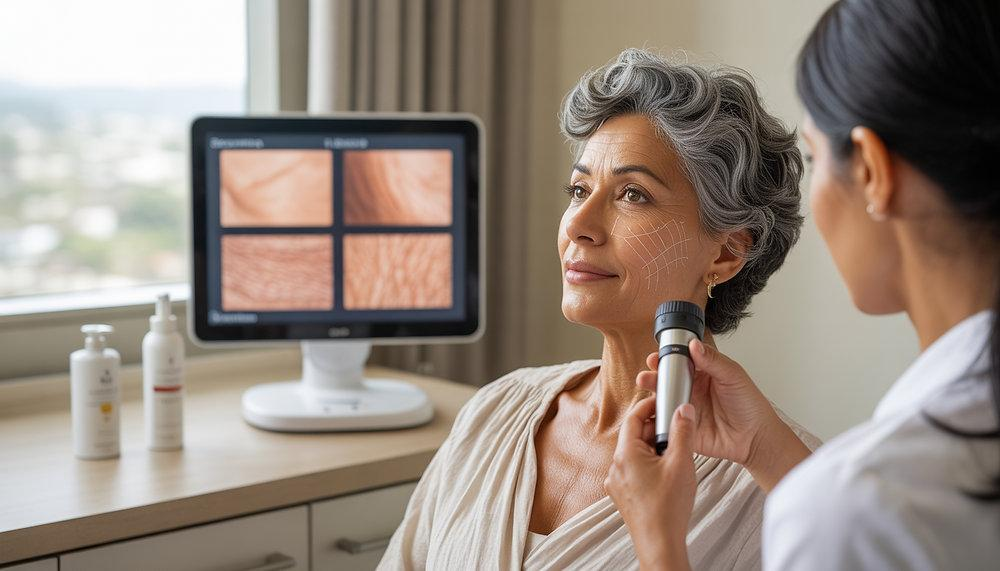
Photography, skin-analysis tools, and standardized assessment methods may help clinics document changes over time. These tools should support, rather than replace, professional judgment.
7. Safety, Evidence, and Realistic Expectations
The growth of RF technology makes evidence-based practice increasingly important. Research findings should be interpreted according to the specific device, study design, number of participants, treatment protocol, and follow-up period.
For example, a 2026 study published in Lasers in Medical Science investigated facial contour and skin elasticity following treatment with 40.68 MHz unipolar RF. Such studies contribute to the evidence base, but findings from a particular platform and protocol should not automatically be generalized to every RF device. Read the study.
Before treatment, practitioners should screen for relevant contraindications and follow the manufacturer's instructions. Depending on the device, considerations may include implanted electronic devices, pregnancy, active skin conditions, impaired sensation, or other medical factors requiring professional assessment.
Potential adverse effects can include discomfort, redness, swelling, burns, and changes in skin appearance. Risks vary by technology, treatment area, energy settings, and operator technique. RF microneedling and other invasive or minimally invasive systems have additional considerations and should not be treated as equivalent to surface RF.
Clinics should use appropriate training, documented protocols, equipment maintenance, informed consent, and follow-up procedures. Clients should also understand that collagen remodeling takes time and that outcomes vary. A responsible provider discusses both the potential benefits and the limitations before treatment.
8. Conclusion: A More Personalized Future for Professional RF
The future of RF technology in aesthetic clinics is not simply about increasing power or adding more treatment modes. It is about delivering energy more consistently, supporting operator control, improving the treatment experience, and matching technology to individual needs.
For professional beauty salons and aesthetic clinics, RF equipment can be a valuable part of a broader skin-rejuvenation service when its capabilities align with the clinic's target clients, staff training, and treatment protocols.
When evaluating a professional RF system, clinic owners should consider energy-delivery technology, safety controls, applicator design, intended treatment areas, training support, maintenance, and the quality of available clinical evidence. These factors provide a more meaningful basis for investment than feature counts or marketing claims alone.
Ultimately, successful non-invasive skin tightening depends on more than the machine. Appropriate client selection, personalized treatment planning, skilled operation, and realistic expectations remain essential.
As aesthetic care continues to evolve, professional RF technology is well positioned to support a more measured, evidence-informed approach to skin firmness and quality—one that prioritizes individual needs and long-term client trust
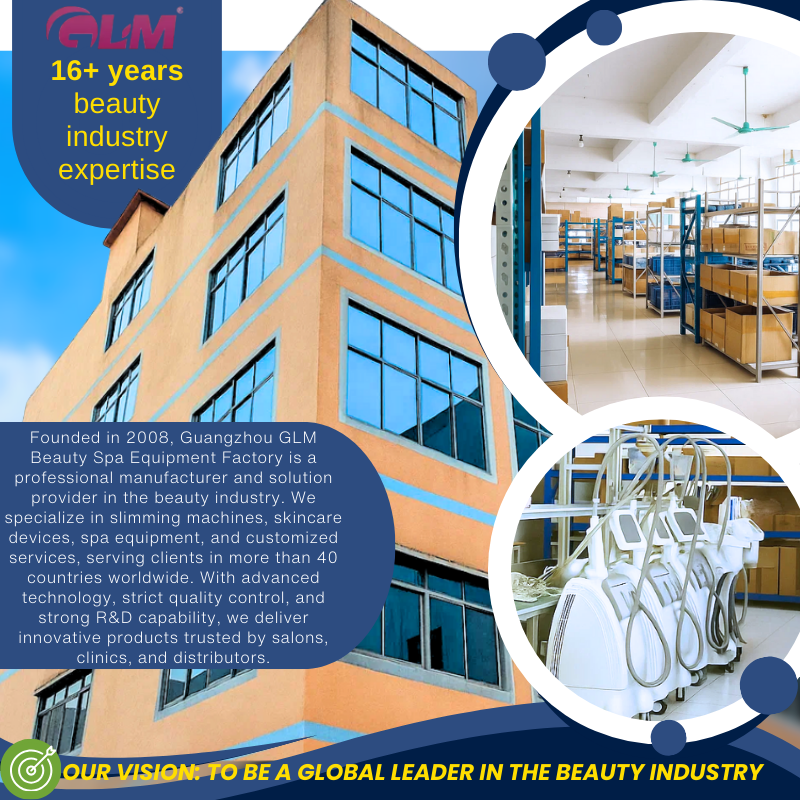
Founded in 2008, Guangzhou GLM Beauty Spa Equipment Factory specializes in research, development, manufacture and selling of beauty and slimming machines. Our production base is located in Guangzhou City, Guangdong Province, China. Since our foundation, we have introduced advanced technologies and equipment, to assure high quality and high performance of our products. With professional marketing guide and excellent after-sales service, our products have been exported to over 20 countries and regions, including Southeast Asia, the Middle East, Europe and the United States, won worldwide praises and gained a good reputation