
1. Introduction: Understanding the Gut-Brain Connection
Longevity is no longer defined solely by how long a person lives. Increasingly, the conversation focuses on healthspan—the years spent maintaining physical vitality, mental clarity, emotional well-being, and quality of life. Within this broader approach to healthy aging, the gut-brain axis has emerged as an important area of scientific research.
The gut-brain axis describes the complex, two-way communication network connecting the gastrointestinal tract and the central nervous system. It involves neural pathways, immune signaling, hormones, and metabolites produced by intestinal microorganisms. Through these interconnected systems, the gut microbiome may influence processes associated with mood, stress responses, inflammation, and aspects of cognitive function.
For the professional beauty and wellness industry, this growing interest presents an opportunity to take a more integrated view of client care. Skin appearance, perceived vitality, stress management, and healthy lifestyle habits are closely connected in the way clients experience overall well-being. Although cosmetic treatments cannot directly improve the gut microbiome or prevent brain aging, professional beauty services can contribute to a broader wellness experience through appropriate skin care, relaxation-focused treatments, and personalized client support.
Understanding the gut-brain axis therefore offers beauty professionals a valuable perspective: long-term well-being is multifaceted, and responsible technology should complement—not replace—evidence-based health practices.
2. Background and Problem: Why the Gut Matters in Healthy Aging
The human gut contains a diverse community of microorganisms, including bacteria, fungi, and other microbes. Collectively known as the gut microbiome, these organisms help process dietary components, interact with the immune system, and produce metabolites that influence the body's internal environment.
A balanced microbiome is not a single, universal microbial profile. Instead, it represents a dynamic ecosystem whose composition and activity are influenced by diet, age, medication use, sleep, physical activity, and other environmental factors.
As people grow older, changes in diet, medication exposure, immune function, and gastrointestinal physiology may alter the microbiome. Some studies have identified associations between microbial changes and conditions involving inflammation, metabolic health, and neurological function. Researchers are also investigating whether microbiome-related changes contribute to cognitive aging.
However, an important distinction must be made: an association does not establish causation. Scientists have not yet determined that a particular microbiome profile can reliably predict an individual's cognitive decline, nor have they established a universal microbiome-based intervention that prevents dementia.
Several factors make this research challenging. Aging affects multiple body systems simultaneously, and diet, chronic disease, socioeconomic conditions, and medication use can influence both microbial composition and cognitive health. Human studies also vary in methodology, making direct comparisons difficult.
Nevertheless, the gut-brain axis provides a useful framework for investigating how everyday behaviors may influence long-term health. It also reinforces the importance of a comprehensive approach to aging that considers nutrition, sleep, movement, stress, preventive health care, and appropriate professional wellness services.
For beauty clinics and aesthetic centers, this perspective encourages realistic conversations about healthy aging rather than promising that a single treatment can deliver comprehensive anti-aging results.
3. Technology and Mechanisms: How the Gut-Brain Axis Works
The gut-brain axis operates through several interconnected communication pathways. Understanding these mechanisms helps explain why microbiome research has attracted interest across nutrition, neuroscience, and preventive health.
3.1 Neural Communication and the Vagus Nerve
The vagus nerve is a major communication pathway between the digestive system and the brain. Signals originating in the gastrointestinal tract can inform the brain about digestive activity, nutrient availability, and aspects of the body's internal state.
Intestinal microorganisms may influence this communication indirectly by affecting intestinal cells, immune activity, and the production of signaling molecules. Some microbial metabolites can interact with pathways involved in nerve signaling, although the specific effects depend on the compound, biological context, and individual.
This communication is bidirectional. Brain activity and psychological stress can also affect gastrointestinal motility, sensitivity, and function. The relationship is therefore not simply a matter of the gut sending signals to the brain; both systems continuously influence one another.
3.2 Microbial Metabolites and Inflammation
One important research area involves short-chain fatty acids, including acetate, propionate, and butyrate. These compounds are produced when certain intestinal microorganisms ferment dietary fibers.
Short-chain fatty acids participate in several biological processes, including intestinal barrier function, immune regulation, and cellular metabolism. Researchers are investigating how these compounds may influence inflammatory signaling and pathways relevant to neurological health.
The gut barrier is also important. Under normal conditions, it helps regulate the movement of substances between the intestinal contents and the body's internal environment. Changes in barrier function may influence immune responses, although the implications differ across individuals and diseases.
Systemic inflammation has been associated with several age-related conditions, including some neurological disorders. Researchers are examining whether interactions among the microbiome, intestinal barrier, immune system, and brain help explain part of this relationship.
These mechanisms remain active areas of investigation. They should not be interpreted as proof that modifying the microbiome will prevent cognitive decline.
3.3 The Gut-Brain Axis, Stress, and Sleep
Stress and sleep are also relevant to the gut-brain relationship. Psychological stress can alter digestive function, while gastrointestinal discomfort may disrupt sleep and affect daily mood. Sleep quality, in turn, is associated with cognitive performance and general health.
The microbiome may participate in some of these interactions, but it is only one component of a much larger biological system.
For healthy aging, practical priorities remain consistent: maintain a varied, fiber-rich diet when appropriate, exercise regularly, protect sleep quality, manage stress, and seek medical advice for persistent digestive or neurological symptoms.
Suggested in-article image 1 — Gut-Brain Axis Scientific Illustration
Placement: After Section 3.3.
Visual direction: A clean scientific illustration showing the brain and intestine connected by the vagus nerve, immune signaling, and microbial metabolites. Use a white background, restrained blue and teal colors, and clearly labeled pathways. Avoid suggesting that cosmetic equipment directly affects gut bacteria or cognitive function.
3.4 Where Professional Beauty Technology Fits In
The gut-brain axis is a biological communication network, not a cosmetic treatment target. Nevertheless, its broader implications for stress, well-being, and healthy aging are relevant to how professional wellness services are designed.
In aesthetic clinics, technologies such as LED phototherapy, controlled facial cleansing systems, and professional skin-care platforms serve specific skin-related purposes. Depending on the device, its specifications, and the treatment protocol, these technologies may support skin cleansing, provide selected wavelengths of light, or complement established facial care procedures.
For example, LED devices deliver light at selected wavelengths to the skin. Different wavelengths interact with tissue in different ways, and outcomes depend on the wavelength, irradiance, treatment duration, device design, and intended indication. Certain LED applications have evidence for specific skin-related uses, but evidence for one indication should not be generalized to unrelated outcomes such as improved gut health, memory, or longevity.
Professional devices can offer practitioners greater control over treatment settings, treatment consistency, hygiene procedures, and documentation. However, professional status alone does not guarantee better outcomes; device quality, appropriate indications, operator training, and evidence-based protocols remain essential.
The most responsible connection between gut-brain research and beauty technology is therefore indirect: professional treatments can form part of a personalized self-care routine, while microbiome health and cognitive well-being require their own evidence-based strategies.
4. Advantages and Comparison: Professional Care Versus Home-Based Devices
Home beauty devices have become more accessible, allowing consumers to maintain selected aspects of their skin-care routines between appointments. They may be convenient for people who understand their intended use and follow the manufacturer's instructions.
Professional equipment, however, serves a different role in a clinic or aesthetic center.
Greater Control and Treatment Consistency
Professional systems may provide adjustable settings, treatment-specific accessories, and operating protocols designed for trained practitioners. These features can help standardize procedures and support consistent service delivery when the equipment is properly validated and used.
Individual Assessment and Personalization
Professional operators can assess a client's skin condition, treatment goals, sensitivities, and relevant contraindications before selecting an appropriate procedure. They can also modify the treatment plan based on the client's response.
This is particularly important when clients have sensitive skin, active skin conditions, recent aesthetic procedures, or other circumstances requiring additional caution.
Hygiene, Documentation, and Service Standards
Clinics must consider device maintenance, contact-surface disinfection, consumable management, and client records. A well-designed professional device can support these workflows, although the clinic remains responsible for implementing appropriate hygiene and safety procedures.
Clearer Boundaries Between Wellness and Medical Care
A professional setting also creates an opportunity to communicate realistic expectations. Skin-care devices should be selected according to their intended purpose and supporting evidence, not marketed as treatments for intestinal dysfunction, dementia, or neurological aging.
This distinction protects clients and supports long-term business credibility.
Ultimately, the difference between professional and home-based equipment is not simply power or price. It is the complete service environment: assessment, device suitability, operator competence, procedural consistency, aftercare, and appropriate follow-up.
5. Applications and Client Needs: Bringing Healthy Aging Into the Clinic
As longevity becomes a more prominent consumer interest, beauty clinics can develop services that respond to clients' desire to look refreshed while maintaining realistic expectations about what aesthetic technology can achieve.
5.1 Skin Vitality and Age-Related Changes
Visible skin aging can involve changes in elasticity, texture, hydration, pigmentation, and the appearance of fine lines. These changes are influenced by intrinsic aging, ultraviolet exposure, lifestyle, genetics, and environmental factors.
Professional skin-care services can address selected cosmetic concerns through appropriate cleansing, hydration-focused procedures, and device-based treatments supported by evidence for their intended applications.
LED phototherapy, for example, may be considered for certain skin-care indications when the device and protocol are appropriate. Other professional systems may support cleansing or the application of topical products. Practitioners should explain what each treatment is designed to do, what evidence supports it, and what results cannot be promised.
A healthy-aging service should focus on achievable skin outcomes rather than implying that improved skin appearance demonstrates better brain health or a healthier gut microbiome.
5.2 Relaxation-Focused Treatments and Client Experience
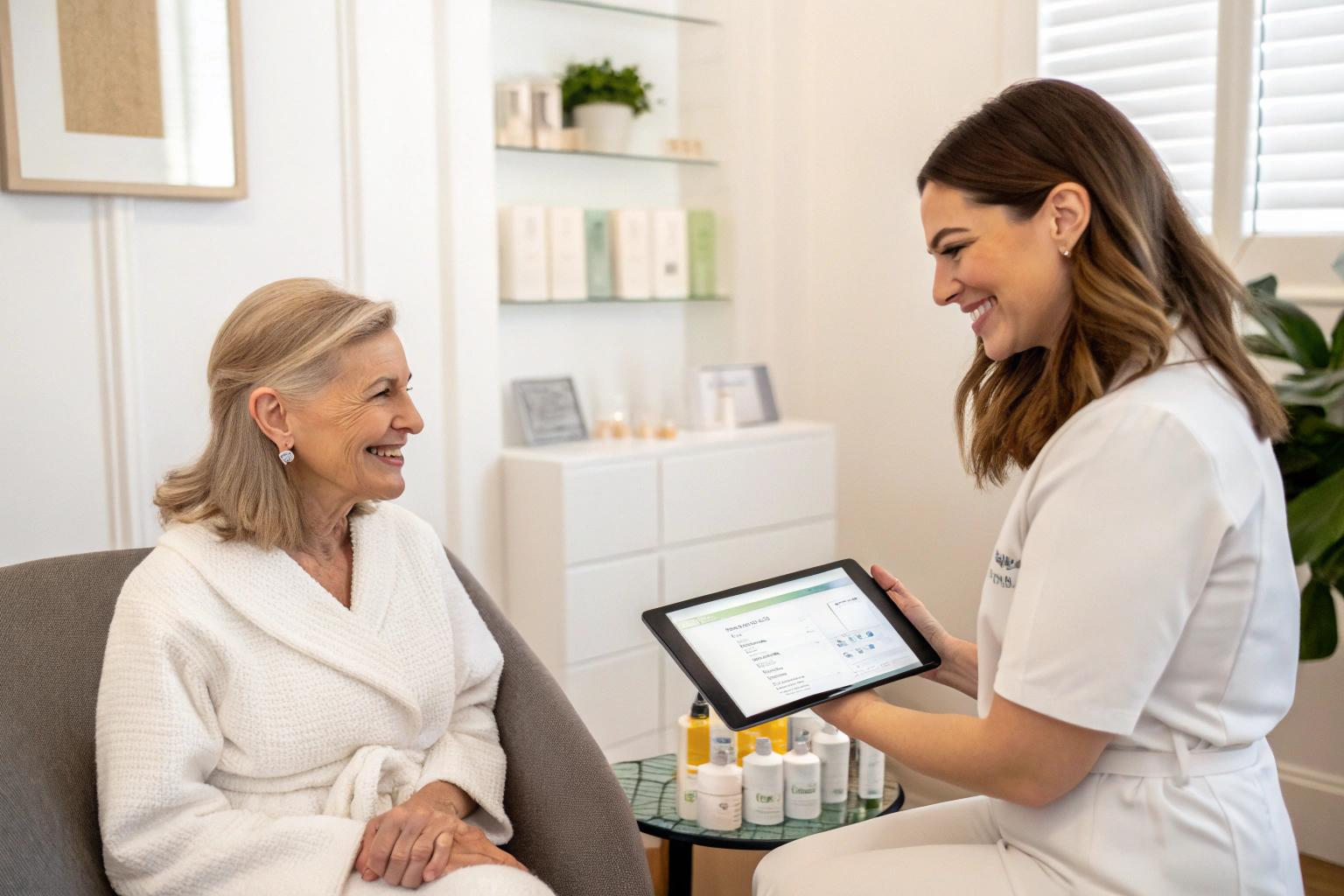
Many clients seek aesthetic services for relaxation as well as appearance-related goals. A calm environment, clear communication, comfortable treatment positioning, and an appropriate facial-care protocol can help create a positive experience.
Some treatments incorporate gentle massage or other relaxation-oriented elements. These may help clients feel more comfortable during a session, but they should not be presented as clinically validated methods of changing the microbiome or preventing cognitive decline.
Practitioners should also recognize that persistent anxiety, sleep disturbance, digestive symptoms, or memory concerns may require assessment by a qualified health professional rather than a cosmetic treatment.
5.3 A Personalized, Multidisciplinary Approach
A client interested in longevity may benefit from separating goals into distinct categories:
- Skin health: Appropriate sun protection, established skin-care practices, and professional treatments matched to the client's condition.
- Gut health: A varied diet, adequate dietary fiber when suitable, and medical evaluation for persistent gastrointestinal symptoms.
- Cognitive health: Physical activity, quality sleep, social engagement, management of cardiovascular risk factors, and professional medical advice when needed.
- Stress management: Sustainable routines, relaxation practices, and qualified support when stress becomes difficult to manage.
Beauty professionals can support clients within their scope of practice and refer them to appropriate health professionals when concerns fall outside it.
5.4 What Clinics Should Consider When Selecting Equipment
For manufacturers, distributors, and clinic owners, the longevity trend creates demand for equipment that supports clear, responsible, and repeatable services.
When evaluating a professional device, buyers should consider:
- Intended use: Are the device's functions and claims clearly defined?
- Technical specifications: Are wavelength, energy output, treatment settings, and other relevant parameters documented where applicable?
- Safety and compliance: Does the device meet the regulatory requirements of the target market, with appropriate documentation?
- Usability and training: Can practitioners operate the system consistently after suitable training?
- Maintenance and support: Are cleaning instructions, technical assistance, spare parts, and warranty terms available?
- Evidence and marketing language: Do promotional claims match the device's intended use and the available evidence?
For factories serving international beauty markets, transparent specifications, reliable quality control, practical operator training, and responsive after-sales support can be more valuable than exaggerated promises about longevity or biological rejuvenation.
Professional equipment should help clinics deliver the services it was designed for—not create unsupported expectations about unrelated health outcomes.
6. Conclusion: A More Informed View of Longevity
The gut-brain axis has expanded scientific understanding of how intestinal microorganisms, microbial metabolites, neural pathways, and immune signaling may interact with aspects of brain function and aging. Although important questions remain unanswered, this research reinforces a broader principle: healthy aging depends on multiple interconnected systems and sustained habits rather than a single intervention.
For the beauty and wellness industry, the opportunity lies in responding to longevity-focused clients with professional, evidence-informed services. Appropriate skin-care technologies can support specific aesthetic goals, while a comfortable treatment environment and personalized consultation can contribute to a thoughtful client experience.
However, cosmetic devices should not be represented as methods for modifying the gut microbiome, improving memory, or preventing neurological disease unless robust evidence and the relevant regulatory authorization support those specific claims.
The future of professional beauty care will depend not only on technological innovation but also on transparent communication, appropriate treatment selection, and a clear understanding of professional boundaries. By combining well-designed equipment with realistic expectations and a broader appreciation of healthy aging, clinics and manufacturers can build services that are credible, useful, and aligned with clients' long-term well-being
Founded in 2008, Guangzhou GLM Beauty Spa Equipment Factory specializes in research, development, manufacture and selling of beauty and slimming machines. Our production base is located in Guangzhou City, Guangdong Province, China. Since our foundation, we have introduced advanced technologies and equipment, to assure high quality and high performance of our products. With professional marketing guide and excellent after-sales service, our products have been exported to over 20 countries and regions, including Southeast Asia, the Middle East, Europe and the United States, won worldwide praises and gained a good reputation