The Ultimate Guide to HIFU Beauty Devices: From Technical Principles to Business Investment Decisions
High-intensity focused ultrasound (HIFU) technology has become the gold standard for modern non-invasive aesthetic treatments, bringing revolutionary treatment options to beauty clinics and medical aesthetic institutions. This guide will comprehensively analyze the core principles of HIFU technology, comparisons of mainstream market devices, key selection indicators, return on investment analysis, and clinical best practices, helping you make informed business decisions. We will deeply explore the technical differences of HIFU devices of different generations, analyze the unique advantages of cutting-edge systems such as Ultraformer MPT and Doublo, and provide detailed cost-benefit calculation models. In addition, you will also learn how to select the most suitable equipment configuration based on the clinic's positioning, as well as how to enhance customer satisfaction and repurchase rate by optimizing the treatment plan. Whether you are planning to invest in HIFU equipment for the first time or considering upgrading your existing system, this guide will provide you with professional and comprehensive decision support.
In-depth Analysis of HIFU Technology and Its Market Application Prospects
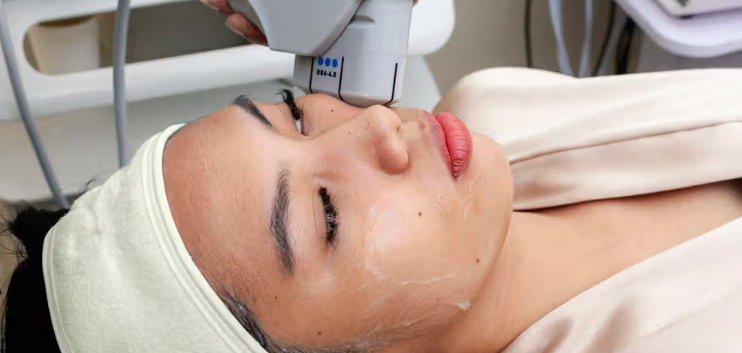
High-Intensity Focused Ultrasound (HIFU for short) is a non-invasive treatment technology that uses the precise focusing of ultrasonic waves to generate thermal effects. The physical principle is to focus high-frequency sound waves (usually 0.8-7.5MHz) at a specific depth under the skin through specially designed transducers, forming a tiny thermal damage zone with a diameter of about 1-3mm and a length of about 10-20mm at the focal point. The temperature can reach 60-70℃ instantly, thereby precisely destroying the target tissue without damaging the surrounding normal structures and epidermis. This selective thermal injury activates the wound repair mechanism, stimulates the activation of fibroblasts, promotes the synthesis of new collagen, elastic fibers and hyaluronic acid, and ultimately achieves the effect of skin tightening and lifting.
The application of HIFU technology in the field of aesthetic medicine is mainly based on three major biological effects:
Immediate mechanical effect: The radiation force generated when ultrasound propagates in tissues can directly cause the contraction of collagen fibers, achieving an immediate tightening effect after treatment. Usually, a 20-30% improvement can be observed.
Thermal effect: The high temperature in the focal area causes the three-dimensional structure of collagen to denature (about 60-65℃), and simultaneously induces the expression of heat shock protein (HSP), activating the tissue repair signaling pathway.
Long-term regenerative effect: The inflammatory response triggered by thermal damage continuously stimulates dermal remodeling. The new collagen reaches its peak 3 to 6 months after treatment and can be maintained for 12 to 24 months. 47
Compared with traditional beauty techniques, HIFU has unparalleled precision. By adjusting the transducer frequency and focusing depth, different skin layers can be precisely targeted:
1.5-3.0mm: Acts on the middle layer of the dermis to improve fine lines and skin texture
3.0-4.5mm: Targets the superficial muscular aponeuromembrane system (SMAS) to achieve facial lifting
6.0-13mm: Acts on the fascia layer and fat layer, used for body shaping and deep firming
Market data shows that the global HIFU beauty equipment market size has grown from XX billion yuan in 2023 to XX billion yuan in 2025, with a compound annual growth rate of XX%. This rapid growth stems from the multiple advantages of HIFU technology: non-invasive, no downtime, long-lasting effects, and the ability to provide personalized treatment for different anatomical levels. In clinical applications, HIFU has become one of the preferred solutions for improving facial sagging, wrinkles, double chins and body contour shaping.
Table: Main Application Fields and Effects of HIFU Technology in Aesthetic Medicine
Therapeutic area, targeted level, main indications, expected duration of effect
The middle layer of the facial dermis (1.5-3.0mm) will have fine lines, enlarged pores, improved skin texture, delicate skin texture and enhanced luster for 6-12 months
SMAS layer (3.0-4.5mm) : Facial laxity, blurred jawline contour elevation, and apple muscle repositioning for 12-18 months
Neck dermis - superficial fascia (2.0-3.0mm), neck wrinkles, Turkey neck, neck skin firmness, and reduction of wrinkles for 9-15 months
The body fat layer (6.0-13mm), loose skin on the abdomen, arms and thighs, tightened and contour improved for 12-24 months
Fat layer (10-13mm), local fat accumulation (such as double chin), reduction of fat cells, long-term shaping (fat cell apoptosis)
It is worth noting that the safety and effectiveness of HIFU technology have been widely verified in clinical practice. Depending on the treatment area and depth, the duration of a single treatment is usually between 30 and 90 minutes. Patients will only feel a slight heat or tingling sensation, and the vast majority can tolerate it without anesthesia. After treatment, there may be brief erythema, edema or tenderness, but they usually subside on their own within 24 to 48 hours and do not affect normal work and social activities. This extremely low downtime is particularly suitable for the fast-paced lifestyle of modern urban people.
With technological advancements, the new generation of HIFU devices has been continuously improved in terms of energy control, treatment accuracy, and patient comfort, providing more powerful and flexible treatment tools for practitioners in aesthetic medicine. Understanding these technical differences and equipment characteristics is crucial for beauty institutions to make informed investment decisions.
A comprehensive comparison and technical assessment of the mainstream HIFU devices in the market
HIFU devices in the beauty market have undergone multiple generations of technological innovations, evolving from the initial 2D single-point focusing to today's 7D multi-dimensional treatment systems. Each technology has its unique therapeutic advantages and application scenarios. A thorough understanding of the technical differences and clinical positioning of these devices is crucial for beauty institutions to select the equipment that best suits their business needs. The following is a comprehensive comparative analysis of mainstream HIFU equipment to provide professional references for investment decisions.
Ultherapy (Ultrasonic Knife), as the pioneer of HIFU technology, adopts 2D single-focus technology and mainly offers three standard treatment depths of 1.5mm, 3.0mm and 4.5mm. Its advantage lies in having the richest clinical validation data and long-term safety records, and it has been approved by the FDA for indications such as eyebrow lifting, neck firming, and lower facial rejuvenation. However, its therapeutic limitations are also quite obvious: The single-point emission mode leads to a longer treatment time (about 60-90 minutes for the entire face), and lacks the processing ability for shallower (<1.5mm) or deeper (>4.5mm) tissues 10. Clinical feedback indicates that approximately 15-20% of patients will stop treatment halfway due to discomfort, which to some extent affects the patient experience.
In contrast, Ultraformer III (7D HIFU) introduces the revolutionary MMFU (microfocus and macrofocus ultrasound) technology. By optimizing the transducer array design, it achieves multi-depth synchronous treatment capabilities 10. Its 7D system can act simultaneously at seven different depths of 1.5mm, 3.0mm, 4.5mm, 6mm, 8mm, 10mm and 13mm, and is particularly suitable for multi-level composite rejuvenation treatment of the face. Actual clinical applications show that 7D HIFU can shorten the full-face treatment time to 30-45 minutes, and the patient tolerance is significantly improved. This is attributed to its patented "energy dispersion algorithm", which reduces the continuous heat accumulation in a single area. In addition, its 13mm depth option offers a more effective solution for double chin and body shaping treatments, which traditional Ultherapy cannot achieve.
The latest generation of Ultraformer MPT (Micropulse technology) has further enhanced the treatment accuracy and comfort by 10. The breakthroughs in its core technologies are reflected in three aspects:
Dynamic pulse regulation: Decomposes traditional continuous waves into millisecond-level micropulses, allowing tissues to dissipate heat in energy gaps, reducing pain while increasing total energy deposition.
Intelligent temperature feedback: Built-in infrared sensor monitors the surface temperature in real time and automatically adjusts the output to prevent overheating.
Multi-handle system: Equipped with dedicated treatment heads for the face, body and private parts, achieving truly multi-functional applications 48.
Clinical data shows that the tolerance of patients with MPT technology has increased by 40%, while the effect of collagen stimulation has enhanced by 20% instead. This makes it an ideal choice for people sensitive to pain. It is worth noting that the "wrinkle box" of the MPT system is specially designed for fine areas such as the eye area and lip area, and can safely and effectively improve dynamic wrinkles that are difficult to handle with traditional HIFU.
Doublo HIFU represents an innovative direction of technological integration, synergistically integrating HIFU and radio frequency (RF) energy in one system. Its "synergistic point technology" enables two types of energy to act simultaneously on the same target, generating a superimposed effect: HIFU provides deep SMAS enhancement, while RF strengthens dermal collagen remodeling. Independent assessment shows that compared with single HIFU, the long-lasting effect of Doublo combined treatment is prolonged by approximately 30%, making it particularly suitable for elderly patients with severely loose skin. Another commercial advantage of this system is its treatment efficiency - the Quattro handle supports four transducers working simultaneously, reducing the full-face treatment time to an astonishing 15-20 minutes and significantly enhancing the daily reception capacity of the clinic.
Table: Comparison of Core Technical Parameters and Clinical Characteristics of Mainstream HIFU devices
Equipment type, representative model, core technology, treatment depth (mm), treatment time (full face), pain index, unique advantages, best applicable population
2D HIFU Ultherapy single-focus ultrasound 1.5, 3.0, 4.5 60-90 minutes with medium to high clinical data,FDA certified for conservative patients pursuing safety
Some of the 3D HIFU models from South Korea feature multi-line launches of 6,8,10, and 40 to 60 minutes, with high body shaping efficiency. This clinic mainly focuses on body treatment
4D HIFU partially upgraded models have been deeply expanded with 1.5 to 10 + vaginal 50 to 70 minutes of private rejuvenation functions, providing a comprehensive institution for obstetric and gynecological beauty
7D HIFU Ultraformer III MMFU technology 1.5-13 30-45 minutes Flexible combination of medium and low seven depths for patients with multiple needs of the face and body
MPT HIFU Ultraformer MPT micropulse technology 1.5-13 30-40 minutes low painless experience, precise temperature control for pain-sensitive high-end customers
For patients with severe relaxation requiring potent treatment due to the synergistic effect of dual-energy HIFU (Doublo HIFU+RF) within 0.5-15 minutes and 15-20 minutes
For multi-functional integrated systems, the Mico Aes three-in-one HIFU machine offers an attractive commercial solution 8. This device integrates three functional modules: vaginal HIFU, 7D HIFU and Liposonix fat reduction. It is particularly suitable for medium-sized beauty institutions that wish to expand their service scope. Among them, vaginal HIFU uses specially designed intracavity probes, which can non-invasively improve urinary incontinence and vaginal laxity. The treatment process only takes 15 to 20 minutes, and the effect can last for 6 to 12 months. The Liposonix module, on the other hand, focuses on non-invasive reduction of subcutaneous fat. By permanently destroying fat cells through focused ultrasound, it can achieve a reduction of 2-4cm in waist circumference with a single treatment, adding a high-profit shaping service option for the clinic.
When choosing HIFU equipment, beauty institutions should comprehensively consider the characteristics of the customer group, the focus of treatment needs and the budget range. For clinics that are new to the HIFU field, starting with the basic 7D HIFU system is a relatively safe choice. For high-end medical beauty centers, investing in advanced technologies such as MPT or Doublo can help establish a professional image and attract high-spending customers. No matter what kind of equipment is chosen, it is necessary to ensure that the operators receive systematic training and personalized treatment plans are formulated, so as to fully exert the potential of the equipment and achieve the best clinical effect and customer satisfaction.
In-depth Analysis of HIFU Equipment Procurement Strategies and Return on Investment
Investing in HIFU equipment is an important business decision that requires a comprehensive assessment of multiple factors such as technical performance, clinical needs, and financial feasibility. A shrewd purchasing strategy is not only related to the cost-effectiveness of the equipment itself, but also closely associated with the long-term business development of beauty institutions. This chapter will delve deeply into the key considerations for purchasing HIFU equipment and provide a detailed return on investment model to help you make data-driven and informed decisions.
Technical and business considerations for equipment selection
When choosing HIFU equipment, the matching degree of clinical needs should be regarded as the primary evaluation criterion. There are significant differences in the target customer groups of different institutions: High-end beauty clinics focusing on facial rejuvenation may prefer the precise and painless technology of Ultraformer MPT; Medical beauty centers that provide all-round body shaping services may require multi-functional systems such as Doublo or Mico Aes 810. Actual research shows that equipment with more than three treatment depths can meet the diverse needs of over 85% of customers, while the customer satisfaction rate of equipment with a single depth is generally lower than 70%. Therefore, within the allowable budget, choosing equipment with a wide range of treatment depths and the ability to replace multiple treatment heads usually brings better clinical flexibility and commercial adaptability.
Brand reputation and certification status are another core consideration point. Well-known brands such as Ultherapy and Ultraformer have more comprehensive clinical data support and long-term safety records. This not only enhances customer trust but also reduces the risk of medical disputes by 10%. Key certifications include approvals from regulatory authorities such as the US FDA, the EU CE, and China's NMPA. These certifications are not only the foundation for legal operation but also powerful tools for marketing. It is worth noting that some low-priced devices may lack the necessary medical certifications, and using such devices may lead to legal liability and insurance issues.
The technical parameters of the equipment directly affect the treatment effect and operational experience. The following aspects need to be given special attention:
Energy stability: The output fluctuation of high-quality HIFU equipment should be less than 5% to ensure the consistency and safety of treatment
Positioning accuracy: The high-end system is equipped with real-time image navigation or contact sensing technology, which can ensure that energy is precisely delivered to the target level
Heat dissipation performance: Equipment with strong continuous treatment capabilities usually adopts liquid cooling systems, supporting all-weather operation without frequency reduction
Ergonomics: Lightweight handles and intelligent interfaces can significantly reduce operator fatigue and enhance treatment efficiency
Take the HIFU-PWR1200 power supply system of China Electronics Huaxing as an example. It adopts LLC resonant topology and all-digital control algorithm, with an output ripple of ≤0.5%. It can ensure that the HIFU device completes energy focusing within 0.1 seconds and achieves "millimeter-level" ablation positioning. This energy accuracy is crucial to the effect of cosmetic treatment 36. Meanwhile, its dual-channel liquid cooling system ensures that the temperature rise of the core components is ≤15℃, which is 300% higher than the traditional air cooling solution in terms of heat dissipation efficiency. It supports the equipment to operate continuously for 24 hours at high intensity, which is particularly valuable for beauty institutions with high foot traffic.
Cost structure and return on investment analysis
The price range of HIFU devices is extremely wide, ranging from basic domestic models costing tens of thousands of yuan to imported high-end systems costing over a million yuan. In addition to the cost of equipment purchase, the following recurrent expenditures also need to be considered:
Consumable cost: Most HIFU devices require regular replacement of the treatment head or chip, generating consumable costs of approximately 50 to 300 yuan per treatment
Maintenance costs: The average annual maintenance contract typically accounts for 8-15% of the equipment value, covering preventive maintenance and fault repair
Training investment: Systematic operation training costs approximately 5,000 to 20,000 yuan per person, which is indispensable for ensuring the treatment effect and safety
Marketing expenditure: The introduction of new equipment usually requires corresponding promotional activities, accounting for approximately 10-20% of the total investment
Table: HIFU Equipment Investment Return Calculation Model (Taking Medium-sized Beauty Institutions as an Example)
Project basic equipment, high-end equipment, multi-functional system
The cost of purchasing equipment ranges from 150,000 to 250,000 yuan, 500,000 to 800,000 yuan, and 800,000 to 1.2 million yuan
The charge for a single treatment ranges from 3,000 to 6,000 yuan, 8,000 to 15,000 yuan, and 10,000 to 20,000 yuan
The average daily treatment volume is 2 to 3 patients, 1 to 2 patients, and 2 to 4 patients
Monthly turnover: 180,000-270,000 yuan, 240,000-480,000 yuan, 600,000-1.2 million yuan
The proportion of consumable costs is 15-20%, 10-15%, and 15-25%
The investment payback period is 6 to 10 months, 12 to 18 months, and 10 to 15 months
Annual profit margin: 45-60%, 50-65%, 40-55%
From a financial perspective, the profitability of the HIFU project is quite considerable. Market data shows that the gross profit margin of HIFU treatment under standardized operation is usually between 60% and 75%, which is much higher than that of many traditional beauty treatments. Take a mid-range HIFU device (with an investment of approximately 500,000 yuan) as an example. If 20 treatments are conducted each month, with an average charge of 8,000 yuan per session, after deducting variable costs such as consumables and labor, the investment can be recovered in about 8 to 12 months. The service life of the equipment is usually 5 to 7 years, and the subsequent years are almost all in the net income stage.
It is worth noting that pricing strategies have a significant impact on investment returns. The price of HIFU treatment should be comprehensively considered based on factors such as the grade of the equipment, geographical location, institutional positioning, and competitive situation. The HIFU charges of high-end medical beauty centers can be 2 to 3 times that of ordinary beauty salons, and providing additional services (such as preoperative 3D simulation, postoperative care packages, etc.) can also effectively increase the average transaction value and customer satisfaction.
Supplier selection and negotiation strategies
Choosing a reliable equipment supplier is the key to ensuring the safety of investment. High-quality suppliers should possess the following characteristics:
At least 5 years of industry experience, with a stable customer base and successful cases
Provide comprehensive installation, training and after-sales service support
The equipment is guaranteed for no less than two years, and the key components are guaranteed for more than three years
Have sufficient spare parts inventory and rapid response capability 36
Key attention should be paid to the following during negotiations:
Payment method: Strive for installment payment or reserve part of the balance for payment after acceptance
Training terms: Clearly define the number of trainees, duration and content, and it is best to include practical operation guidance
Software upgrade: Ensure free system upgrade services for at least two years
Consumables supply: Lock in reasonable prices and ensure long-term supply stability
Marketing support: Strive for suppliers to provide case pictures, promotional materials and other market support
Participating in industry exhibitions (such as the Shanghai Beauty Expo, the Guangzhou International Beauty Festival, etc.) is an effective way to learn about the latest equipment and industry trends, and it is also a good opportunity to directly compare the performance of different brands. At the same time, it is also extremely important to consult the real experiences of existing users, especially practical operational issues such as equipment stability and after-sales response speed.
For institutions with limited budgets, considering second-hand equipment or financial leasing is also a feasible option. However, special attention should be paid to the following: Second-hand equipment should ensure reliable sources, sufficient remaining warranty periods, and it is best to have it inspected and refurbished by the original factory. When it comes to leasing plans, the total cost needs to be carefully calculated. Generally, the total expenditure for long-term leasing is higher than that for direct purchase.
Overall, the procurement decision for HIFU equipment should be based on rigorous demand analysis and financial assessment. It is necessary to take into account both the technological advancement of the equipment and ensure that it is in line with the business model and development strategy of the institution. The correct selection of equipment can not only bring considerable economic returns, but also significantly enhance the professional image and market competitiveness of the institution.
GLM is a specialized beauty instrument factory that produces instruments for a variety of functions, including weight loss devices. We have vacuum negative press, radio frequency fat blasting equipment, frozen fat dissolving machine and EMS body shaping machine. GLM is a 14 year old supplier of beauty instruments with guaranteed quality.https://gdglmbeauty.com/