

Introduction
In 2025, the beauty and aesthetic industry continues its shift toward personalized and data-driven skin care. The demand for accurate skin assessments has grown rapidly, pushing clinics to adopt 3D skin scanning technology—a tool that combines optical imaging, AI algorithms, and multispectral analysis to deliver precise evaluations of the skin’s surface and deeper layers.
Unlike traditional visual inspections or 2D photography, 3D skin scanners capture high-resolution images and reconstruct the skin into a three-dimensional digital model. This innovation allows professionals to detect even subtle concerns such as uneven pigmentation, wrinkles, pore depth, and hydration loss. As clients increasingly seek targeted, evidence-based treatments, 3D analysis is becoming a core diagnostic system in modern aesthetic clinics.
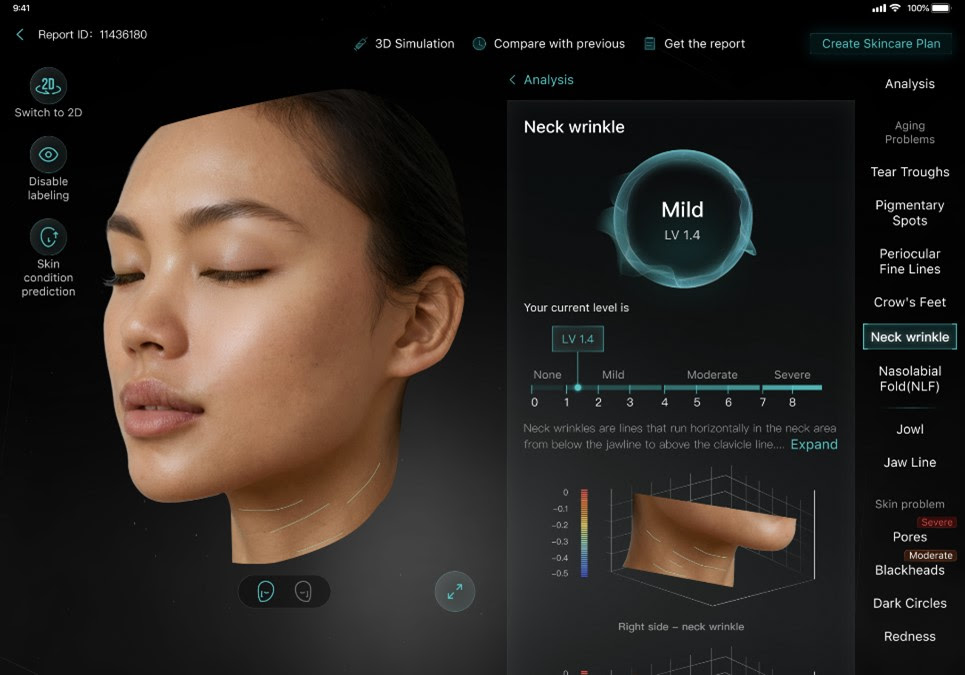
From 2D Images to 3D Intelligence
Traditional skin analysis relied heavily on flat photography or visual examination, which provided limited information about the skin’s texture, elasticity, and subdermal conditions. 3D skin scanning technology represents a major leap forward by creating a multi-dimensional skin map.
Through the use of structured light or multiple cameras, the system captures multiple images from different angles and reconstructs a detailed model. Combined with AI-driven analysis, it can measure pore density, wrinkle depth, melanin concentration, sebum levels, and even vascular visibility—all in a matter of seconds.
This digital skin twin allows clinicians to visualize both surface and subsurface conditions, improving accuracy in diagnosis and treatment planning.
The Science Behind 3D Skin Scanning
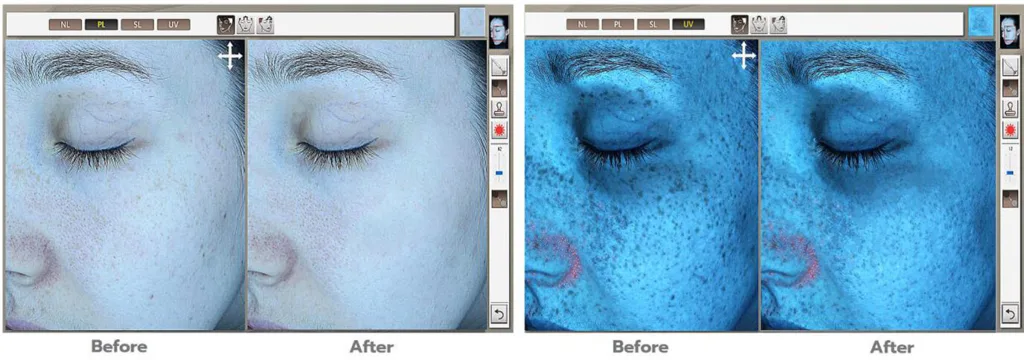
Modern 3D skin analyzers use an integration of optical sensors, polarized light, UV imaging, and AI algorithms. Here’s how it works:
-
Image Capture – The device takes multiple synchronized images under different light conditions (normal, polarized, UV).
-
Depth Mapping – Structured light projects patterns onto the skin, allowing the system to detect height differences and create a 3D topographical model.
-
AI Analysis – Artificial intelligence identifies issues like pigmentation, fine lines, acne, redness, or dehydration.
-
Comparative Simulation – The software can simulate aging progression or predict treatment outcomes, helping clients visualize expected results.
This fusion of imaging and AI not only enhances precision but also provides objective and measurable data, helping professionals monitor progress over time.
Key Benefits for Aesthetic Clinics
The adoption of 3D skin scanning technology provides numerous advantages to clinics, both from a clinical and a business perspective:
✅ Accurate and objective diagnosis – Eliminates guesswork and builds trust with clients.
✅ Customized treatment planning – Enables data-based product or device recommendations.
✅ Progress tracking – Compares before-and-after results with measurable metrics.
✅ Improved client engagement – 3D visualizations make consultations interactive and transparent.
✅ Marketing advantage – High-tech diagnostics enhance a clinic’s professional image.
For aesthetic centers, this means stronger customer retention, better treatment credibility, and increased sales of complementary skincare or device-based treatments.
3D Skin Scanning in the Era of AI and Big Data
As artificial intelligence evolves, 3D skin scanners are now integrating cloud-based data analytics to refine their diagnostic accuracy. By collecting anonymized skin data from global users, these systems continuously improve their algorithms—offering personalized skincare insights based on ethnicity, age, and regional climate.
Clinics can leverage these insights to recommend customized facial programs, such as radio frequency (RF) tightening, hydra-dermabrasion, HIFU, or LED therapy, depending on the specific skin condition. This represents the future of precision aesthetic medicine—where technology, biology, and AI converge.
Why 3D Analysis Outperforms Traditional Skin Analyzers
| Feature | Traditional 2D Analyzer | 3D Skin Scanner (2025 Model) |
|---|---|---|
| Image Type | Flat photography | 3D reconstruction |
| Depth Measurement | None | Yes – pore, wrinkle, and texture mapping |
| AI Analysis | Basic pattern recognition | Deep learning with predictive modeling |
| Skin Layer Insight | Surface only | Epidermis + dermis visualization |
| Accuracy | Moderate | High precision |
| Client Experience | Passive | Interactive and data-driven |
This comparison highlights how 3D skin scanners redefine diagnostics, turning analysis into a comprehensive, science-based consultation tool.
The Market Growth of 3D Skin Analyzers in 2025

According to global aesthetic industry reports, the 3D skin analysis market has seen over 40% growth in the past two years. Clinics in Asia, Europe, and North America are investing in these systems to elevate their service quality and customer satisfaction.
Consumers now prefer quantifiable skin evaluations rather than subjective opinions. As a result, 3D skin analyzers are increasingly viewed as essential clinic infrastructure, much like laser or RF machines.
Manufacturers—especially those in China’s beauty equipment sector—are developing portable and AI-enhanced 3D analyzers that integrate seamlessly with facial devices, allowing full diagnostic-to-treatment workflows within one platform.
Choosing the Right 3D Skin Analysis Device
When selecting a 3D skin analyzer for your clinic, consider the following key factors:
-
Imaging Resolution – Higher megapixels mean more detailed 3D rendering.
-
AI Capability – Look for software that updates regularly with new analysis models.
-
Lighting Modes – Multi-spectrum (RGB, UV, polarized) for comprehensive detection.
-
Compatibility – Integration with your clinic’s existing database or CRM system.
-
User Interface – Simple yet powerful visualization tools for consultations.
Clinics that adopt professional-grade devices—such as GLM’s advanced AI 3D skin analysis system—gain a clear competitive edge by offering diagnosis-based beauty solutions that boost both credibility and client satisfaction.
Conclusion
The year 2025 marks a defining moment for aesthetic technology. 3D skin scanning has evolved from a diagnostic novelty into a standard of professional skincare assessment.
By combining precision imaging, AI analytics, and client education, this technology empowers professionals to deliver personalized, results-driven treatments. For beauty clinics aiming to enhance professionalism and trust, investing in 3D skin scanning systems is no longer an option—it’s a necessity.
Founded in 2008, Guangzhou GLM Beauty Spa Equipment Factory specializes in research, development, manufacture and selling of beauty and slimming machines. Our production base is located in Guangzhou City, Guangdong Province, China. Since our foundation, we have introduced advanced technologies and equipment, to assure high quality and high performance of our products. With professional marketing guide and excellent after-sales service, our products have been exported to over 20 countries and regions, including Southeast Asia, the Middle East, Europe and the United States, won worldwide praises and gained a good reputation.