Introduction
In the evolving landscape of aesthetic and wellness treatments, non-invasive technologies are gaining increasing attention for their ability to deliver visible results with minimal downtime. Among these innovations, air compression therapy has emerged as a valuable solution in both medical and aesthetic settings.
Originally developed for clinical use—particularly in vascular and post-surgical recovery—this technology has been successfully adapted into the beauty industry. Today, it plays a key role in body contouring, lymphatic drainage, and recovery-focused treatments offered by professional clinics and beauty centers.
But what exactly is the science behind air compression therapy? How does it work on a physiological level, and why is it becoming a preferred addition to multi-function aesthetic devices?
This article explores the underlying mechanisms, practical benefits, and real-world applications of air compression therapy from a professional perspective.
Background / Problem
Modern clients are increasingly concerned with issues such as:
- Poor circulation due to sedentary lifestyles
- Fluid retention and swelling (edema)
- Sluggish lymphatic drainage
- Post-treatment recovery after body contouring procedures
- General fatigue and muscle tension
While traditional massage techniques can provide temporary relief, they often lack consistency, depth control, and measurable outcomes. Manual lymphatic drainage, for example, requires highly trained practitioners and can vary significantly depending on technique.
For aesthetic clinics, this creates several challenges:
- Inconsistent treatment results due to operator variability
- Limited scalability in high-volume environments
- Time-intensive procedures that reduce operational efficiency
- Difficulty integrating recovery treatments into existing workflows
As a result, there is a growing demand for standardized, technology-driven solutions that can deliver reliable and repeatable results.
Technology / Mechanism
Air compression therapy, also known as pressotherapy, uses controlled pneumatic pressure to stimulate circulation and lymphatic flow. It typically involves a specialized suit or garment with multiple chambers that inflate and deflate in a programmed sequence.
1. Sequential Compression Principle
The core mechanism is based on gradient pressure application.
- Chambers inflate sequentially from distal to proximal areas (e.g., feet to thighs)
- This creates a wave-like motion that mimics natural muscle contractions
- The pressure pushes blood and lymphatic fluid toward central drainage points
Physiological effect:
- Enhances venous return
- Prevents fluid accumulation
- Supports detoxification processes
2. Lymphatic System Stimulation
Unlike the circulatory system, the lymphatic system does not have a central pump like the heart. It relies on muscle movement and external forces.
Air compression therapy provides:
- Rhythmic external pressure
- Directional flow stimulation
- Activation of lymphatic vessels
This helps remove metabolic waste, toxins, and excess fluid from tissues.
3. Adjustable Pressure and Zoning
Professional devices allow precise control over:
- Pressure intensity (measured in mmHg)
- Treatment duration
- Specific body zones (legs, abdomen, arms)
Clinical advantage:
- Customization based on client condition
- Safe application for different body types
- Targeted treatment for specific concerns
4. Integration with Other Technologies
In modern aesthetic equipment, air compression therapy is often integrated with:
- Radio frequency (RF)
- Cavitation
- Vacuum therapy
Synergistic effect:
- Enhances fat metabolism after cavitation
- Accelerates recovery post RF treatments
- Improves overall treatment efficiency
Advantages / Comparison
Air Compression Therapy vs. Manual Massage
| Aspect | Air Compression Therapy | Manual Massage |
|---|---|---|
| Consistency | High | Variable |
| Pressure Control | Precise | Operator-dependent |
| Efficiency | Time-saving | Labor-intensive |
| Scalability | Suitable for high-volume clinics | Limited |
| Repeatability | Standardized | Difficult to replicate |
Air compression therapy offers a more controlled and reproducible approach, making it ideal for professional environments.
Professional Systems vs. Home-Use Devices
While home-use compression devices are available, they are typically limited in functionality.
Professional advantages:
- Higher pressure range for effective stimulation
- More chambers for precise sequential compression
- Advanced programming options
- Greater durability for continuous use
In clinical settings, these features translate into more noticeable results and improved treatment efficiency.
Applications / Client Needs
Air compression therapy addresses a wide range of client concerns and fits seamlessly into various treatment protocols.
1. Lymphatic Drainage and Detox
One of the primary uses is to promote lymphatic flow.
Client benefits:
- Reduced swelling and fluid retention
- Improved skin tone and texture
- Enhanced detoxification
2. Post-Body Contouring Recovery
After treatments such as cavitation or RF, the body needs to process and eliminate broken-down fat cells.
Role of compression therapy:
- Accelerates metabolic clearance
- Reduces inflammation
- Improves overall treatment results
3. Circulation Improvement
Clients with sedentary lifestyles often experience poor blood flow.
Therapeutic effect:
- Increased oxygen supply to tissues
- Reduced muscle fatigue
- Improved overall wellness
4. Body Shaping Support
While not a fat-reduction method on its own, compression therapy enhances the results of other treatments.
Professional value:
- Complements slimming programs
- Improves contour definition
- Enhances client satisfaction
5. Relaxation and Wellness Treatments
Beyond aesthetics, air compression therapy provides a comfortable and relaxing experience.
Clinic advantage:
- Adds value to treatment packages
- Attracts wellness-focused clients
- Encourages repeat visits
Conclusion
Air compression therapy represents a perfect balance between scientific principle and practical application in modern aesthetic treatments.
By leveraging controlled pneumatic pressure, it effectively supports circulation, lymphatic drainage, and post-treatment recovery—key elements in achieving optimal aesthetic results.
For professional clinics, integrating this technology into treatment protocols offers multiple benefits:
- Improved efficiency through standardized procedures
- Enhanced treatment outcomes when combined with other technologies
- Greater client satisfaction and retention
As the demand for non-invasive and holistic treatments continues to grow, air compression therapy is no longer just an optional add-on—it is becoming an essential component of advanced aesthetic systems.
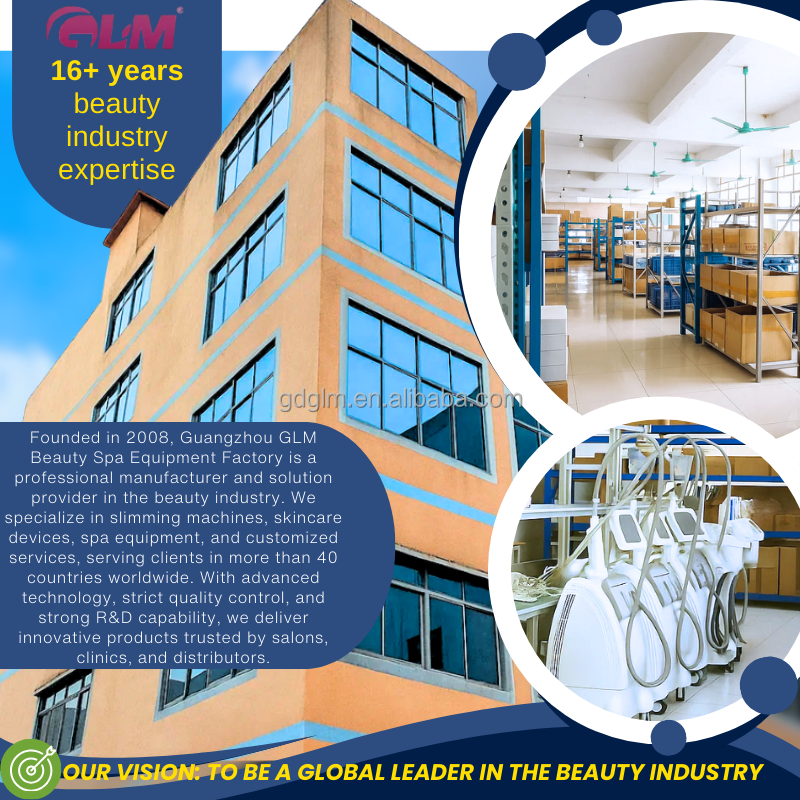
Founded in 2008, Guangzhou GLM Beauty Spa Equipment Factory specializes in research, development, manufacture and selling of beauty and slimming machines. Our production base is located in Guangzhou City, Guangdong Province, China. Since our foundation, we have introduced advanced technologies and equipment, to assure high quality and high performance of our products. With professional marketing guide and excellent after-sales service, our products have been exported to over 20 countries and regions, including Southeast Asia, the Middle East, Europe and the United States, won worldwide praises and gained a good reputation.