
Introduction
Healthy-looking hair begins with a healthy scalp. Yet, in professional beauty and aesthetic settings, scalp concerns are often assessed based on visible symptoms alone. Dryness, excess oil, flakes, redness, clogged follicles, or thinning hair may be noticed during a consultation, but visual observation does not always provide enough information to understand what is happening beneath the surface.
This is where scalp analysis becomes an important part of modern professional beauty services.
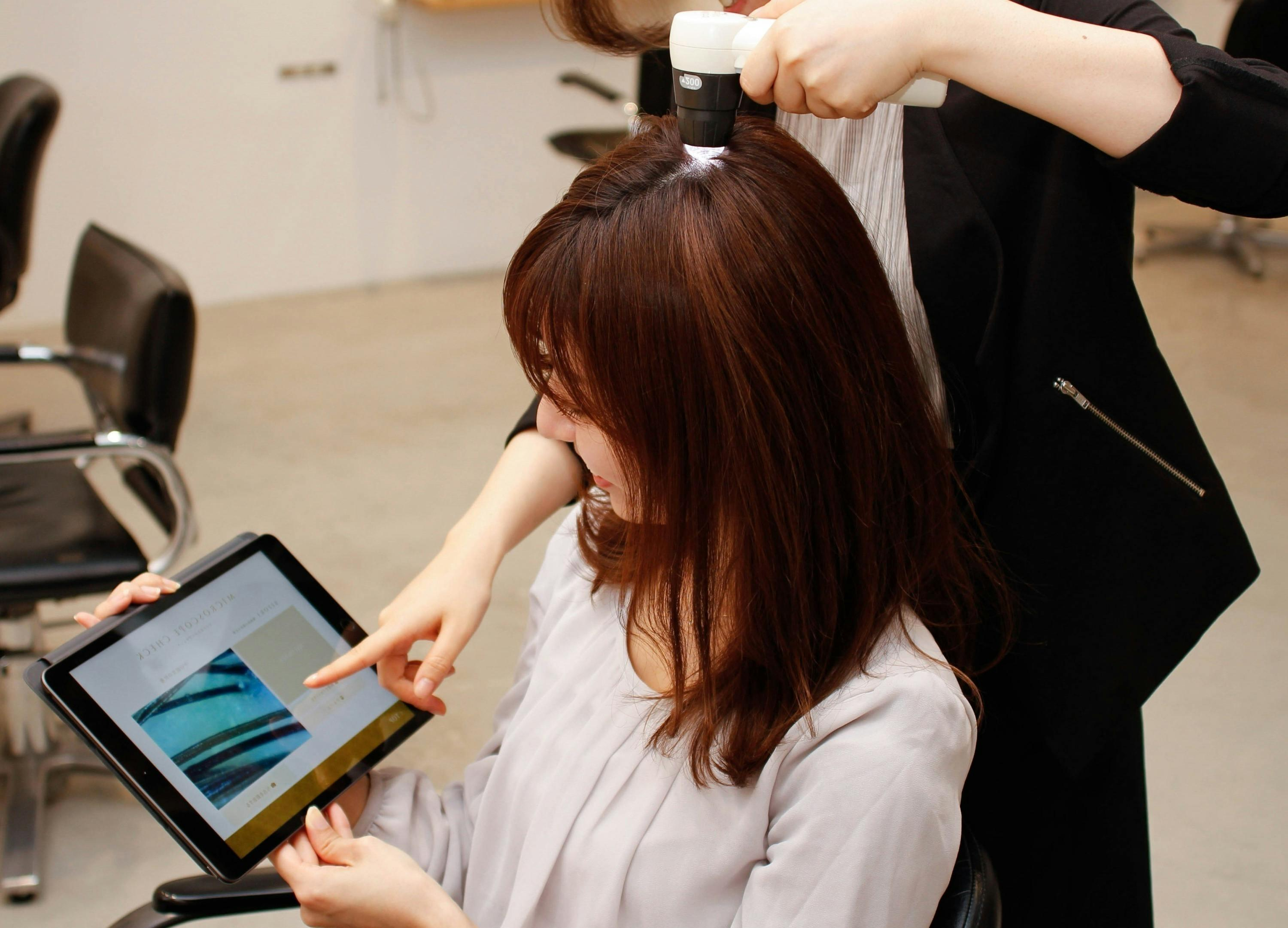
A professional scalp analysis uses visual inspection, magnification, imaging, and in some cases digital analysis technology to evaluate the condition of the scalp and hair follicles. Instead of simply asking clients what they feel or looking at the hair from a distance, professional operators can obtain a closer view of the scalp and use the information to build a more targeted treatment plan.
For beauty salons, scalp care centers, and aesthetic clinics, this approach offers more than a diagnostic-style consultation. It creates an opportunity to introduce personalized treatment programs, demonstrate the value of professional equipment, and build longer-term client relationships.
As the beauty industry continues moving toward personalized services, scalp analysis is becoming an increasingly valuable step before professional scalp and hair-related treatments.
Background: Why Is Scalp Analysis Necessary?
The scalp is a complex skin environment containing sebaceous glands, hair follicles, blood vessels, and a natural protective barrier. Its condition can change depending on age, lifestyle, environmental exposure, cleansing habits, product use, and other factors.
However, many scalp problems look similar from the outside.
For example, visible flakes may be associated with dryness, excess oil, product buildup, or other scalp conditions. An oily-looking scalp does not necessarily mean that the scalp only needs stronger cleansing. Likewise, hair that appears thinner may require a closer examination of the follicular area rather than simply switching to a different shampoo.
This creates a challenge for professional operators.
Without a structured analysis process, treatment recommendations may rely too heavily on general assumptions. Clients may receive the same cleansing, hydration, massage, or scalp-care protocol even though their actual scalp conditions are different.
A scalp analysis provides a more structured starting point.
By examining the scalp at higher magnification and documenting its condition, professionals can identify visible characteristics such as:
- Excess sebum and oil accumulation
- Dry or flaky areas
- Visible scalp redness
- Clogged follicular openings
- Product or environmental buildup
- Uneven scalp texture
- The appearance and distribution of hair follicles
- Areas where the scalp appears particularly dry or oily
- Changes in scalp condition over time
The purpose is not simply to find a problem. It is to understand the client's current condition well enough to select a more appropriate professional care approach.
Technology and Mechanism: How Does a Professional Scalp Analysis Work?
Modern scalp analysis can range from a basic magnifying camera to advanced digital imaging systems integrated with professional beauty equipment.
The core principle is relatively straightforward: magnification and imaging make details of the scalp easier to observe, document, and communicate.
1. High-Magnification Imaging
A scalp analysis camera can magnify areas that are difficult to see clearly with the naked eye.
Under magnification, operators may be able to observe the condition around follicular openings, the presence of visible buildup, surface dryness, oil distribution, and other characteristics.
This is particularly useful during professional consultations because the operator and client can look at the same image rather than relying entirely on verbal descriptions.
The visual comparison can also make the consultation more educational.
Instead of telling a client that their scalp appears oily or congested, the operator can show the client the relevant area on a screen. This creates a clearer connection between the analysis and the recommended professional treatment.
2. Digital Image Documentation
Another important function is documentation.
Professional scalp-care programs often involve multiple sessions rather than a single treatment. Recording images before treatment creates a visual reference that can be compared during future appointments.
For example, an operator may capture images of the same scalp area during the initial consultation and then repeat the analysis after several treatment sessions.
This allows professionals to observe visible changes in:
- Surface cleanliness
- Oil accumulation
- Flaking
- Scalp appearance
- Follicular visibility
- Overall scalp condition
Documentation can therefore support more consistent treatment management.
3. Multi-Parameter Observation
More advanced systems may combine imaging with different illumination modes or analysis functions to reveal different surface characteristics.
Depending on the equipment design, professional operators may use standard lighting, magnified imaging, or specialized illumination to examine different aspects of the scalp.
The objective is not to make the equipment replace professional judgment. Instead, technology provides additional visual information that helps the operator make a more informed treatment decision.
This distinction is important.
A scalp analysis device should be viewed primarily as a professional assessment and visualization tool, rather than a replacement for medical diagnosis. When a client presents with persistent, severe, or unusual scalp symptoms, referral to an appropriately qualified healthcare professional may be necessary.
Why Professional Scalp Analysis Adds Value to Beauty Equipment Services
The value of scalp analysis extends beyond the analysis itself. For professional beauty businesses, it can strengthen the entire treatment experience.
From Generic Treatments to Personalized Protocols
One of the biggest advantages is personalization.
A salon may offer several scalp-care services, including deep cleansing, hydration, exfoliation, scalp massage, oxygen-based treatments, infusion technologies, LED-based treatments, or other professional protocols.
However, not every client needs the same combination.
Scalp analysis gives the operator an opportunity to select treatments based on the client's observable condition rather than using a standardized protocol for everyone.
For example, a scalp showing visible buildup may require a cleansing-focused protocol, while another client with a visibly dry scalp may benefit from a gentler hydration-oriented approach.
The analysis becomes the starting point, while the professional equipment becomes the tool used to deliver the selected treatment.
Better Client Communication
Professional beauty treatments are highly experience-driven.
Clients want to understand what is being done, why it is necessary, and whether their investment is providing value.
A scalp analysis can make the consultation more visual and transparent.
When clients can see magnified images of their scalp, the treatment recommendation becomes easier to understand. This can also reduce the perception that professional scalp treatments are simply an upgraded version of ordinary hair washing.
For salons and clinics, this creates an opportunity to communicate the difference between a basic service and a structured professional treatment program.
Creating a More Professional Treatment Journey
Scalp analysis can also transform a single appointment into a longer-term service journey.
A typical professional workflow may include:
Consultation → Scalp Analysis → Condition Assessment → Personalized Treatment → Post-Treatment Care → Follow-Up Analysis
This structure creates multiple touchpoints with the client.
Instead of focusing exclusively on selling one treatment, the salon can develop a more systematic scalp-care program based on regular assessments and adjustments.
That model is particularly attractive for businesses looking to build recurring services.
Scalp Analysis vs. Traditional Visual Inspection
Traditional visual inspection still has value. Experienced operators can identify many visible scalp characteristics simply by examining the client during consultation.
However, visual inspection has limitations.
| Traditional Observation | Professional Scalp Analysis |
|---|---|
| Primarily relies on naked-eye observation | Uses magnification and imaging |
| Limited visibility of small areas | Provides detailed close-up views |
| Difficult to document consistently | Images can be saved for comparison |
| Recommendations may rely on general observation | Supports more personalized protocols |
| Limited client visualization | Clients can directly see scalp images |
| Harder to demonstrate changes over time | Before-and-after comparisons are easier |
This does not mean that technology should replace professional expertise.
The strongest approach combines both.
An experienced operator understands the client's concerns and service history, while scalp analysis equipment provides additional visual information. Together, they create a more complete consultation process.
Professional Equipment vs. Home Scalp Inspection
Consumers can now find smartphone attachments, handheld cameras, and other tools designed to magnify the scalp at home. These products can be useful for basic personal observation, but professional equipment offers several advantages in a salon or clinic environment.
First, professional systems are designed around treatment workflows rather than simple curiosity. Imaging can be integrated into consultation, documentation, treatment planning, and follow-up.
Second, professional operators have the training and experience to interpret visible characteristics within the context of the client's overall condition.
Third, professional equipment can be combined with other aesthetic technologies.
For example, a salon may use scalp analysis before a professional cleansing treatment, then perform the selected treatment using specialized scalp-care equipment. The scalp can subsequently be analyzed again to document visible changes.
This creates a complete analysis-to-treatment-to-review cycle.
That workflow is difficult to replicate with a basic consumer device.
Applications in Professional Beauty Salons and Clinics
Scalp analysis can support a wide range of professional service scenarios.
1. Scalp Deep-Cleansing Programs
Before a deep-cleansing treatment, analysis can help operators identify visible oil accumulation, buildup, or areas that require additional attention.
After treatment, another image can provide a visual reference for the client.
2. Hydration and Scalp Comfort Programs
Clients experiencing a visibly dry or uncomfortable scalp may benefit from a gentler professional care approach.
Analysis helps operators identify areas that appear particularly dry and select an appropriate treatment intensity.
3. Hair and Scalp Wellness Programs
For salons offering broader scalp and hair wellness services, regular analysis can become part of a membership or multi-session program.
Instead of offering isolated treatments, the salon can establish a recurring assessment and care schedule.
4. Premium Scalp Spa Services
Scalp spas increasingly combine cleansing, massage, relaxation, hydration, and technology-assisted treatments.
Adding digital scalp analysis at the beginning of the service can make the experience feel more personalized and professional.
The consultation itself becomes part of the premium service.
5. Before-and-After Treatment Documentation
For professional operators, visual documentation can help demonstrate changes between appointments.
This is especially valuable for long-term service programs where clients may not notice subtle changes immediately.
What Clients Really Gain From Scalp Analysis
From the client's perspective, the most important benefit is not the technology itself.
It is a more personalized understanding of their scalp condition.
Clients increasingly expect beauty services to be customized. They do not necessarily want the strongest treatment or the most expensive treatment. They want a treatment that makes sense for their individual needs.
Scalp analysis helps professionals move from:
“This is the treatment we usually provide.”
to:
“Based on your scalp condition, this is the professional care approach we recommend.”
That difference can significantly improve the perceived value of a service.
It can also encourage better client education. Once clients understand their scalp condition, operators can provide appropriate recommendations for cleansing frequency, product selection, professional treatment intervals, and follow-up care.
How Scalp Analysis Can Support Business Growth
For beauty businesses, the commercial value of scalp analysis should not be overlooked.
A professional scalp analysis device can support several business objectives at the same time.
First, it can increase consultation value.
The consultation becomes a technology-supported professional service rather than a simple conversation.
Second, it can support treatment personalization.
Different scalp conditions can lead to different treatment pathways, allowing salons to develop multiple service packages.
Third, it can improve client retention.
Regular analysis gives clients a reason to return for follow-up appointments and review changes in their scalp condition.
Fourth, it can strengthen equipment utilization.
When analysis is connected with professional scalp-care technologies, the equipment becomes part of a complete service ecosystem rather than an isolated device.
Finally, it can help differentiate premium services.
In an increasingly competitive beauty market, technology alone is not enough. What matters is how technology improves the service experience.
A scalp analysis system becomes more valuable when it helps operators create a clear process:
Analyze → Personalize → Treat → Review → Maintain
This is the type of workflow that can turn a single equipment investment into a broader professional service opportunity.
Choosing the Right Scalp Analysis Equipment
For salons and clinics considering a professional scalp analysis system, several factors should be evaluated.
Image Quality
Clear magnified images are fundamental. The system should provide enough detail for operators to examine relevant scalp areas comfortably.
Ease of Operation
A professional device should fit naturally into the consultation workflow. Complicated operation can slow down appointments and reduce staff adoption.
Display and Visualization
A clear display or connected screen can make it easier for both the operator and client to review scalp images.
Image Storage and Comparison
For multi-session programs, the ability to save and compare images can add significant practical value.
Integration With Treatment Services
The strongest equipment solutions should complement, rather than isolate themselves from, the salon's broader service portfolio.
A scalp analysis system can work particularly well alongside professional cleansing, hydration, massage, infusion, LED, oxygen, and other scalp-care technologies, depending on the intended application and equipment specifications.
Conclusion
Scalp analysis is becoming an important component of modern professional scalp-care services because it brings greater visibility and structure to the treatment process.
By using magnification and digital imaging, professional operators can examine scalp conditions more closely, communicate findings more clearly, personalize treatment plans, and document changes over time.
More importantly, scalp analysis connects technology with professional service.
For beauty salons and aesthetic clinics, the value is not simply in owning another device. The real opportunity lies in creating a complete service experience where analysis guides treatment selection, professional equipment delivers the selected protocol, and follow-up analysis helps maintain the client relationship.
As the beauty industry continues moving toward personalization and technology-assisted services, scalp analysis can become a practical foundation for building more professional, measurable, and client-focused scalp-care programs
Founded in 2008, Guangzhou GLM Beauty Spa Equipment Factory specializes in research, development, manufacture and selling of beauty and slimming machines. Our production base is located in Guangzhou City, Guangdong Province, China. Since our foundation, we have introduced advanced technologies and equipment, to assure high quality and high performance of our products. With professional marketing guide and excellent after-sales service, our products have been exported to over 20 countries and regions, including Southeast Asia, the Middle East, Europe and the United States, won worldwide praises and gained a good reputation