
1. Introduction
The aesthetic industry is experiencing a shift toward treatments that offer visible improvements without surgery, extensive recovery periods, or significant disruption to daily life. Clients increasingly ask about firmer skin, a more defined jawline, reduced facial sagging, and natural-looking rejuvenation. For aesthetic clinics and professional beauty centers, meeting these expectations requires more than an attractive treatment menu. It requires reliable technology, appropriate patient selection, and a service model that can deliver consistent experiences.
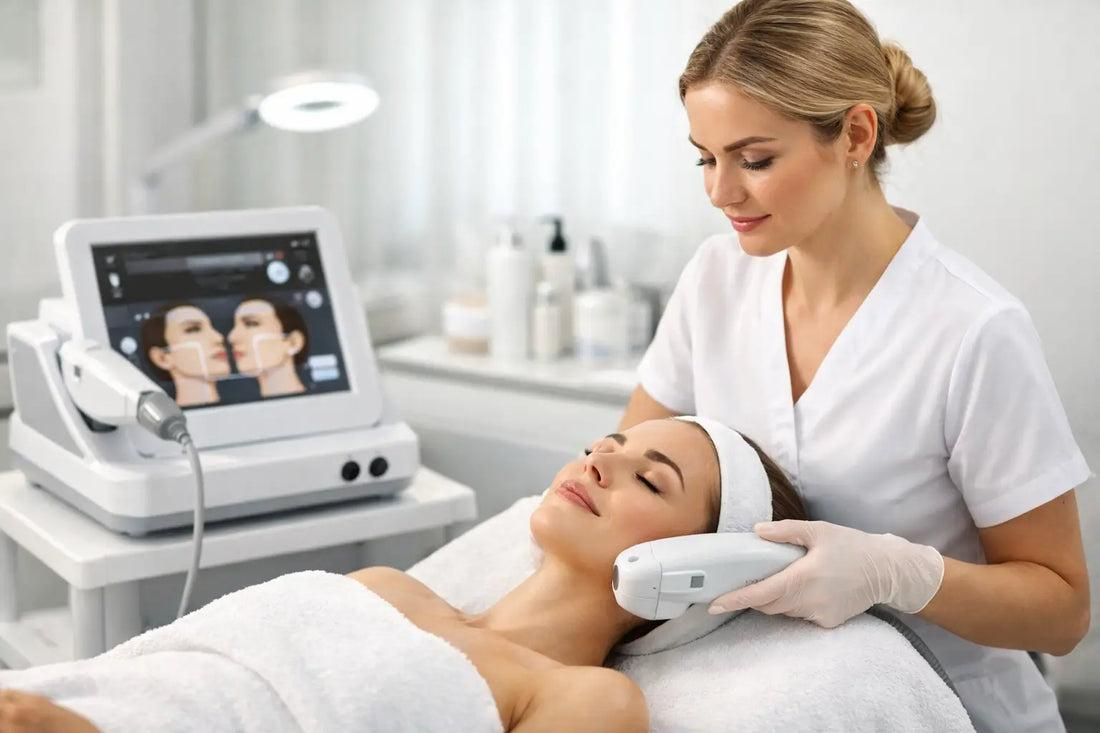
High-Intensity Focused Ultrasound (HIFU) has become an important technology in the non-invasive aesthetic treatment market. By delivering focused ultrasound energy to selected tissue depths, HIFU devices are designed to stimulate tissue remodeling and improve the appearance of skin laxity. Depending on the device, its approved indications, and its treatment parameters, HIFU may be used for facial lifting, skin tightening, and selected body-contouring applications.
For clinic owners, investing in a HIFU machine is not simply a decision to add another beauty device. It is a decision about expanding treatment options, attracting clients interested in non-surgical rejuvenation, and developing a potentially valuable service line.
However, a successful investment depends on more than market popularity. Clinics need to understand how HIFU works, what results clients can reasonably expect, how safety should be managed, and how equipment costs translate into long-term business performance.
2. Background and Problem: Why Is Demand for Non-Surgical Facelifts Growing?
Changing Client Expectations
Traditional surgical facelifts can address significant facial aging, but surgery involves incisions, anesthesia, recovery, and medical considerations that may not suit every client. Many people with mild to moderate skin laxity prefer to explore non-surgical options before considering invasive procedures.
HIFU appeals to this group because it offers a different approach to aesthetic rejuvenation. Instead of removing skin surgically, the technology delivers focused energy beneath the skin to initiate a controlled tissue response. The intended outcome is gradual improvement in firmness and lifting, rather than an immediate surgical transformation.
Clients may seek treatment for concerns such as:
-
Mild to moderate laxity around the cheeks and lower face.
-
A less defined jawline or submental area.
-
Visible signs of aging around the neck and selected facial regions.
-
A preference for treatments with limited recovery time.
-
Gradual, natural-looking changes rather than dramatic alterations.
These expectations create opportunities for clinics that can explain the benefits and limitations of non-surgical treatments clearly.
The Commercial Opportunity for Clinics
The non-invasive aesthetic market covers a broad range of services, from skin rejuvenation to body contouring. Aesthetic ultrasound occupies a distinct position within this landscape because it uses focused acoustic energy rather than relying exclusively on surface-level skincare or light-based treatments. A 2025 systematic review examined 45 clinical trials and cohort studies involving HIFU for skin tightening and body contouring, illustrating the breadth of research and application areas being explored. Nevertheless, treatment protocols and the strength of evidence vary across devices and indications.
For clinic operators, the opportunity is not to promote HIFU as a universal solution. It is to identify suitable clients whose needs match the device's intended use and to build a professional treatment pathway around those needs.
A well-positioned HIFU service can complement existing facial treatments, consultations, and follow-up appointments. It may also help a clinic differentiate its service portfolio in a competitive local market.
3. Technology and Mechanism: How Do HIFU Machines Work?
Focused Ultrasound Energy
HIFU stands for High-Intensity Focused Ultrasound. The device generates ultrasound waves and concentrates acoustic energy at selected focal points beneath the skin. At these points, energy can produce localized heating and controlled thermal coagulation, initiating a tissue repair response.
The treatment is designed to affect targeted tissue while limiting unnecessary injury to surrounding structures. Actual performance depends on the device's design, transducer, energy settings, focal depth, coupling method, and operator technique.
Unlike conventional topical skincare, which primarily acts at the skin surface, HIFU is designed to deliver energy to deeper tissue targets. This makes it a different category of treatment rather than simply a more powerful facial.
Collagen Remodeling and Skin Firmness
Collagen provides structural support to the skin. As people age, changes in collagen organization and overall tissue structure contribute to reduced firmness and visible laxity.
When appropriately delivered focused ultrasound produces controlled thermal effects, the body initiates a repair process involving collagen remodeling. Over time, this process may improve skin firmness and the appearance of mild sagging.
Results are not necessarily immediate. Some clients may notice early changes, while further improvement can develop over several weeks or months. Outcomes vary with baseline skin condition, age, treatment area, device characteristics, and individual biological response.
HIFU should therefore be presented as a treatment that may gradually improve selected signs of skin laxity, not as a guaranteed replacement for surgery.
Treatment Depth and Device Configuration
Different HIFU systems use different transducers, cartridges, focal depths, and energy-delivery designs. Some professional systems offer multiple treatment depths to address different tissue targets.
For example, commonly discussed focal depths include approximately 1.5 mm, 3.0 mm, and 4.5 mm. These are examples rather than universal settings, and their suitability depends on the specific device, treatment region, and intended indication. A depth should never be selected solely because it is available on the machine.
Some microfocused ultrasound systems incorporate real-time imaging to help qualified practitioners visualize tissue layers. Other systems do not provide this feature. Clinics should distinguish between standard HIFU and image-guided systems rather than assuming that all machines offer equivalent targeting precision.
For equipment buyers, evaluating transducer design, output consistency, treatment controls, maintenance requirements, and training support is more meaningful than comparing the number of cartridges alone.
4. Advantages and Comparison: What Makes HIFU Valuable in a Professional Setting?
Non-Surgical Treatment with Limited Downtime
One of HIFU's main attractions is that it does not require surgical incisions. Depending on the device and treatment protocol, clients can often return to routine activities relatively quickly.
This can be appealing to working professionals and clients who want to address early signs of aging without planning an extended recovery period. However, limited downtime does not mean no adverse effects. Temporary redness, swelling, tenderness, bruising, and discomfort may occur, while less common but more serious complications are possible.
Clinics should explain the recovery profile of the specific device and avoid promising a completely painless treatment or an absence of downtime.
HIFU Compared with Other Aesthetic Technologies
HIFU is not interchangeable with every other skin-tightening technology. Each treatment has different energy characteristics, tissue targets, and practical limitations.
HIFU versus radiofrequency (RF): HIFU concentrates ultrasound energy at selected focal points. RF devices deliver electrical energy that produces tissue heating through a different mechanism. Both may be used in skin-tightening services, but the appropriate choice depends on the device, indication, patient characteristics, and clinical evidence.
HIFU versus laser treatments: Lasers use selected wavelengths of light and are often chosen for indications such as pigmentation, vascular concerns, hair removal, or resurfacing, depending on the platform. HIFU is generally considered when focused ultrasound is appropriate for the intended deeper tissue target.
HIFU versus surgery: Surgery can provide more substantial structural changes for selected patients with significant laxity. HIFU may be suitable for some people who want a non-surgical option, but it cannot reliably reproduce the results of a surgical facelift.
HIFU versus home beauty devices: Professional systems may provide more specialized controls, treatment protocols, and operator training than consumer devices. However, professional positioning alone does not prove superior safety or efficacy. Clinics should evaluate objective specifications, validated indications, quality documentation, and clinical evidence rather than assuming that every professional machine is better than every home device.
The strongest commercial position is based on matching the right technology to the right client, not claiming that one device can solve every aesthetic concern.
A More Structured Treatment Service
A professional HIFU service can include consultation, assessment, treatment planning, informed consent, photography where appropriate, post-treatment instructions, and scheduled follow-up.
This structure creates value beyond the machine itself. Clients receive a clearer explanation of their options, while practitioners can document outcomes and refine future treatment planning. For the clinic, a standardized process can support service consistency and more credible marketing.
5. Applications and Client Needs: Building a HIFU Service Around Real Demand
Facial Lifting and Skin Tightening
Facial rejuvenation is one of the best-known aesthetic applications of HIFU. Depending on the system's intended use, practitioners may assess the cheeks, lower face, jawline, submental region, or neck.
Suitable candidates generally need realistic expectations and concerns that match the device's treatment capabilities. HIFU is not equally appropriate for every face. Skin quality, tissue thickness, facial fat distribution, degree of laxity, medical history, and previous aesthetic procedures may influence treatment decisions.
A careful consultation helps determine whether HIFU is appropriate or whether another treatment, a combination approach, or referral for medical assessment would be more suitable.
Body Contouring: A Separate Purchasing Consideration
Some HIFU systems are designed for selected body-contouring applications. However, facial and body-focused systems should not be treated as interchangeable. Their energy delivery, transducers, intended tissue targets, and treatment protocols may differ substantially.
Clinics considering body treatments should evaluate the machine's documented indications, treatment-area compatibility, contraindications, and supporting evidence. They should also avoid presenting body-contouring results as equivalent to weight loss or a substitute for healthy lifestyle measures.
For equipment manufacturers and distributors, clear product specifications and accurate indication descriptions help buyers understand which applications a particular platform can genuinely support.
Meeting Different Client Expectations
Not every client is looking for the same outcome. Some prioritize subtle improvements, others want a more defined facial contour, and some may be unsuitable for ultrasound-based treatment altogether.
Professional operators should assess these differences before recommending a service. A responsible consultation includes discussion of realistic results, alternative options, expected discomfort, possible adverse effects, recovery, and follow-up.
This approach may reduce mismatched expectations and help build long-term client trust. For clinics, that trust can be more valuable than a single high-priced treatment sale.
What to Look for When Purchasing a HIFU Machine
Clinic owners and distributors should assess equipment through a practical purchasing framework:
-
Intended use: Confirm that the device is suitable for the planned facial or body applications in the target market.
-
Technical performance: Review energy controls, focal-depth options, output consistency, transducer design, and relevant performance documentation.
-
Safety features: Examine operating instructions, warnings, treatment controls, contact or coupling requirements, and protective measures.
-
Training and support: Check operator training, technical assistance, spare parts availability, warranty conditions, and maintenance arrangements.
-
Documentation and compliance: Verify the actual regulatory status and required documentation for the specific model and destination market.
-
Business suitability: Consider treatment duration, consumable costs, expected demand, staffing, service capacity, and the availability of after-sales support.
These factors are particularly important for clinics purchasing equipment for long-term use rather than selecting a machine based only on its initial price.
6. Safety: Why Professional Training and Patient Selection Matter
HIFU is a medical-aesthetic energy-based treatment, not a risk-free beauty procedure. Its safety depends on appropriate device selection, operator competence, correct treatment planning, and adherence to the manufacturer's instructions.
Potential adverse effects include pain or tenderness, redness, swelling, bruising, temporary sensory changes, and, in some cases, burns, unwanted tissue effects, or nerve-related injury. The frequency and severity of these events vary by device, treatment area, settings, and technique.
Before treatment, practitioners should review medical history, assess the target area, identify relevant contraindications, and discuss potential risks. They should also determine whether the proposed treatment is within their professional scope and local regulatory requirements.
Treatment should follow the exact device instructions, including approved indications, energy settings, coupling procedures, and anatomical restrictions. Operators should not improvise treatment depths or increase energy simply to pursue a more dramatic result.
Clinics should also establish clear protocols for post-treatment guidance, adverse-event recognition, documentation, and referral when necessary.
Regulatory claims require particular care. The US Food and Drug Administration provides specific guidance for focused ultrasound systems intended for aesthetic use. Device classification, authorization, and permitted indications depend on the actual product and jurisdiction. A general statement that a machine is “FDA approved” or “CE certified” should never replace verification of the relevant model, documentation, and authorized claims.
For clinic owners, safety is not merely a compliance expense. It is part of service quality, professional reputation, and long-term business sustainability.
7. Return on Investment: How Can Clinics Evaluate a HIFU Investment?
Purchasing a HIFU machine can require a significant initial investment. A realistic business assessment should consider the total cost of ownership, not just the advertised equipment price.
Relevant costs may include the machine, transducers or cartridges, consumables, staff training, maintenance, marketing, treatment-room capacity, insurance where applicable, and downtime for servicing.
Revenue depends on local demand, pricing, utilization, treatment protocols, and the clinic's ability to attract suitable clients. No device can guarantee a specific number of bookings or a fixed payback period.
Calculate the Break-Even Point
A simple break-even model can help clinic owners test whether a purchase is commercially realistic.
Break-even treatments = Initial investment ÷ Contribution per treatment
Contribution per treatment is the amount remaining after deducting variable costs directly associated with providing one treatment. For a fuller analysis, the clinic should also account for recurring fixed costs and the time required to recover the initial investment.
Consider a hypothetical example:
A clinic purchases a HIFU system for $12,000. It charges $300 per treatment and incurs $60 in variable costs per treatment.
-
Revenue per treatment: $300.
-
Variable cost per treatment: $60.
-
Contribution per treatment: $240.
-
Initial investment: $12,000.
-
Treatments required to recover the initial investment before other fixed costs: 50.
This calculation is illustrative, not a forecast. It excludes rent, salaries, marketing, maintenance, financing, taxes, and other overheads. Actual break-even performance may therefore require substantially more than 50 treatments.
Measure Utilization, Not Just Treatment Price
A machine with a high treatment price can still deliver a poor return if bookings are infrequent. Conversely, a reasonably priced service with consistent demand and well-controlled costs may be more sustainable.
Clinics should monitor:
-
Number of qualified inquiries and consultations.
-
Consultation-to-booking conversion rate.
-
Treatments completed per month.
-
Average revenue and contribution per treatment.
-
Repeat visits and appropriate follow-up bookings.
-
Consumable usage, maintenance costs, and equipment downtime.
-
Client satisfaction, complaints, and referral rates.
These indicators reveal whether the service is attracting the right clients and generating sustainable margins.
Build Demand Through Education
Marketing should explain what HIFU does, who may benefit, what results are realistic, and how the clinic manages safety. Before-and-after photographs should be genuine, appropriately consented, and presented without implying that every client will achieve the same result.
Useful content may include explanations of focused ultrasound, treatment timelines, consultation procedures, device features, and comparisons with alternative technologies. Educational marketing can help clients make informed decisions while positioning the clinic as a professional provider.
For equipment suppliers, this also highlights the value of offering product training, technical documentation, maintenance support, and responsible marketing materials alongside the device itself.
8. Conclusion: A Strategic Investment Requires More Than Market Popularity
HIFU machines are attracting attention because they offer clinics a way to provide selected non-surgical skin-tightening and rejuvenation treatments using focused ultrasound energy. Demand for less invasive aesthetic services creates opportunities, but commercial success depends on matching treatment capabilities to client needs.
For clinics, the key considerations are realistic treatment outcomes, qualified operation, safety protocols, regulatory compliance, and a service model that can generate sufficient demand. For equipment buyers, technical performance, documentation, training, maintenance, and after-sales support deserve as much attention as the purchase price.
A HIFU machine can become a valuable part of a professional aesthetic service portfolio when the technology, operator, client selection, and business plan work together. The strongest investment is not necessarily the machine with the most features or the lowest price. It is the system that fits the clinic's intended applications, supports safe and consistent practice, and offers a credible path toward long-term commercial sustainability
Founded in 2008, Guangzhou GLM Beauty Spa Equipment Factory specializes in research, development, manufacture and selling of beauty and slimming machines. Our production base is located in Guangzhou City, Guangdong Province, China. Since our foundation, we have introduced advanced technologies and equipment, to assure high quality and high performance of our products. With professional marketing guide and excellent after-sales service, our products have been exported to over 20 countries and regions, including Southeast Asia, the Middle East, Europe and the United States, won worldwide praises and gained a good reputation