
Introduction
The global demand for professional hair restoration and scalp care services has grown rapidly over the past few years. Consumers are becoming increasingly aware that healthy hair begins with a healthy scalp, leading more beauty salons, aesthetic clinics, wellness centers, and hair treatment studios to expand their scalp therapy offerings.
However, despite the popularity of hair growth products, scalp serums, LED treatments, and other advanced therapies, many treatments still begin without a comprehensive understanding of the client's scalp condition. As a result, clients may receive ineffective solutions, spend unnecessary money, and lose confidence in professional services.
This is where scalp detection technology has transformed the industry.
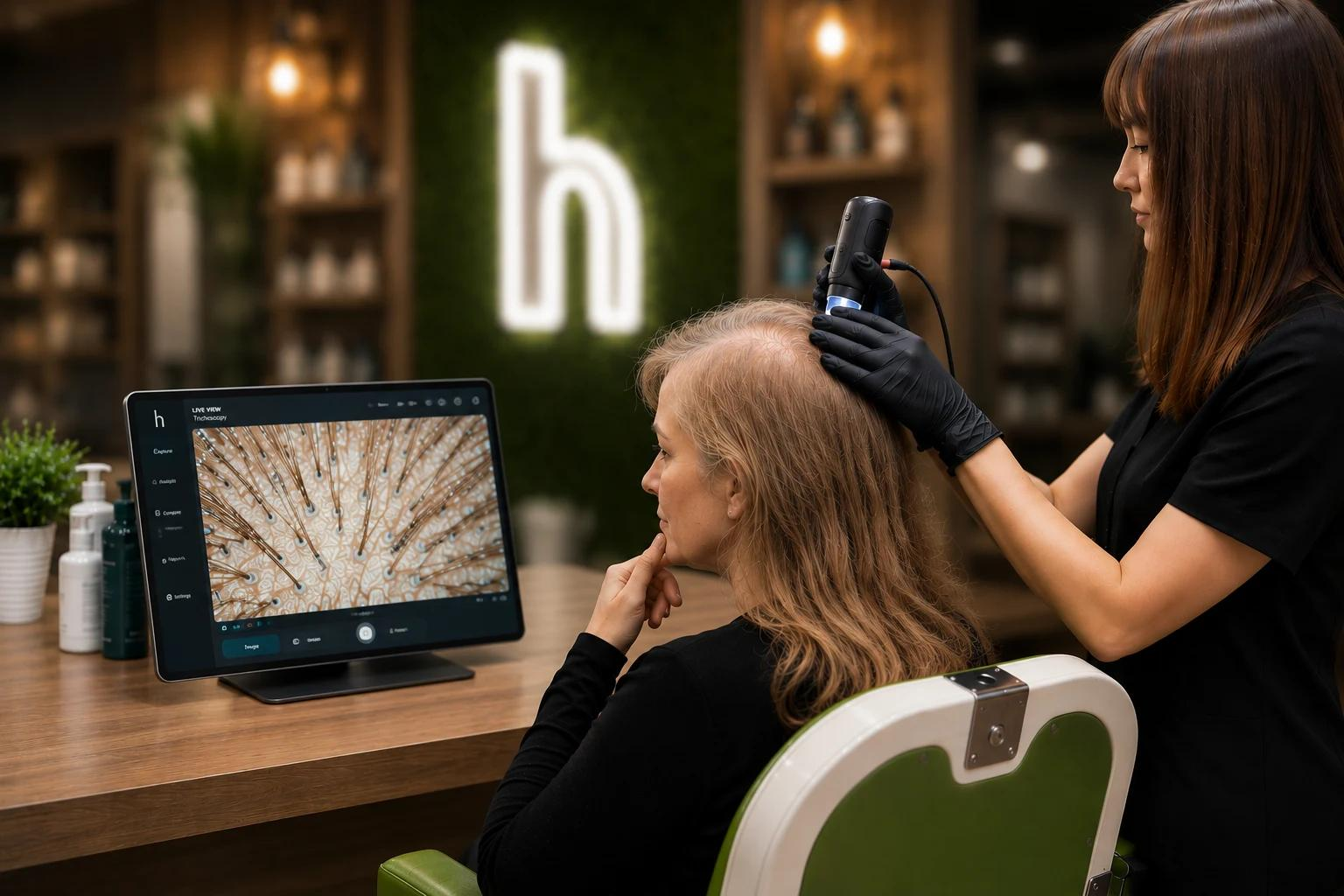
Rather than relying solely on visual observation or customer descriptions, modern scalp analyzers provide magnified, high-definition images and objective data that help practitioners understand the actual condition of the scalp before recommending any treatment. This scientific approach improves treatment accuracy, enhances customer trust, and creates personalized therapy plans based on real evidence instead of assumptions.
For professional beauty businesses, scalp detection is no longer simply an optional consultation tool—it has become the foundation of effective hair therapy.
Background / Problem
Hair Problems Often Begin Below the Surface
Many clients visit salons because they notice symptoms such as:
- Excessive hair shedding
- Slow hair growth
- Itchy scalp
- Oily roots
- Dry scalp
- Flakes or dandruff
- Sensitive skin
- Thinning hair
- Reduced hair density
Although these concerns appear similar, their underlying causes can be completely different.
For example, two clients experiencing hair loss may require entirely different treatment strategies. One may suffer from excessive sebum blocking hair follicles, while another may have poor scalp circulation or chronic dryness. Treating both clients with the same products or equipment often leads to disappointing results.
Without understanding what is happening beneath the hair, even experienced therapists may struggle to recommend the most suitable treatment.
Why Traditional Consultation Is No Longer Enough
Traditional scalp consultation generally depends on three factors:
- Visual observation
- Client questionnaires
- Practitioner experience
While professional experience remains valuable, these methods have several limitations.
Many scalp conditions cannot be identified with the naked eye. Early inflammation, blocked follicles, excess oil accumulation, weakened follicles, or microscopic skin damage often remain invisible during a routine consultation.
Clients also tend to misjudge their own scalp condition. Someone who believes they have a dry scalp may actually be experiencing dehydration caused by excessive cleansing, while another client complaining about oily hair may actually have an unhealthy scalp barrier.
Without objective imaging, treatments become based on assumptions rather than measurable evidence.
This not only reduces treatment effectiveness but also makes it more difficult to explain recommendations and demonstrate professional expertise.
Technology / Mechanism
What Is a Scalp Detection Device?
A scalp detection device is a professional diagnostic instrument designed to capture high-resolution images of the scalp, hair follicles, and hair shafts through advanced optical imaging technology.
Depending on the model, modern scalp analyzers may combine multiple technologies, including:
- High-definition digital microscopy
- Multiple magnification levels
- Polarized light imaging
- UV light analysis
- Moisture analysis
- Sebum analysis
- AI-assisted image analysis
- Digital comparison software
- Cloud-based customer record management
Instead of making subjective judgments, practitioners can evaluate the scalp using visual evidence supported by measurable data.
This significantly improves consultation quality while strengthening communication between professionals and clients.
How Does Scalp Detection Work?
A professional scalp analysis usually follows a structured workflow.
Step 1: Image Collection
The therapist places the detection probe on different areas of the scalp, including:
- Frontal hairline
- Crown
- Temporal areas
- Occipital region
The built-in HD camera captures magnified images ranging from approximately 50× to 200×, depending on the device configuration.
These images reveal details invisible to the naked eye.
Step 2: Hair Follicle Observation
The analyzer allows practitioners to observe important indicators such as:
- Follicle cleanliness
- Sebum accumulation
- Keratin blockage
- Hair density
- Hair shaft thickness
- Miniaturized hairs
- Empty follicles
- Signs of inflammation
- Scalp redness
These observations provide valuable clues regarding the scalp's overall health and help identify potential causes of hair concerns before visible symptoms become severe.
Step 3: Scalp Condition Evaluation
Many professional systems categorize scalp conditions into several common types, such as:
- Healthy scalp
- Oily scalp
- Dry scalp
- Sensitive scalp
- Inflamed scalp
- Aging scalp
- Dandruff-prone scalp
- Hair loss risk scalp
Some advanced platforms also generate analysis reports that compare the client's condition with reference standards, making consultations easier to understand and more transparent.
Step 4: Personalized Treatment Planning
Once the analysis is complete, practitioners can recommend therapies based on objective findings rather than assumptions.
For example:
- Clients with excess sebum may benefit from deep scalp cleansing treatments before hair growth therapies.
- Clients showing signs of poor scalp hydration may require moisturizing protocols combined with barrier-repair products.
- Individuals with weakened follicles may be suitable candidates for low-level light therapy (LLLT), scalp massage devices, or other circulation-supporting technologies.
- Those with sensitive or inflamed scalps may first need soothing treatments before introducing more intensive procedures.
This step-by-step assessment helps ensure that each treatment plan is tailored to the client's actual scalp condition, improving both safety and treatment efficiency while increasing client confidence in professional recommendations
Technology / Mechanism (Continued)
Building a Digital Scalp History
One of the greatest advantages of modern scalp detection systems is their ability to store client data over time. Every consultation can be documented with high-resolution images, analysis reports, and treatment records, creating a visual timeline of the client's scalp health.
Unlike verbal feedback such as "I think my hair is getting better," digital records provide objective evidence. Practitioners can compare before-and-after images from different visits to evaluate improvements in scalp cleanliness, follicle condition, hair density, and overall scalp appearance.
For clinics and salons offering long-term hair restoration programs, this visual documentation enhances treatment credibility and encourages client compliance with recommended care plans.
Integrating Scalp Detection with Professional Hair Therapy Devices
Scalp detection should not be viewed as an isolated diagnostic procedure. Instead, it serves as the starting point for a comprehensive treatment workflow.
Once practitioners understand the scalp's condition, they can select appropriate professional equipment according to the client's needs.
Common professional technologies include:
- LED Light Therapy for scalp rejuvenation and circulation support
- High-frequency scalp treatment devices for cleansing and scalp stimulation
- Electroporation systems for enhanced serum penetration
- Oxygen scalp therapy systems for hydration and comfort
- Scalp hydro-dermabrasion devices for deep cleansing
- Microcurrent technologies for improving scalp vitality
- Professional scalp massage systems for circulation enhancement
Rather than applying the same protocol to every client, therapists can combine different technologies based on diagnostic findings, resulting in more personalized and effective treatment programs.
This individualized approach not only improves treatment outcomes but also differentiates professional clinics from businesses that rely solely on standardized services.
Advantages / Comparison
Why Professional Scalp Detection Outperforms Traditional Assessment
Professional scalp analysis provides benefits that extend far beyond simple magnification. It transforms consultation into a data-driven process that supports informed decision-making.
1. Greater Diagnostic Accuracy
Human observation alone has limitations. A scalp analyzer reveals details that cannot be seen with the naked eye, helping practitioners identify issues before they become more severe.
Earlier detection allows earlier intervention, which often leads to better long-term treatment outcomes.
2. Personalized Treatment Recommendations
No two clients share identical scalp conditions.
Professional analysis enables practitioners to customize treatment intensity, product selection, therapy frequency, and equipment combinations according to each client's scalp characteristics.
This level of personalization increases treatment efficiency while minimizing unnecessary procedures.
3. Improved Client Trust
Many clients struggle to understand why a specific treatment is recommended.
When therapists can display enlarged scalp images on a monitor and explain visible conditions directly, consultations become educational rather than promotional.
Clients gain a clearer understanding of their concerns and are generally more confident in accepting professional recommendations.
4. Better Treatment Tracking
Hair restoration is typically a gradual process.
Visible improvements may take weeks or months, making it difficult for clients to recognize progress.
Digital scalp reports provide measurable comparisons throughout the treatment journey, helping clients remain motivated and committed.
5. Enhanced Professional Image
Modern diagnostic equipment demonstrates a clinic's commitment to scientific assessment and evidence-based treatment planning.
Instead of relying solely on experience or product claims, clinics can support every recommendation with objective visual data, strengthening their professional reputation.
Professional Equipment vs. Home Scalp Cameras
Consumer scalp cameras have become increasingly available in recent years. While these devices may offer basic magnification for personal observation, they differ significantly from professional systems.
| Home Scalp Camera | Professional Scalp Detection System |
|---|---|
| Basic imaging | High-definition imaging with multiple magnifications |
| Limited analysis | Comprehensive scalp evaluation |
| No professional interpretation | Assessment by trained practitioners |
| Minimal record management | Digital client database and progress tracking |
| Suitable for self-checks | Designed for professional consultation and treatment planning |
Home devices can increase consumer awareness of scalp health, but they generally cannot replace the expertise, diagnostic workflow, and integrated treatment planning available in professional salons and clinics.
For businesses providing advanced hair therapy services, professional scalp detection remains an essential investment that supports both clinical quality and client experience.
Applications / Client Needs
Who Can Benefit from Scalp Detection?
Professional scalp analysis is valuable for a wide range of clients, not only those experiencing noticeable hair loss.
Common client groups include:
Clients Concerned About Hair Thinning
Early-stage hair thinning often develops gradually and may go unnoticed until significant hair density has already been lost.
Routine scalp detection helps identify subtle changes in follicle health, allowing professionals to recommend timely preventive treatments.
Clients Experiencing Excessive Hair Shedding
Seasonal shedding, stress-related hair loss, postpartum changes, and lifestyle factors can all contribute to increased hair fall.
Scalp analysis helps practitioners identify visible scalp conditions that may influence treatment planning and determine whether further medical evaluation should be considered when appropriate.
Clients with Oily or Dry Scalps
Excess oil production and insufficient scalp hydration both affect the scalp environment.
Professional imaging helps determine whether cleansing, hydration, or barrier-support treatments are likely to provide the greatest benefit.
Clients Receiving Hair Restoration Programs
Scalp detection is particularly valuable before beginning long-term treatment packages.
Baseline images establish a reference point that can be compared throughout the program, allowing practitioners and clients to evaluate visible changes over time.
Wellness and Preventive Care Clients
Not every client seeks treatment because of an existing problem.
Many consumers now view scalp analysis as part of preventive beauty and wellness maintenance, similar to professional skin analysis before facial treatments.
Offering scalp detection as a routine consultation service creates opportunities for regular follow-up visits while strengthening long-term client relationships.
Conclusion
Healthy hair begins with a healthy scalp—but achieving a healthy scalp begins with accurate assessment.
Professional scalp detection provides practitioners with objective information that supports personalized treatment planning, improves communication, and enhances treatment credibility. Rather than relying on assumptions, therapists can recommend targeted solutions based on visible evidence and measurable observations.
As demand for professional hair restoration and scalp wellness continues to grow, diagnostic technology is becoming an increasingly important part of modern salon and clinic workflows. It not only improves the quality of consultations but also helps businesses deliver more consistent, data-driven services that build long-term client trust.
For manufacturers and providers of professional beauty equipment, scalp detection devices represent more than diagnostic tools. They are the foundation of comprehensive hair therapy solutions, creating a bridge between scientific assessment and personalized treatment.
In an industry where precision, transparency, and client confidence matter more than ever, scalp detection is no longer an optional step—it is the first step toward more effective hair therapy
Founded in 2008, Guangzhou GLM Beauty Spa Equipment Factory specializes in research, development, manufacture and selling of beauty and slimming machines. Our production base is located in Guangzhou City, Guangdong Province, China. Since our foundation, we have introduced advanced technologies and equipment, to assure high quality and high performance of our products. With professional marketing guide and excellent after-sales service, our products have been exported to over 20 countries and regions, including Southeast Asia, the Middle East, Europe and the United States, won worldwide praises and gained a good reputation