
Introduction
Modern aesthetic clinics are no longer competing only on location, pricing, or treatment availability. Clients increasingly expect professional technology, personalized treatment plans, efficient appointments, and a wider range of solutions from the same clinic.
This is one reason all-in-one aesthetic devices are attracting growing attention among professional beauty salons, med spas, and aesthetic clinics.
Instead of purchasing a separate machine for every treatment category, clinics can choose an integrated platform that combines multiple technologies, handpieces, or treatment functions within one professional system. Depending on the configuration, an all-in-one device may support facial cleansing, skin rejuvenation, radio frequency, vacuum therapy, cavitation, EMS, LED therapy, infusion, or other aesthetic applications.
The value of this approach is not simply that “one machine can do more.” The bigger advantage is that the equipment can become part of a more efficient treatment workflow.
For a growing clinic, every square meter, staff hour, treatment room, and equipment investment matters. Smart equipment decisions therefore need to consider not only technical specifications, but also how effectively a device can be integrated into everyday operations.
Background: Why Single-Function Equipment Can Become a Challenge
Single-function aesthetic machines can be highly effective for specific applications. However, relying entirely on separate devices can create operational challenges as a clinic expands its treatment menu.
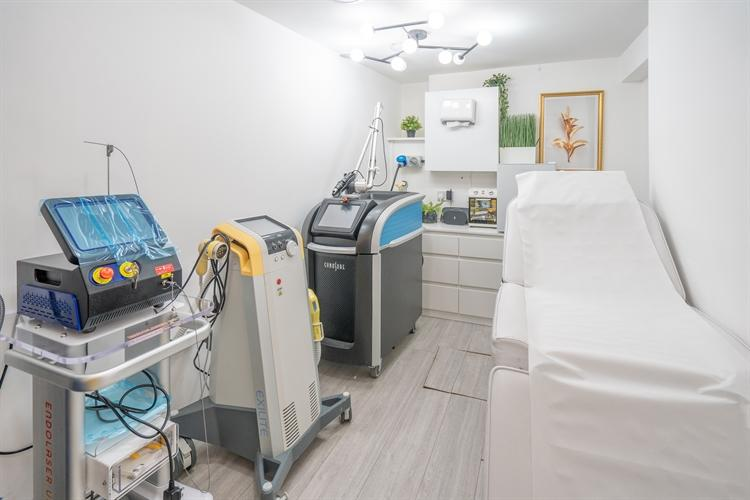
Imagine a clinic offering skin cleansing, skin tightening, body contouring, muscle stimulation, and rejuvenation services. Traditionally, each treatment may require a dedicated machine. Over time, the treatment room can become crowded with multiple consoles, handpieces, cables, accessories, and control systems.
The financial impact can also extend beyond the initial purchase price.
Each additional device may require:
- Additional treatment-room space
- Separate staff training
- Individual maintenance and servicing
- Additional accessories and consumables
- More complicated scheduling
- More equipment management
- Separate demonstrations and marketing materials
For smaller clinics, these challenges can be even more significant.
A multifunction platform can help consolidate several treatment capabilities into one professional system. Industry suppliers increasingly position this model around lower equipment redundancy, easier workflow management, broader treatment menus, and better utilization of limited clinic space.
However, choosing an all-in-one machine should not mean choosing the machine with the longest feature list.
The smarter approach is to select technologies that match the clinic's actual customers, treatment goals, operator skills, and business model.
Technology and Mechanism: How All-in-One Devices Work
An all-in-one aesthetic device is essentially an integrated platform that brings several treatment technologies together.
The exact configuration varies by manufacturer and model, but professional systems may combine different energy-based, mechanical, or skincare-support technologies.
Radio Frequency
Radio frequency, or RF, uses controlled electromagnetic energy to generate heat within targeted tissue layers.
In professional aesthetic applications, RF is commonly incorporated into skin-tightening and rejuvenation protocols. Controlled thermal energy can support collagen remodeling and improve the appearance of skin firmness over a series of treatments.
Different RF configurations can be designed for different treatment areas and depths. For example, facial protocols may use smaller treatment heads, while larger handpieces can be designed for body applications.
The key advantage of integrating RF into a multifunction platform is flexibility. Operators can incorporate RF into a broader treatment protocol instead of relying on a dedicated RF-only machine.
Ultrasound and Cavitation
Ultrasound technology uses acoustic waves to interact with tissue.
In aesthetic equipment, ultrasound-based technologies can serve different purposes depending on frequency, intensity, handpiece design, and treatment protocol. Cavitation systems are commonly marketed for body-contouring applications and are often combined with complementary technologies such as RF or vacuum.
For professional clinics, this combination can create a more comprehensive body treatment menu rather than limiting the machine to a single function.
Vacuum Therapy
Vacuum systems use controlled negative pressure to lift and mobilize soft tissue.
Vacuum handpieces are commonly incorporated into body-care and contouring treatments and may also be combined with mechanical massage or RF technologies.
From an operational perspective, vacuum functionality can add another treatment option without requiring a completely separate device.
EMS and Electrical Stimulation
Electrical muscle stimulation, or EMS, uses controlled electrical impulses to stimulate muscle contractions.
In aesthetic settings, EMS-based systems are often used as part of body toning and conditioning programs. The treatment parameters and suitability depend on the specific device and client.
When EMS is integrated into a multifunction platform, operators can create more diversified body-care programs while keeping the equipment footprint relatively compact.
LED and Other Skin-Rejuvenation Technologies
LED-based systems use selected wavelengths of light for targeted cosmetic and skincare applications.
LED is often incorporated into facial and recovery-oriented protocols because it can be used as a complementary treatment following other aesthetic procedures, depending on the equipment and professional protocol.
This is where an all-in-one system becomes particularly useful: technologies do not necessarily have to operate independently. They can be organized into a structured treatment journey.
Modular Handpieces: The Practical Core of an All-in-One System
One of the most important components of a multifunction device is the handpiece system.
A professional platform may include multiple interchangeable handles, each designed for a specific function or treatment area. A well-designed system allows the operator to switch between functions without changing the entire machine.
The touchscreen interface, parameter controls, treatment presets, safety features, and handpiece identification can also influence how efficiently the equipment performs in a real clinic environment.
In other words, an all-in-one device should not simply combine technologies mechanically. The best systems are designed around the operator's workflow.
Advantages and Comparison: Why Smart Clinics Choose All-in-One Platforms
1. Broader Treatment Capability
The most obvious advantage is treatment versatility.
Instead of building a treatment menu around one technology, clinics can develop services around multiple client concerns.
For example, a multifunction body platform may support combinations of:
Body Contouring + RF + Vacuum + EMS
A facial platform may combine:
Cleansing + Infusion + RF + LED
The exact combination depends on the device, but the business principle remains the same: one equipment investment can support several service categories.
This gives clinics greater flexibility when introducing new treatments or responding to changing client demand.
2. Better Use of Treatment-Room Space
Treatment-room space is a valuable business resource.
Multiple single-purpose machines can quickly create a crowded environment, particularly in smaller salons and clinics.
An integrated platform can consolidate equipment into a more organized workstation. This can make the treatment room easier to operate and may create a cleaner, more professional visual experience for clients.
For clinics working with limited space, this can be a meaningful advantage.
3. More Efficient Staff Training
Training becomes more manageable when multiple functions are organized within one equipment ecosystem.
Operators still need proper training for every technology and treatment protocol. An all-in-one machine does not eliminate the need for professional knowledge.
However, staff can become familiar with one interface, one operating environment, and one equipment workflow rather than learning completely different control systems for every machine.
This can simplify internal training and make it easier for clinics to standardize treatment procedures.
4. Flexible Treatment Packages
Modern clients often prefer personalized programs rather than isolated treatments.
For example, a clinic may create a structured body-care program involving several complementary technologies across multiple sessions.
The advantage of multifunction equipment is that the clinic does not necessarily need to purchase several independent machines to build this type of service portfolio.
This can support package development, membership programs, maintenance treatments, and customized treatment plans.
5. Higher Equipment Utilization
A single-function machine may remain unused whenever there is insufficient demand for its specific treatment.
A multifunction platform can potentially be used across a broader range of appointments.
This is important when evaluating return on investment.
Instead of asking only:
“How much does the machine cost?”
A clinic should also ask:
“How many different services can this machine realistically support, and how often can our team use it?”
The second question often provides a more useful perspective on equipment value.
6. More Consistent Client Experience
A professional treatment experience is influenced by more than the treatment itself.
Clients notice the cleanliness of the room, the organization of equipment, the professionalism of the operator, the consultation process, and how smoothly the appointment progresses.
A well-organized multifunction system can help reduce unnecessary equipment changes and keep the client within one treatment environment.
That can contribute to a more streamlined and premium experience.
All-in-One vs. Single-Function Devices
| Factor | All-in-One Device | Single-Function Device |
|---|---|---|
| Treatment Range | Broad | Specialized |
| Space Requirement | Generally lower | Higher when multiple devices are needed |
| Staff Training | Centralized around one platform | Separate training for each system |
| Treatment Flexibility | High | Limited to specific applications |
| Equipment Management | More centralized | Multiple systems to maintain |
| Service Expansion | Easier to add related treatments | Requires additional equipment |
| Ideal For | Growing clinics and diversified treatment menus | Highly specialized practices |
This does not mean multifunction equipment is always superior.
A specialized clinic with very high demand for one particular procedure may benefit from investing in a dedicated professional system designed specifically for that application.
The important point is alignment.
Smart clinics invest in equipment based on their treatment strategy, not simply because a machine has more functions.
Applications and Client Needs
Facial Rejuvenation
For facial-focused clinics, an all-in-one platform can help create structured skincare and rejuvenation programs.
Depending on the equipment configuration, treatments may combine cleansing, infusion, RF, LED, or other complementary technologies.
For example, a clinic could design a treatment journey that begins with skin preparation, continues with an infusion or rejuvenation step, and finishes with a complementary recovery-oriented procedure.
The benefit is not simply having several functions available. It is being able to create a more complete service around the client's needs.
Body Contouring
Body-focused clinics can also benefit from multifunction platforms.
A machine combining technologies such as cavitation, RF, vacuum, or EMS can support a broader body-care menu.
Different technologies may address different aspects of a client's aesthetic goals. Rather than presenting one machine as a solution for everything, professional operators can select suitable technologies according to the client's consultation and treatment plan.
This approach also creates opportunities for structured packages rather than one-off sessions.
Small Clinics and Start-Ups
For a new clinic, equipment investment must be carefully controlled.
Buying several machines at once can require significant capital and treatment-room space.
A carefully selected multifunction platform may provide a more practical starting point by allowing the clinic to establish several services around one professional equipment system.
As the business grows, additional specialized equipment can then be introduced according to actual customer demand.
Established Clinics
For established clinics, the objective may be different.
Instead of reducing initial investment, the goal may be to increase treatment capacity, improve room utilization, or expand an existing service menu.
A multifunction system can complement existing equipment by filling treatment gaps or supporting additional protocols.
In this situation, the machine becomes part of an equipment portfolio rather than a replacement for every specialized technology.
What Should Clinics Check Before Buying?
Not every all-in-one device delivers the same practical value.
Before investing, clinic owners should evaluate several factors.
Technology Configuration
Look beyond the number of functions.
Ask whether the included technologies are actually relevant to your target market.
Five frequently requested functions may be more valuable than ten rarely used features.
Handpiece Design
Handpieces should be comfortable, practical, and appropriate for the intended treatment areas.
Frequent switching between poorly designed handles can reduce workflow efficiency.
User Interface
The control system should be clear enough for trained operators to use efficiently.
Parameter adjustment, treatment mode selection, safety controls, and maintenance information all influence daily usability.
Safety and Compliance
Professional equipment should be evaluated according to the regulations and certification requirements applicable in the target market.
Clinics should verify documentation, manufacturer information, operator requirements, and intended use before purchasing.
Manufacturer Support
The relationship with the manufacturer does not end when the machine is delivered.
Training, technical support, spare parts, warranty policies, manuals, and after-sales service can have a major influence on the long-term value of professional equipment.
A reliable machine with strong support can be more valuable than a cheaper system with limited technical assistance.
Conclusion
Smart clinics are not necessarily investing in all-in-one devices because they want the most functions possible.
They are investing because modern clinic operations require flexibility.
An intelligently designed multifunction aesthetic device can combine several treatment technologies, reduce equipment redundancy, improve room utilization, simplify workflow, support broader treatment menus, and create more opportunities for customized client programs.
The real value lies beyond the machine itself.
A professional device becomes valuable when it fits the clinic's treatment strategy, staff capabilities, customer demand, and long-term growth plan.
For salons, med spas, and aesthetic clinics looking to expand without filling every treatment room with separate equipment, an all-in-one platform can provide a practical balance between technology, versatility, and operational efficiency.
Ultimately, the smartest equipment investment is not the machine with the longest feature list.
It is the machine that gets used consistently, supports meaningful treatments, and continues to create value for the clinic long after the initial purchase
Founded in 2008, Guangzhou GLM Beauty Spa Equipment Factory specializes in research, development, manufacture and selling of beauty and slimming machines. Our production base is located in Guangzhou City, Guangdong Province, China. Since our foundation, we have introduced advanced technologies and equipment, to assure high quality and high performance of our products. With professional marketing guide and excellent after-sales service, our products have been exported to over 20 countries and regions, including Southeast Asia, the Middle East, Europe and the United States, won worldwide praises and gained a good reputation